TL;DR:
- Proper backflow prevention is essential to protect public health and avoid regulatory penalties.
- Installation must be performed by licensed professionals with approved devices and permits.
- Regular testing, documentation, and timely submissions are crucial for ongoing compliance and water safety.
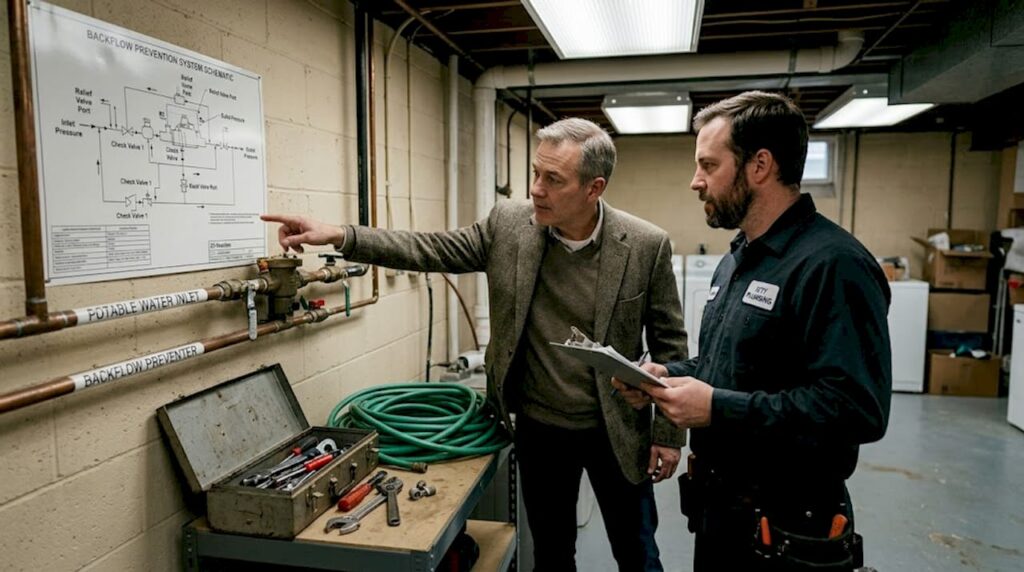
A single undetected cross-connection at a New Jersey apartment building can push contaminated water backward into the potable supply before anyone notices. One backflow incident can affect dozens of tenants, trigger regulatory action, and create liability that takes years to resolve. Preventive annual testing is the standard approach to avoiding these rare but severe contamination events. New Jersey law makes backflow prevention mandatory, not optional. This guide walks property owners and managers through every step, from understanding regulations to scheduling annual tests, so you stay compliant and protect the people who depend on your water system.
Table of Contents
- Understanding water backflow and New Jersey regulations
- Assessing your property’s backflow risk and requirements
- Step-by-step installation and permitting in New Jersey
- Annual testing, documentation, and maintenance checklist
- Our perspective: Why backflow prevention in New Jersey is a compliance AND trust issue
- Streamline your compliance with expert backflow services
- Frequently asked questions
Key Takeaways
| Point | Details |
|---|---|
| Follow NJ laws | New Jersey mandates certified backflow prevention devices installed and tested for most commercial and larger residential properties. |
| Choose right device | Hazard assessment helps you select the correct device—DCVA, RPZ, PVB, or air gap—for your property’s risk. |
| Annual testing is essential | A certified tester must inspect most devices yearly and submit test results promptly to maintain compliance. |
| Keep thorough records | Proper documentation safeguards you from fines and streamlines annual permit renewals. |
Understanding water backflow and New Jersey regulations
Before you tackle installation, it’s important to understand why state rules exist and what backflow really is.
Backflow is the reverse flow of water from a potentially contaminated source back into the clean drinking water supply. It sounds simple, but the consequences are serious. Two conditions cause it: backpressure, where downstream pressure exceeds supply pressure, and backsiphonage, where a sudden pressure drop in the supply line creates a vacuum that pulls water backward. Both can happen without any visible warning.
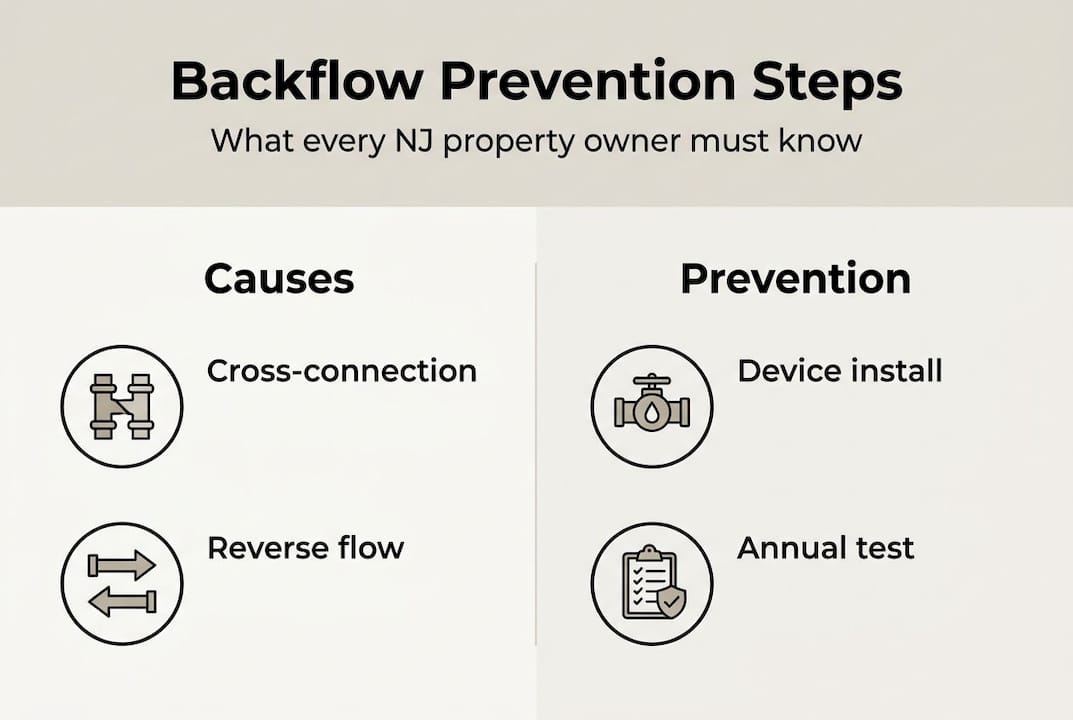
The most common culprit is a cross-connection, a physical link between the potable water system and any source of contamination. Irrigation systems, boilers, fire suppression lines, and commercial food equipment are all common cross-connection points on New Jersey properties.
New Jersey addresses this through a layered regulatory framework. NJ backflow regulations fall primarily under N.J.A.C. 7:10-10, which requires approved assemblies like the DCVA or RPZ for public water systems. The Uniform Construction Code (UCC) plumbing subcode adds another layer, requiring permitted installations and licensed professionals.
Here are the four main device types and uses you’ll encounter:
- DCVA (Double Check Valve Assembly): Used for low-hazard applications like standard irrigation without chemical injection
- RPZ (Reduced Pressure Zone Assembly): Required for high-hazard connections like chemical boilers or reclaimed water lines
- PVB (Pressure Vacuum Breaker): Commonly used for irrigation systems where the head is above the supply line
- Air gap: The highest level of protection, a physical separation between the supply outlet and any potential contaminant
Important: New Jersey does not allow property owners to self-certify device selection. Devices must be on the NJDEP-approved list, installed by a licensed master plumber, and tested by a certified tester.
Understanding these basics is not just academic. When an inspector asks why you chose a DCVA over an RPZ, you need a defensible answer grounded in your property’s actual hazard level.
Assessing your property’s backflow risk and requirements
Now that you know what’s at stake and what assemblies do, it’s time to see exactly what your property needs.
New Jersey uses a hazard classification system to match the right device to the right risk. The higher the potential for contamination, the more robust the required protection. Here’s how that breaks down in practice:
- Low hazard (e.g., standard irrigation without chemical injection): DCVA is typically sufficient
- High hazard (e.g., boilers with chemical additives, reclaimed water, medical equipment): RPZ is required
- Highest hazard (e.g., direct chemical injection into the water line): Air gap is the only acceptable solution
The hazard level determines device type, and getting this wrong is not just a compliance issue. It’s a public health risk.
Here’s a quick comparison to guide your thinking:
| Device type | Hazard level | Typical application | Approximate cost range |
|---|---|---|---|
| DCVA | Low | Standard irrigation, HVAC | $200 to $600 |
| PVB | Low to moderate | Irrigation above supply line | $150 to $400 |
| RPZ | High | Chemical boilers, reclaimed water | $400 to $1,200 |
| Air gap | Highest | Direct chemical injection | Varies by setup |
Who must comply? Most property owner regulations apply to multifamily residential buildings, commercial properties, and any facility with irrigation, boiler, or food service connections. Private wells are generally exempt because they don’t connect to a public water system.
For properties with multiple water uses, such as a commercial building with both irrigation and a chemical boiler, you may need more than one device. Each connection point must be assessed individually. You can review physical connection permit info from the NJDEP to understand what triggers a permit requirement.
Pro Tip: Don’t rely on a general contractor’s opinion for hazard classification. A licensed master plumber with backflow certification will give you an accurate assessment and protect you from costly re-installations later.
When choosing the right device, always document the reasoning. Inspectors appreciate a paper trail that shows you made an informed, code-based decision.
Step-by-step installation and permitting in New Jersey
With requirements in hand, here’s how to legally and efficiently perform the installation step.
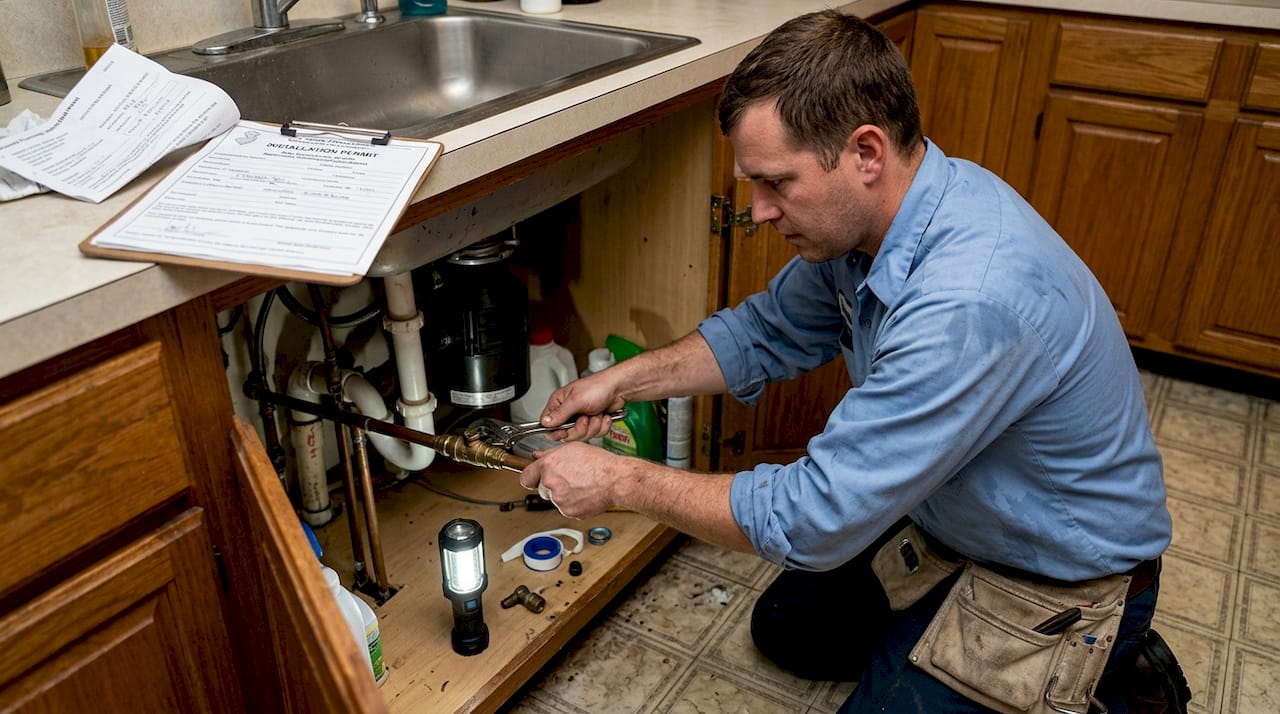
Installation is not a DIY project in New Jersey. The state requires licensed professionals and permits at every stage. Skipping any step can result in failed inspections, fines, or forced removal of the device.
Here’s the process:
- Hire a licensed master plumber. Only a licensed master plumber can pull a plumbing permit in New Jersey. This is not optional. A physical connection permit must be issued before any installation begins, and the plumber is responsible for obtaining it.
- Apply for permits. Your plumber will submit a plumbing permit application to the local construction office. For connections to a public water system, a physical connection permit from NJDEP is also required.
- Select an approved device. The device must appear on the NJDEP-approved product list. Your plumber and the device installation basics will guide the right choice based on your hazard classification.
- Install per NJ UCC and IPC standards. The installation must follow both the New Jersey Uniform Construction Code plumbing subcode and the International Plumbing Code. Placement, orientation, and clearance all matter.
- Schedule and pass inspection. After installation, a local construction official inspects the work. Only after passing inspection is the device considered legally compliant.
- Complete certification steps. Initial testing by a certified tester confirms the device is functioning correctly. This test result becomes your first compliance record.
Here’s a general timeline to set expectations:
| Step | Responsible party | Approximate duration |
|---|---|---|
| Permit application | Licensed master plumber | 1 to 3 weeks |
| Device procurement | Plumber or supplier | 1 to 2 weeks |
| Physical installation | Licensed master plumber | 1 to 2 days |
| Inspection scheduling | Property owner or plumber | 1 to 2 weeks |
| Initial certification test | Certified tester | Same day |
For properties that use third-party backflow testing, the initial test can often be scheduled in parallel with the inspection to save time.
Pro Tip: Create a dedicated folder, physical or digital, for every permit, inspection report, and test result from day one. Annual renewals and future inspections go much faster when your documentation is organized and complete.
Annual testing, documentation, and maintenance checklist
Protecting your property doesn’t end with installation. Ongoing oversight is critical.
A backflow preventer that passes its initial test can still fail over time. Seals wear out. Springs lose tension. Debris accumulates. Regular testing is the only way to confirm your device is still doing its job.
New Jersey’s rules on testing frequency depend on your hazard level. Annual testing requirements apply to most properties, but high-hazard locations require quarterly testing, and all results must be submitted within 30 days of the test. Records must be retained for at least three years.
Here’s the testing and maintenance process:
- Schedule with a certified tester. Testing must be performed by someone certified under ASSE Series 5000 standards. Your local water utility or NJDEP can provide a list of approved testers.
- Conduct the test. The tester uses calibrated gauges to verify that each check valve and relief valve is functioning within spec.
- Submit results. Test reports go to your water utility or the NJDEP, depending on your connection type. Late submissions can trigger compliance notices.
- Repair or replace if needed. If the device fails, signs your device needs maintenance include pressure fluctuations, visible leaks, or a failed test result. Repairs must also be performed by a licensed professional.
Documents you must keep on file:
- Annual or quarterly test reports
- Permits from original installation
- Inspection sign-off records
- Repair and replacement logs
- Correspondence with your water utility
Critical: Failure to submit test results on time or hiring a non-certified tester can result in water service shutoff or significant fines. The maintenance requirements are not suggestions. They are enforceable conditions of your water service agreement.
The most common compliance failures we see are not broken devices. They are missed deadlines and lost paperwork. Build testing into your annual property calendar the same way you schedule fire alarm inspections.
Our perspective: Why backflow prevention in New Jersey is a compliance AND trust issue
After walking through the required steps, here’s an insight from our team’s experience with property owners across New Jersey.
Most property owners think about backflow prevention only when something goes wrong. That mindset is the problem. When your system works perfectly, prevention is invisible. No one thanks you for the contamination that never happened. But the moment something fails, and it only has to fail once, the consequences extend far beyond a fine or a repair bill.
We’ve seen properties lose tenant trust over a single water quality complaint. We’ve seen commercial operators face health department scrutiny because a test result was filed two weeks late. The device didn’t fail. The paperwork did. That distinction matters because it means most compliance problems are entirely preventable with basic organization and routine.
The myths about backflow that hurt property owners most are the ones that frame prevention as rare and unlikely. That framing leads to complacency. Annual prevention isn’t a burden. It’s the lowest-cost insurance you can buy for your water system and your reputation.
Streamline your compliance with expert backflow services
Ready to delegate the technicalities and compliance headache?
Staying compliant with New Jersey’s backflow prevention rules takes more than a one-time installation. It requires annual testing, accurate documentation, timely submissions, and a trusted professional who knows the local regulatory landscape.
South Jersey Backflow handles the full cycle for property owners and managers across New Jersey. From permit coordination and device installation to certified annual testing and emergency repairs, we keep your property protected and your records current. Understanding backflow prevention methods is just the start. Knowing why regular testing matters is what drives action. Visit South Jersey Backflow today to schedule your annual test or get a compliance assessment for your property.
Frequently asked questions
How often does my backflow preventer need to be tested in New Jersey?
Most preventers require annual testing, but high-hazard locations may need quarterly tests per NJDEP rules. Your water utility will specify the frequency based on your connection type.
Do I need a permit for backflow prevention device installation?
Yes, a physical connection permit and a plumbing permit are both required before installing a backflow prevention device in New Jersey. No installation should begin without them.
Who can perform annual backflow device testing?
Testing must be performed by a certified tester following ASSE Series 5000 standards. Hiring an uncertified individual invalidates the test result and puts you out of compliance.
What types of properties need backflow prevention in New Jersey?
Most commercial, multifamily residential, and properties with irrigation, boilers, or food service equipment require protection. Private wells connected only to a single-family home are generally exempt from public water system rules.
Pingback: RPZ Backflow Compliance and Protection for NJ Properties
Pingback: Essential backflow recordkeeping guide for NJ compliance
Pingback: Who certifies backflow devices? NJ compliance explained
Pingback: Backflow Preventers Explained: Protect Your NJ Water
Pingback: Backflow device installation guide for NJ property owners
Pingback: Key backflow preventer parts for NJ compliance
Pingback: NJ residential backflow protection guide for homeowners
Pingback: Seasonal Plumbing Maintenance Tips for NJ Property Owners
Pingback: NJ commercial backflow compliance: what you need to know
Pingback: NJ backflow certification: The complete owner's guide