TL;DR:
- Property owners in New Jersey must install and maintain backflow preventers to protect water quality. Regular testing, proper device selection, and record-keeping are essential for compliance. Neglecting ongoing management can lead to fines, service interruptions, and health violations.
Most property owners in New Jersey assume their drinking water is automatically protected from contamination once it enters their plumbing system. That assumption is wrong, and it can be costly. Backflow, the unwanted reversal of water flow, can pull pollutants, chemicals, or bacteria back into your clean water supply without any warning signs. A backflow preventer is the mechanical device installed at cross-connection points to stop that from happening. Understanding which device your property needs, what New Jersey law requires, and how to stay compliant is not just a regulatory checkbox. It is how you protect your tenants, your liability, and your water.
Table of Contents
- What is a backflow preventer?
- Why backflow prevention is critical in New Jersey
- How New Jersey compliance actually works
- Maintenance and testing: What property owners must do
- What most property owners get wrong about backflow compliance
- Need help with NJ backflow testing?
- Frequently asked questions
Key Takeaways
| Point | Details |
|---|---|
| NJ defines preventer devices | New Jersey law recognizes two major types: double check valve and reduced pressure zone assemblies. |
| Annual testing is required | State rules demand annual testing and ongoing maintenance for most backflow preventers. |
| Proper device selection | Choosing the right device depends on property risk and regulatory guidance—not just convenience. |
| Record-keeping matters | Accurate logs and timely retests are as important as installation for maintaining compliance. |
What is a backflow preventer?
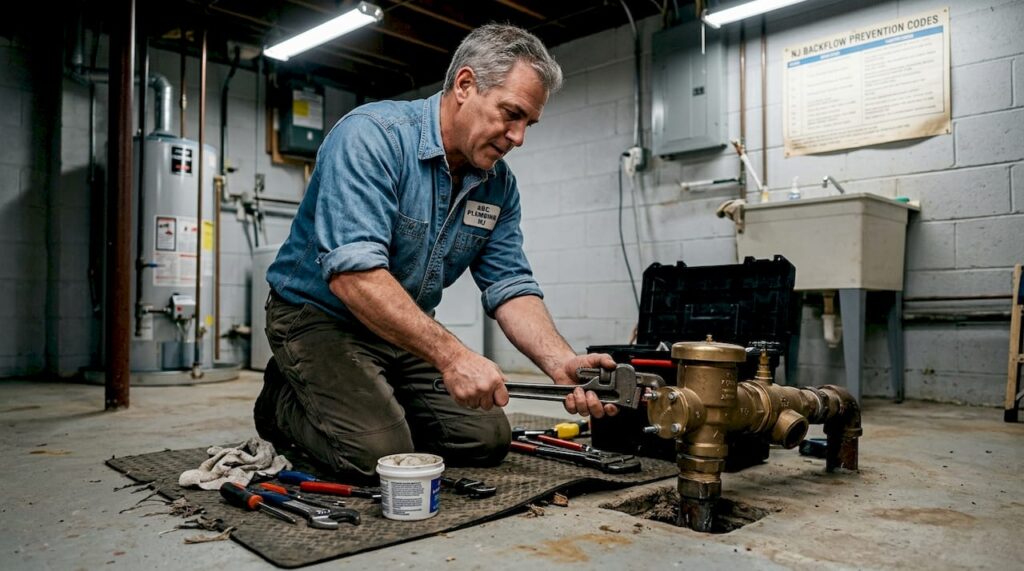
A backflow preventer is a plumbing assembly installed at the point where your private plumbing connects to the public water supply. These connection points are called cross-connections, and they create the risk that contaminated water from your property could reverse direction and flow back into the municipal water system.
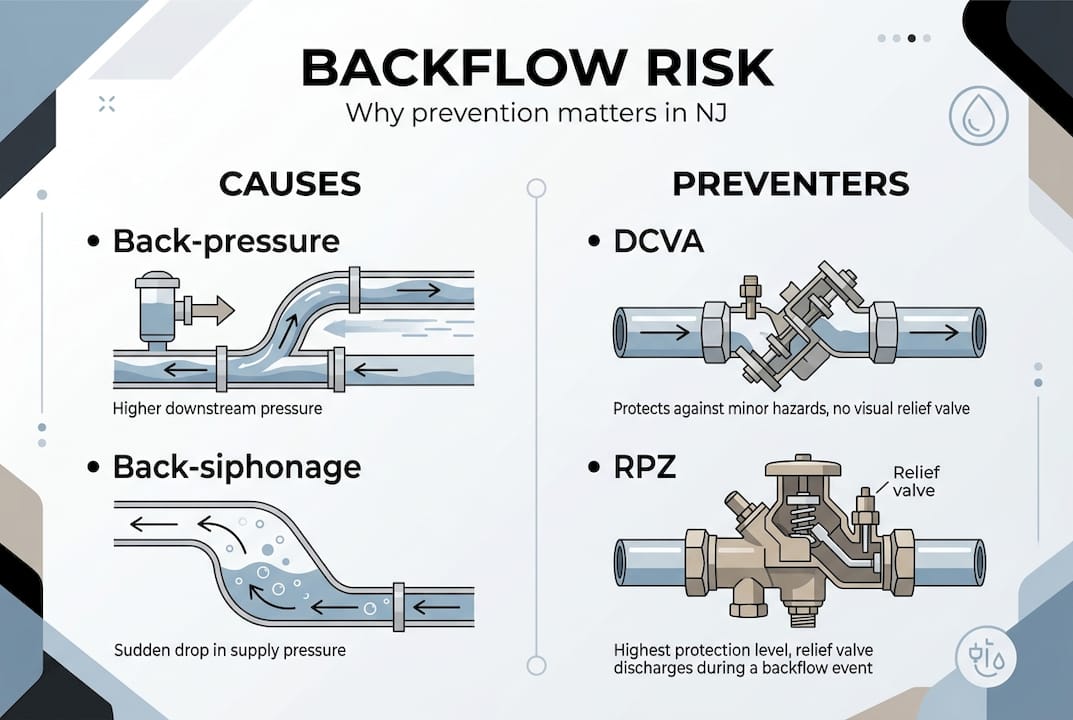
Backflow happens for two main reasons. The first is back-pressure, where pressure on your side of the system exceeds the supply pressure, pushing water backward. The second is back-siphonage, where a sudden drop in supply pressure (like a water main break nearby) creates a vacuum effect that pulls water in reverse. Both scenarios can introduce serious contaminants into water that others are drinking.
Under NJ drinking water rules, NJAC 7:10 defines backflow prevention devices as double check valve assemblies or reduced pressure zone assemblies. These are the two primary device types recognized for compliance in New Jersey.
The two main device types are:
- Double Check Valve Assembly (DCVA): Two independently operating check valves that block reverse flow. Used for low-to-moderate hazard cross-connections, such as irrigation systems and fire suppression lines without chemical additives.
- Reduced Pressure Zone Assembly (RPZ): Includes two check valves plus a pressure differential relief valve in between. Required for high-hazard connections where chemicals, sewage, or other serious contaminants could enter the water supply.
Learning how backflow preventers work at a mechanical level helps you understand why the right device for your specific risk level matters.
| Feature | DCVA | RPZ |
|---|---|---|
| Hazard level | Low to moderate | High |
| Relief valve | No | Yes |
| Typical use | Irrigation, fire lines | Chemical lines, boilers |
| NJ compliance | Yes, for lower-risk | Yes, required for high-risk |
| Failure behavior | Holds water in | Discharges to atmosphere |
The RPZ is considered more protective because if a check valve fails, the relief valve opens and expels water rather than allowing backflow. That built-in safety mechanism is why it is mandated for higher-risk properties.
Why backflow prevention is critical in New Jersey
New Jersey has one of the most detailed regulatory frameworks for cross-connection control in the country. The state does not leave water safety to chance, and neither should you.
“New Jersey’s Safe Drinking Water Act rules create the regulatory basis for cross-connection control, making backflow prevention a legal obligation, not a recommendation.”
Backflow events are not just a theoretical concern. When contaminants enter a municipal water system, the consequences can affect entire neighborhoods, not just a single property. That is why NJ backflow regulations place the responsibility squarely on property owners and managers to install and maintain appropriate devices.
Consequences of neglecting backflow prevention include:
- Fines and penalties from your local water utility or the NJDEP
- Service interruption if your water connection is deemed non-compliant
- Legal liability if contaminated water causes illness or property damage
- Failed inspections that delay business operations or property transactions
- Public health violations that become part of your property’s regulatory record
The NJDEP requirements apply to commercial, industrial, and multi-family residential properties. Even some single-family homes with irrigation systems, pools, or secondary water uses may fall under local cross-connection control programs.
Understanding the regular testing importance goes beyond simply avoiding fines. A failed device gives no visible warning. Your water may look and taste normal while a compromised backflow preventer allows contamination to occur.
Pro Tip: When budgeting for a new property or lease, factor in annual backflow testing costs upfront. Installation is only the beginning. Ongoing testing is where most compliance gaps occur, and where most penalties originate.
How New Jersey compliance actually works
Compliance with New Jersey’s backflow prevention rules is not a single event. It is an ongoing process that involves device selection, installation, testing, and record-keeping, all coordinated with your local water purveyor.
Local water purveyors (your water utility) play a central role. They administer cross-connection control programs under NJDEP oversight and determine which properties require backflow prevention based on their risk assessment surveys. Your utility may require you to submit a survey, select an approved device, and schedule testing through their program.
NJ compliance requires correct device selection based on hazard level, plus ongoing testing and maintenance to keep the device in working order. Getting the device type wrong from the start creates a compliance problem that is expensive to fix.
| Scenario | Recommended device | Risk level |
|---|---|---|
| Lawn irrigation system | DCVA | Low to moderate |
| Boiler system with additives | RPZ | High |
| Fire suppression (no chemicals) | DCVA | Moderate |
| Chemical injection system | RPZ | High |
| Multi-family building service line | RPZ | High |
Utilities typically require field testing at installation and at least annually after that. Some high-hazard applications may require more frequent testing.
Step-by-step compliance process:
- Request a cross-connection survey from your water purveyor or hire a licensed professional to assess your property.
- Identify all cross-connection points and classify the hazard level at each.
- Select the correct device type (DCVA or RPZ) based on hazard classification under cross-connection standards.
- Have the device installed by a licensed NJ plumber.
- Schedule and pass the initial field test with a certified tester.
- Submit test results to your water purveyor.
- Repeat annual testing and keep records on file.
Review the backflow testing frequency rules that apply to your property type, since some utilities have additional requirements beyond the state minimum.
Pro Tip: If your device fails its initial test, do not wait. Repair or replace the device immediately and schedule a retest. Letting a failed device sit without action compounds your compliance problem and can trigger utility notices. The step-by-step prevention guide walks you through what to expect at each stage.
Maintenance and testing: What property owners must do
Installing a backflow preventer is step one. Keeping it compliant is an ongoing responsibility that many property owners underestimate until they receive a notice from their water utility.
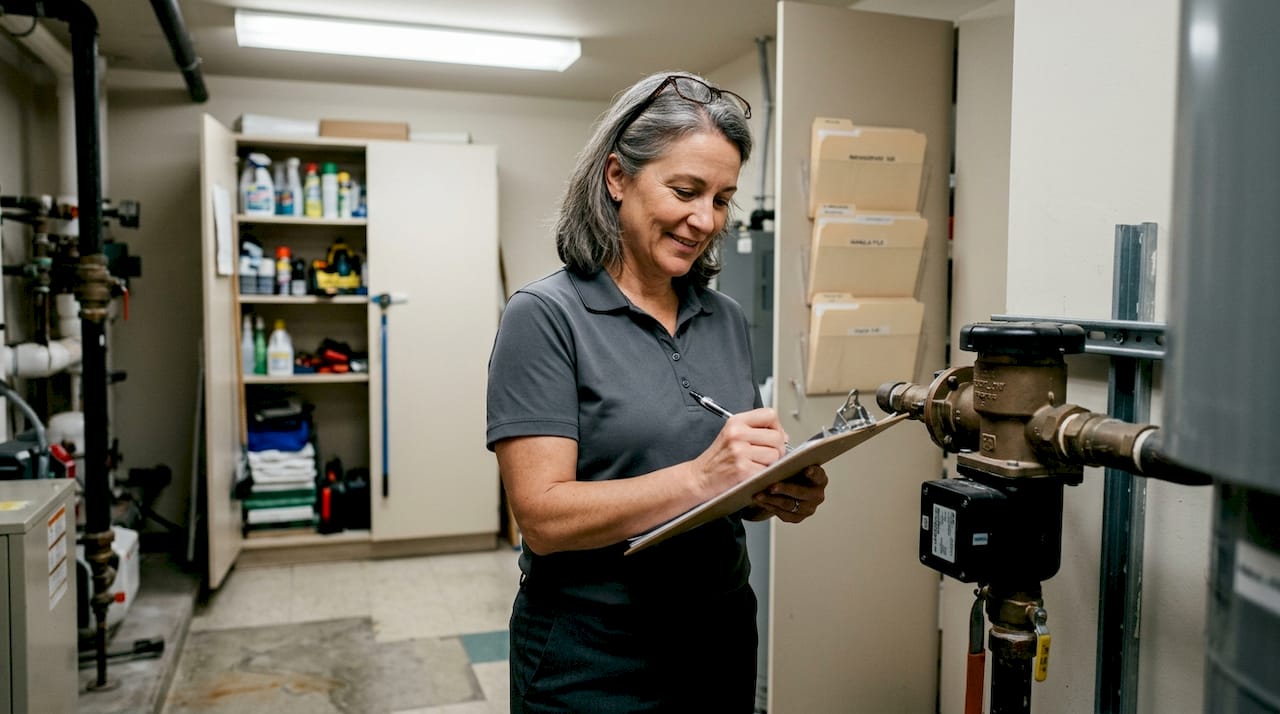
NJ requires ongoing testing and maintenance of installed backflow assemblies, with field testing at installation and at least annual testing every year after that. Your certified tester documents the results using a standardized field test report, which gets submitted to your water purveyor.
Record-keeping is just as important as the testing itself. If your utility requests proof of compliance and you cannot produce recent test reports, you are in violation even if your device is functioning correctly. Keep copies of every test report, repair invoice, and correspondence with your utility in one organized file.
Common mistakes that lead to compliance failures:
- Failing to schedule annual testing until after receiving a violation notice
- Not retesting promptly after a device failure or repair
- Submitting incomplete or unsigned test reports to the utility
- Assuming a device that passed last year will automatically pass again
- Not updating records after device replacement or relocation
Understanding what it takes for passing backflow testing helps you prepare rather than react. Devices can degrade from sediment buildup, freeze damage, or simple wear over time. A device that looked fine during installation may not perform the same way three years later without proper maintenance.
For compliance for property owners, the real obligation is treating backflow prevention like any other critical building system: scheduled, documented, and managed proactively.
Pro Tip: Add your annual backflow test date to your property management calendar the same day you receive your passing test report. One year goes faster than it seems, and a missed test is one of the most avoidable compliance violations there is.
What most property owners get wrong about backflow compliance
Here is the uncomfortable truth: most compliance failures have nothing to do with defective equipment. They happen because property owners treat backflow prevention as a one-time installation task rather than a recurring management responsibility.
We have seen properties with perfectly functioning RPZ assemblies receive utility notices simply because no one filed the annual test report. The device was fine. The paperwork was not. That is a fixable problem, but it still triggers a formal violation.
The other mistake we see repeatedly is choosing the wrong device for the hazard level, usually because someone tried to save money by installing a DCVA where an RPZ was required. The cost difference between device types is real, but it is far smaller than the cost of a utility-mandated retrofit after a failed inspection.
Knowing how to spot common backflow issues before they become violations is the kind of proactive mindset that separates compliant property managers from reactive ones. Build annual testing into your calendar, keep your records organized, and work with a certified tester who knows NJ requirements.
Pro Tip: Build annual testing into your property management calendar as a fixed recurring task, not something you remember when a notice arrives.
Need help with NJ backflow testing?
Staying compliant with New Jersey’s backflow prevention rules is straightforward when you work with the right professionals. Whether you need your first test, a retest after a repair, or guidance on which device fits your property’s risk level, having a certified tester on your side makes every step cleaner.
Explore backflow testing and certification services designed specifically for New Jersey property owners and managers. Have questions before you schedule? The backflow preventer FAQs page covers the most common concerns from property owners across the state. Getting compliant does not have to be complicated when you know exactly who to call and what to expect.
Frequently asked questions
Are backflow preventers required in every New Jersey property?
Not every property requires a backflow preventer. NJDEP rules require risk-based device selection, so requirements depend on the type of cross-connections present and the hazard level they represent.
How often must backflow preventers be tested in New Jersey?
Most assemblies must be tested at installation and then annually thereafter, with a retest required promptly after any device failure or repair.
What happens if a backflow test fails?
You must repair or replace the device right away and arrange a retest. Property owners must maintain their devices and demonstrate restored compliance through a passing retest report submitted to the utility.
Can property managers perform backflow testing themselves?
No. New Jersey requires certified testers to conduct, document, and submit backflow test results for official regulatory compliance. Self-testing is not accepted.
Recommended
- How Backflow Preventers Work: Protecting New Jersey’s Water Supply –
- Understanding Backflow: What It Is and Why It Matters –
- NJ water backflow prevention guide: step-by-step
- Protect Your Property: Understanding Backflow Hazards
- Backflow Prevention: Protecting Houston Water Safety
- Backflow Preventer Testing & Installation GTA | Proper Plumbing
Pingback: Backflow device installation guide for NJ property owners
Pingback: Key backflow preventer parts for NJ compliance
Pingback: NJ residential backflow protection guide for homeowners
Pingback: NJ backflow codes: your compliance roadmap for 2026
Pingback: NJ fire sprinkler backflow: Stay compliant and safe
Pingback: Backflow report filing guide for NJ property managers
Pingback: Backflow Statute Overview for NJ Property Owners