TL;DR:
- New Jersey’s backflow regulations require permits, licensed installers, and annual testing to prevent contamination.
- Proper device selection depends on hazard level, with approved types including DCVA, RPZ, PVB, AVB, and Air Gap.
- Ongoing maintenance, timely testing, and accurate reporting are essential to ensure compliance and avoid fines or service shutoffs.
Contaminated drinking water from a failed backflow preventer is not just a health emergency. It can trigger fines, water service shutoffs, and legal liability for property owners who ignored state requirements. New Jersey regulates backflow prevention through both the Uniform Construction Code plumbing subcode and NJDEP Safe Drinking Water regulations, creating a layered compliance framework that catches many owners off guard. This guide walks you through device types, permits, installation steps, testing procedures, and ongoing maintenance so you can protect your property and stay fully compliant.
Table of Contents
- Understanding New Jersey backflow regulations and device types
- Permitting and qualified installers
- Preparing for installation: Tools, materials, and site requirements
- Step-by-step installation and testing procedures
- Maintaining and troubleshooting backflow devices
- What most New Jersey property owners miss about backflow compliance
- Connect with certified backflow experts in New Jersey
- Frequently asked questions
Key Takeaways
| Point | Details |
|---|---|
| NJ codes mandate devices | New Jersey law requires proper backflow prevention devices matched to each hazard level and enforced by local officials. |
| Certified testers required | Only ASSE-certified professionals can perform required installation tests, annual checks, and filing with NJ water purveyors. |
| Maintenance prevents fines | Consistent maintenance, timely testing, and accurate reporting protect property owners from costly penalties and water contamination. |
| Device selection matters | Choosing the correct device for your specific hazard scenario ensures compliance and safe water for residents or tenants. |
| Local rules may differ | Some New Jersey municipalities enforce stricter standards than state regulations, so check with your local utility. |
Understanding New Jersey backflow regulations and device types
New Jersey’s backflow prevention rules come from two overlapping sources. The Uniform Construction Code (UCC) plumbing subcode governs the installation side, requiring permits and licensed plumbers. The NJDEP Safe Drinking Water regulations (N.J.A.C. 7:10) govern the public water supply side, mandating annual testing and reporting. Both sets of rules apply to most commercial and residential properties connected to a public water system, so you cannot satisfy one without addressing the other.
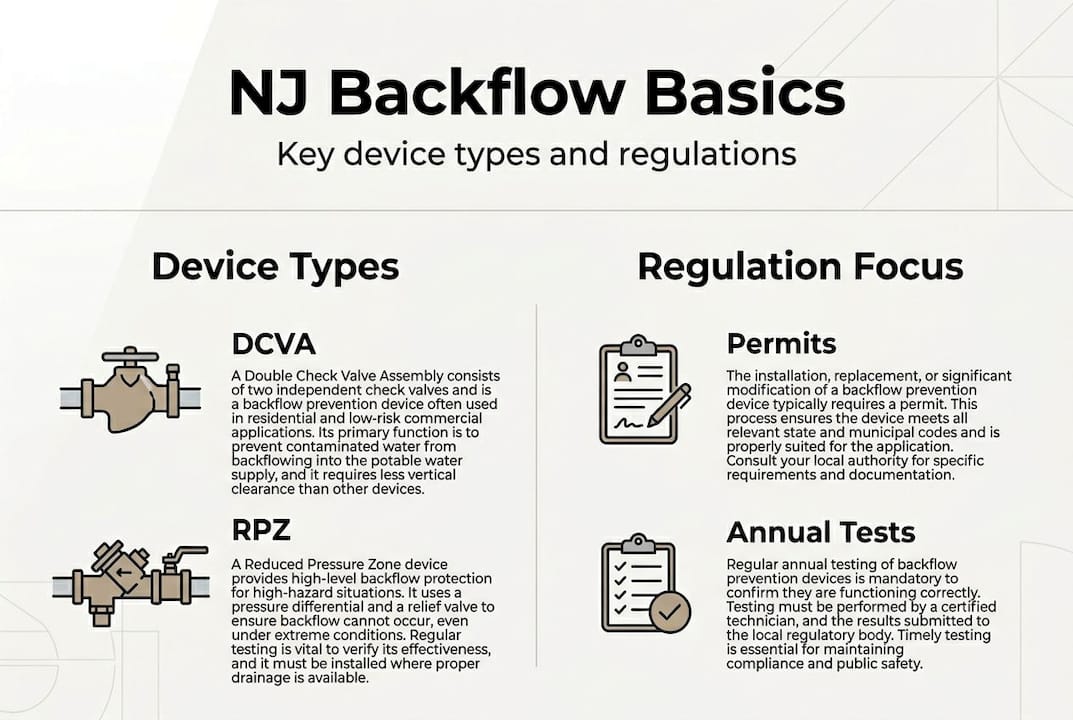
The key concept that drives device selection is hazard level. A low-hazard connection is one where backflow could cause unpleasant water but not serious illness. A high-hazard connection involves chemicals, biological agents, or other substances that could cause serious harm. Getting this classification wrong is one of the most common and costly mistakes property owners make.
Understanding the types of backflow devices available in New Jersey helps you match the right solution to your specific risk level. The state approves five main device categories:
- Double Check Valve Assembly (DCVA): Used for low-hazard connections such as commercial irrigation without fertilizer injection or general building supply lines.
- Reduced Pressure Zone (RPZ): Required for high-hazard connections including boilers, healthcare facilities, chemical feed systems, and fire suppression lines with additives.
- Pressure Vacuum Breaker (PVB): Suitable for irrigation systems where the device can be installed at least 12 inches above the highest downstream outlet.
- Atmospheric Vacuum Breaker (AVB): Used for individual fixture protection in low-risk applications; cannot be used under continuous pressure.
- Air Gap: The most reliable protection, physically separating the supply from potential contaminants; used in high-risk industrial or medical settings.
Here is a quick comparison to help you decide which device fits your situation:
| Device | Hazard level | Continuous pressure | Typical use case |
|---|---|---|---|
| DCVA | Low | Yes | General building supply, irrigation |
| RPZ | High | Yes | Boilers, healthcare, chemical systems |
| PVB | Low to medium | No | Seasonal irrigation |
| AVB | Low | No | Individual fixtures |
| Air Gap | High | N/A | Industrial, medical, food service |
Reviewing the full scope of NJ backflow regulations before you purchase any device will save you from having to replace equipment after a failed inspection.
Permitting and qualified installers
Before any device goes in the ground or on a pipe, you need a permit. New Jersey requires a plumbing permit pulled under the UCC for every backflow preventer installation. Your local plumbing subcode official reviews the application, approves the device type, and schedules the inspection after work is complete. Skipping this step means the installation is not legally recognized, even if the device itself is functioning correctly.
Installation requires a licensed plumber under the NJ UCC, and devices on public water systems must be tested at installation and annually by an ASSE Series 5000 certified tester. The ASSE Series 5000 is a nationally recognized certification program specifically for backflow prevention device testers. It is not the same as a general plumbing license. A licensed plumber who has not earned ASSE Series 5000 certification cannot legally test the device after installation.
This distinction matters more than most property owners realize. Many managers assume their regular plumber handles everything. In practice, installation and testing are two separate professional responsibilities that may require two different people.
Here is how to select qualified professionals for your project:
- Verify the plumber’s NJ license through the Division of Consumer Affairs before signing any contract.
- Confirm ASSE Series 5000 certification for whoever will perform the post-installation test. Ask to see the certificate, not just a verbal confirmation.
- Check device certification status to ensure the specific device model is on the approved list for New Jersey.
- Ask about local utility experience. Some utilities in Bergen and Hudson counties have requirements beyond state minimums, and your installer should know them.
- Request references from similar properties. A plumber who mostly works on single-family homes may not have experience with multi-family or commercial RPZ installations.
Pro Tip: Ask your water utility for their approved tester list before hiring. Many utilities maintain their own roster of certified testers they trust, and working with someone already on that list can speed up your reporting and approval process significantly.
| Professional role | Required credential | Who oversees them |
|---|---|---|
| Installer | NJ licensed plumber | UCC plumbing subcode official |
| Tester | ASSE Series 5000 certified | Water purveyor / NJDEP |
| Inspector | Local plumbing subcode official | NJ DCA |
Connecting with reliable backflow services early in your planning process prevents last-minute scrambles that lead to compliance gaps.
Preparing for installation: Tools, materials, and site requirements
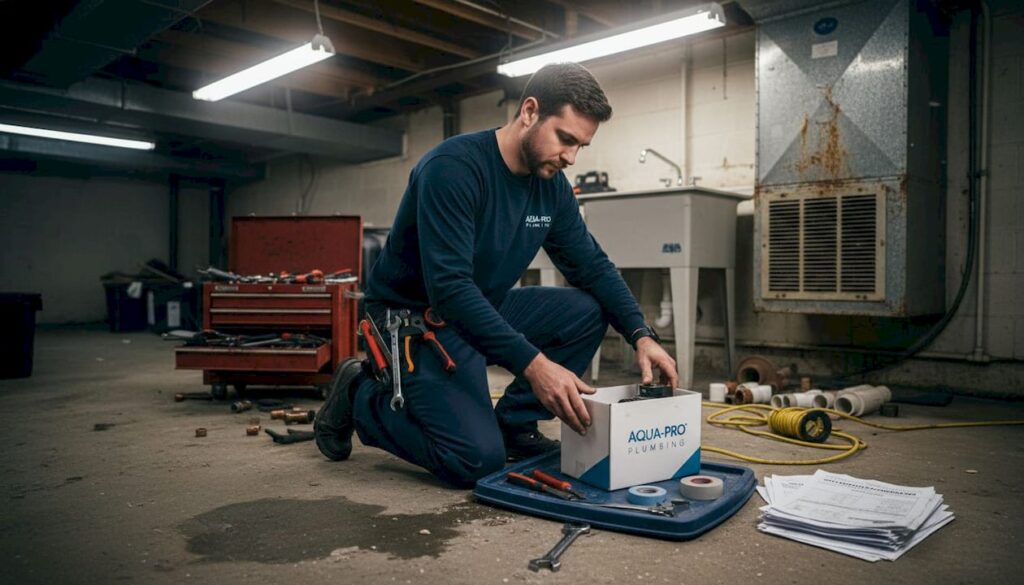
Good preparation prevents the most common installation failures. Before the plumber arrives, you should understand what conditions the site needs to meet and what materials are required. This is not about doing the work yourself. It is about being an informed property owner who can verify the job is set up for success.
New Jersey code requires that RPZ and DCVA devices be installed with shutoff valves on both sides, test cocks (ports) that are accessible for annual testing, and adequate drainage for the RPZ relief valve discharge. If any of these conditions are not met, the device will fail inspection regardless of how well it was physically installed.
Key materials and tools your licensed plumber should bring to the job:
- Approved backflow preventer (verify model against NJ approved product list)
- Full-port ball valves for upstream and downstream shutoffs
- Test cocks in the correct configuration for the device type
- Pipe fittings compatible with your existing supply line material
- Backflow test kit (for the certified tester at startup)
- Drain connection or floor drain access for RPZ installations
Site conditions to confirm before installation day:
- Access clearance: The device needs at least 12 inches of clearance on all sides for testing equipment. Tight mechanical rooms are a frequent problem.
- Drainage: RPZ relief valves discharge water during a backflow event. There must be a drain nearby. Installing an RPZ above finished flooring without a drain creates a flooding risk.
- Freeze protection: Devices installed in unheated spaces or outdoors need insulation or heat tape to prevent damage during New Jersey winters.
Warning: Never install a backflow preventer downstream of a water softener or chemical treatment system. Doing so can void device approval and expose your supply line to contamination risk from the treatment chemicals themselves.
Pro Tip: Take photos of the installation location before and after the work is done. These images support your permit documentation and give you a clear reference point if questions arise during the inspection or future testing.
Follow the full step-by-step NJ guide to make sure nothing is overlooked before the plumber starts work.
Step-by-step installation and testing procedures
With site preparation complete, the installation itself follows a clear sequence. Here is how a compliant installation proceeds from start to finish:
- Shut off the main water supply to the section being worked on and relieve pressure in the line.
- Cut and prepare the pipe at the installation point, following manufacturer specifications for the device being installed.
- Install upstream shutoff valve using a full-port ball valve to ensure unrestricted flow when open.
- Mount the backflow preventer in the correct orientation. RPZ devices must be installed horizontally unless the manufacturer specifies otherwise.
- Install downstream shutoff valve and confirm both shutoffs operate freely.
- Connect drain line for RPZ devices, routing discharge to an approved drain location.
- Restore water pressure slowly and check all joints for leaks before calling for inspection.
- Schedule the certified tester to perform the initial test before the device is placed into full service.
Devices on public systems must be tested at installation and annually by an ASSE Series 5000 certified tester, with results submitted to the water purveyor within 30 days per N.J.A.C. 7:10-10. Missing that 30-day window is a compliance violation even if the device passed the test.
Single-family versus multi-family installations differ in important ways:
| Property type | Typical device | Testing frequency | Special requirements |
|---|---|---|---|
| Single-family residential | DCVA or PVB | Annual | Standard permit process |
| Multi-family / high-rise | RPZ on service line | Annual or quarterly | Service-line RPZ required; ASSE cert mandatory |
| Irrigation systems | PVB or RPZ | Annual | Device height requirements for PVB |
| Fire suppression with additives | RPZ | Annual | Coordination with fire marshal |
Understanding how often testing is required for your specific property type prevents missed deadlines. Review the full process for passing the test and staying compliant so you know exactly what to expect when the tester arrives.
Maintaining and troubleshooting backflow devices
Installation is a one-time event. Maintenance is a permanent responsibility. Most compliance failures in New Jersey happen not because of bad installations but because of neglected maintenance and missed testing deadlines.
Regular inspection tasks every property owner or manager should schedule:
- Visual inspection every 90 days: Check for leaks around the device body, test cocks, and shutoff valves. Look for corrosion, mineral buildup, or physical damage.
- Relief valve check (RPZ only): A dripping relief valve often signals internal wear. It is not always a failure, but it warrants a call to your certified tester.
- Shutoff valve operation: Exercise both shutoff valves at least once a year to prevent them from seizing in the open position.
- Documentation review: Confirm your last test report was submitted on time and that your water utility has it on file.
Certified testers reduce errors significantly compared to self-reported maintenance, and local utilities in areas like Bergen and Hudson counties may require more frequent testing or stricter documentation than the state baseline.
For properties with physical connections to unapproved water supplies, DCVA or RPZ installation is required under N.J.A.C. 7:10-10.3 and 10.4, with annual permit renewal and potentially quarterly testing depending on the risk classification.
“A device that passed last year’s test is not guaranteed to pass this year. Internal seals and check valves wear out, especially in properties with high water demand or fluctuating pressure.”
Common problems and how to address them:
- Test failure due to worn check valves: Rebuild kits are available for most approved devices. Your certified tester can often repair on-site rather than requiring full replacement.
- Relief valve discharging continuously: This usually means backpressure is exceeding the device’s rated capacity. Check for downstream pressure spikes before assuming the device has failed.
- Test cocks that won’t open: Mineral deposits from hard water are the usual cause. Regular flushing during inspections prevents this from becoming a test-day emergency.
Review common troubleshooting issues and understand why regular testing matters beyond just meeting the legal minimum.
What most New Jersey property owners miss about backflow compliance
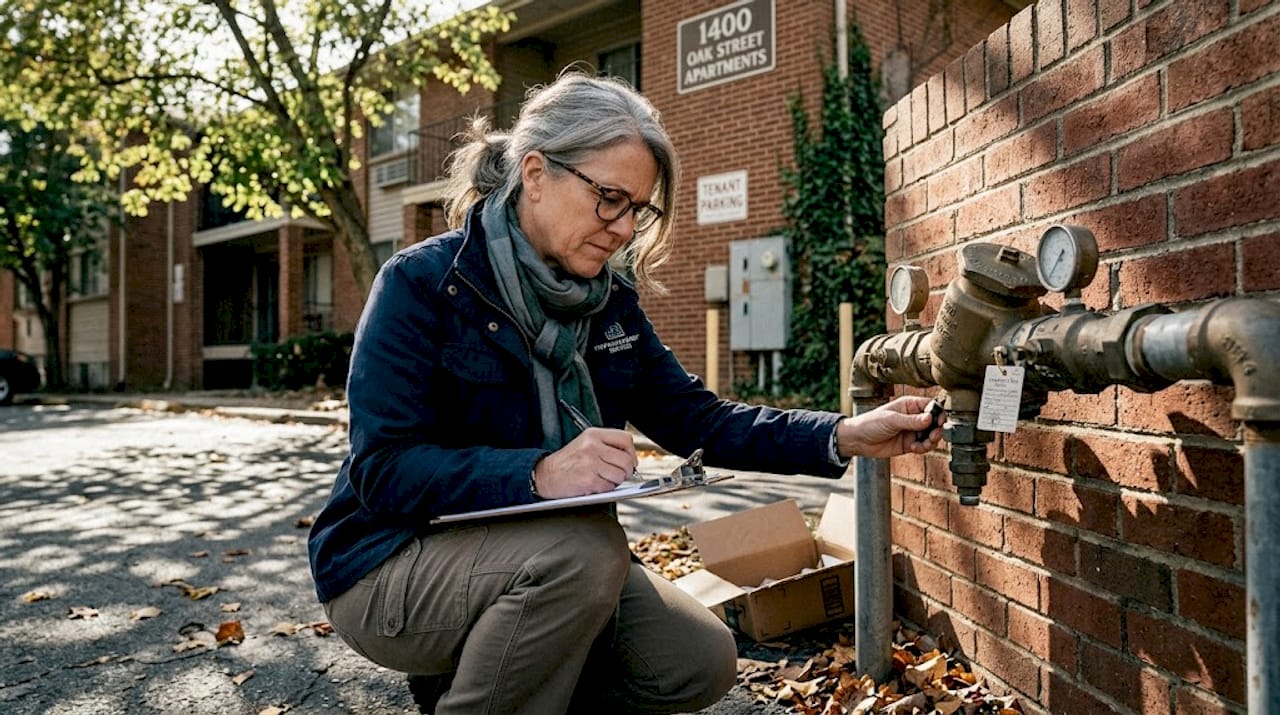
After working with property owners across New Jersey, the pattern we see most often is not willful neglect. It is a false sense of security after the initial installation. Owners get the permit, hire the plumber, pass the first test, and then assume the system runs itself.
It does not. The annual testing deadline is a hard requirement, not a suggestion. Missing it by even a few weeks can trigger utility enforcement action, including water service interruption. We have seen well-maintained properties face shutoffs simply because the test report was submitted late.
The other gap we see constantly is hazard misclassification. A property owner installs a DCVA because it was cheaper, without realizing their boiler system qualifies as a high-hazard connection requiring an RPZ. When the utility audits the installation, the device has to come out and be replaced at full cost, plus fines.
What actually works is treating backflow compliance the way you treat property insurance: proactively, consistently, and with qualified professionals. Build your testing deadline into your annual calendar. Establish a relationship with a certified tester who knows your property. And read what NJ property owners need to know before assuming your current setup is fully compliant.
Connect with certified backflow experts in New Jersey
Staying compliant with New Jersey’s backflow requirements is straightforward when you have the right team behind you.
Our certified testers work with property owners and managers across New Jersey to handle installation oversight, annual and quarterly testing, documentation submission, and device troubleshooting. Whether you need compliance testing services for a new installation or are catching up on missed annual tests, we make the process simple. Our certification services cover the full range of device types approved in New Jersey, and we understand the specific requirements of local utilities across the state. Reach out today to schedule your test or get expert guidance on your next installation.
Frequently asked questions
Which backflow device do I need for my property in New Jersey?
Device selection depends on hazard level: DCVA is for low-hazard connections, while RPZ is required for high-hazard settings such as boilers, healthcare facilities, or chemical systems.
Can I test backflow devices myself, or do I need a certified tester?
In New Jersey, only ASSE Series 5000 certified testers can legally perform backflow device tests. No plumber is automatically qualified for testing without this specific certification.
How often should backflow devices be tested in New Jersey?
Devices on public systems must be tested at installation and then annually, with results submitted to the water purveyor within 30 days. Some high-risk properties require quarterly testing.
What happens if I skip the required tests or fail to report results?
Missing tests or failing to submit results on time can result in fines, water service shutoff, or loss of compliance status. Utilities enforce these requirements actively, and property owners bear full responsibility for containment compliance.
Do local utilities in New Jersey have stricter requirements than state regulations?
Yes. Some local utilities, including those in Bergen and Hudson counties, set standards above state minimums, requiring more frequent testing or more detailed reporting than N.J.A.C. 7:10 mandates.
Pingback: NJ residential backflow protection guide for homeowners
Pingback: NJ backflow certification: The complete owner's guide
Pingback: Seasonal Plumbing Maintenance Tips for NJ Property Owners
Pingback: RPZ Device Meaning: Essential Guide for NJ Property Owners
Pingback: Purpose of Backflow Device Tags: NJ Owner's Guide