TL;DR:
- Homeowners in New Jersey are legally responsible for backflow prevention and compliance.
- Regular annual testing of backflow devices is required to prevent contamination and avoid fines.
- The appropriate device depends on the risk level and plumbing setup, with professional installation.
Most homeowners assume backflow is a commercial problem. If you live in a single-family home in New Jersey, you might think your water is safe by default and that regulations only apply to factories or apartment buildings. That assumption is wrong, and it can cost you real money. New Jersey enforces strict backflow prevention rules under state code, and residential property owners are fully responsible for compliance. This guide breaks down exactly what backflow is, which devices you need, what the law requires, and how to stay on the right side of your local water authority.
Table of Contents
- What is backflow and why does it matter?
- New Jersey backflow prevention regulations explained
- Comparing residential backflow prevention devices
- Annual testing and maintenance: What every homeowner needs to do
- The truth about residential backflow protection in New Jersey
- Connect with certified backflow protection experts
- Frequently asked questions
Key Takeaways
| Point | Details |
|---|---|
| Annual testing required | New Jersey homeowners must have backflow devices tested each year to comply with regulations. |
| Device choice matters | Selecting the right backflow prevention device depends on household risk and plumbing features. |
| Regulatory penalties apply | Failing to test or permit backflow devices can result in fines or water shutoff. |
| Expert help is available | Certified professionals can guide device selection, installation, and testing for best water safety. |
What is backflow and why does it matter?
Backflow is the unwanted reversal of water flow in your plumbing system. Under normal conditions, water flows in one direction: from the public main into your home. When that flow reverses, contaminants from your private plumbing can travel back into the public water supply. That is the core problem.
There are two ways this reversal happens. Backflow mechanics and prevention describe them clearly: backpressure occurs when the pressure inside your private system rises above the supply pressure, pushing water backward. Backsiphonage happens when a sudden pressure drop in the main line creates a vacuum effect that pulls water out of your home and back into the supply. Both scenarios are real risks in residential settings.
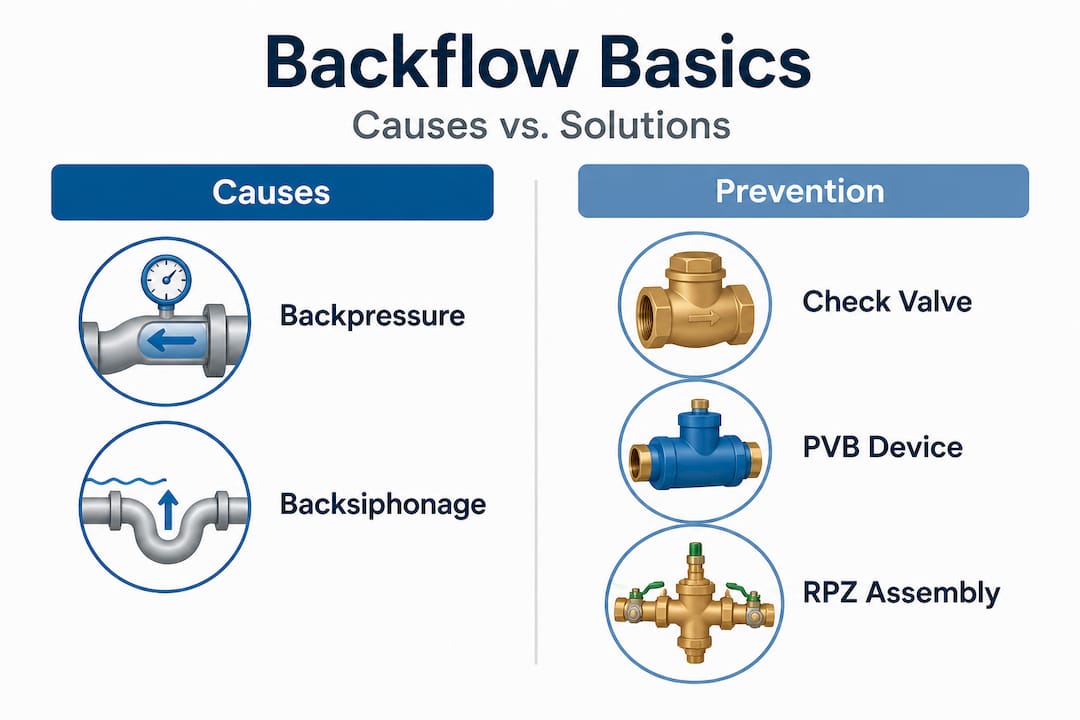
Understanding how backflow preventers work helps you see why devices matter. Preventers use check valves, relief valves, or physical air gaps to block the reversal before it reaches the public main. Without one, your irrigation system, boiler, or garden hose connection becomes a potential contamination point.
Common residential risks include:
- Lawn irrigation systems that draw fertilizer or pesticide residue back into the line
- Boilers using water treatment chemicals
- Swimming pool fill connections
- Hose bibs left submerged in buckets or pools
- Pressure washers connected directly to the supply
One important fact that surprises many homeowners: backflow event frequency and risk data shows that backflow events occur frequently, though they rarely result in actual health hazards. The reason health incidents stay low is precisely because testing and prevention devices are mandated. Skip the testing, and that protection disappears.
The real danger is not dramatic contamination events. It is the slow degradation of your backflow device over time through normal wear and sediment buildup. Annual testing catches failures before they become public health problems.
Understanding backflow hazards in plumbing in a residential context is the first step. The second step is knowing what New Jersey law actually requires you to do about it.
New Jersey backflow prevention regulations explained
New Jersey does not leave backflow prevention to chance or homeowner goodwill. The state has a layered regulatory system that touches every residential property with a backflow device installed.
NJ regulations for backflow prevention are enforced under N.J.A.C. 7:10, which is the New Jersey Safe Drinking Water Act regulation. On top of that, the NJ Uniform Construction Code (UCC) adopts the International Plumbing Code (IPC), and local water authorities layer their own annual testing and reporting requirements on top of state rules. That means you are answering to multiple agencies, not just one.
Here is the compliance sequence every NJ homeowner must follow:
- Get a plumbing permit. Permitting and enforcement detail confirms that installation or replacement of a backflow device requires a plumbing permit under the NJ UCC. You cannot legally install a device without one.
- Use a licensed plumber. The installation must be done by a licensed professional. DIY installation will not pass inspection.
- Schedule initial inspection. After installation, a municipal inspector must approve the work before the permit closes.
- Register with your water purveyor. Your local water utility maintains a list of all backflow devices. You need to be on it.
- Complete annual testing. Every year, a certified tester must inspect and test your device and submit results to your water authority.
The penalties for skipping any of these steps are serious. NJDEP regulations give authorities the power to issue fines and order water service shutoff for non-compliant properties. A water shutoff is not a threat. It is a real enforcement tool that utilities use regularly.
Many homeowners get confused about deadlines. Your water authority typically sends an annual testing notice, but missing that notice does not excuse non-compliance. You are responsible for knowing your testing window.
Pro Tip: Keep a dedicated folder, physical or digital, with your permit records, test reports, and water authority correspondence. When your annual notice arrives, you will know exactly what device you have, who tested it last, and when the deadline falls. This also protects you if there is ever a dispute about compliance history.
For a full walkthrough, the step-by-step prevention guide covers the process from permit to annual submission. You can also review what property owners need to know for a broader overview of your obligations under New Jersey law.
Comparing residential backflow prevention devices
Not every home needs the same device. The right choice depends on what you are protecting against, how your plumbing is set up, and what your water authority requires. Here is a clear comparison of the most common options:
| Device | Risk level | Typical use | Drainage needed? |
|---|---|---|---|
| Pressure Vacuum Breaker (PVB) | Low to moderate | Lawn irrigation | No |
| Double Check Valve Assembly (DCVA) | Moderate | General residential, fire suppression | No |
| Reduced Pressure Zone (RPZ) | High | Chemical injection, high-hazard connections | Yes |
| Dual-check valve | Low | Boilers without additives | No |
| Air gap | Highest | Extreme hazard, direct chemical contact | N/A |
Device types and applications from NJDEP guidance confirm these categories. The PVB is the most common choice for residential irrigation systems because it is cost-effective and simple to install. The DCVA works well for moderate-risk applications where backpressure is not a concern. The RPZ is the gold standard for high-hazard situations, but it comes with a catch.
RPZ and DCVA usage notes explain that RPZ devices discharge water during normal operation whenever zone pressure drops. That means you need a floor drain or proper drainage path near the installation point. Many homeowners are surprised by this requirement when they first install an RPZ in a basement or utility room.
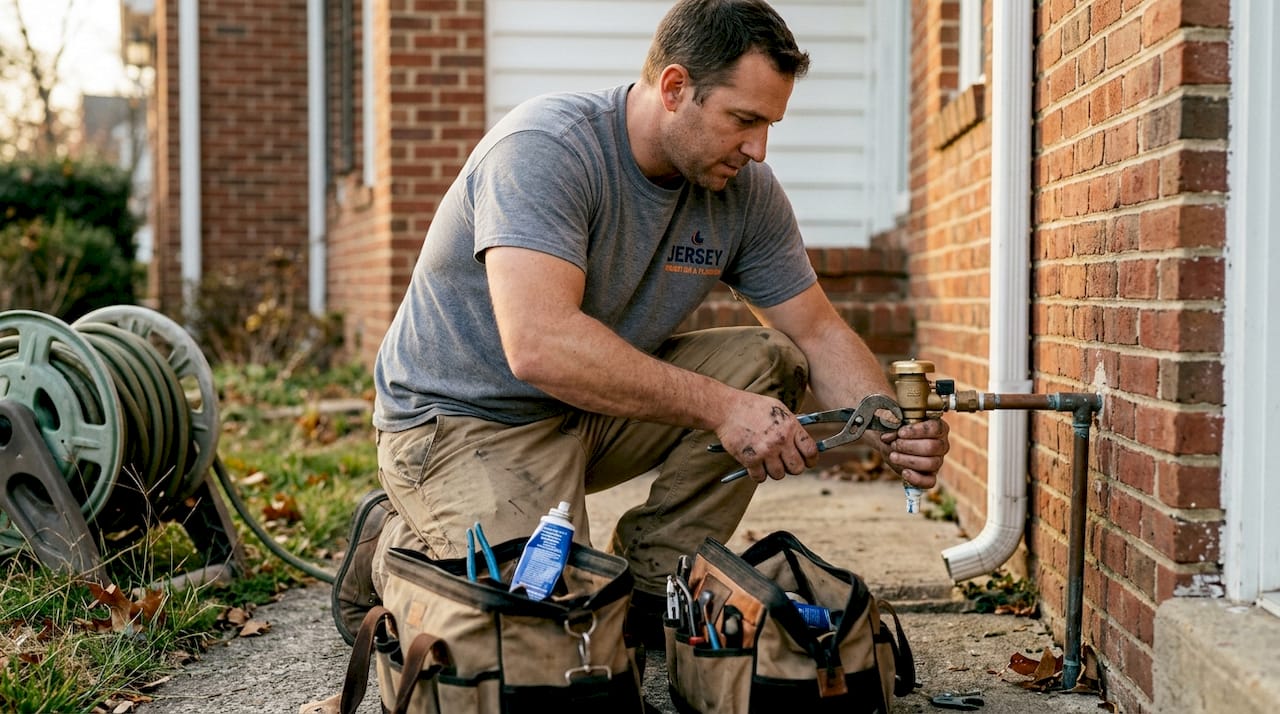
Edge case device guidance addresses situations that fall outside the standard categories. A single-family home with a standard boiler and no chemical additives can typically use a dual-check valve. But if you add a chemical treatment system to that boiler, the risk level changes and a higher-rated device becomes necessary. Similarly, irrigation systems that inject fertilizers or pesticides through the water line require at minimum a PVB, and in many cases an RPZ.
Key considerations when selecting your device:
- Future upgrades matter. If you plan to add a chemical injection system or expand your irrigation zones, choose a device rated for that future use now. Upgrading later means another permit and another installation cost.
- Consult your water authority first. Some local utilities in New Jersey have specific device requirements that go beyond state minimums.
- Location affects your options. RPZ devices cannot be installed in pits or below grade because of the drainage requirement.
Pro Tip: Before purchasing any device, call your water authority and ask which specific makes and models they accept for testing. Not all certified devices are accepted by every utility, and finding out after installation is an expensive mistake.
For a deeper look at your options, the device types and uses library covers each category in detail, and device explanation walks through how each one functions in a real NJ compliance context.
Annual testing and maintenance: What every homeowner needs to do
Owning a backflow device is not a one-time task. The device must be tested every year, and the results must be submitted to your water authority. Annual testing and enforcement rules are clear: failure to comply leads to fines and potential water shutoff.
Here is how the annual testing process works:
- Receive your notice. Your water utility sends a testing notice, usually 30 to 60 days before your deadline.
- Hire a certified tester. Only testers certified by the state of New Jersey can perform the test. This is not optional.
- Schedule the test. The tester comes to your property, connects gauges to the device, and runs a series of pressure checks.
- Review results on-site. If the device passes, the tester fills out the official report form. If it fails, you need repairs before resubmission.
- Submit the report. The tester or homeowner submits the completed test report to the water authority by the deadline.
Testing importance is well documented: annual testing catches wear and sediment buildup before they cause device failure. A device that looked fine last year may have a worn check valve seat or debris blocking a relief port. Only a pressure test reveals these hidden problems.
Here is a practical maintenance schedule to keep your device in good shape between annual tests:
| Task | Frequency | Notes |
|---|---|---|
| Visual inspection | Monthly | Check for leaks, corrosion, or physical damage |
| Clear debris around device | Seasonally | Especially after winter and heavy rain |
| Check drainage path (RPZ only) | Monthly | Ensure drain is clear and functional |
| Review test report on file | Annually | Confirm submission was received by utility |
| Verify tester certification | Annually | Check NJ state certification database |
Pro Tip: Schedule your annual test at least three weeks before your deadline. If the device fails and needs repair, you will have time to fix it and retest without missing the submission window. Last-minute scheduling is the most common reason homeowners end up non-compliant.
For information on who can legally perform this work, backflow device certification explains the NJ certification requirements for testers and what credentials to look for when hiring.
The truth about residential backflow protection in New Jersey
Here is an honest take that most articles skip over: the reason some homeowners dismiss backflow risk is that the consequences are invisible until they are not. You will never see the moment your device prevents contamination. You will only see the fine notice, the shutoff order, or in a worst case, the boil water advisory affecting your neighborhood.
Expert consensus across regulators, utilities, and plumbing authorities is consistent: strict prevention is essential for public health, and utilities enforce it through testing mandates because voluntary compliance does not work at scale. There is no serious debate about whether these requirements are necessary.
What does get debated is proportionality. Some homeowners with simple setups, a standard boiler and no irrigation, feel the annual testing requirement is excessive for their actual risk level. That frustration is understandable. But the mandate exists because the system cannot function on case-by-case risk assessments. Regulators need a uniform rule that applies to everyone.
The tradeoffs in device selection are also real. An RPZ gives you the highest level of protection but costs more to install, requires drainage, and discharges water during pressure fluctuations. A DCVA is cheaper and simpler but does not protect against backpressure in high-hazard scenarios. Choosing the wrong device to save money upfront often means replacing it later at greater cost when your water authority requires an upgrade.
There is also a common misconception worth addressing directly. Many homeowners believe that because their neighbors have never had a backflow incident, they are safe without testing. The myths about backflow are persistent, but the absence of visible incidents is not evidence that devices are working. It is evidence that mandated testing is doing its job.
Annual testing is not bureaucratic overhead. It is the mechanism that keeps a working device working. Treat it the same way you treat smoke detector battery checks: routine, non-negotiable, and worth every minute.
Connect with certified backflow protection experts
Staying compliant with New Jersey’s backflow requirements is straightforward when you have the right support. The process, from device selection to annual testing submission, does not have to be stressful.
Our team specializes in residential backflow testing and certification across New Jersey. Whether you need to understand passing backflow tests and submitting results on time, or you want to get your backflow certification handled by a licensed professional, we make the process simple. Not sure if your current device is up to code? We can assess your setup and recommend the right path forward. Learn more about testing necessity and connect with our certified testers to schedule your annual inspection today.
Frequently asked questions
How often must residential backflow devices be tested in New Jersey?
Residential backflow devices must be tested annually to comply with NJDEP and local water authority requirements. Missing your annual deadline can trigger fines and service interruption.
What happens if I skip required backflow testing?
Skipping annual testing can result in fines and water shutoff ordered by your local water authority. Non-compliance consequences are enforced consistently across New Jersey utilities.
Which backflow prevention device do I need for my home?
Device selection depends on your risk level: PVB for irrigation, DCVA for moderate risk, RPZ for high hazard, and dual-check valves for boilers without additives. Device types and uses from NJDEP guidance provide the full framework for matching your setup to the right device.
Do backflow events pose a real health risk in single-family homes?
Backflow events occur frequently but rarely result in health hazards, largely because mandated annual testing and properly functioning devices catch problems before contamination reaches the public supply.
Is a plumbing permit required to install or replace a backflow prevention device?
Yes. A plumbing permit under the NJ Uniform Construction Code is required for any backflow device installation or replacement. Work must be performed by a licensed plumber and inspected before the permit closes.
Pingback: NJ backflow codes: your compliance roadmap for 2026
Pingback: Water pressure backflow: NJ property owner's guide
Pingback: Backflow Ordinances Explained for NJ Property Owners