TL;DR:
- Annual backflow testing in New Jersey is mandatory and must be performed by certified professionals.
- Proper device selection depends on the property’s hazard level to ensure compliance and safety.
- Effective maintenance includes visual inspections, accurate recordkeeping, and timely repairs to prevent violations.
Missing a single annual backflow test in New Jersey can trigger fines, mandatory water shutoff, and serious liability exposure for contamination. Property owners and managers carry the full weight of compliance under state law, and the consequences of gaps in your maintenance workflow are real and costly. Whether you oversee a retail strip, an apartment complex, or an industrial facility, getting your backflow prevention process right is not optional. This guide walks you through every stage of a compliant maintenance workflow, from understanding your regulatory obligations to selecting the right device, executing the testing process, and avoiding the pitfalls that trip up even experienced managers.
Table of Contents
- Understand New Jersey commercial backflow regulations and responsibilities
- Identify and select the correct commercial backflow device
- Step-by-step commercial backflow maintenance workflow
- Troubleshooting commercial backflow issues and avoiding common pitfalls
- Expert perspective: What most property managers get wrong about backflow maintenance
- Streamline your compliance with expert commercial backflow services
- Frequently asked questions
Key Takeaways
| Point | Details |
|---|---|
| Annual testing is mandatory | New Jersey requires yearly backflow device inspections by certified professionals for all commercial properties. |
| Choose the right device | Matching device type to hazard level ensures compliance and protects your water supply. |
| Standardized workflow saves time | Following a clear maintenance process streamlines compliance and reduces costly mistakes. |
| Recordkeeping prevents fines | Keeping organized test reports and maintenance logs protects against regulatory penalties and surprises. |
Understand New Jersey commercial backflow regulations and responsibilities
Before diving into the hands-on workflow, it is critical to clarify what New Jersey law expects from you and where responsibility lies.
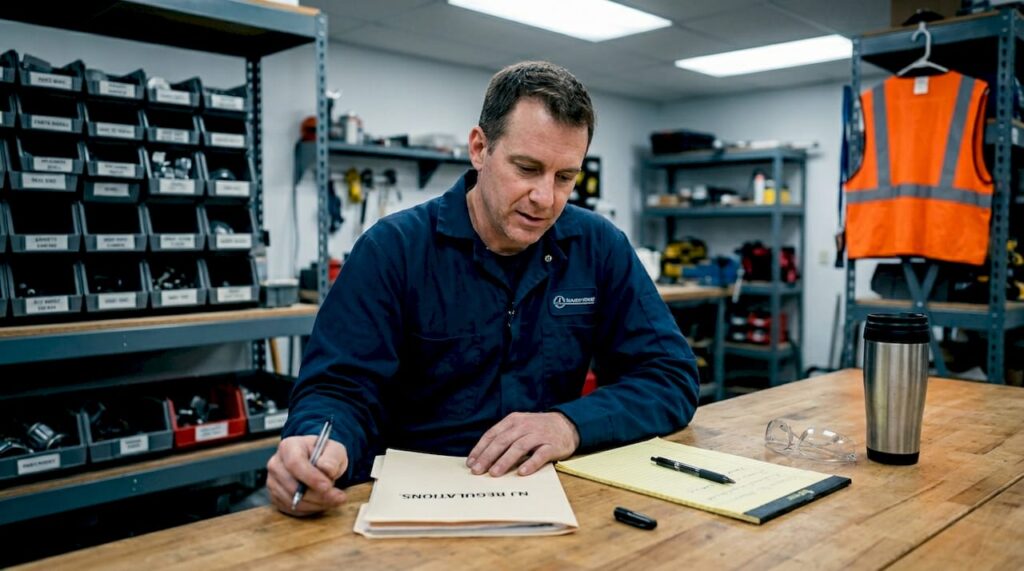
New Jersey’s backflow prevention rules are governed by N.J.A.C. 7:10-10, which mandates annual testing for all commercial backflow prevention devices. This is not a suggestion. Testing must be performed by a professional recognized by the New Jersey Department of Environmental Protection (NJDEP). Understanding NJ backflow ownership rules is the starting point for building any reliable compliance program.
Here is how responsibilities typically break down:
- Property owners are legally accountable for hiring a NJDEP-certified tester, maintaining records of all tests, and ensuring repairs are completed promptly after any failed inspection.
- Property managers handle day-to-day coordination, including scheduling tests, preparing the site for inspection, and storing documentation where it can be retrieved quickly during audits.
- Both parties should verify whether their local township has additional requirements beyond state minimums, since testing frequency in NJ can vary by municipality.
Local jurisdiction variations matter more than most managers realize. Some townships require reporting directly to the local water utility, while others route everything through the municipal construction office. Always confirm with your township before assuming state-level compliance is sufficient.
The stakes are high. Non-compliance with NJDEP prevention requirements can result in financial penalties, forced water service shutoff, and personal liability if contamination reaches the public supply. These are not theoretical risks. They happen to unprepared property owners every year.
The bottom line: know your role, know your local rules, and never let annual testing deadlines slip.
Identify and select the correct commercial backflow device
With a clear understanding of regulatory duties, the next step is choosing the right device for your specific property and risk profile.
New Jersey follows a hazard-based selection model. Your property is categorized as either low hazard or high hazard based on how dangerous a backflow event would be if contaminated water entered the public supply. A medical facility, chemical processing plant, or irrigation system using fertilizers falls into the high hazard category. A standard office building or retail space with no chemical connections is typically low hazard.
Selecting the wrong device is not a minor paperwork issue. It is a compliance failure that can void your testing results and expose you to the same penalties as having no device at all. Here is a quick comparison of the three most common device types and uses:
| Device | Full Name | Best For | Hazard Level |
|---|---|---|---|
| RPZ | Reduced Pressure Zone Assemby | High-hazard connections, chemical risk | High |
| DCVA | Double Check Valve Assembly | Low-hazard commercial connections | Low |
| PVB | Pressure Vacuum Breaker | Irrigation without chemical additives | Low to moderate |
According to NJAC 7:10 device requirements, RPZ assemblies are required wherever backpressure or back-siphonage poses a serious contamination risk, while DCVAs cover most standard low-hazard commercial applications. PVBs are limited to irrigation systems that do not involve chemical injection.
Common selection mistakes include installing a DCVA where an RPZ is required, or using a PVB on a system that later gets a fertilizer injector added without upgrading the device. Both scenarios create immediate compliance failures.
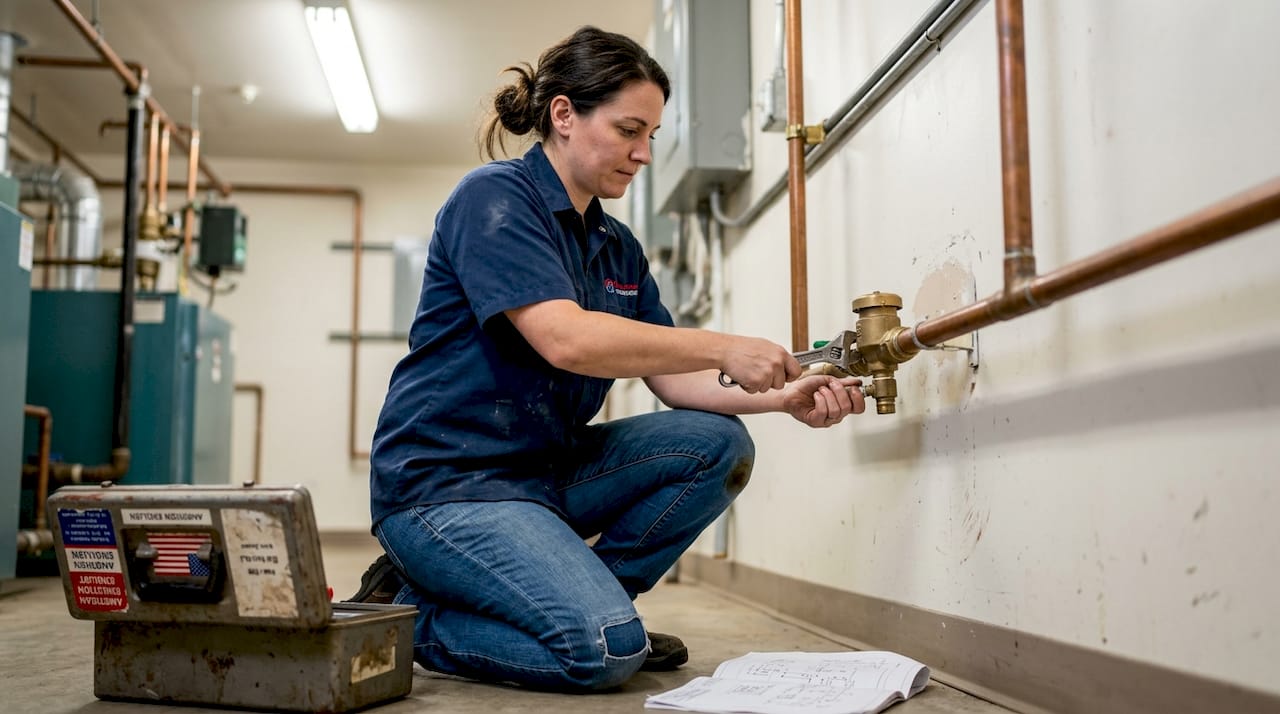
Pro Tip: When you are unsure which device applies to your property, do not guess. A NJDEP-certified tester can assess your system’s hazard level and recommend the correct assembly before installation, saving you the cost of a replacement down the road.
Step-by-step commercial backflow maintenance workflow
Once the correct device is installed and understood, you are ready to put a proven, compliant workflow into action.
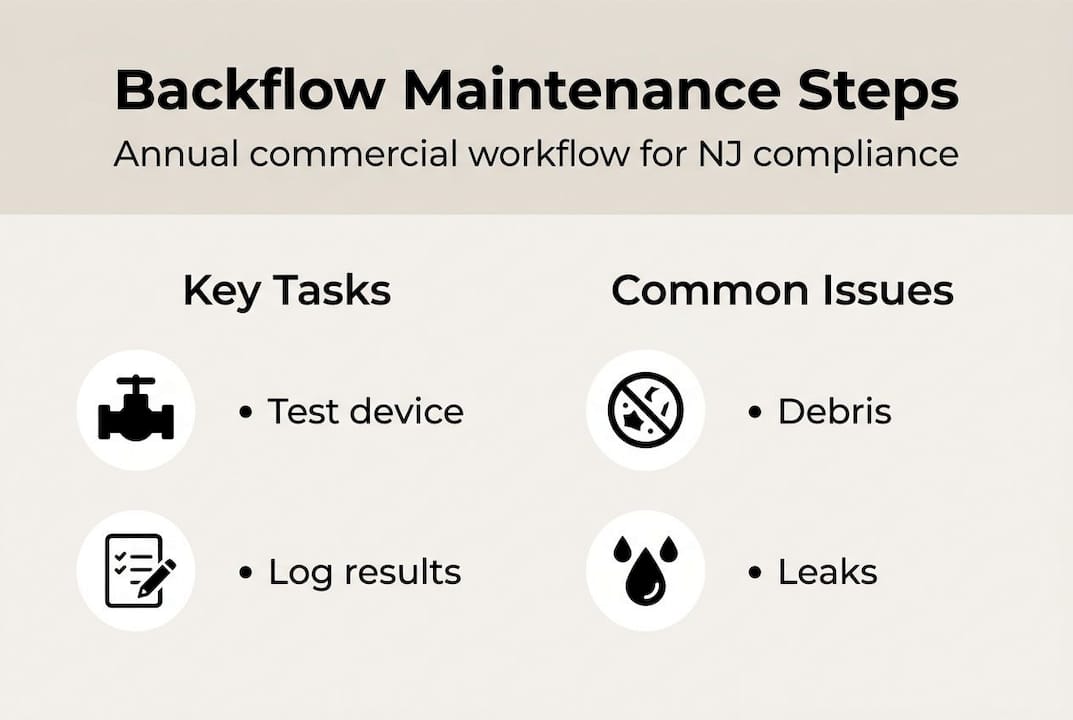
Here is the standard process used by certified professionals across New Jersey:
- Visual inspection. Walk the device and surrounding area. Look for visible corrosion, pipe leaks, physical damage, and signs of freeze exposure. Check that shutoff valves are fully operational and that the device is protected from environmental hazards.
- Isolate the system. Shut off the downstream water supply. This prevents pressure fluctuations from interfering with test readings and protects the building’s plumbing during the procedure.
- Connect calibrated test gauges. Attach differential pressure gauges to the test cocks on the device. Gauges must be calibrated and within their certification window. Using an out-of-date gauge invalidates the test.
- Perform pressure differential tests. For an RPZ, test both check valves and the relief valve independently. For a DCVA, test both check valves. The standard workflow requires each component to meet minimum pressure thresholds before the device is considered compliant.
- Generate and retain documentation. Complete the official test report with device type, serial number, test results, tester certification number, and date. Store copies for a minimum of three years or as required by your township.
- Initiate repairs if needed. If any component fails, the tester must note it in the report and repairs must be completed before the device is returned to service.
| Step | RPZ Focus | DCVA Focus |
|---|---|---|
| Check valve test | Both check valves tested separately | Both check valves tested separately |
| Relief valve test | Required, must open at correct differential | Not applicable |
| Minimum passing threshold | Varies by valve, typically 2 psi differential | Typically 1 psi differential per check valve |
Documentation is not optional. Missing or incomplete test reports are treated the same as a missed test by most NJ municipalities. Keep records organized and accessible.
Pro Tip: Build a physical or digital maintenance log that tracks every test, repair, and visual check. When an auditor or water utility requests records, you want to hand over a clean file in minutes, not spend hours searching through emails.
For a deeper look at maintenance best practices, reviewing state-aligned guidance can help you refine your internal process.
Troubleshooting commercial backflow issues and avoiding common pitfalls
Mistakes during maintenance are surprisingly common, but most can be avoided with a checklist and awareness of failure triggers.
The most frequent issues that cause device failures or compliance problems include:
- Debris accumulation inside check valves, which prevents proper seating and causes pressure differentials to fall below passing thresholds.
- Freeze damage to exposed assemblies, especially in unheated mechanical rooms or outdoor installations. A single hard freeze can crack a relief valve body and render the device non-functional.
- Corrosion on test cocks and valve stems, making it impossible to connect gauges or operate shutoffs during testing.
- Improper installation where devices are installed in a pit without proper drainage, leading to flooding and accelerated corrosion.
- Missed annual deadlines, which are the single most common reason properties receive notices of violation from their water utility.
For common maintenance problems, most can be addressed before they become expensive repairs if you catch them during routine visual checks.
Minor issues like debris in a test cock or a slightly stiff shutoff valve can often be cleaned or lubricated without replacing the assembly. However, a cracked valve body, a failed relief valve that will not reseat, or a check valve that consistently fails pressure tests all require a certified professional and likely a parts replacement.
Pro Tip: Schedule your annual test in late summer or early fall, before cold weather arrives. This gives you time to complete any repairs before winter, protecting the device from freeze damage and keeping you ahead of the compliance calendar.
Maintenance between annual tests should include visual checks and debris cleaning after major storms, as debris-laden water can accelerate internal wear. A 15-minute walkthrough after a heavy rain event can prevent a failed test months later.
Expert perspective: What most property managers get wrong about backflow maintenance
After working with commercial properties across New Jersey, the pattern is clear. The technical side of backflow maintenance is rarely where things go wrong. Certified testers know how to run the tests. The real failures happen in the paperwork and the scheduling.
Recordkeeping gaps are the leading cause of compliance violations we see. A device gets tested, the tester emails a report, and that report sits in an inbox until the township sends a notice of violation. At that point, the property owner has to prove compliance retroactively, which is stressful and sometimes impossible if the tester’s records are not current.
The second mistake is attempting to cut costs by using uncertified technicians or treating visual checks as a substitute for formal testing. NJAC 7:10 is unambiguous: only certified professionals can conduct official tests. Unofficial maintenance saves nothing and creates liability.
The managers who stay consistently compliant treat backflow certification as a non-negotiable annual line item, not a reactive expense. They schedule testing proactively, file reports immediately, and repair failures before the device goes back into service. That approach is not complicated. It just requires discipline and the right professional partner.
Streamline your compliance with expert commercial backflow services
With confidence in your maintenance workflow, partnering with a trusted provider can ensure you never miss a compliance deadline.
Understanding why regular backflow testing protects your property is the first step. Acting on it with a reliable certified professional is what keeps you compliant year after year. Our team at South Jersey Backflow works with commercial property owners and managers across New Jersey to handle annual testing, documentation, and repairs with zero gaps. If you are dealing with a device that keeps failing or need guidance on fixing common issues, we have the expertise to resolve it fast and keep your records clean.
Frequently asked questions
How often must commercial backflow devices be tested in New Jersey?
New Jersey law requires annual testing of commercial backflow prevention devices by NJDEP-recognized certified professionals, with no exceptions for property type or device age.
What happens if I fail to maintain or test my backflow device?
Non-compliance risks include township fines, mandatory water service shutoff, and potential personal liability if contaminated water reaches the public supply system.
Who is authorized to perform commercial backflow testing in NJ?
Only NJDEP-certified testers are authorized to conduct official backflow prevention tests and submit compliant reports to your local water authority or municipality.
Which backflow preventer is best for my commercial property?
The right device depends on your hazard level: RPZ for high-hazard applications, DCVA for standard low-hazard commercial connections, and PVB for irrigation systems that do not use chemical additives.
Pingback: Seasonal Plumbing Maintenance Tips for NJ Property Owners
Pingback: Backflow device installation guide for NJ property owners
Pingback: Essential backflow recordkeeping guide for NJ compliance
Pingback: Backflow compliance guide for NJ commercial properties
Pingback: NJ water meter and backflow compliance guide