TL;DR:
- Most property owners in New Jersey underestimate the importance of backflow device tags, risking fines and water interruptions. These tags serve as compliance tools, safety records, and maintenance guides, displaying critical data like installation and test dates. Proper management, including timely updates and record retention, ensures water safety and legal compliance under state regulations.
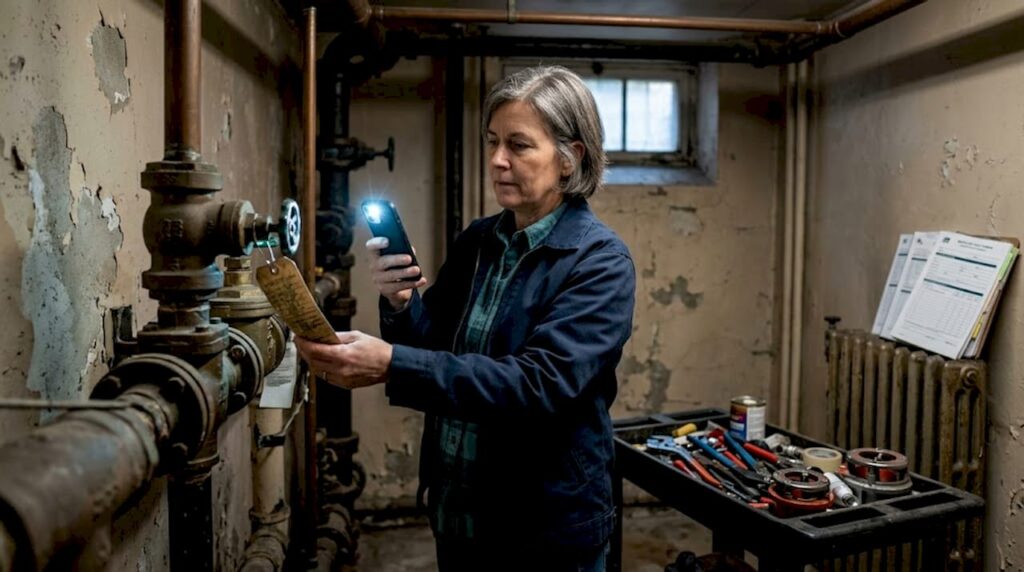
Most property owners in New Jersey treat backflow device tags like the stickers on a piece of furniture. They assume someone else worries about them. That assumption has cost property managers real money in fines and water service interruptions. The purpose of backflow device tags goes far beyond labeling. These tags are compliance tools, safety records, and maintenance guides all attached to one device. This article explains exactly what they contain, why New Jersey law requires them, and how to manage them correctly so your property stays protected and inspected.
Table of Contents
- Key takeaways
- The purpose of backflow device tags explained
- Why backflow tags matter for NJ safety and compliance
- How tags support operational efficiency and maintenance
- The backflow tag lifecycle: from installation to record keeping
- Common mistakes property owners make with backflow tags
- My take on why property owners consistently underestimate tags
- Get your NJ backflow tags and compliance handled right
- FAQ
Key takeaways
| Point | Details |
|---|---|
| Tags carry critical data | Each tag displays installation date, device type, last test date, and responsible party contact information. |
| NJ compliance is time-sensitive | New Jersey requires annual testing with results submitted within 30 days under N.J.A.C. 7:10-10. |
| Tags do not replace test reports | Official test reports are the legal compliance document. Tags are visual reference tools for inspectors and staff. |
| Records must be kept three years | Retain all test reports and tag documentation for at least three years to satisfy audit requirements. |
| Only certified testers apply tags | Tampering with or self-replacing a tag can invalidate your compliance status entirely. |
The purpose of backflow device tags explained
A backflow device tag is a physical label, typically made from durable aluminum, laminated plastic, or weatherproof card stock, that is secured directly to the backflow prevention assembly on your property. It is not decorative. It is a working record that tells anyone who looks at the device exactly what it is, when it was installed, who tested it last, and whether it passed or failed.
Here is what a standard backflow prevention tag displays:
- Device type and model so inspectors and technicians know exactly what assembly they are working with
- Installation date to establish the device’s service history from day one
- Most recent test date and whether the device passed or failed that inspection
- Contact information for the responsible party or the certified tester who performed the work
- Next scheduled test date in some jurisdictions, which helps property managers plan ahead
Tags display installation date and device type alongside last inspection results, making them a quick-reference tool that eliminates the need to dig through paperwork during an inspection visit. Think of a tag as the device’s identification card. Without it, an inspector has no fast way to verify the device’s status on the spot.
Materials matter more than most owners realize. Tags exposed to outdoor conditions in New Jersey weather need to withstand heat, humidity, and freezing temperatures. A faded or illegible tag is treated the same as a missing one during many inspections, so durability is not optional.
Pro Tip: When your tester applies a new tag, photograph it immediately with your phone and store it in a folder alongside your test report. This takes 30 seconds and gives you a backup record if the physical tag is ever damaged.
Why backflow tags matter for NJ safety and compliance
Backflow is not a minor inconvenience. It occurs when contaminated water reverses direction in the plumbing system and flows back into the potable water supply. This can introduce chemicals, sewage, or other hazardous materials into the water your tenants or occupants drink. Annual inspection tags track a device’s maintenance history and verify that protection systems are actually functioning. Without a properly tagged and tested device, you have no documented proof that your system is safe.
New Jersey takes this seriously at the regulatory level. The controlling regulation is N.J.A.C. 7:10-10, which governs cross-connection control and backflow prevention across the state. Here is a summary of the key requirements property owners need to understand:
| Requirement | Detail |
|---|---|
| Testing frequency | Annual inspection required for all regulated backflow prevention assemblies |
| Submission deadline | Test results must be submitted to the local water authority within 30 days of testing |
| Tag application | Tags must be applied or updated at the time of each inspection |
| Existing untagged devices | Devices that lack tags must receive one at the next scheduled test |
| Non-compliance consequences | Fines, water service interruptions, or both |
“Water utilities view backflow tags as a frontline defense in cross-connection control to prevent public health threats via contaminated water.” — City of Regina Cross-Connections & Backflow
For property managers overseeing multiple units or commercial buildings, the stakes are higher. A single untagged device found during a regulatory inspection can trigger a compliance review of the entire property. Staying current with NJ backflow regulations is not optional when you have occupants depending on clean water.
N.J.A.C. 7:10-10 mandates annual testing with results submitted within 30 days, and non-compliance creates real financial exposure. The cost of a missed tag or unfiled report is always higher than the cost of doing it right the first time.
How tags support operational efficiency and maintenance
Beyond legal compliance, backflow prevention tags do something quieter but equally valuable. They help your maintenance team work faster and make fewer mistakes.

Consider a building with multiple backflow assemblies across different mechanical rooms. Without clear tags, a maintenance worker trying to shut down one section of the system for repairs might accidentally deactivate the wrong assembly. Tags improve operational efficiency by helping maintenance crews quickly identify device functions, which directly reduces accidental shutdowns during routine work.
Here is how tagged devices support day-to-day operations:
- Faster device identification during repairs, reducing the time a system is offline
- Clear status verification so staff know whether a device is in service and when it last passed inspection
- Emergency response guidance when a water event occurs and responders need to locate and assess devices quickly
- Scheduling visibility since the tag reminds your team when the next inspection is due before a reminder letter arrives from the water authority
One detail that surprises many property owners is the relationship between tags and official test reports. Tags are primarily convenience tools for inspectors. The official test report remains the authoritative legal compliance document. Absence of a tag does not necessarily mean non-compliance if proper documentation exists, but the absence of the report absolutely does. Treat the tag as a helpful summary and the report as the binding record.
Pro Tip: Ask your certified tester to walk you through each tagged device after every inspection. Five minutes of explanation will help your maintenance staff understand what they are looking at and reduce the risk of accidental interference with critical assemblies.
The backflow tag lifecycle: from installation to record keeping
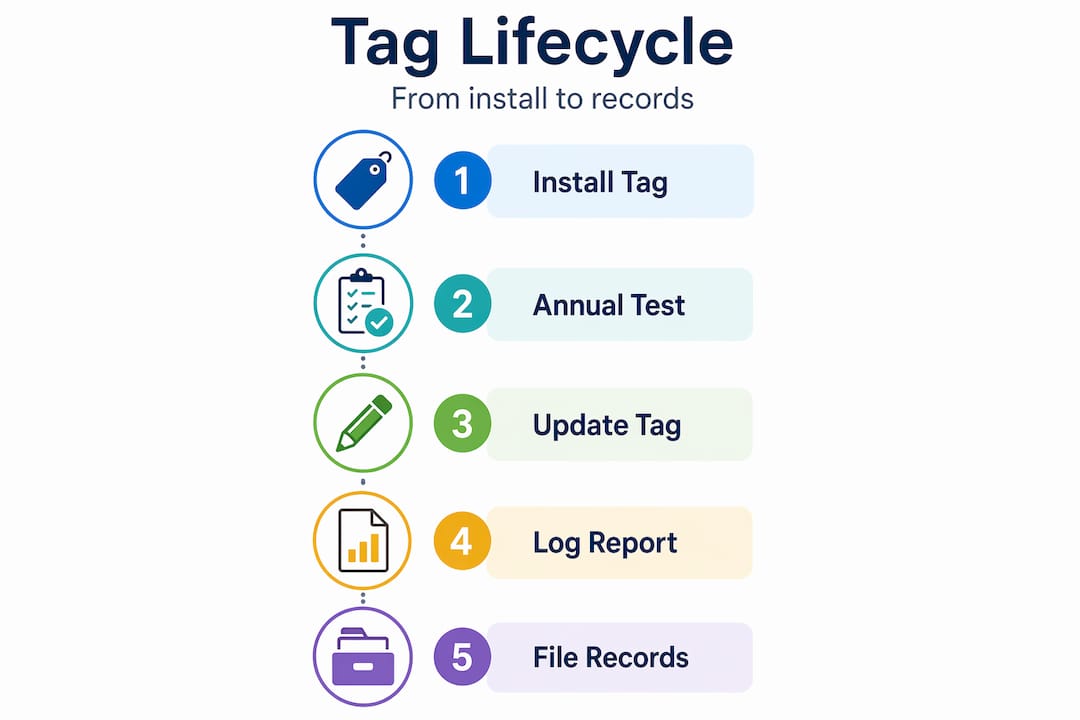
Managing backflow device maintenance tags correctly over the life of your device is where most property owners fall short. The tag is not a one-time installation. It needs to be updated and managed alongside your inspection schedule.
Here is how the lifecycle works in practice:
- Initial installation. When a backflow prevention assembly is first installed and tested, the certified tester applies a tag immediately. This tag documents the installation date and the result of the initial test.
- Annual inspection update. Every year, the tester returns, tests the device, and updates or replaces the tag to reflect the new inspection date and result. Whether the device passes or fails, the tag gets updated. A failed test must be documented just as clearly as a passed one.
- Devices missing tags. If you acquire a property or discover a device with no tag, tags must be placed on existing devices during the next scheduled test. You cannot attach one yourself. Only a certified tester can apply an official tag.
- Record retention. Records must be retained for at least three years for audit purposes. This applies to both the physical or digital test reports and any tag documentation you maintain as a property owner.
- Report filing confirmation. After each test, confirm with your tester that the results have been submitted to the local water authority. Property owners are ultimately responsible for ensuring reports are filed. Some testers handle filing as a standard service; others do not. Assume nothing.
- Device replacement. When a backflow assembly is replaced entirely, the new device starts a fresh tag history from the date of that installation.
A simple digital folder organized by device location, inspection year, and report date will cover your record-keeping obligations and make any audit straightforward. Cross-reference your backflow testing schedule with calendar reminders so annual deadlines never sneak up on you.
Common mistakes property owners make with backflow tags
Even well-intentioned property managers make mistakes with backflow device identification and tag management. Here are the ones that show up most often and what to do instead:
- Assuming the tester files the report. Not all testers automatically file results with the local water authority. After every inspection, ask directly: “Did you file with the water authority, or do I need to submit this?” The penalty for an unfiled report falls on the property owner, not the tester.
- Ignoring faded or damaged tags. A tag that cannot be read is treated as absent during inspections. If you notice a deteriorated tag between annual tests, contact your certified tester to arrange replacement at the next visit. Do not remove it yourself.
- Tampering with or replacing tags without a certified tester. Tampering with backflow tags is prohibited, and self-created replacement tags are not accepted by authorities. Only a certified tester can apply an official tag. Attempting a DIY fix creates a compliance failure, not a solution.
- Confusing tags with full compliance. A tag on the device does not mean the property is compliant. The official test report filed with the water authority is what matters legally. Verify both exist after every inspection.
- Missing the 30-day submission window. New Jersey gives property owners 30 days after a test to submit results. Missing this window creates a compliance gap even if the device passed. Build the follow-up into your calendar the same day as the test.
The water system safety checklist for NJ backflow owners is a practical tool to verify you have covered every obligation after each annual inspection.
My take on why property owners consistently underestimate tags
I have seen this pattern repeat across properties of every size. A building manager will spend thousands on plumbing repairs without hesitation, then treat a missing backflow tag like a paperwork nuisance. That gap in priorities is where compliance violations are born.
In my experience, the owners who get cited are rarely negligent people. They simply do not understand that a tag represents a documented chain of custody for water safety on their property. When an inspector sees a device without a current tag, they do not assume the best. They assume the worst and start asking for reports that sometimes do not exist.
What I have learned from working with properties across New Jersey is that the tag conversation almost never happens proactively between owners and their testers. The tester comes out, does the work, attaches the tag, and leaves. No one explains that the tag is the owner’s responsibility to monitor between visits. That gap in communication is what I see cause the most compliance stress.
My advice is straightforward. Treat every backflow tag as a living document on your property. Know where each device is located, know when the tag was last updated, and confirm after every test that the report was filed. That three-step habit eliminates about 90% of the compliance issues I have seen New Jersey property owners face.
— Jordan
Get your NJ backflow tags and compliance handled right
If you are managing a New Jersey property and you are not completely certain your backflow devices are properly tagged, tested, and reported, that uncertainty is worth resolving before an inspector does it for you.
Southjerseybackflow works with property owners and managers across New Jersey to handle annual testing, tag application, and report submission to local water authorities. The team is fully certified and familiar with the requirements under N.J.A.C. 7:10-10, so nothing falls through the cracks on your end. Whether you need a first-time inspection on a newly acquired property or want to get ahead of this year’s annual test, you can find everything you need to know about passing and staying compliant with New Jersey’s backflow requirements. For certified testing and tagging services, visit Southjerseybackflow’s testing and certification page and schedule your inspection today.
FAQ
What is the purpose of backflow device tags?
Backflow device tags serve as on-site visual records that display a device’s installation date, type, and most recent inspection result. They allow inspectors and maintenance staff to quickly verify device status without requiring access to separate paperwork.
Are backflow tags required by New Jersey law?
Yes. Under N.J.A.C. 7:10-10, New Jersey requires annual backflow testing, and tags must be updated at each inspection. Devices that lack tags must receive one at their next scheduled test.
Can I replace a damaged backflow tag myself?
No. Only a certified tester can apply or replace an official backflow tag. Self-applied or homemade tags are not accepted by authorities and can result in a compliance failure.
Do backflow tags prove my property is compliant?
Not on their own. A tag is a reference tool. The official test report filed with your local water authority is the legal compliance document. Both are needed to demonstrate full compliance.
How long do I need to keep backflow test records?
Test reports and related documentation must be retained for at least three years for audit purposes. Keeping digital copies alongside your physical records is a reliable way to meet this requirement.