TL;DR:
- Homeowners must actively monitor their water sources, whether public or private, to ensure safety and compliance. Regular testing, seasonal maintenance, and proper backflow prevention are crucial in preventing contamination and system failures. Preparedness and proactive habits protect households from water emergencies and long-term health risks.
Your home’s water supply might look clean, taste fine, and carry a clean bill of health from your utility provider. But water system safety tips NJ homeowners need go far beyond trusting what comes out of the tap. Whether your property connects to a municipal line or a private well, the pipes, devices, and practices in your home determine the actual safety of your drinking water. This article covers the specific steps New Jersey homeowners and property managers can take to protect their water systems, stay compliant with state regulations, and avoid the kind of problems that only show up after the damage is done.
Table of Contents
- Key Takeaways
- 1. Understand your water system type and risks
- 2. Test your water on a schedule, not just when something seems wrong
- 3. Follow a seasonal maintenance routine for your water system
- 4. Backflow prevention: what it is and why NJ requires it
- 5. Managing water quality changes during NJ utility maintenance
- 6. Smart water conservation habits that protect your system
- 7. Water emergency preparedness for NJ homeowners
- What I’ve seen homeowners get wrong about water safety in NJ
- How Southjerseybackflow helps NJ homeowners stay protected
- FAQ
Key Takeaways
| Point | Details |
|---|---|
| Know your water source | Public and private well systems carry different risks and require different safety responsibilities. |
| Test beyond bacteria | Private well owners should test for lead, nitrates, arsenic, VOCs, and PFAS, not just bacteria. |
| Backflow prevention is required | NJ regulations mandate approved backflow devices; annual testing keeps you compliant and protected. |
| Municipal maintenance affects quality | Hydrant flushing and disinfectant changes can temporarily alter taste, odor, and pressure. |
| Conservation improves system health | Smart water use reduces pressure fluctuations and contamination risks in your plumbing. |
1. Understand your water system type and risks
Knowing whether your home uses a public water supply or a private well is the starting point for every other water safety decision you make. These two systems operate under completely different rules, and confusing them leads to gaps in protection.
Public water systems in New Jersey are regulated under the New Jersey Safe Drinking Water Act. Your utility monitors contaminant levels, treats the water, and reports results to the state. But that oversight ends at the water meter. From there, the pipes inside your home and property are your responsibility. Lead service lines, aging plumbing, and cross-connections inside the building can introduce contaminants that the utility never sees.
Private well owners carry the full weight of water quality on their own. The state does not monitor private wells in NJ, which means testing, treatment, and maintenance fall entirely on you. The consequences of skipping that responsibility can be serious.
Key risks by system type:
- Public water users: Lead from indoor plumbing, backflow contamination, chemical changes during utility maintenance events, and pressure fluctuations
- Private well owners: Bacterial contamination, nitrates, heavy metals like lead and arsenic, volatile organic compounds (VOCs), and location-specific risks like PFAS or radon
- Both system types: Cross-connections between potable and non-potable water, deteriorating fixtures, and improper chemical storage near water lines
2. Test your water on a schedule, not just when something seems wrong
Most water quality problems are invisible. You won’t taste lead. You won’t smell nitrates. Waiting for a visible sign before testing is how contamination goes undetected for months or years.
For private well owners, comprehensive baseline testing should cover bacteria, nitrates, pH, iron, manganese, lead, arsenic, VOCs, and in many New Jersey locations, PFAS and radon as well. This first-time panel gives you a complete picture of what you are actually drinking. After that, annual bacteria and nitrate testing is the minimum, with a full panel every three to five years or after any event that could affect the aquifer. That includes flooding, nearby construction, or any repair work on the well itself.
Many homeowners under-test private wells, failing to go beyond basic bacteria checks, which misses a long list of other key contaminants that are common in New Jersey geology. Experts recommend using a state-certified lab and getting results in five to ten days.
Public water users should run their tap water through a certified point-of-use filter rated for lead and request their utility’s Consumer Confidence Report annually. If your home was built before 1986, have your internal plumbing tested for lead regardless of what the utility reports.
Pro Tip: Run your cold water tap for two minutes before filling a glass, especially first thing in the morning. This flushes any lead or copper that has leached overnight from sitting in your pipes.
3. Follow a seasonal maintenance routine for your water system
Water system safety is not a one-time project. The same way you service your HVAC unit each fall, your water system needs seasonal attention to stay in good condition.
Spring is the right time to inspect all visible pipes for winter damage, check pressure relief valves on your water heater, and replace any filtration cartridges that have run their service life. Summer brings higher water demand, which stresses pressure regulators and can draw bacteria into systems with improperly sealed entry points. Fall is ideal for draining outdoor lines, checking backflow preventers before freezing temperatures arrive, and reviewing any treatment equipment settings.
For New Jersey property managers specifically, seasonal walkthroughs of mechanical rooms, booster pump stations, and any shared water features are a non-negotiable part of NJ water system maintenance. Document everything with dates and photos. That documentation protects you during inspections and helps you spot patterns over time.
Visual and sensory checks matter year-round. Rust-colored water signals pipe corrosion. A chlorine smell stronger than usual often follows a utility treatment change. Sudden drops in pressure can indicate a leak or a failed pressure regulator. None of these observations replace testing, but they flag when testing should happen sooner.
4. Backflow prevention: what it is and why NJ requires it
Backflow is the reversal of water flow in a plumbing system. Under normal conditions, water pressure keeps your supply flowing in one direction. When pressure drops suddenly, due to a main break, heavy firefighting demand, or equipment failure, water can be pulled backward through your system. If that reverse flow picks up pesticides from an irrigation line, chemicals from a boiler, or waste from a hose left in a bucket, those contaminants enter your drinking water supply.
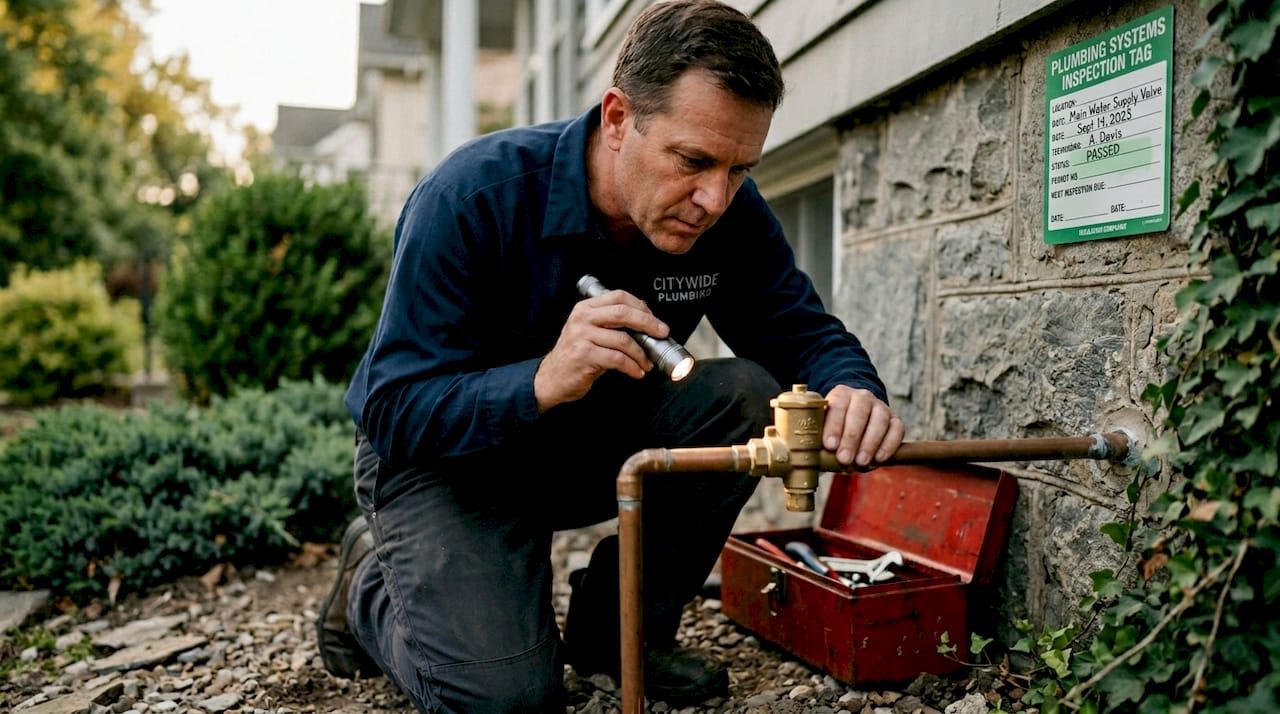
This is why NJ Safe Drinking Water regulations under N.J.A.C. 7:10 define specific approved backflow prevention device types. A Double Check Valve Assembly (DCVA) handles low-to-moderate hazard connections. A Reduced Pressure Zone (RPZ) device is required for high-hazard cross-connections, including irrigation systems that use fertilizer injectors, fire suppression lines, and commercial boilers.
Steps every NJ homeowner and property manager should take:
- Identify all cross-connections on your property, including outdoor hose bibs, irrigation systems, and any auxiliary water sources.
- Confirm which type of device is required for each connection using your water utility’s cross-connection control program.
- Have a certified tester install or inspect devices annually. NJ requires annual testing for most backflow preventers.
- Keep your test records on file and submit them to your water utility on time to stay compliant.
Pro Tip: If you received a backflow compliance letter from your utility and are not sure what to do next, the compliance notice guidance from Southjerseybackflow walks you through exactly what steps to take.
Backflow prevention is a cross-connection control strategy at its core. The device physically separates your supply from any potential contamination source. Without it, even a small pressure fluctuation can create a path for contaminants that no filter downstream will catch.
| Device type | Hazard level | Common applications |
|---|---|---|
| DCVA | Low to moderate | Garden hose bibs, commercial dishwashers |
| RPZ | High | Irrigation with fertilizer injection, fire suppression lines |
| Air gap | Highest | Boiler fill lines, pools, chemical systems |
5. Managing water quality changes during NJ utility maintenance
Every spring, NJ American Water begins annual hydrant flushing across its service territory. This maintenance removes sediment, tests equipment, and preserves long-term system integrity. The short-term effect for homeowners can be temporary discolored water, reduced pressure, and occasional taste changes.
Separately, between February and April 2026, NJ American Water temporarily switched disinfectants from chloramine to free chlorine at several treatment plants serving central and northern New Jersey. This is a planned and safe procedure, but it can produce a stronger chlorine taste or smell in your water during that window.
What to do during maintenance periods:
- Run the cold water tap for several minutes before using it for drinking or cooking.
- Avoid running hot water immediately, as discolored water can stain laundry or hot water tank linings.
- Store a day or two of drinking water in advance if your utility announces a scheduled flushing event.
- Sign up for your utility’s alert system to receive advance notice of maintenance, treatment changes, and boil water advisories.
Property managers carrying responsibility for multiple units should prepare residents ahead of time with written guidance on expected effects and recommended steps. Coordinated resident notifications improve compliance and reduce unnecessary concern calls during routine maintenance windows.
6. Smart water conservation habits that protect your system
Water conservation is often framed as an environmental issue, but it has direct practical benefits for your plumbing and water quality. Systems that are consistently overloaded are more prone to pressure fluctuations, pipe fatigue, and the conditions that invite backflow events.
Installing WaterSense-labeled fixtures reduces flow without sacrificing pressure. A dripping faucet or running toilet wastes thousands of gallons per year and keeps your pressure regulator working harder than it needs to. Fixing leaks promptly is one of the simplest New Jersey plumbing safety steps you can take.
Outdoor irrigation deserves particular attention. Overwatering saturates soil around foundation pipes and creates backflow risk at hose connections. Use smart irrigation controllers that adjust to weather conditions, and keep fertilizer injectors physically separated from your drinking water line with a properly rated backflow device.
Choosing drought-tolerant native plants in your landscaping reduces irrigation demand significantly, which keeps your outdoor plumbing connections under less stress. Organizations like Brighton Air Corp also note that overall home maintenance habits, including managing water use around HVAC systems, affect the moisture conditions that can stress your plumbing over time.
7. Water emergency preparedness for NJ homeowners
Water emergencies come in different forms. A main break, a contamination event, a severe storm, or a backflow incident can cut access to safe drinking water without warning. Being prepared before any of those events happen is what separates a manageable situation from a crisis.
Every NJ household should keep at least 72 hours of drinking water stored in food-grade containers. That figure comes from standard emergency preparedness guidance and assumes roughly one gallon per person per day. Rotate that supply every six months.
Know where your main water shutoff valve is located and confirm that it operates correctly. If a pipe bursts or a contamination event occurs inside your plumbing, shutting off the supply quickly limits the damage. Property managers should post shutoff valve locations in accessible building documentation.
Subscribe to your municipality’s emergency alert system and know the difference between a boil water advisory and a do-not-use order. A boil water advisory means heating water to a rolling boil for one minute makes it safe to drink. A do-not-use order means even boiling is insufficient and you need an alternative supply.
Keep the contact number for a licensed NJ plumber and a certified backflow tester in your emergency contacts. Waiting to find one during an active incident is a problem you can eliminate with five minutes of preparation today.
What I’ve seen homeowners get wrong about water safety in NJ
I’ve worked with enough New Jersey homeowners and property managers to spot the same mistakes repeating. The most common one is the assumption that municipal water removes the homeowner from responsibility entirely. It doesn’t. Your utility delivers water to your meter in compliance with state standards. What happens inside your walls after that is your territory.
The second pattern I see is private well owners who test for bacteria once when they move in and never again. Bacteria is one variable in a long list of contaminants to test for. Nitrates, arsenic, and VOCs don’t announce themselves. You won’t know they’re there without testing, and in parts of New Jersey, they are genuinely present in groundwater.
Backflow prevention is the area where I see the most avoidable compliance problems. Homeowners receive a letter from their water utility, set it aside meaning to deal with it later, and six months go by. The annual testing requirement exists because devices fail over time and a failed device provides no protection. Getting on a regular testing schedule with a certified tester is genuinely one of the highest-value things you can do for your property’s safety and legal standing.
My honest advice is this: treat your water system the way you treat your roof. You don’t wait for water to come through the ceiling before you inspect it. Check it, test it, and fix what you find before the problem scales up.
— Jordan
How Southjerseybackflow helps NJ homeowners stay protected
Southjerseybackflow specializes in backflow testing, certification, and device maintenance for New Jersey homeowners and property managers. If you have a backflow preventer installed on your property, annual testing is required by NJ regulations, and failing to submit results can put you out of compliance with your water utility.
Southjerseybackflow provides certified backflow testing and handles the reporting paperwork so you don’t have to navigate it alone. Whether you need a first-time device inspection, a rebuild after a failed test, or help understanding NJ compliance requirements, the team at Southjerseybackflow has you covered. Serving homeowners and property managers across South Jersey, they make it straightforward to stay current with state regulations and keep your water supply protected.
FAQ
What does backflow prevention actually protect against?
Backflow prevention stops contaminated water from reversing into your clean supply line. It guards against pesticides, fertilizers, boiler chemicals, and other non-potable substances entering your drinking water during pressure drops.
How often should NJ private well owners test their water?
At minimum, test for bacteria and nitrates annually. A full panel covering lead, arsenic, VOCs, PFAS, and other contaminants should be completed every three to five years or after any flooding, nearby construction, or well repair.
Is backflow testing required by law in New Jersey?
Yes. NJ Safe Drinking Water rules require annual testing of approved backflow prevention devices. Results must be submitted to your water utility to maintain compliance.
Why does my tap water smell like chlorine during spring maintenance?
NJ American Water temporarily switches from chloramine to free chlorine during February through April for routine treatment maintenance. The stronger chlorine odor is safe and temporary. Running the tap for a few minutes reduces the smell significantly.
What should I store for a water emergency at home?
Keep at least one gallon of drinking water per person per day for a minimum of 72 hours. Store it in food-grade sealed containers and replace the supply every six months.
Pingback: Water Storage Tank Material Types: Your 2026 Buyer’s Guide – SmartWaterBox