TL;DR:
- Sewer backflow involves raw sewage reversing into homes during sewer surcharges, while water backflow contaminates potable supplies through cross-connections. Proper protection requires separate devices: backwater valves for sewer lines and backflow preventers for drinking water, with regular testing mandated by NJ regulations. Confusing these systems can lead to unprotected urban infrastructure, health hazards, and costly damages.
Sewer backflow is defined as raw sewage reversing into your home’s drains when the municipal sewer main surcharges, while water backflow is the contamination of your potable water supply through cross-connections that allow non-potable water to enter clean lines. These are two separate plumbing problems requiring two separate devices: backwater valves for sewer lines and backflow preventers for drinking water systems. New Jersey homeowners and property managers face both risks, and confusing the two leads directly to unprotected systems, code violations, and costly damage. Understanding the difference between sewer backflow vs water backflow is the first step toward choosing the right protection.
1. How sewer backflow happens and why it matters
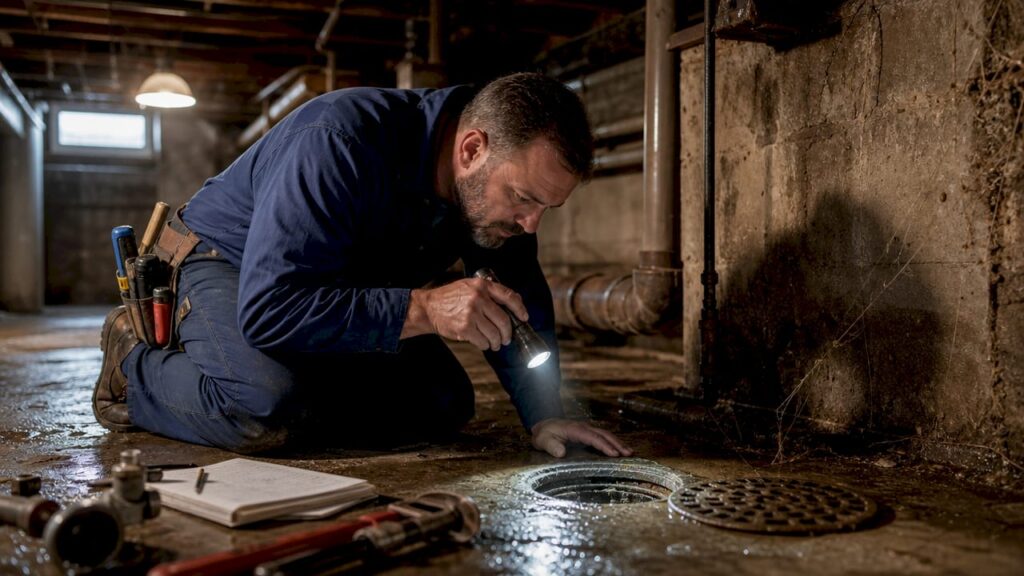
Sewer backflow occurs when wastewater from a surcharged municipal sewer main reverses direction and flows back into your home through floor drains, toilets, or tub drains. Heavy rainfall is the most common trigger in New Jersey, where aging combined sewer systems can overwhelm quickly during storms. The result is raw sewage entering your basement or lower-level plumbing, which creates serious health hazards and property damage.
Properties most at risk are those with basement floor drains or fixtures that sit below the elevation of the nearest upstream manhole. When the sewer main fills past that elevation, gravity does the rest. This is not a rare edge case in South Jersey. Many older neighborhoods have infrastructure that regularly surcharges during heavy rain events.
The consequences go beyond the obvious mess. Sewage contains pathogens including E. coli and hepatitis A. Cleanup after a sewer backup typically requires professional remediation, and many standard homeowner insurance policies do not cover sewer backup damage without a specific rider.
- Floor drains gurgling or backing up during heavy rain
- Sewage odors rising from basement drains
- Slow drainage across multiple fixtures simultaneously
- Visible sewage or dark water pooling in basement areas
Pro Tip: If your basement floor drain sits lower than the street-level manhole outside your home, treat sewer backflow as a near-certain risk, not a possibility. Get a backwater valve installed before the next major storm.
2. What causes water backflow and why it is a contamination concern
Water backflow is a contamination event, not a flooding event. It happens when a cross-connection allows non-potable water to enter your clean drinking water supply, typically through back-siphonage or backpressure. Back-siphonage occurs when a drop in supply pressure pulls contaminated water backward through an open connection. Backpressure occurs when a downstream system operates at higher pressure than the supply line.
Common cross-connection points in residential and commercial properties include:
- Garden hoses submerged in buckets, pools, or chemical solutions
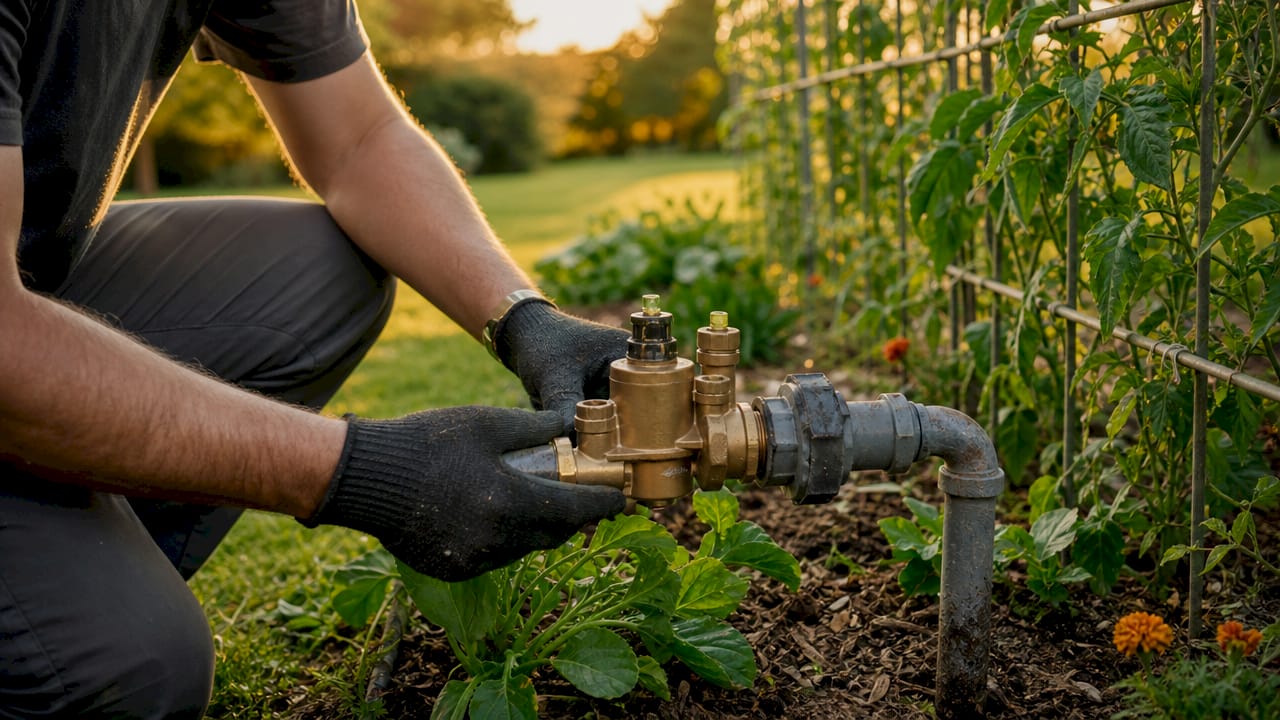
- Irrigation systems connected directly to potable lines without protection
- Boiler makeup water connections
- Hose bibs without vacuum breakers
- Dishwashers and washing machines with improper air gaps
The IRC 2024 plumbing code mandates specific cross-connection control devices at each of these points, including reduced pressure zone (RPZ) valves, double check valves, vacuum breakers, and air gaps. Each device type matches a specific hazard level. An RPZ valve, for example, is required where the contamination risk is classified as high, such as irrigation systems with fertilizer injectors.
Unlike sewer backflow, water backflow may produce no visible signs at all. Contaminated water can look, smell, and taste completely normal while carrying pesticides, fertilizers, or bacteria. This makes annual testing and certification of backflow preventers a regulatory requirement, not just a recommendation.
Pro Tip: Check every hose bib on your property for a vacuum breaker. It is a small, inexpensive device that screws onto the spigot and prevents back-siphonage. Many NJ homes built before 1990 do not have them.
3. Backwater valves vs backflow preventers: what each device actually does
These two devices protect different systems and are not interchangeable. A backwater valve installs on the building’s sanitary sewer lateral, the pipe that connects your home to the municipal sewer main. It contains a flap or float mechanism that allows wastewater to flow out normally but seals shut automatically when flow reverses. No electricity required. No manual operation needed.
A backflow preventer installs on potable water lines at cross-connection points. Depending on the hazard level, it may be a simple vacuum breaker, a double check valve assembly, or a full RPZ valve with a relief port that discharges water to atmosphere if the internal check valves fail. RPZ valves are the gold standard for high-hazard connections because they provide redundant protection with a built-in failure mode that is visible and safe.
| Feature | Backwater valve | Backflow preventer |
|---|---|---|
| System protected | Sanitary sewer line | Potable water supply |
| Mechanism | Flap or float seals on reverse flow | Redundant check valves, relief port |
| Installation point | Building sewer lateral | Cross-connection points on water lines |
| Annual maintenance | Cleaning and inspection | Certified testing and recertification |
| Code authority | Local building/plumbing codes | IRC 2024, NJDEP regulations |
| Typical cost range | $150 to $600 installed | $100 to $1,500 depending on device type |
Check valves alone are not adequate substitutes for tested backflow preventers on potable water lines. A single check valve can leak, corrode, or fail without any visible indication. Plumbing codes require redundant, tested assemblies precisely because a single point of failure is unacceptable when drinking water safety is at stake.
Pro Tip: Ask your plumber specifically whether your irrigation system has an RPZ valve or just a double check valve. If your irrigation uses any chemical injection, only an RPZ valve meets code requirements.
4. Assessing your NJ property’s risk for both types of backflow
New Jersey’s geography and infrastructure create specific risk profiles that homeowners in other states may not face. Properties in low-lying areas of Camden, Burlington, Gloucester, and Atlantic counties sit closer to sea level, which directly affects sewer surcharge risk. Homes with basement drains below the elevation of upstream manholes are at the highest risk for sewer backflow during storm events.
For potable water backflow, the risk is less about geography and more about the age and configuration of your plumbing. Older properties are more likely to have unprotected hose bibs, irrigation systems installed before cross-connection control requirements were enforced, and boiler systems without proper makeup water protection.
Here is a practical risk assessment process for NJ property owners:
- Walk your property and identify every point where a hose, irrigation line, or non-potable system connects to your water supply.
- Check whether each connection has a code-compliant backflow prevention device installed and visible.
- Locate your building’s sewer cleanout and ask a licensed plumber whether a backwater valve is present and functional.
- Review your local municipality’s sewer surcharge history. Many NJ water utilities publish this data.
- Contact a certified backflow tester to schedule an inspection and document your current compliance status.
Annual testing is not optional in New Jersey. The NJDEP requires that backflow preventers on potable water systems be tested and certified by a licensed tester each year. Failing to maintain this record can result in fines and, in commercial properties, service interruption.
5. Signs your system needs attention
Both sewer backflow and potable water backflow can give warning signs before a full failure occurs. Knowing what to look for saves you from a much larger problem.
For sewer backflow risk, watch for gurgling sounds from floor drains or toilets when it rains heavily. Slow drainage across multiple fixtures at once points to a sewer line issue, not a single clog. Sewage odors rising from basement drains between rain events suggest the backwater valve flap may be stuck open or corroded.
For potable water backflow, the signs of device failure are less dramatic but equally serious. An RPZ valve that is discharging water from its relief port indicates that one of the internal check valves has failed. Discolored water, pressure fluctuations, or unexplained drops in water pressure at fixtures can all point to a cross-connection problem or a failing backflow preventer.
Property managers overseeing multiple units face compounded risk. A single unprotected irrigation connection or a failed backflow preventer on one unit’s boiler can affect the water quality for the entire building. Scheduling annual inspections across all units on a single service visit is the most cost-effective approach.
6. Common misconceptions that create real problems
The most damaging misconception in residential plumbing is that a backwater valve and a backflow preventer are the same device or serve the same purpose. They do not. Mixing up these devices leaves one of your two systems completely unprotected, and neither device can substitute for the other.
Several other misconceptions cause real compliance and safety failures:
- “My check valve covers it.” A standard check valve is not a tested backflow preventer. Plumbing codes require redundant, certified assemblies for potable water protection.
- “I only need a backflow preventer if I have a commercial property.” Residential irrigation systems, hose bibs, and boiler connections all require cross-connection control under IRC 2024 regardless of property type.
- “My backwater valve was installed once and never needs service.” Backwater valves require annual cleaning and inspection. Debris, grease, and root intrusion can prevent the flap from sealing properly.
- “Backflow only matters if my water looks or smells bad.” Contaminated potable water from a backflow event can be completely undetectable without testing.
- “New Jersey doesn’t enforce backflow testing for residential properties.” NJDEP regulations apply to residential cross-connections, and municipalities actively enforce annual testing requirements.
Consulting a plumber who is specifically licensed and experienced in both sewer systems and potable water cross-connection control is the only way to get accurate guidance for your specific property configuration.
Key takeaways
Sewer backflow and water backflow require different devices, different maintenance schedules, and different compliance programs. Treating them as the same problem is the single most common mistake NJ property owners make.
| Point | Details |
|---|---|
| Different systems, different devices | Backwater valves protect sewer lines; backflow preventers protect potable water supply. |
| Sewer backflow risk is location-dependent | NJ properties with drains below upstream manhole elevation face the highest sewer surcharge risk. |
| Potable water backflow is invisible | Contaminated water shows no visible signs, making annual certified testing non-negotiable. |
| Check valves are not enough | IRC 2024 requires redundant, tested assemblies for potable water cross-connection control. |
| Annual maintenance differs by device | Backwater valves need cleaning; backflow preventers need licensed testing and recertification each year. |
What I’ve learned from years of NJ backflow work
After working with New Jersey homeowners and property managers across South Jersey, the pattern I see most often is not ignorance. It is misplaced confidence. A homeowner gets a backwater valve installed after a basement flood, assumes the problem is solved, and never thinks about their irrigation system’s cross-connection. Or a property manager schedules backflow preventer testing on the main building line but overlooks the boiler makeup connection in the mechanical room.
The two systems operate completely independently. A failure in one does not protect you from a failure in the other. I have seen properties with excellent sewer backflow protection and zero potable water cross-connection control, and vice versa. Both gaps carry real consequences.
Local elevation matters more than most homeowners realize. In parts of South Jersey, the difference of two feet in drain elevation relative to the nearest manhole determines whether a backwater valve will actually seal during a surcharge event. A valve installed at the wrong point on the lateral, or without accounting for that elevation relationship, provides false security. This is why device selection and placement require a licensed professional who knows your local sewer infrastructure, not just a general plumber following a standard template.
The other mistake I see consistently is treating maintenance as optional. A backwater valve with a corroded or stuck flap is not protection. An RPZ valve that has not been tested in three years may have a failed check valve that nobody knows about. The NJ residential backflow guide covers this in detail, but the short version is this: schedule your annual inspection and do not skip it.
— Jordan
Protect your NJ property with professional backflow services
Southjerseybackflow provides licensed backflow testing, certification, and device inspection for homeowners and property managers throughout New Jersey. Whether you need to confirm your sewer backflow protection is correctly positioned or get your potable water backflow preventers tested and certified for NJDEP compliance, the team at Southjerseybackflow handles both.

Staying current on NJ backflow testing requirements protects your water supply, keeps you compliant with state regulations, and gives you documented proof of maintenance that matters for insurance purposes. Visit Southjerseybackflow to schedule a service visit or get answers about your specific property’s backflow prevention needs.
FAQ
What is the main difference between sewer and water backflow?
Sewer backflow is raw sewage reversing into your home’s drains from a surcharged municipal sewer main. Water backflow is contamination of your potable water supply through a cross-connection that allows non-potable water to enter clean lines.
Can one device protect against both types of backflow?
No. A backwater valve protects only the sanitary sewer line, while a backflow preventer protects only the potable water supply. These devices serve entirely different systems and cannot substitute for each other.
How often do backflow preventers need to be tested in New Jersey?
NJDEP regulations require annual testing and certification of backflow preventers by a licensed tester. Skipping annual testing can result in fines and, for commercial properties, potential service interruption.
Are backflow preventers required on residential properties in NJ?
Yes. IRC 2024 and New Jersey plumbing regulations require cross-connection control devices on residential irrigation systems, hose bibs, boiler connections, and other cross-connection points regardless of whether the property is residential or commercial.
What happens if a backwater valve is not maintained?
A backwater valve with a corroded, stuck, or debris-blocked flap will not seal during a sewer surcharge event, leaving your home fully exposed to sewage backflow. Annual cleaning and inspection are required to confirm the valve functions correctly.