TL;DR:
- Updating backflow records in New Jersey is a crucial and regulated responsibility for property owners to avoid fines and service interruptions. Proper documentation, timely submission within specified deadlines, and verification of records ensure compliance while protecting public water supplies. Delegating this process to licensed professionals simplifies compliance management and maintains public health safety.
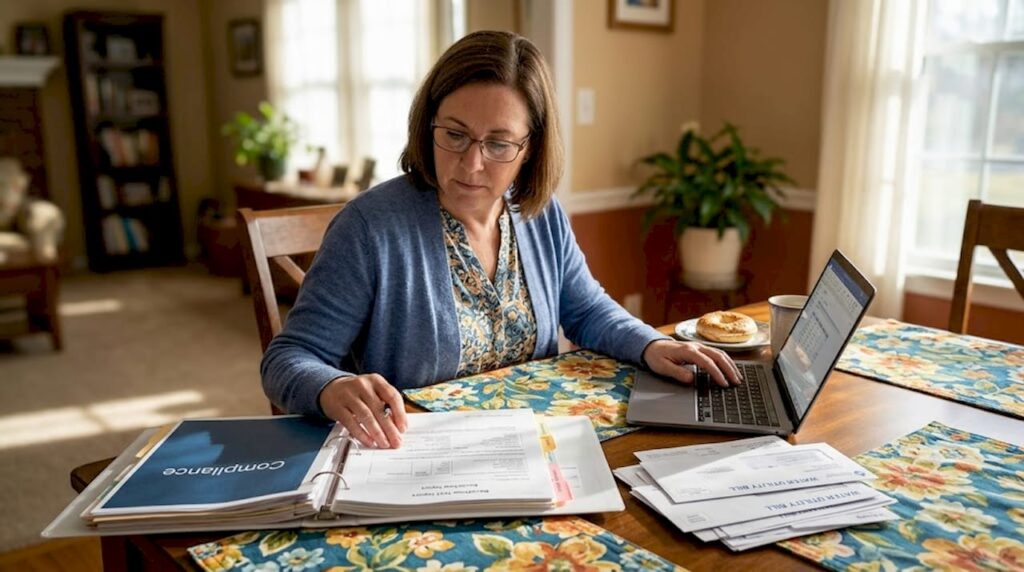
Knowing how to update backflow records is one of the most overlooked compliance obligations for New Jersey property owners and managers. Miss a filing deadline and you are looking at potential fines, water service interruptions, or a notice from your local water authority that puts your entire property on a compliance watch list. Backflow recordkeeping is not optional in New Jersey. It is a regulated requirement, and doing it correctly protects your tenants, your property, and the public water supply connected to your building.
Table of Contents
- Key Takeaways
- How to update backflow records: what you need first
- Steps to update backflow records with NJ water authorities
- Common mistakes when updating backflow records in NJ
- How to verify your records are accepted and compliant
- My take on why meticulous record management matters
- Work with Southjerseybackflow to stay compliant
- FAQ
Key Takeaways
| Point | Details |
|---|---|
| Gather documents first | Collect your test reports, device details, and licensed tester credentials before submitting anything. |
| File within the deadline window | Most NJ water authorities require report submission within 10 to 30 days after testing. |
| Follow up after submission | Request confirmation notices and check your compliance status to verify records were accepted. |
| Fix failures before closing the record | Failed devices require documented repairs and a retest before your file is considered complete. |
| Track deadlines year-round | Set calendar reminders for annual tests to avoid late filings and the penalties that follow. |
How to update backflow records: what you need first
Before you submit anything to your water authority, you need to have the right documents assembled. Walking into this process without them is the fastest way to delay your filing or have it rejected outright.
Here is what you need to gather:
- Current backflow test report: Completed and signed by a licensed backflow tester with valid state credentials. New Jersey requires testers to carry specific certifications, and water authorities verify those credentials as part of the review process.
- Device identification details: The make, model, serial number, and location of each backflow prevention assembly on the property.
- Previous test records: These help establish a compliance history and are useful if you are resolving a lapse in filing.
- Repair documentation (if applicable): If a device failed its last test, you need records showing what was repaired and when. Unresolved repair records can trigger service interruptions.
- Property account or permit number: Your water authority uses this to match your submission to the correct account.
Pro Tip: Verify your tester’s certification before the test day, not after. If your tester’s credentials are expired or unrecognized by your local authority, the report will be rejected regardless of the test results.
The table below outlines the standard documentation types and their general timing requirements for NJ compliance:
| Document | When It Is Required |
|---|---|
| Completed test report form | Within 10 to 30 days after test date |
| Repair completion record | Before or alongside retest report |
| Retest report (after failure) | Submitted to close the remediation record |
| Tester certification copy | On file with water authority or submitted with report |
Annual backflow testing and record submission is not just regulatory box-checking. Wear and tear on device components can cause failure over time, and regular tests detect those failures early before they become a public health problem.
Steps to update backflow records with NJ water authorities
Once your documents are in order, the actual update process follows a clear sequence. Here is how it works from start to finish.
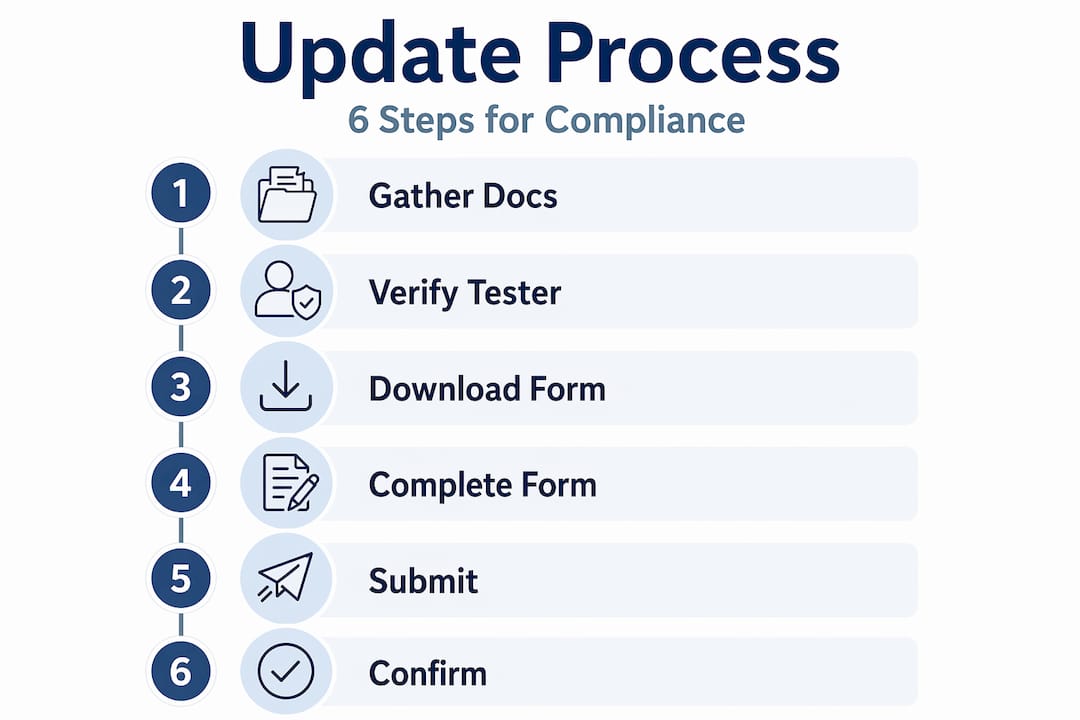
1. Obtain the correct test report form.
Water authorities typically have their own standardized forms. Download yours from your local utility’s website or request it directly. Using the wrong form is a surprisingly common reason for rejected filings.
2. Fill out the form completely and accurately.
Certified testers complete standardized forms capturing device data, test results, and location details. Review the form before submission. Blank fields or illegible entries are grounds for rejection.
3. Choose your submission method.
New Jersey utilities vary in what they accept. The three most common methods are:
- Online portal: The fastest option. Electronic filing portals speed up processing and generate quicker confirmation notices.
- Email submission: Acceptable at many authorities. Attach your signed PDF and keep the sent email as proof of submission.
- Mail: Still used, especially with smaller or rural utilities. Build in extra time for delivery and processing.
The table below compares these methods so you can pick what fits your situation:
| Submission method | Processing speed | Confirmation | Best for |
|---|---|---|---|
| Online portal | Fastest | Immediate or same-day | Urban NJ utilities, multi-device properties |
| Moderate | 1 to 5 business days | Utilities without portal access | |
| Slowest | 1 to 3 weeks | Rural utilities, paper-only authorities |
4. Submit within the deadline.
Filing timelines often range from 10 to 30 days after testing. Mark that window on your calendar the moment testing is complete. Do not wait until the last few days.
5. Handle failed tests separately.
If your device failed, do not stop at filing the failure report. Repairs to failed assemblies require separate reporting of the repair work and a retest. Both reports must be submitted to close the record. An open remediation file is treated as non-compliant.
6. Confirm receipt.
Follow up with your water authority to verify they received and processed your submission. Do not assume silence means success.
Pro Tip: If you manage multiple properties, create a master tracking spreadsheet with device serial numbers, test dates, submission dates, and confirmation numbers. This single habit eliminates the most common cause of missed filings.
Common mistakes when updating backflow records in NJ
Even experienced property managers make avoidable errors when it comes to backflow record management. Here are the ones that cause the most trouble, along with how to fix them.
“Maintaining accurate logs and reminders aids in meeting annual testing and reporting deadlines.” The absence of a basic tracking system is the root cause of most compliance violations.
Missing the filing deadline. Late submissions cause compliance violations and can trigger fines or water service interruptions. The fix is simple: set a recurring annual reminder 60 days before your test is due so you have time to schedule a tester and still meet the filing window.
Submitting incomplete forms. A partial form is worse than no form at all because it creates a record that looks like non-compliance. Check every field, especially device serial numbers and tester license numbers, before you send anything.
Failing to report repairs. This is where many property managers fall short. A failed test that gets repaired is not fully resolved until the repair is documented and a passing retest is filed. Open remediation records that remain unresolved beyond the cure period lead directly to service interruptions.
Using an uncertified tester. Water authorities verify technician credentials during record review. If your tester’s certification does not hold up, the entire report can be invalidated. Always confirm credentials in advance.
Losing track of prior filings. Without a paper trail, you cannot prove compliance during an audit or inspection. Property owners play a key role in maintaining accurate documentation on time. Keep digital copies of every report, confirmation, and correspondence for at least three years.
Pro Tip: Ask your licensed tester to give you a copy of the submitted form and their submission confirmation. This creates a second record that protects you if the authority claims a report was never received.
For a deeper look at what can go wrong with the devices themselves, the common backflow issues guide from Southjerseybackflow covers the most frequent mechanical failures and what they mean for your compliance status.
How to verify your records are accepted and compliant
Submitting your backflow records is only half the job. Verifying that they were received, processed, and logged correctly is what actually closes the loop on compliance.
Here is what the verification process looks like in practice:
- Check for a confirmation notice. Confirmation notices from authorities confirm successful record updates and your compliance status. If you submitted by email or mail, follow up within two weeks if you have not heard back.
- Log into your water authority’s online portal. Many New Jersey utilities now offer account dashboards where you can check device compliance status directly. If your device shows as “pending” or “non-compliant” after submission, contact the authority immediately.
- Request a written compliance letter. For commercial properties especially, having a dated letter confirming compliance is worth keeping on file. It protects you during property inspections or tenant disputes.
- Cross-check your internal records. Compare the confirmation details against your own tracking log. If the authority’s records show a different test date or device serial number than yours, resolve it in writing right away.
Self-surveys by property owners help utilities identify backflow assemblies requiring testing or record updates, and they build a habit of staying ahead of compliance gaps rather than reacting to notices.
Pro Tip: Set a recurring calendar reminder every 90 days to log into your water authority portal and check your compliance status. This takes five minutes and prevents the kind of surprise that shows up right before an inspection.
My take on why meticulous record management matters
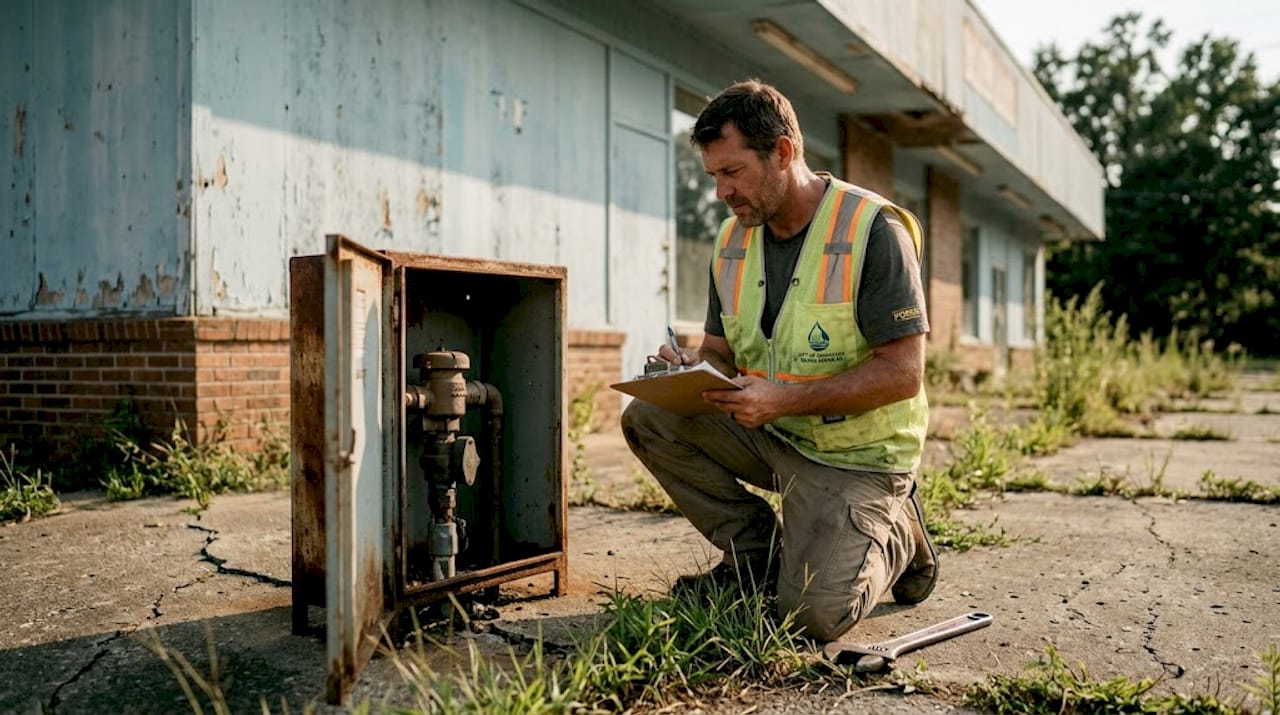
I have worked with enough NJ property managers to see a clear pattern. The ones who get hit with fines or service interruptions are almost never the ones who ignored the rules outright. They just got busy. They assumed their tester handled the filing. They figured a few days late would not matter. And then the notice arrived.
In my experience, the biggest risk in backflow record management is the gap between completing a test and confirming the record was actually accepted. Those two things are not the same, and treating them as the same is what gets property managers into trouble.
What I have found actually works is treating backflow compliance like a short checklist with a hard close date. Test scheduled. Test completed. Report submitted. Confirmation received. File updated. That five-step sequence, done every year, is what separates compliant properties from ones scrambling to respond to a utility notice.
Beyond the legal obligation, there is a community angle worth considering. Backflow failures introduce contaminants into shared water lines. Your records are not just paperwork. They are documentation that your device is protecting the people connected to the same system. That matters more than the fine.
For property managers overseeing multiple buildings, partnering with a licensed service like Southjerseybackflow to handle both testing and record submission removes the risk almost entirely. Delegation works when the right people are doing the delegating.
— Jordan
Work with Southjerseybackflow to stay compliant
Staying on top of backflow records is much easier when you have a licensed team handling the process from test to submission. Southjerseybackflow works with NJ property owners and managers to complete testing, fill out the required forms accurately, and submit reports to your water authority on time.
If you have received a notice from your water authority or are not sure whether your current records are up to date, the backflow compliance guide for NJ properties walks through exactly what is required and how to meet it. For properties that have already received an official notice, the backflow letter response page explains the next steps specific to NJ. Reach out to Southjerseybackflow to schedule a test, get your records updated, and confirm your compliance status before a deadline turns into a problem. The NJ commercial backflow workflow guide is also worth reviewing if you manage multiple devices across multiple locations.
FAQ
How often do backflow records need to be updated in NJ?
Backflow prevention devices in New Jersey require annual testing, and records must be submitted to your local water authority within the window specified by your utility, typically 10 to 30 days after the test date.
Who is allowed to submit backflow test reports in New Jersey?
Only tests performed by licensed and state-certified backflow testers produce valid reports. Water authorities verify tester credentials during record review, so using an uncertified tester invalidates the report.
What happens if I miss the backflow filing deadline?
Missing the deadline can result in compliance violations, fines, or water service interruptions under your local cross-connection enforcement program. Filing as soon as possible after a missed deadline reduces the risk of escalation.
How do I know if my backflow records were accepted?
Your water authority will issue a confirmation notice after processing your submission. You can also check your compliance status through the authority’s online portal if one is available, or call the utility directly to confirm receipt.
What do I do if my backflow device failed its test?
A failed test requires documented repair work followed by a retest. Both the repair record and the passing retest report must be submitted to your water authority to close the remediation file and restore your compliance status.