TL;DR:
- Maintaining water safety in New Jersey requires regular inspections, testing, and detailed record-keeping to stay compliant and prevent contamination.
- A well-structured checklist should include specific tasks with defined frequencies, documentation, and continual review to address aging systems and evolving regulations.
Keeping your water supply safe in New Jersey is not a one-time project. Property owners with backflow prevention systems face a layered challenge: staying ahead of physical wear, testing obligations, and shifting local regulations, all at once. A practical water system safety checklist is the most reliable tool you have for meeting that challenge without letting critical tasks fall through the cracks. This article walks you through what belongs on that checklist, how often to act on it, and what the consequences are when you don’t.
Table of Contents
- Key criteria for an effective water system safety checklist
- Monthly inspection tasks to monitor your backflow prevention system
- Periodic water quality testing: what and when to test
- Comparing essential checklist components for effective water system safety
- Prioritizing your water system safety checklist tasks for New Jersey properties
- A fresh perspective on water system safety checklists for NJ backflow owners
- Professional backflow testing and certification services in New Jersey
- Frequently asked questions
Key Takeaways
| Point | Details |
|---|---|
| Monthly inspections | Perform monthly visual checks on backflow devices to detect leaks and maintain accessibility. |
| Periodic water testing | Test source and treated water regularly to identify contaminants and ensure treatment effectiveness. |
| Regulatory alignment | Align your checklist and maintenance activities with New Jersey regulations and manufacturer guidelines. |
| Comprehensive record-keeping | Keep detailed records of inspections, tests, repairs, and certifications for compliance and performance tracking. |
| Professional support | Use certified backflow testing services to guarantee compliance and maintain water safety. |
Key criteria for an effective water system safety checklist
Not all checklists are built the same. A checklist that simply reminds you to “check the system” is not useful. What you need is a structured set of tasks tied to specific frequencies, clear pass/fail criteria, and a documentation trail that holds up to regulatory scrutiny.
The most important criterion is specificity. Every item on your checklist should name an exact component, describe what to look for, and define what action to take if something looks wrong. Vague instructions create vague results.
Here are the core criteria your checklist must meet:
- Monthly leak inspections covering all fittings, tubing, valves, and device housings to catch problems before they escalate
- Accessibility verification confirming the backflow device can be reached quickly for inspection or emergency shutoff
- Alignment with local regulations and manufacturer maintenance schedules to stay compliant with New Jersey requirements
- Up-to-date documentation including inspection dates, findings, and any corrective actions taken
- Cross-connection checks to confirm no unauthorized plumbing modifications have occurred since the last inspection
Monthly visual inspections for leaks and device accessibility are a baseline requirement, not an optional step. Following proven backflow maintenance guidelines gives your checklist a foundation grounded in both manufacturer recommendations and field experience.
One thing many property owners overlook: the checklist itself needs to be reviewed annually. Regulations change, systems age, and what was sufficient two years ago may no longer meet current backflow inspection compliance standards in New Jersey.
Monthly inspection tasks to monitor your backflow prevention system
Monthly inspections are the heartbeat of your water system safety checklist. They catch the small problems before they become expensive, compliance-threatening failures. Regular monthly inspections help detect common failures such as leaks, tubing cracks, and filter deterioration that would otherwise go unnoticed until a test fails or a pipe gives out.
Follow this sequence each month:
- Inspect all fittings, valves, and tubing for visible leaks, moisture buildup, corrosion stains, or mineral deposits
- Confirm the device is unobstructed and accessible for both routine inspection and emergency shutoff
- Listen and observe water flow for unexpected drops in pressure, unusual sounds, or irregular flow patterns that may point to internal valve issues
- Check for cross-connections or any plumbing changes made since your last inspection that could compromise water quality
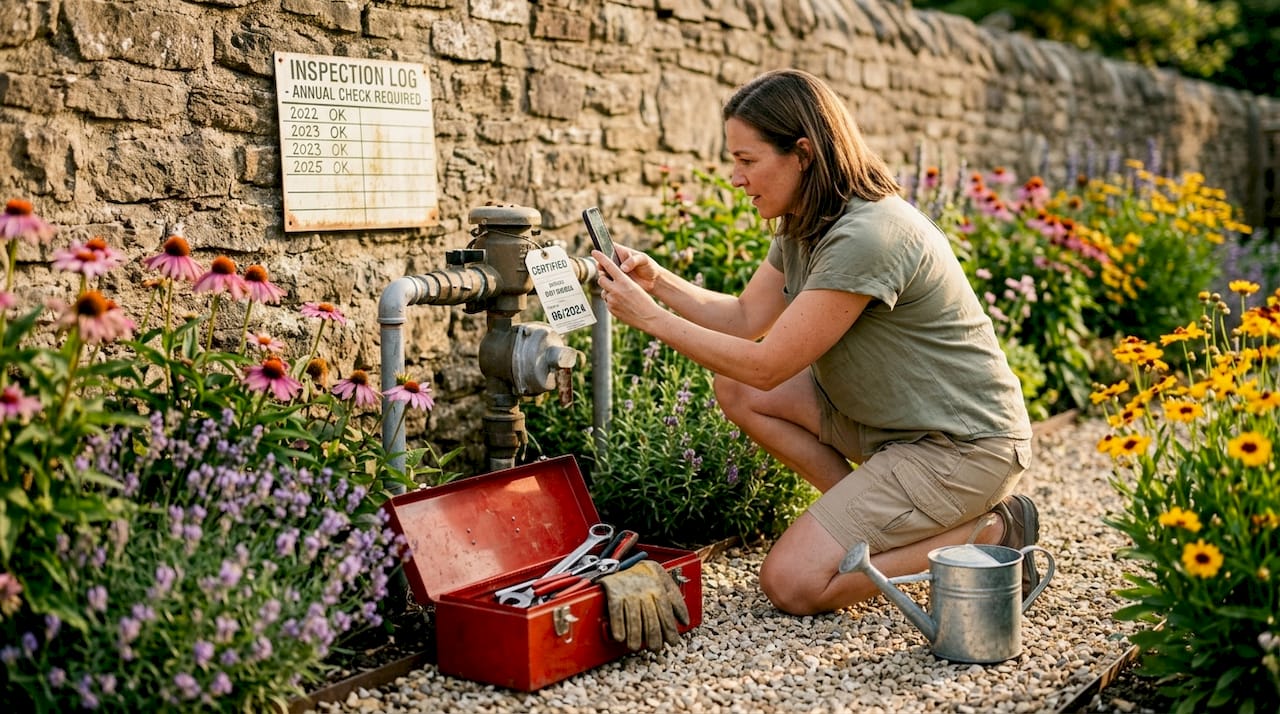
- Verify certification tags and signage are current, legible, and posted where required by your local authority
Each step takes only a few minutes when done consistently. The real cost is skipping a month and then scrambling when a certified tester finds a failure you could have caught in week two.
Pro Tip: Take a dated photo of your backflow device and its certification tag during each monthly inspection. This takes 30 seconds and creates a visual audit trail that is invaluable if a compliance dispute ever arises.
Knowing what to look for is half the battle. The backflow prevention guide walks through the mechanics of how these devices work, which makes your monthly checks far more informed. If you have questions about what you are finding during inspections, the backflow preventer FAQs cover the most common field situations in plain language.
Periodic water quality testing: what and when to test
Visual inspection confirms your device looks right. It does not tell you what is in your water. Periodic water quality testing is the only way to detect contaminants that bypass or quietly damage your backflow system over time.
Periodic testing identifies contaminants and system vulnerabilities that visual checks alone cannot detect. That distinction matters enormously. A device can look perfect from the outside while the water running through it carries elevated nitrates or bacterial indicators.
Test for these parameters at minimum:
- Lead: Especially relevant for older New Jersey properties with aging service lines
- Nitrates: A concern in areas near agricultural land or certain industrial zones
- Bacteria indicators such as total coliform and E. coli, which signal potential sewage intrusion
- Total dissolved solids (TDS): A broad indicator of overall water quality that can reveal changes in your source or system
- pH levels: Extreme pH accelerates corrosion in backflow device components
| Parameter | Why it matters | Recommended test frequency |
|---|---|---|
| Lead | Health risk, especially for children | Annually or after plumbing work |
| Nitrates | Health risk at high levels | Annually or after flooding |
| Bacteria indicators | Signals sewage or contamination risk | Annually, or after any pressure loss event |
| Total dissolved solids | Tracks overall water quality shifts | Annually |
| pH | Affects device corrosion and pipe integrity | Annually or after source changes |
Always use a certified lab for these tests. Results from certified labs hold weight with New Jersey regulators and give you the accurate baseline you need to track changes over time. Keep every test report on file. Backflow testing compliance in New Jersey requires documentation, and water quality records are part of that picture.
If your property experiences flooding, a main break nearby, or any significant plumbing modification, do not wait for the annual test. Retest immediately.
Comparing essential checklist components for effective water system safety
A well-designed checklist balances monthly inspections and periodic testing aligned with regulations to maintain long-term system integrity. This comparison table makes it easier to prioritize and assign responsibility.
| Checklist component | Primary task | Frequency | Main benefit |
|---|---|---|---|
| Visual device inspection | Check fittings, valves, tubing, and tags | Monthly | Early failure detection |
| Accessibility check | Confirm device is reachable and unobstructed | Monthly | Enables fast response to problems |
| Water quality testing | Lab analysis for contaminants | Annually or as needed | Detects invisible chemical and biological risks |
| Filter and membrane check | Inspect for wear, replacement if needed | Per manufacturer schedule | Maintains treatment performance |
| Record-keeping update | Log inspections, tests, and repairs | After every task | Supports regulatory audits and traceability |
| Cross-connection review | Confirm no unauthorized plumbing changes | Monthly | Prevents undetected contamination pathways |
Pro Tip: Assign each checklist item to a specific person if your property has multiple staff or contractors involved in maintenance. Shared responsibility without named ownership means tasks get assumed, not done.
This structure gives you a defense-in-depth approach: monthly tasks catch physical problems fast, while periodic tests confirm water quality between those checks. Together, they address the full spectrum of risk in a single, manageable system. The plumbing safety tips for NJ properties add useful context around building-level risk factors that often interact with backflow device performance.
Prioritizing your water system safety checklist tasks for New Jersey properties
Knowing what to do is only useful if you know what to do first. For New Jersey property owners starting from scratch or rebuilding a lapsed maintenance program, sequence matters. Water safety depends on ongoing maintenance combined with reliable data from both visual and testing inspections, which means neither task type can substitute for the other.
Start here:
- Conduct a full baseline inspection of your backflow device, all associated plumbing, and accessible service lines before setting any schedule
- Order a comprehensive water quality test to establish current conditions before your first checklist cycle begins
- Set recurring monthly reminders for visual inspections aligned with the first or last week of each month, whichever is easier to maintain consistently
- Plan your annual lab test for the same time each year, ideally in spring when system stress from winter is most visible
- Create a maintenance log with columns for date, task performed, findings, action taken, and the name of whoever completed the work
Once the baseline is set, follow this sequence to keep the program running:
- Complete monthly visual inspection and log results immediately
- After any plumbing change, recheck all nearby fittings and valves within 48 hours
- Submit annual water quality test samples to a certified lab before your renewal deadline
- Schedule professional backflow testing well ahead of your certification deadline to avoid last-minute failures
- Review the full checklist annually and update it to reflect any regulation changes, device upgrades, or new service lines
NJ backflow inspection compliance has specific deadlines tied to device type and local authority. Build those deadlines into your log so they function as hard stops, not suggestions.
A fresh perspective on water system safety checklists for NJ backflow owners
Most property owners treat water safety as a compliance obligation. Pass the test, file the paperwork, move on. That mindset works fine until something fails, and then it is expensive, embarrassing, and sometimes dangerous.
Here is what 15 years of watching property owners manage water systems teaches you: the ones who stay out of trouble are not the ones who have the best devices. They are the ones who treat their checklist as a decision-making tool, not a box-ticking exercise. There is a meaningful difference. A box-ticker looks at the device and writes “OK.” A decision-maker looks at the device, compares it to last month’s photo, notes the new mineral staining on the lower fitting, and calls a technician.
Subtle changes in water quality or system behavior are almost always the earliest warning signs. Ongoing monitoring and data-driven decisions are key to water safety precisely because one-time testing or installation is never sufficient. Conditions shift. Systems age. Upstream changes in your municipality’s supply, a neighboring property’s plumbing work, or a pressure event two blocks away can all affect your system without touching it directly.
New Jersey’s regulatory environment is also not static. The NJ backflow compliance roadmap for 2026 outlines how current codes are evolving, and aligning your checklist with those changes before they become mandatory is far easier than scrambling to catch up. Cross-referencing your records with EPA water quality data for your area adds another layer of context that most property owners never think to use.
The property owners who genuinely protect their water supply are the ones who take personal ownership of the checklist rather than treating it as a task for whoever is available that week. That ownership is what turns a checklist from a form into a genuine safety practice.
Professional backflow testing and certification services in New Jersey
Your monthly checklist handles the day-to-day. But certified professional testing is what closes the loop on compliance and gives you documentation that holds up to regulatory review.
South Jersey Backflow provides backflow testing in New Jersey with certified technicians who inspect, test, and submit results directly to local authorities on your behalf. Our backflow certification services are designed to complement your monthly checklist work, not replace it. When your visual inspections flag something unusual, we step in with the tools and credentials to diagnose and resolve it. Every service includes a detailed report you can drop straight into your maintenance log for full NJ backflow inspection compliance and audit readiness.
Frequently asked questions
How often should I inspect my backflow prevention device?
Monthly visual inspections are recommended to check for leaks, damage, and accessibility issues. Annual professional testing is required separately for certification under New Jersey regulations.
What contaminants should I test for in my water?
Key contaminants include lead, nitrates, bacteria indicators, and total dissolved solids. Testing frequency should follow local guidelines and be repeated after any plumbing changes or flooding events.
Can one water test guarantee my water is safe forever?
No. Ongoing periodic testing is necessary because water conditions, system performance, and upstream supply factors all change over time in ways no single test can anticipate.
Where can I find professional backflow testing services in New Jersey?
South Jersey Backflow offers certified testing and certification submission for New Jersey property owners, ensuring both regulatory compliance and confirmed system safety.
Pingback: Step by Step Inspection Reporting for NJ Properties