TL;DR:
- Plumbing code violations in New Jersey can lead to costly delays, fines, and safety hazards if overlooked. Understanding the enforcement framework, common material and procedural infractions, and imminent hazards helps property owners proactively maintain compliance. Partnering with professionals like South Jersey Backflow ensures timely testing, certification, and adherence to strict NJ plumbing standards.
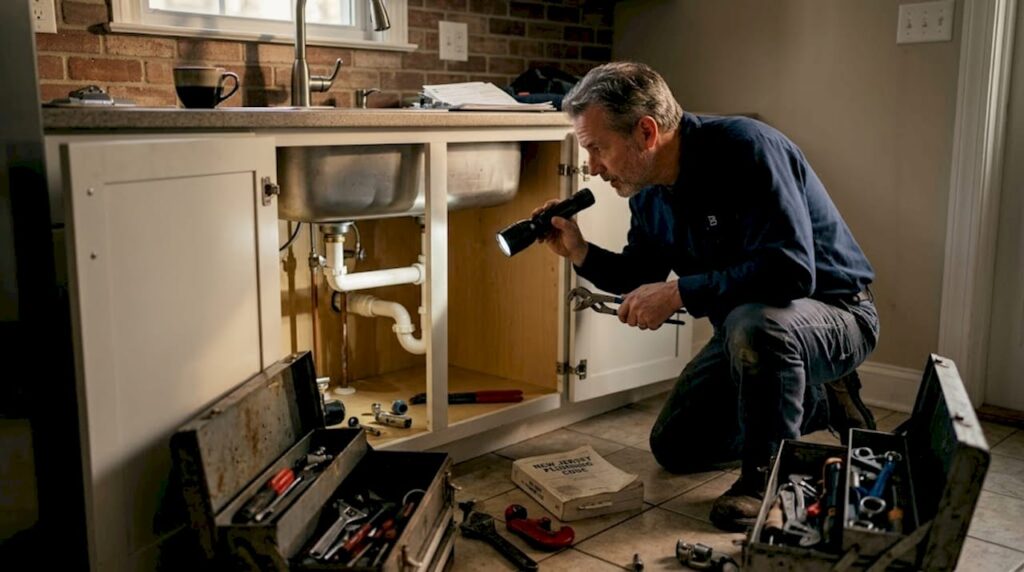
Plumbing code violations are one of the fastest ways to turn a routine renovation or inspection into an expensive, time-consuming problem. For property owners and managers in New Jersey, the stakes are especially high: missed violations can mean stop-work orders, repeated fines, failed inspections, and in serious cases, real safety hazards for tenants and building occupants. Understanding the most common plumbing code violations before an inspector shows up puts you in a far stronger position than reacting after the fact.
Table of Contents
- How to evaluate plumbing code compliance in New Jersey
- Top plumbing code violations related to materials and installation
- Common procedural violations: permits, inspections, and access requirements
- Imminent hazard violations: cross-connections and unvented drains
- Comparing and prioritizing plumbing code violations for NJ properties
- Why proactive plumbing code compliance saves costs and headaches for NJ property managers
- How South Jersey Backflow helps ensure your NJ property meets plumbing code standards
- Frequently asked questions
Key Takeaways
| Point | Details |
|---|---|
| Understand violation tiers | New Jersey classifies plumbing violations as technical, serious, or imminent hazards based on risk levels. |
| Use approved materials | Always use code-compliant materials and traps to avoid inspection failures and odors. |
| Get proper permits | Working without permits or failing inspections can cause costly project delays and fines. |
| Address imminent hazards immediately | Cross-connections and unvented drains require urgent correction to prevent health risks and emergency stop-work orders. |
| Proactive QA saves costs | Perform internal testing before concealment to detect violations early and avoid expensive rework. |
How to evaluate plumbing code compliance in New Jersey
Before you can fix a violation, you need to understand what you’re being measured against. New Jersey enforces plumbing standards through the NJ Uniform Construction Code (UCC), which adopts a modified version of the International Plumbing Code with state-specific amendments. Municipal construction officials carry out inspections, and they have real authority: they can issue notices of violation (NOVs), halt projects, and in serious cases, refer matters to municipal court.
One of the most important things to understand is that not all violations are treated equally. Violations are categorized by severity tiers under the New Jersey Uniform Construction Code Plumbing Subcode: technical, serious, and imminent hazard. Technical violations are lower-risk issues that typically come with cure periods. Serious violations carry higher penalties and shorter timelines. Imminent hazard violations require emergency correction with no grace period at all.
Beyond the physical work itself, procedural compliance matters just as much. Missing permits, work that doesn’t match approved drawings, and failure to schedule required inspections all count as plumbing code infractions. Here’s what inspectors look for during a typical compliance evaluation:
- Conformance to approved permit drawings
- Approved pipe materials and correct installation methods
- Proper trap types and venting configurations
- Accessible shut-off valves and cleanouts
- Valid permits posted on site
- Evidence of prior inspection signoffs at each phase
Improving plumbing safety in NJ starts with understanding this framework. With these compliance criteria clear, let’s explore the most common plumbing code violations impacting New Jersey property owners.
Top plumbing code violations related to materials and installation
Material and installation errors make up a large share of inspection failures in New Jersey. Violations include non-compliant pipe materials, venting configurations, and trap types that don’t meet code. These are often mistakes made during installation that get buried behind walls, only to surface during a rough-in or final inspection.
Improper pipe materials are one of the most frequent plumbing installation code failures. Corrugated flexible piping, for example, is not an approved material for drain, waste, and vent (DWV) systems under the NJ Plumbing Subcode. Approved materials include PVC, ABS, cast iron, and copper, depending on the application. Using the wrong material isn’t just a code issue. It creates long-term maintenance problems and structural risk.
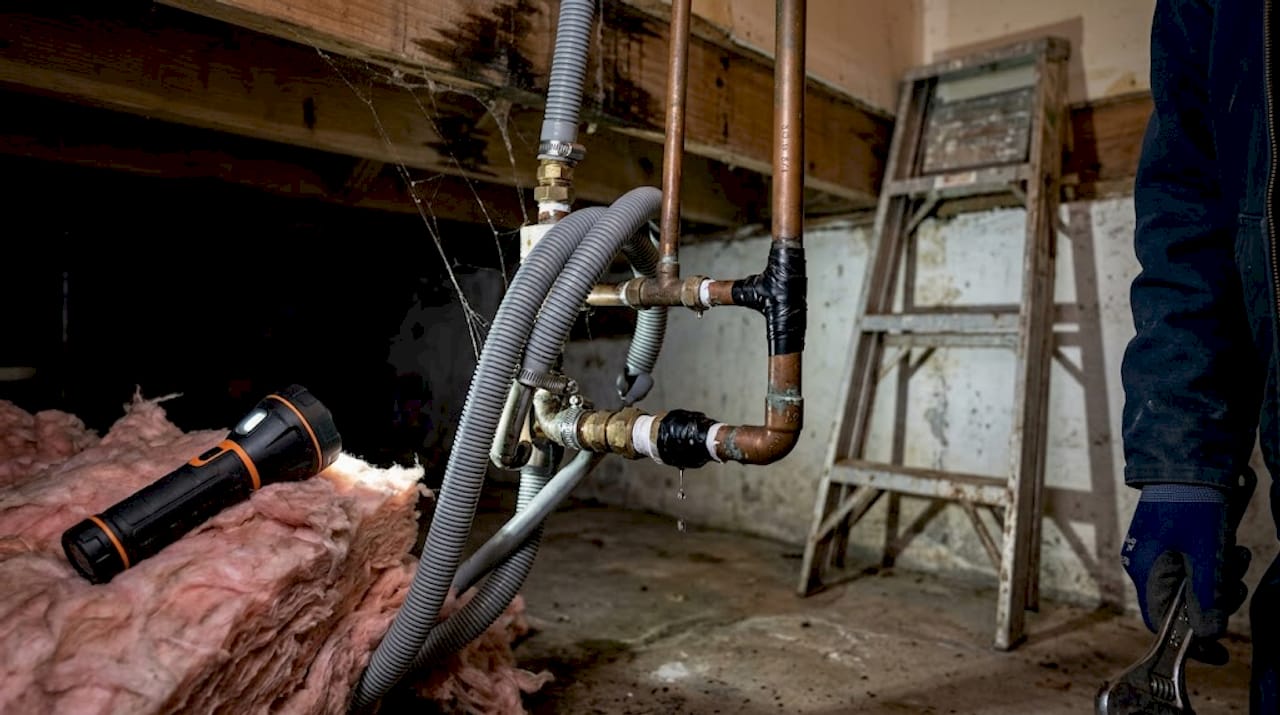
Venting errors are equally common and often misunderstood. Vents must discharge vertically through the roof. Running a vent horizontally into an attic space or terminating it in an enclosed area is a code violation that allows sewer gas to accumulate inside the building. That’s not a paperwork problem. It’s a health and fire hazard.
Prohibited trap types are another recurring issue. Many odor and drain problems stem from trap installation non-compliance and prohibited trap types like S-traps, which can lose their water seal under normal use and allow sewer gas into the building. Common plumbing code requirements prohibit these trap configurations:
- S-traps (lose seal easily due to siphoning)
- Bell traps (prone to seal failure and hard to maintain)
- Crown-vented traps (venting occurs too close to the crown, rendering it ineffective)
- Traps with moving parts or interior partitions made from non-corrosion-resistant materials
For safe plumbing safety for NJ properties, every trap must maintain a proper liquid seal between 2 and 4 inches in depth. Shallow seals evaporate or siphon out. Too deep, and solids accumulate and block drainage.
Pro Tip: Before any wall or floor covering is installed, photograph all trap and vent configurations with a timestamp. This documentation can resolve inspector disputes quickly and prove that work matched the approved permit drawings.
Next, we examine violations tied to procedural lapses and maintenance that often stop construction or trigger penalties.
Common procedural violations: permits, inspections, and access requirements
Even when the physical plumbing work is done correctly, procedural violations can shut down a project just as effectively as faulty pipe installation. Missing or insufficient permits, along with failing to correct deficiencies after an NOV, are among the most common inspection-failing issues that cause project halts in New Jersey.
Starting plumbing work without a required permit is one of the most serious procedural missteps a property manager can make. Not only does it expose you to immediate fines, it can require demolition of completed work so inspectors can verify what’s behind the walls. The cost of unpermitted work correction almost always exceeds the cost of the permit itself.
Violations are enforced through NOVs, cure periods, and possible stop-work orders for technical and procedural lapses alike. When you receive an NOV, the clock starts immediately. Failing to respond within the prescribed cure period escalates the matter, often adding fines and potentially triggering court involvement.
Access is another often-overlooked area. Code requires that shut-off valves, cleanouts, and certain inspection points remain accessible. Covering a cleanout with drywall or tile is a code violation, even if the underlying work is perfect. Here are the access and documentation requirements that most often trip up property owners:
- All shut-off valves must be reachable without tools or removal of permanent construction
- Cleanout plugs must be accessible for drain maintenance
- Permit documents and inspection cards must be available on site
- All plumbing work must match the approved permit drawings exactly
- Re-inspections must be scheduled promptly after any NOV correction
For properties that also require backflow inspection compliance, the same principle applies: documented, verified, and on schedule.
Pro Tip: Create a simple project tracking sheet that logs permit numbers, inspection dates, NOV receipt dates, and correction deadlines. A single missed re-inspection date can cascade into weeks of delays.
Now that we’ve covered procedural and material violations, let’s focus in detail on two high-risk plumbing issues that are imminent hazards.
Imminent hazard violations: cross-connections and unvented drains
Some plumbing code compliance issues are bad. Cross-connections and unvented drains are in a different category. Imminent hazard violations include cross-connections between potable and non-potable water and unvented drains releasing sewer gas, both of which require immediate abatement under NJ code.
A cross-connection is any physical link between the drinkable water supply and a non-potable source, such as irrigation systems, boiler water, chemical lines, or even a hose submerged in a contaminated bucket. Without a properly installed and tested backflow preventer, contaminated water can flow backward into the drinking supply when pressure drops. This is not a theoretical risk. It has caused documented public health incidents across the country.
“Cross-connections may trigger emergency stop-work orders and must be addressed promptly to avoid severe enforcement action.” Plumbing Violations and Penalties in New Jersey
Unvented drains create a parallel danger. When drain systems lack proper venting, negative pressure builds in the pipe as water flows through. That pressure pulls the water seal out of nearby traps, opening a direct path for sewer gas, including hydrogen sulfide and methane, to enter the building. Occupants often notice it as a rotten egg smell. Left unaddressed, it becomes a health and fire risk.
Key facts every property manager should know about these violations:
- Cross-connections and unvented drains receive no cure period under NJ enforcement
- An emergency stop-work order can be issued the same day an inspector identifies either issue
- Backflow preventers must be tested annually by a certified tester under NJ regulations
- Installation of an approved backflow preventer alone is not enough: ongoing testing and documentation are required
Your backflow protection guide for NJ explains the specific device types and testing requirements in detail. Having covered imminent hazard violations, we can now compare the full range of common violations to help prioritize your compliance efforts.
Comparing and prioritizing plumbing code violations for NJ properties
Not every violation demands the same response speed. Violations are classified as technical, serious, or imminent hazard with differing enforcement and cure periods, so understanding where a specific issue falls helps you allocate resources correctly.
| Violation type | Severity tier | Cure period | Typical consequence |
|---|---|---|---|
| Cross-connection (no backflow preventer) | Imminent hazard | None | Emergency stop-work order |
| Unvented drain releasing sewer gas | Imminent hazard | None | Emergency stop-work order |
| Work performed without a permit | Serious | Short or none | Fines, mandatory exposure of work |
| Improper pipe materials (e.g., corrugated drain) | Technical/Serious | Allowed | NOV, reinspection required |
| Prohibited trap type (S-trap, bell trap) | Technical | Allowed | NOV, rework required |
| Incorrect venting termination | Technical/Serious | Allowed | NOV, re-inspection |
| Inaccessible shut-off valve or cleanout | Technical | Allowed | NOV, modification required |
| Failing to respond to NOV | Serious | Expires | Escalated fines, court referral |
Here’s how to prioritize your compliance efforts:
- Fix imminent hazards first, the same day they are identified
- Address permit and documentation gaps before scheduling any inspections
- Schedule material and trap corrections within the stated cure period and never let deadlines pass
- Use your NJ backflow compliance roadmap to stay ahead of annual testing requirements
With a clear understanding of priorities, let’s look at a perspective on managing plumbing code compliance that most property managers don’t hear often enough.
Why proactive plumbing code compliance saves costs and headaches for NJ property managers
Here’s the uncomfortable reality most contractors and property managers avoid saying out loud: the majority of costly plumbing violations are not discovered by inspectors. They’re created by rushed decisions, inadequate documentation, and the assumption that “it’ll be fine.” By the time the inspector arrives, the wall is sealed and the fix costs three times what it would have during rough-in.
Correcting plumbing violations before walls are sealed is far cheaper than tearing them open after a failed inspection. This is not a new insight. But property managers consistently skip pressure testing before concealment because it adds a day to the schedule. That one skipped step can turn into weeks of rework.
What actually works is treating plumbing compliance as a property management function, not just a construction function. That means tracking permit status and inspection dates in the same system you use to manage leases and maintenance requests. It means treating corrections as both technical and procedural so that no fix goes undocumented. And it means scheduling annual backflow testing before your municipality sends a notice, not after.
The property managers who avoid costly violations aren’t doing anything extraordinary. They’re just not waiting for a problem to force their hand. Regular backflow certification, documented plumbing safety improvements, and proactive inspector coordination cost a fraction of what a single stop-work order costs in lost time and rework.
How South Jersey Backflow helps ensure your NJ property meets plumbing code standards
Navigating New Jersey’s plumbing subcode requirements is easier when you have experienced professionals handling the compliance work that directly affects your risk exposure.
South Jersey Backflow provides backflow testing in New Jersey along with full certification documentation submitted directly to your municipality, so your records stay current without extra legwork on your part. If you’ve received a backflow letter from your water authority or municipality, that’s a compliance deadline, not a suggestion. South Jersey Backflow helps you respond quickly and correctly. From scheduling and testing to report submission and ongoing tracking, their backflow testing and certification services are built specifically for NJ property owners and managers who can’t afford the risk of a missed deadline or a failed test.
Frequently asked questions
What are some of the most common plumbing code violations in New Jersey?
Common violations include non-compliant pipe materials, venting configurations, and prohibited trap types such as S-traps, along with missing permits, backflow deficiencies, and inaccessible shut-off valves or cleanouts.
Why are imminent hazard violations like cross-connections so critical?
Imminent hazard violations include cross-connections that risk contaminating potable water and can trigger emergency stop-work orders the same day they are identified, with no cure period allowed under NJ code.
How can property managers avoid project delays caused by plumbing inspections?
Failing to correct deficiencies after a notice of violation can halt a project until all issues are corrected and re-inspected, so securing permits upfront and responding to NOVs immediately is essential.
What trap types are prohibited under New Jersey plumbing codes?
Several trap types are explicitly prohibited due to their tendency to lose the water seal or create safety problems, including S-traps, bell traps, crown-vented traps, and traps with non-corrosion-resistant moving parts.
What is the best way to maintain compliance with backflow prevention rules in New Jersey?
Backflow prevention deficiencies are serious violations requiring certified annual testing and accurate documentation under NJ codes, so scheduling testing before municipal notices arrive is the most reliable approach.
Pingback: What Is Back Pressure in Plumbing? NJ Owner's Guide
Pingback: NJ Plumbing Codes Explained for Property Owners