TL;DR:
- Asking about credentials, experience, and reporting processes ensures proper, compliant backflow testing.
- Understanding device types and hazard levels helps select appropriate devices and avoid violations.
- Clarifying costs, timing, and regulations prevents surprises and costly noncompliance issues.
Choosing the wrong backflow service provider in New Jersey can cost you far more than a failed test. Noncompliance notices, expensive repairs, and contaminated water are real consequences that property owners and managers face when they skip the right questions upfront. New Jersey has specific certification requirements, township-level reporting portals, and device standards that not every technician understands. Asking the right questions before you hire protects your water supply, your tenants, and your wallet. This guide walks you through every essential question to ask, from verifying credentials to understanding hidden costs, so you can make a confident, informed decision.
Table of Contents
- Essential questions to ask your backflow tester
- Key device questions: RPZ, DCVA, and PVB explained
- Regulatory and local compliance questions
- Price, timing, and hidden cost questions
- What most property owners miss about backflow service decisions
- Next steps: Connect with trusted backflow pros
- Frequently asked questions
Key Takeaways
| Point | Details |
|---|---|
| Ask about certifications | Only certified and licensed testers can legally perform backflow service in New Jersey. |
| Match device to hazard | Ensure your backflow device type matches your property’s specific water safety needs. |
| Understand local rules | Township portals and deadlines can affect compliance—clarify with your tester before service. |
| Budget for hidden costs | Backflow testing can include extra fees for urgent service, seasonal challenges, or special requirements. |
Essential questions to ask your backflow tester
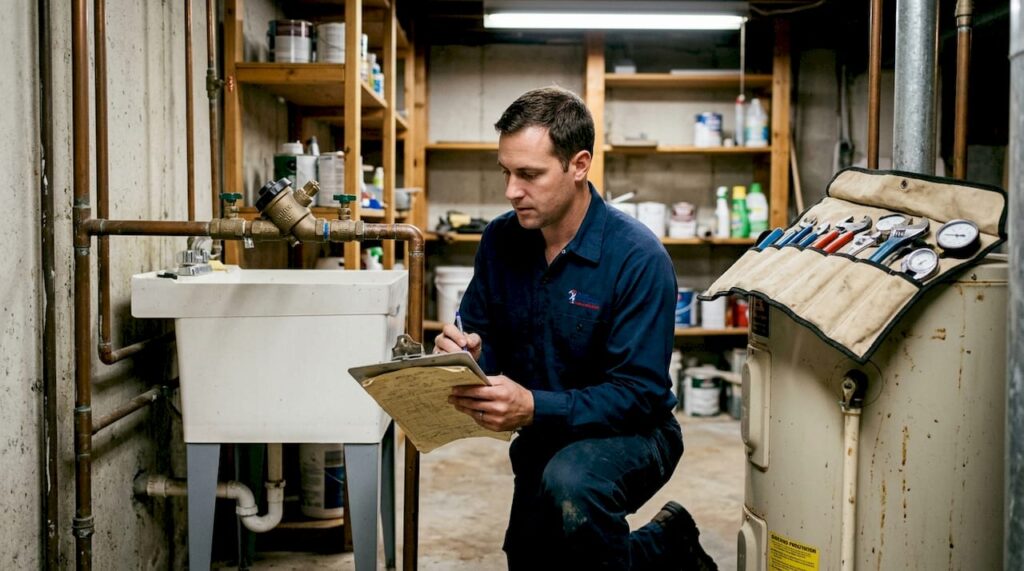
Before you schedule any service, you need to know exactly who is walking onto your property and whether they are qualified to do the job under New Jersey rules. The questions you ask at this stage are the single biggest factor in whether your testing goes smoothly or turns into a compliance headache.
Start with credentials. Certified testers must hold ASSE Series 5000 or an equivalent certification, and only licensed professionals can legally perform tests in New Jersey. Ask to see the certificate directly, not just a verbal confirmation. A legitimate technician will have no problem showing you documentation.
Next, ask about their experience with New Jersey-specific compliance. Not all testers understand the local township reporting portals, and that gap can leave you with a completed test that never gets filed correctly. Ask these questions before you commit:
- Are you currently certified with an active backflow tester certification in New Jersey?
- How many NJ properties have you tested in the past 12 months?
- Which township portals do you regularly submit reports to?
- Can you provide references from property managers or owners in this area?
- Do you carry liability insurance and a current NJ plumbing license?
- What is your process if a device fails the test?
References matter more than most property owners realize. A tester who works primarily in residential settings may not have the experience needed for a commercial property with high-hazard connections. Ask specifically for references that match your property type.
Finally, confirm their reporting process. In New Jersey, test results must be submitted to your water utility or township portal within a specific window. Ask the technician who handles that submission, whether it is their responsibility or yours, and how quickly it gets done after the test.
Pro Tip: Always ask to see the technician’s current ASSE certification card on the day of service. Certifications expire, and an outdated card means the test may not be recognized by your township.
Key device questions: RPZ, DCVA, and PVB explained
Once you know what to ask about the service provider, it is crucial to focus on the device itself. The type of backflow preventer installed on your property determines your risk exposure, your testing frequency, and your compliance obligations. Asking the right device questions now prevents mismatches that lead to failed inspections later.
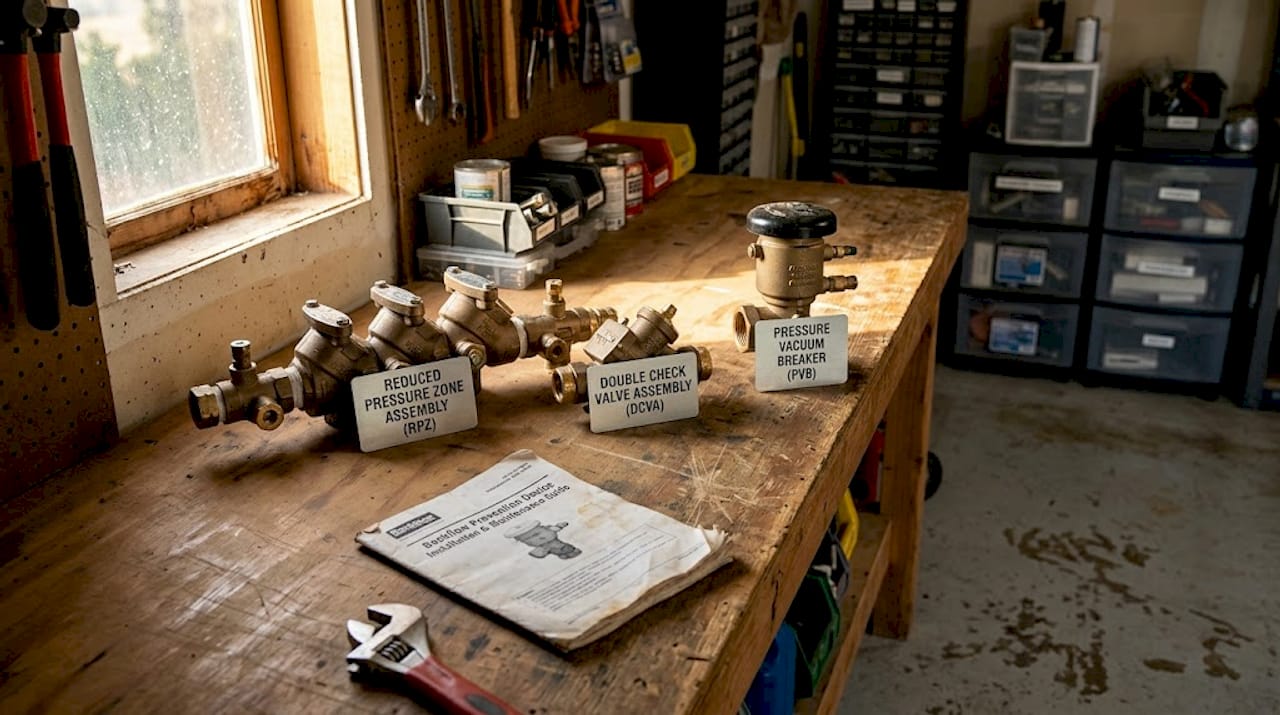
Common devices include the RPZ for high-hazard or backpressure scenarios such as chemigation and boilers, the DCVA for low-hazard connections, and the PVB for irrigation systems installed above 12 inches. Each device has a specific use case, and installing the wrong one for your hazard level is a code violation.
Ask your technician these questions about your device:
- What type of backflow preventer is currently installed, and is it appropriate for my hazard level?
- When was the device last serviced or replaced?
- Does my property’s use require an upgrade to a higher-protection device?
- Are there local code requirements that affect which device I can use?
Understanding device types in backflow prevention helps you have a more informed conversation with your technician and catch any recommendations that do not fit your situation.
| Device | Best use case | Hazard level | Test frequency |
|---|---|---|---|
| RPZ (Reduced Pressure Zone) | Boilers, chemigation, high-risk connections | High | Annual |
| DCVA (Double Check Valve Assembly) | Commercial irrigation, low-risk supply lines | Low to medium | Annual |
| PVB (Pressure Vacuum Breaker) | Irrigation above 12 inches, outdoor use | Low | Annual |
Device suitability also affects your insurance coverage. Some insurers require specific device types for certain commercial operations, and a mismatch can void a claim if contamination occurs. That is a risk worth a five-minute conversation before any work begins.
Pro Tip: Device selection can directly affect your test frequency and insurance requirements. If a technician recommends a device without explaining why it fits your specific hazard level, ask for a written justification before approving the work.
Regulatory and local compliance questions
Knowing your device is not enough. You also need to ensure your service and property comply with all relevant regulations at both the state and township level. New Jersey’s backflow requirements are not one-size-fits-all, and the details matter.
Ask your tester these compliance-focused questions in a clear, numbered sequence:
- How often does my specific device and property type require testing under NJ rules?
- Does my township have its own portal or deadline separate from the state requirement?
- What documentation will I receive after the test, and in what format?
- How do you handle edge cases like winter testing, flood-prone locations, or high-hazard facilities?
- What happens if I miss a compliance deadline, and what is the process to get back into good standing?
Testing frequency in NJ is typically annual for most properties, but high-hazard facilities like hospitals face stricter schedules. Township portals and deadlines vary widely, so a tester who works only in one county may not know the rules for your specific municipality.
Edge cases are where many property owners get caught off guard. Winter testing is possible but risky due to frozen gauges, flood-prone areas require additional flood protection measures, and high-hazard properties face stricter oversight with less room for error.
“The most common reason property owners receive noncompliance notices is not that they skipped testing entirely. It is that the test was completed but never filed correctly with the right portal by the deadline. Always confirm who is responsible for submission before the technician leaves your property.”
Understanding NJ backflow regulations in full helps you catch gaps in a technician’s knowledge before they become your problem. A qualified tester should be able to answer every question on this list without hesitation.
Price, timing, and hidden cost questions
With compliance questions covered, do not overlook the financial and logistical factors that can surprise even seasoned property managers. Pricing for backflow testing in New Jersey varies based on device type, location, timing, and service urgency, and the difference between a standard test and an emergency call can be significant.
Typical NJ pricing for a standard annual test ranges from $75 to $200 per device for residential and light commercial properties. Larger commercial properties with multiple devices or complex systems can run higher. But the base price is rarely the full story.
| Service type | Typical price range | What drives the cost |
|---|---|---|
| Standard annual test | $75 to $200 per device | Device type, property size |
| Rush or short-notice service | $150 to $350 per device | Scheduling urgency |
| Emergency or after-hours call | $250 to $500+ per device | Time of day, weekend, holiday |
| Winter testing surcharge | $50 to $150 added | Equipment risk, extra labor |
Ask these financial questions before you agree to any service:
- What is included in the base test fee, and what costs extra?
- Are there surcharges for winter testing, after-hours calls, or unusual access points?
- What are your fees if the device fails and needs repair or replacement?
- Do you offer service contracts for multiple devices or annual scheduling?
Understanding backflow testing cost in NJ upfront helps you budget accurately and avoid surprises. The hidden costs of backflow failure go well beyond a single repair bill. Noncompliance fines, water service interruptions, and liability from contamination events can cost thousands. Regular backflow testing protects your water supply and keeps those worst-case scenarios off the table.
Also confirm ASSE Series 5000 certification is current before any paid service begins. An unlicensed test is money wasted since townships will not accept results from uncertified testers.
What most property owners miss about backflow service decisions
Here is something we see repeatedly in New Jersey: property owners who ask every question on the list but still end up with a compliance problem. Why? Because they asked the right questions in the wrong order. Price comes up first, device type comes up last, and compliance deadlines get skipped entirely.
The assumption that any licensed plumber can handle backflow testing is one of the most expensive mistakes a property manager can make. Backflow certification is a separate credential, and general plumbing experience does not substitute for it.
Another pattern we notice is that property owners rarely ask for a device’s service history. That history tells you whether a device has been repaired repeatedly, which is a sign it may need replacement rather than another test. Asking for that record upfront saves you from approving a test on a device that will fail within months.
Our honest take: the property owners who avoid costly surprises are the ones who treat the pre-hire conversation as seriously as the test itself. Ask about preventing backflow issues proactively, not reactively. The right tester will welcome every question on this list. A hesitant or evasive answer is a red flag worth taking seriously.
Next steps: Connect with trusted backflow pros
You now have the questions. The next step is putting them to work with a provider who can answer every one confidently. Armed with this checklist, you are in a much stronger position to evaluate any backflow service provider in New Jersey before a single test gets scheduled.
If you want to go deeper on specific issues, our library covers everything from fixing backflow problems to a full breakdown of device options for your property type. When you are ready to connect with a certified local team, the NJ backflow experts at South Jersey Backflow are ready to answer every question on this list and then some. Do not wait for a compliance notice to start asking the right questions.
Frequently asked questions
How can I verify a backflow tester’s certification in New Jersey?
Ask for the tester’s ASSE Series 5000 certificate and confirm their active NJ plumbing license before any work begins. A legitimate tester will provide both without hesitation.
What types of backflow devices are commonly used in NJ properties?
RPZ, DCVA, and PVB devices are the most common in New Jersey, each designed for a different hazard level and plumbing scenario. Your tester should be able to explain which one fits your property and why.
How often is backflow testing required in New Jersey?
Most NJ properties require annual backflow testing, but high-hazard facilities and certain townships may have stricter schedules or unique deadlines. Always confirm your specific requirement with your water utility.
Are there hidden costs associated with backflow service?
Yes. Some providers charge extra for emergency calls, winter conditions, or after-hours service, so always ask for a full fee breakdown before scheduling. Getting that information in writing protects you from unexpected charges after the work is done.