TL;DR:
- Backflow prevention is legally required for all NJ properties with irrigation systems to prevent contamination.
- Proper devices like PVB and RPZ are essential, especially when fertilizers or chemicals are used.
- Regular testing by licensed professionals and strict compliance avoid costly fines and health risks.
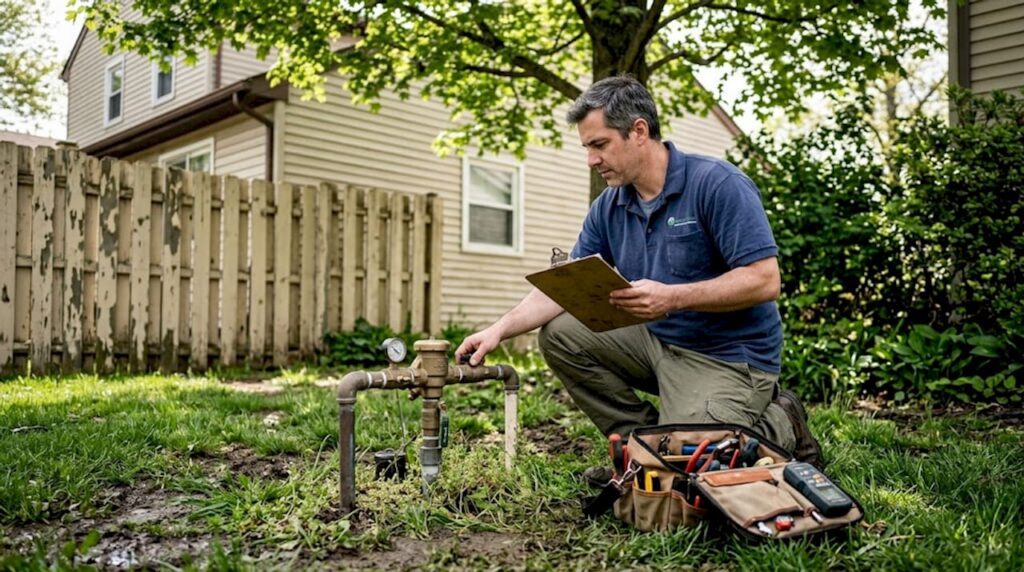
Many New Jersey property owners assume backflow prevention devices are only a concern for large commercial operations or industrial sites. That assumption is wrong and potentially expensive. Backflow prevention is a legal requirement for NJ property owners, including those with standard residential irrigation systems. Whether you manage a single-family rental or a multi-unit complex, your irrigation connection to the public water supply creates a contamination risk that New Jersey law takes seriously. This guide walks you through the core concepts, the right devices, the specific regulations, and the practical steps you need to stay protected and compliant.
Table of Contents
- What is backflow and why does it matter?
- Essential backflow prevention devices for irrigation systems
- New Jersey’s backflow laws and compliance requirements
- Installation, testing, and maintenance: Practical steps for property managers
- Why cutting corners on backflow prevention is a costly mistake
- Get expert help with your irrigation system backflow compliance
- Frequently asked questions
Key Takeaways
| Point | Details |
|---|---|
| Backflow risks are real | Backflow can let contaminants enter your drinking water, causing health and financial issues even in smaller properties. |
| NJ law mandates prevention | New Jersey requires approved devices and annual testing for all irrigation systems tied to public water. |
| Device selection matters | Choose the right preventer based on your system design and chemical use to ensure maximum protection and compliance. |
| Routine maintenance saves money | Annual inspections and upkeep prevent costly failures and keep your property safe and legal. |
What is backflow and why does it matter?
Backflow is the unwanted reversal of water flow in a plumbing system. Instead of clean water flowing from the municipal supply into your property, contaminated water flows backward into the supply line. That contaminated water can reach your neighbors, your tenants, and the broader public water system before anyone notices.
Two forces cause backflow. The first is backsiphonage, which happens when a sudden drop in water pressure creates a siphon effect that pulls water backward through the pipes. A water main break or heavy municipal demand during a fire emergency can trigger this. The second is backpressure, which occurs when your system’s pressure exceeds the supply pressure, pushing water back upstream. Pumps, elevated tanks, and boiler systems are common backpressure sources.
In an irrigation system, the risks are especially real. Your sprinkler heads sit in soil that contains fertilizers, pesticides, animal waste, and other contaminants. When backflow occurs, those substances get drawn directly into the potable water line. As what backflow means explains, this contamination is invisible and odorless in most cases, which is what makes it so dangerous.
The health consequences range from gastrointestinal illness to serious chemical exposure, depending on what your irrigation system contacts. The financial consequences are equally serious:
- Regulatory fines from the NJDEP or local water authority
- Liability exposure if tenants or neighbors are harmed
- Costly pipe replacement if contamination degrades infrastructure
- Service interruption while repairs are completed
The EPA classifies backflow prevention as mandatory for any cross-connection between irrigation and potable water. New Jersey enforces this at the state level through specific codes. Backflow occurs when pressure drops draw contaminated water into potable lines, and without a properly installed device, there is nothing stopping that process.
Prevention is not a suggestion. Once contamination enters a water main, it can affect an entire block or neighborhood before it is identified and contained.
Ignoring backflow risk is not just a health gamble. It is a liability decision that can cost far more than the price of a proper device and annual testing.
Essential backflow prevention devices for irrigation systems
Not all backflow preventers are built the same, and the right choice depends on your irrigation setup, the hazard level, and what New Jersey code requires for your situation. Understanding device types and uses helps you ask the right questions and avoid costly over or underspecification.
Here are the four main devices used in New Jersey irrigation systems, as outlined in backflow prevention standards:
- PVB (Pressure Vacuum Breaker): The most common device for standard residential irrigation. It uses a spring-loaded check valve and an air inlet to stop backsiphonage. It must be installed at least 12 inches above the highest downstream outlet.
- RPZ (Reduced Pressure Zone Assemby): The highest level of protection. It uses two check valves and a relief valve that opens if pressure drops. Required when chemicals or fertilizers are injected into the system.
- DCVA (Double Check Valve Assembly): Used for low-hazard situations. It contains two independent check valves but offers less protection than an RPZ. Not approved for high-hazard irrigation in New Jersey.
- AVB (Atmospheric Vacuum Breaker): A simple, low-cost device for isolated hose connections. Cannot be used on systems that stay pressurized for more than 12 hours or have downstream valves.
| Device | Protection level | Testable | Best for | Limitation |
|---|---|---|---|---|
| PVB | Moderate | Yes | Standard residential irrigation | Must be above highest outlet |
| RPZ | High | Yes | Fertilizer injection, high hazard | Requires drainage for relief valve |
| DCVA | Low to moderate | Yes | Low-hazard commercial | Not for high-hazard irrigation |
| AVB | Basic | No | Isolated hose bibs | Cannot stay pressurized |
Understanding how preventers work at the mechanical level helps you identify failure signs early and communicate clearly with your licensed tester.
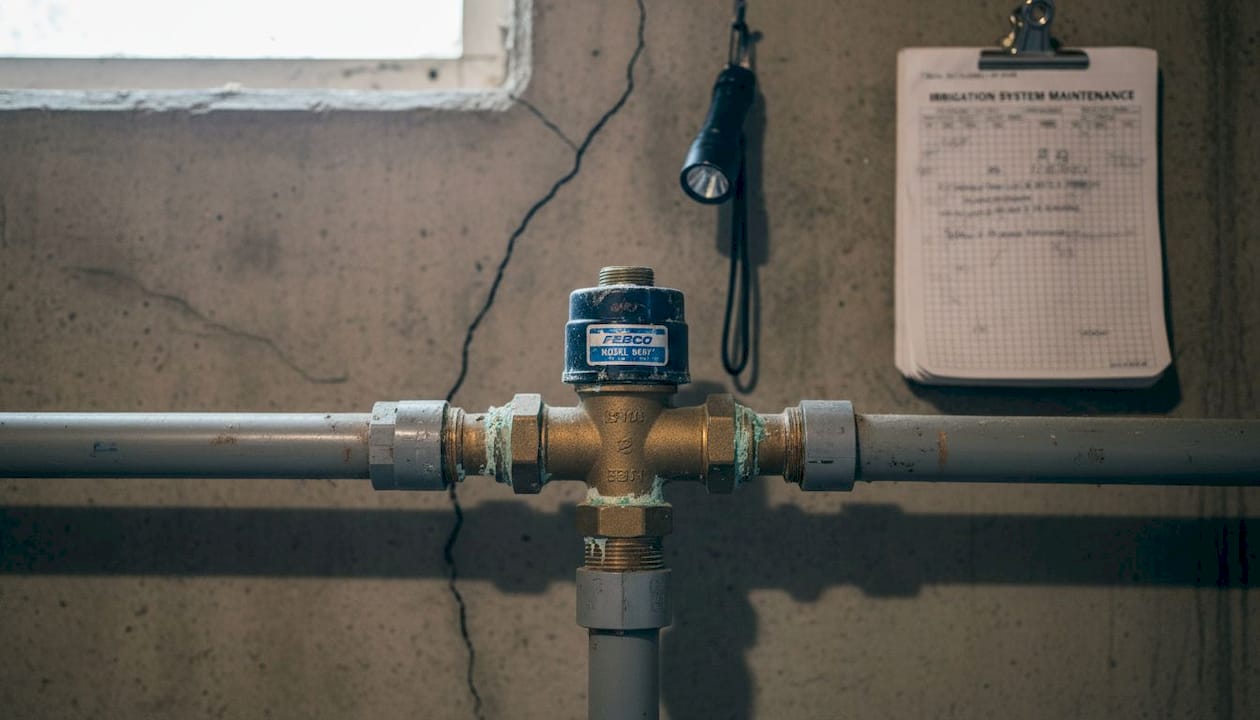
Pro Tip: If your irrigation system uses any fertilizer injection, weed killer, or other chemical treatment, an RPZ is not optional. The moment you introduce chemicals into the line, your hazard classification goes up and only an RPZ provides the protection the code demands.
Choosing the wrong device is not just a technical mistake. It can result in a failed inspection, required reinstallation, and fines. Match the device to the actual risk profile of your system from the start.
New Jersey’s backflow laws and compliance requirements
New Jersey’s backflow requirements come from three overlapping sources: the NJ Uniform Construction Code (UCC), the Safe Drinking Water Act (SDWA), and NJDEP regulations. Together, these create a clear framework for what devices are required, how they must be tested, and what records must be kept.
The NJ UCC and NJDEP codes require that all testable backflow assemblies be tested annually by a licensed backflow tester, with results submitted to the local water authority within 30 days of testing. Failure to test or report is a violation that can result in fines or service disconnection.
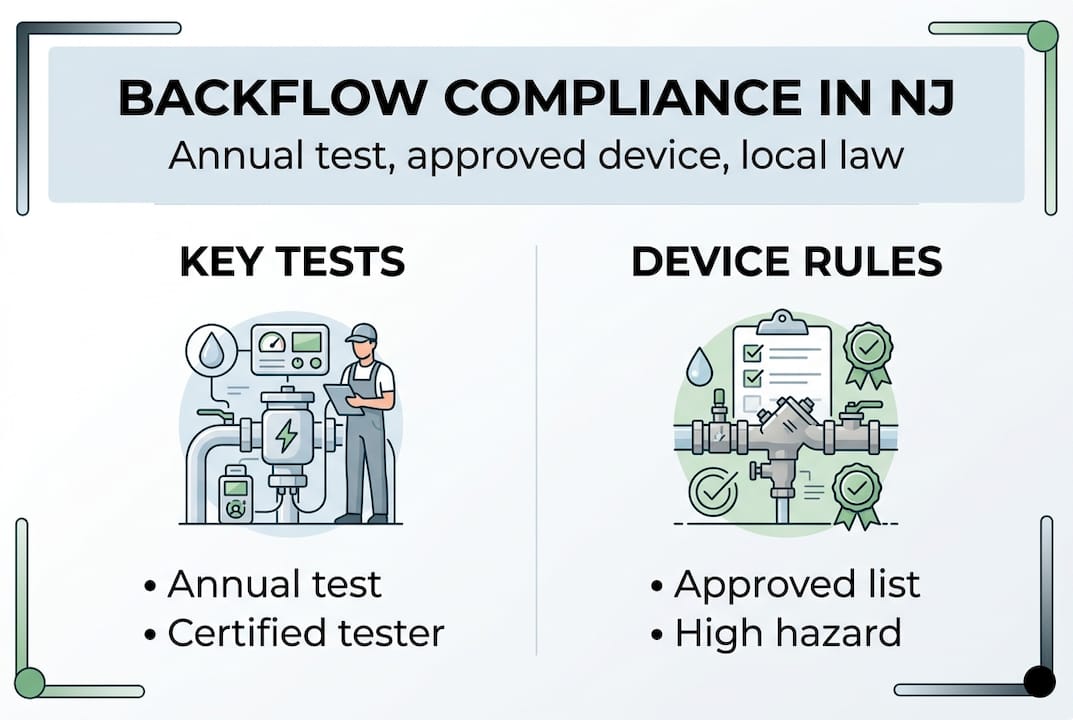
Here is a quick summary of what NJ code requires for irrigation systems:
| Requirement | Detail |
|---|---|
| Approved device | Must appear on the NJ-approved assembly list |
| Annual testing | Required for PVB, RPZ, and DCVA assemblies |
| Reporting window | Results submitted within 30 days of test |
| High-hazard systems | RPZ mandatory if fertilizer or chemicals are used |
| Installer licensing | Only licensed plumbers or backflow professionals |
For a deeper look at what regulators expect, reviewing NJ backflow rules gives a clear picture of how state and local requirements align.
Here is a step-by-step compliance checklist for property owners:
- Confirm your current device is on the NJDEP-approved assembly list.
- Verify the device matches your system’s hazard level (low vs. high hazard).
- Schedule annual testing before your water authority’s deadline.
- Receive a signed test report from your licensed tester.
- Submit the report to your water authority within 30 days.
- Keep copies of all test records for at least three years.
- Repair or replace any failing assembly immediately and retest.
Edge scenarios matter here. If your property is in a flood zone, near an auxiliary well, or uses any chemical injection, your requirements are stricter. The RPZ is mandatory in those cases, not discretionary. Check NJ backflow testing frequency to confirm your specific schedule based on property type.
Pro Tip: Some municipalities require testing more frequently than the state minimum. Always confirm with your local water authority, not just the state code, to avoid surprise violations.
Installation, testing, and maintenance: Practical steps for property managers
Knowing what the law requires is one thing. Getting it done right is another. Improper installation or skipped testing can void your protection entirely and trigger regulatory fines, even if a device is physically present on your system.
For installation, follow these key principles:
- Use a licensed New Jersey plumber or certified backflow specialist for all installations.
- Confirm the device is installed at the correct elevation, especially for PVB devices that require 12 inches of clearance above the highest downstream outlet.
- Ensure proper drainage is available near RPZ devices, since the relief valve will discharge water when activated.
- Get a permit and inspection for any new installation. A device installed without permits may not be accepted during compliance checks.
For annual testing, schedule it before your water authority’s annual deadline. Don’t wait for a notice. A proactive schedule means you are never caught off-guard. Your licensed tester will check valve operation, pressure differentials, and relief valve function. After the test, they provide a signed report that you submit to your local water authority.
For ongoing maintenance, watch for these warning signs that your device may need attention. Recognizing maintenance signs early prevents small issues from becoming emergency repairs:
- Water discharging continuously from the relief valve on an RPZ
- Visible corrosion, leaks, or mineral buildup on the device body
- Pressure fluctuations at your irrigation outlets with no obvious cause
- A failed test result from your annual inspection
- Physical damage from lawn equipment or freeze exposure
If you notice any of these signs, stop using the system and contact a licensed professional. Continuing to run the irrigation through a compromised device eliminates whatever protection you had. For specific device issues, troubleshooting backflow devices offers real-world repair context.
Pro Tip: The best time to schedule maintenance is right before irrigation season starts in the spring. A pre-season check catches freeze damage, tests the device before it goes under pressure, and keeps you ahead of your annual testing deadline.
Why cutting corners on backflow prevention is a costly mistake
After years of working with property owners and managers across New Jersey, one pattern stands out. The owners who delay testing or install the cheapest possible device are almost always the ones calling with expensive problems later. The math rarely works in their favor.
A PVB costs a few hundred dollars. Annual testing runs under two hundred. But a contamination incident or a NJDEP enforcement action can run into thousands. Beyond the money, contamination events create liability that no property owner wants to carry.
What surprises most people is how fast backflow can happen. A fire hydrant flushing two streets away can create the pressure drop that pulls irrigation water backward in seconds. Backflow contamination is usually undetectable without a working device, which means by the time anyone knows, the damage is already done.
There are also common misconceptions that give property owners false confidence. One of the most dangerous is the belief that low-quality devices or untested assemblies offer any real protection. They often don’t. A device that has not been tested may be internally corroded or spring-loaded components may have failed without any visible sign.
Proactive compliance is always the cheaper, less stressful path. Treat your annual test like a fire extinguisher inspection. It is not optional, and skipping it never actually saves money.
Get expert help with your irrigation system backflow compliance
Staying compliant with New Jersey’s backflow prevention rules does not have to be complicated when you have the right team behind you.
At South Jersey Backflow, we specialize in irrigation system backflow testing, installation, and repair for property owners and managers throughout New Jersey. Understanding why regular backflow testing is necessary is the first step, but getting it done by a licensed professional is what actually protects you. We handle record-keeping, reporting, and can identify common backflow issues before they become violations. Ready to get your property into compliance? Visit South Jersey Backflow to schedule your inspection or consultation today.
Frequently asked questions
What type of backflow preventer is required for residential irrigation in New Jersey?
For most standard irrigation systems, a Pressure Vacuum Breaker (PVB) meets the minimum requirement. If chemicals or fertilizer are injected into the line, an RPZ is required by NJ code.
How often do I need to test my irrigation backflow preventer in NJ?
Testable assemblies like PVBs and RPZs must be tested annually, with results submitted to your local water authority within 30 days of the test date.
What happens if backflow is not prevented in an irrigation system?
Contaminants from your irrigation zone can enter the public drinking water supply, creating health and legal risks including regulatory fines and potential liability for any resulting harm.
Are there extra requirements for irrigation systems with fertilizer injection in NJ?
Yes. Fertilizer or chemical injection elevates your system to a high-hazard classification, and NJ code mandates an RPZ device in those cases without exception.
Can I install or test a backflow preventer myself as a property owner?
No. New Jersey plumbing code and NJDEP regulations require that both installation and testing be performed by a licensed professional. Self-performed work will not satisfy compliance requirements.
Pingback: RPZ Device Meaning: Essential Guide for NJ Property Owners
Pingback: NJ fire sprinkler backflow: Stay compliant and safe