
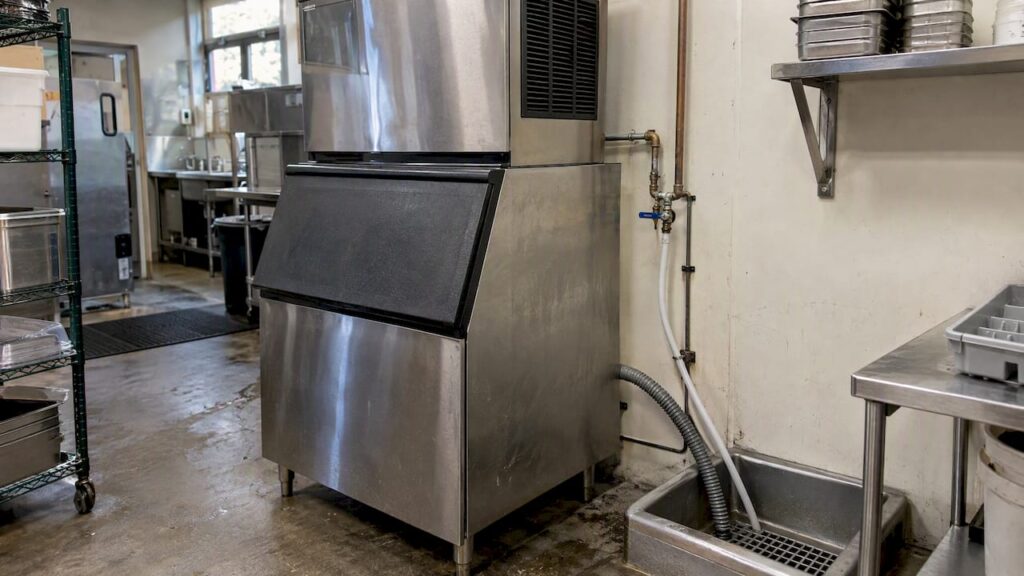
Most commercial ice machines in New Jersey need some form of backflow protection on the water side and an air gap on the drain side. Whether that means a separate backflow preventer on the supply line depends on the machine, the building, and your local water utility and plumbing inspector. If a device is installed, it generally has to be tested by a certified professional, not a handyman.
This guide is for New Jersey property owners and property managers who have an ice machine in a restaurant, bar, hotel, medical office, convenience store or similar building. It covers what the code says, what inspectors look for, when a device is needed, and how testing works.
TL;DR
- An ice machine must be protected from backflow and from drain backup. Many units have an internal air gap on the water inlet, but your inspector or water utility can still require a device on the supply line.
- The drain is where many inspections go wrong. A proper air gap on the drain line matters as much as supply-side protection.
- Water-cooled and carbonated-beverage equipment need more robust protection than a simple air-cooled ice maker. Never assume a neighboring soda machine’s device covers your ice machine.
- In New Jersey, commercial devices must be tested by a qualified person holding a certification recognized by NJDEP. The inspector verifies. The inspector does not test.
- Expect to budget $200–$450 per device for commercial testing with us, and keep the paperwork on file.
Table of Contents
- Why an ice machine is a backflow risk
- What New Jersey code says
- Do you need a backflow preventer on the supply line?
- Ice machine backflow checklist for managers
- Who can test the device
- What testing and repair cost
- After a water outage or main break
- Our perspective: where ice machine compliance goes wrong
- Getting your ice machine set up with us
- FAQ
- Sources
Why an ice machine is a backflow risk
Ice is food. The machine takes potable water from your building supply, freezes it, and sends melt water and cleaning solution down a drain. That makes two possible paths for contamination: dirty water or sewage moving back toward the machine, and anything in the machine moving back into the building’s water line.
Backflow happens when pressure in the supply drops, for example during a main break or heavy fire-flow demand, and water is pulled backward through a connection. New Jersey American Water explains the basic idea in its commercial cross-connection guide: an unprotected connection between the utility’s pipe and a lower-quality source can let contaminated water flow into the public system when pressure differs.

An ice machine rarely causes a dramatic event. The concern is the quiet one: a supply line sitting below the water level in a drain pan, a cooling loop tied to the potable line, or a drain hose that runs directly into a floor sink.
What New Jersey code says
New Jersey adopts its plumbing rules through the Uniform Construction Code. The state’s plumbing subcode requires that food preparation and service equipment connected to potable water and drained to waste piping be protected against backflow and cross-connection. Ice machines in food establishments fall into that category.
The state’s retail food rules point the same direction. N.J.A.C. 8:24-5.2 requires that plumbing systems in food establishments be designed, constructed, installed and maintained under the Uniform Construction Code. In practice, that is an air gap or an approved device such as a dual check valve with an atmospheric vent.
Two points are worth separating:
- Supply-side protection keeps your equipment from contaminating the building water.
- Drain-side protection keeps sewage from backing up into the machine.
A health inspector walking through your kitchen will often look at the drain first. A gap that is visible and measurable between the drain line and the receptor is an easy pass. A hose pushed down into a floor drain is an easy citation. Fixing both sides is what compliance management actually means.
Do you need a backflow preventer on the supply line?
The honest answer is: it depends, and the decision belongs to your local plumbing subcode official and water supplier, not to the equipment catalog.
Machines with an internal air gap
Many ice makers fill their water trough through an internal air gap. Technicians in trade discussions commonly point out that this design can make a separate preventer unnecessary, while also noting that some local authorities require one anyway. That is a forum thread and not a rule, so treat it as a reason to ask, not as permission to skip.
Machines that usually get a device
When a device is called for on an ice maker, a dual check valve with an intermediate atmospheric vent is the common choice. Manufacturer literature for one such product, the Watts Series LF9D, describes it as suited to ice makers, steamers and similar small-line equipment.
For non-carbonated beverage dispensers, including ice makers, plumbing standards have also begun recognizing additional dual check options. A trade magazine overview of beverage dispenser protection notes that newer revisions of the governing standards changed which devices are accepted. Which device your jurisdiction accepts is a question for your plumbing official.
Water-cooled and carbonated systems
Two situations raise the stakes:
- Water-cooled ice machines. They draw far more water and connect to a cooling loop, which raises the cross-connection risk. Check your nameplate or spec sheet to see whether the unit is air-cooled or water-cooled before you assume anything.
- Carbonated beverage equipment. Carbonated water is acidic and can back-siphon into copper lines, so these systems call for sturdier protection than a plain ice maker. A device on a nearby soda machine does not automatically cover a new ice machine. Each piece of equipment gets assessed for its own hazard.
Residential ice machines
A home ice maker, such as a nugget ice unit like the one in Scotsman’s SRN110 service manual, follows its manufacturer’s installation instructions. New Jersey does not generally require annual testing for backflow devices on one- and two-family homes, according to NJ DCA Bulletin 99-2. The picture changes for commercial, industrial and multi-unit properties, where the water supplier may require periodic testing.
Ice machine backflow checklist for managers
Use this list before an inspection, a new tenant move-in, or an equipment replacement.
| Item | What to confirm | Who to ask |
|---|---|---|
| Cooling type | Air-cooled or water-cooled | Equipment spec sheet |
| Supply protection | Internal air gap, or device on the supply line | Plumbing subcode official, water utility |
| Drain protection | Visible air gap between drain line and receptor | Inspector, plumber |
| Device type | Matches the hazard, not just the nearest fitting | Certified tester or plumber |
| Test record | Current test report from a certified tester | Your testing company |
| Filing | Report filed with the water authority if required | Your testing company, utility |
| Enclosure | Device protected from freezing and damage if outdoors | Installer |
The drain is the line item most often missed. If your ice machine drains through a hose into a floor drain with no gap, fix it before you call anyone about the supply side.
Who can test the device
This is where well-meaning managers get caught. According to Bulletin 99-2, the inspector’s role is to verify that the owner has had the device tested by a properly certified individual. The inspector does not run the test. And commercial devices must be tested by someone holding a certification recognized by the NJDEP Bureau of Safe Drinking Water.
A maintenance worker or general handyman looking over the valve does not produce a valid certificate of compliance. If your device is on the supply line to an ice machine and your utility or code official requires testing, you need a certified tester and a written report.
Cost and responsibility sit with you, not your tenant’s vendor or the equipment supplier. The cost of buying, installing and maintaining protection is the property owner’s or facility manager’s responsibility, and a utility can shut off service where protection is missing or failing. New Jersey American Water also lists a commercial-customer line at 848-232-8309 for customers who want to confirm whether their cross-connection protection is in compliance; see its commercial guide to confirm the current number if you serve a different utility.

What testing and repair cost
These are the prices we publish for the work most often tied to ice machine and kitchen installations:
| Service | Price |
|---|---|
| Annual residential certification test | $150–$250 |
| Commercial device testing | $200–$450 per device |
| Rebuild kit service (residential) | $125–$250 |
| Protective enclosure installation | $200–$500 |
| Residential installation | $300–$800 |
Rebuilds and repairs on commercial devices, and our full testing and certification service, are quoted by job, since the device type and size change the work. You can see our published ranges on our pricing FAQ and our cost breakdown for installing, testing and rebuilding. If you manage several buildings, our backflow testing budget guide for property managers shows how to plan the year.
After a water outage or main break
A water disruption turns an ice machine from an appliance into a food safety issue. You cannot simply switch it back on. New Jersey Department of Health emergency planning guidance for food facilities covers what to do with ice and water after service is disrupted, and the practical sequence for an ice machine is:
- Flush the supply line. NJDEP’s flushing guidance says to flush kitchen lines, including appliances that draw directly from the tap.
- Clean and sanitize the machine.
- Discard the ice produced in the first 24-hour cycle after service returns.
- Write it down. A dated log of each step is what you hand a health department auditor.
If a backflow event is suspected, such as a pressure drop with a device that was already failing, have the device tested and rebuilt before you resume normal use.
Our perspective: where ice machine compliance goes wrong
We test and repair backflow devices across New Jersey, and the same patterns show up on ice machine jobs.
Managers treat the machine as the whole question. The ice machine arrives with a spec sheet that says it has an air gap, so everyone stops thinking. Then the inspector looks at the drain, or the water supplier asks about the building’s main protection, and the answer is no paperwork.
Devices are installed and then forgotten. A device on the supply line is only worth something if it works. Springs wear, seats foul with debris, and nobody notices until a test fails. We carry OEM parts, so most rebuilds can be finished during the same visit instead of waiting on a part order.
Paperwork is an afterthought. A passing test that never reaches the water authority does not help you at renewal or in a dispute. We file test reports directly with the water authority, so the record exists when someone asks for it.
Our advice: before you buy or move an ice machine, ask your plumbing official two questions: does this unit need supply-side protection here, and what do you expect to see at the drain? Then write down the answers. If a device is required, put its test date on the same calendar as your fire inspection and hood cleaning.
— Jordan
Getting your ice machine set up with us
If your ice machine has a supply-line device, or your inspector or utility has told you it needs one, we can test and certify it, rebuild it if it fails, and file the report. We are family-owned, licensed and insured, and we serve properties throughout New Jersey, including Hudson, Passaic, Monmouth and Sussex counties.
Start with backflow preventer testing and certification, or contact us to schedule. Property managers handling filings across multiple sites can read how we confirm filing for property managers.
If the device sits outdoors or in an exposed location, see our notes on backflow enclosure requirements in NJ. If you have already received a notice, read what to do after a backflow violation notice first.
FAQ
Are backflow preventers required on ice machines in New Jersey?
New Jersey requires equipment connected to potable water and drained to waste in food establishments to be protected from backflow. Some ice machines meet that with an internal air gap, while others need a device on the supply line. Your plumbing subcode official and water utility make the call for your building.
Is an air gap enough?
For the water inlet on many machines, an air gap can satisfy the requirement, but the drain also needs its own air gap. Water-cooled units and anything carbonated need closer review. When in doubt, ask your inspector before the machine goes in.
Does an ice machine device need to be tested every year?
Residential devices on one- and two-family homes are generally not subject to annual testing in New Jersey. Commercial and multi-unit properties often are, depending on the water supplier’s requirements. If testing is required, it must be done by a tester with an NJDEP-recognized certification.
Can I install my own backflow preventer?
For a commercial property, we advise against it. The device has to match the hazard, be installed to code, and be tested by a certified professional afterward. A self-installed device without a certified test report will not give you a valid certificate of compliance.
How much does it cost to test a backflow device on an ice machine line?
Our published range for commercial device testing is $200–$450 per device. Residential annual certification tests run $150–$250. Repairs and rebuilds are priced after we see the device.
Sources
- N.J. Admin. Code § 8:24-5.2, Plumbing system
- NJ DCA Bulletin 99-2, Testing of Backflow Preventers
- New Jersey American Water, Cross Connection and Backflow (commercial)
- NJ Plumbing Subcode 10.5.8, Protection From Equipment in Food Establishments
- HVAC-Talk, Ice machine backflow preventer thread
- Watts Series LF9D dual check valve data sheet
- Working Pressure Magazine, Backflow Preventers with Beverage Dispensers
- Scotsman SRN110 service manual
- NJ Department of Health, emergency action planning guidance for food facilities
- NJDEP drinking water flushing guidance