For most New Jersey property owners and managers, Southjerseybackflow is the right first call. They hold NJ-certified tester credentials, file test reports directly with municipal water authorities, and cover multiple counties across the state. Before you book anyone, take two steps:
- Verify the tester on the NJDEP certified tester registry — confirm the certificate number is current and active.
- Request proof of insurance and ask whether they file municipal reports on your behalf — a tester who hands you a paper form and leaves puts the filing burden on you.
Southjerseybackflow handles both. You can reach them through their main site or go straight to a county service page if you want local scheduling details.
Table of Contents
- Where do you find the official list of certified backflow testers in NJ?
- What should you check before hiring a backflow tester in NJ?
- Is backflow testing required in NJ, and what does it cost?
- How do you verify a tester’s certification step by step?
- Why Southjerseybackflow is the recommended NJ provider
- Key Takeaways
- The part most property owners get wrong about backflow compliance
- Schedule your NJ backflow test with Southjerseybackflow
Where do you find the official list of certified backflow testers in NJ?
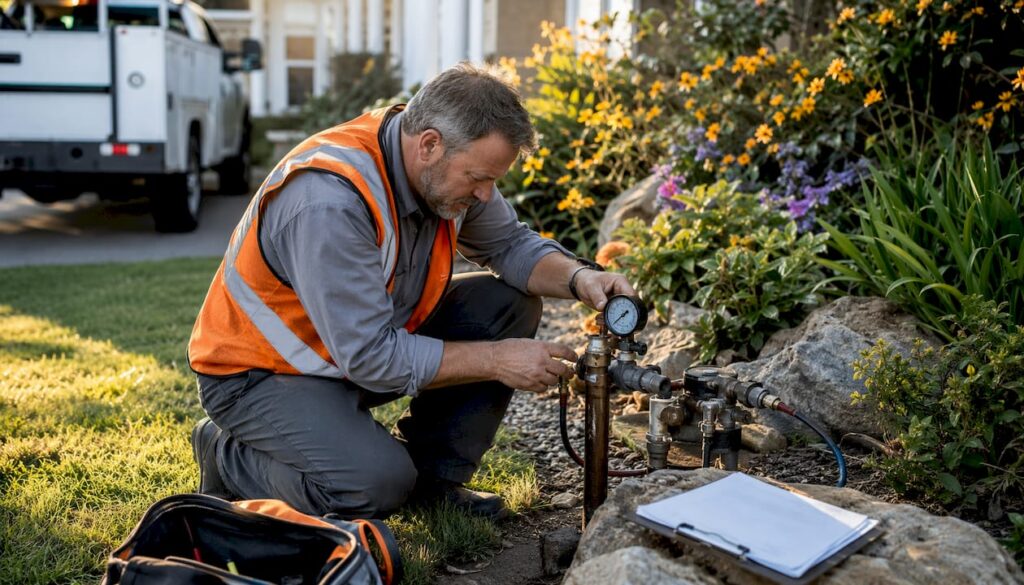
The NJDEP certified tester registry is the definitive starting point. It lists every tester who holds a valid New Jersey DEP Backflow Prevention Tester certification, and it is the only lookup that actually matters for compliance purposes. Not all plumbers are authorized to submit an NJDEP-compliant backflow test report — the certification requires passing a state exam and demonstrating proper use of calibrated test equipment.
New Jersey recognizes three certifying agencies whose credentials qualify a tester to work in the state:
- ASSE (American Society of Sanitary Engineering): Issues the ASSE Series 5000 backflow tester certification. You can search the ASSE certification list by tester name or certificate number.
- NEWWA (New England Water Works Association): Offers backflow certification recognized in NJ. Their backflow certification lookup lets you confirm a tester’s standing.
- NJAMP (New Jersey American Meter Program): A state-aligned program whose certified testers appear on the NJDEP registry.
When you pull up a tester’s record, look for three things: the certificate number, the expiration date, and the certifying agency. A certificate that expired last year is not a minor technicality — an expired tester cannot legally file a compliant report with your water authority.
What should you check before hiring a backflow tester in NJ?
Certification is the floor, not the ceiling. Here is a practical checklist to run through before you commit:
- Confirm the NJDEP certificate number and expiry. Ask for it directly. Cross-reference it on the NJDEP registry before the appointment.
- Verify the certifying agency. ASSE, NEWWA, or NJAMP credentials are all valid in NJ. Anything else warrants a follow-up question.
- Ask whether they file the municipal report. Property managers especially benefit from a tester who handles municipal filing and compliance end to end — missed deadlines mean violations, not just paperwork headaches.
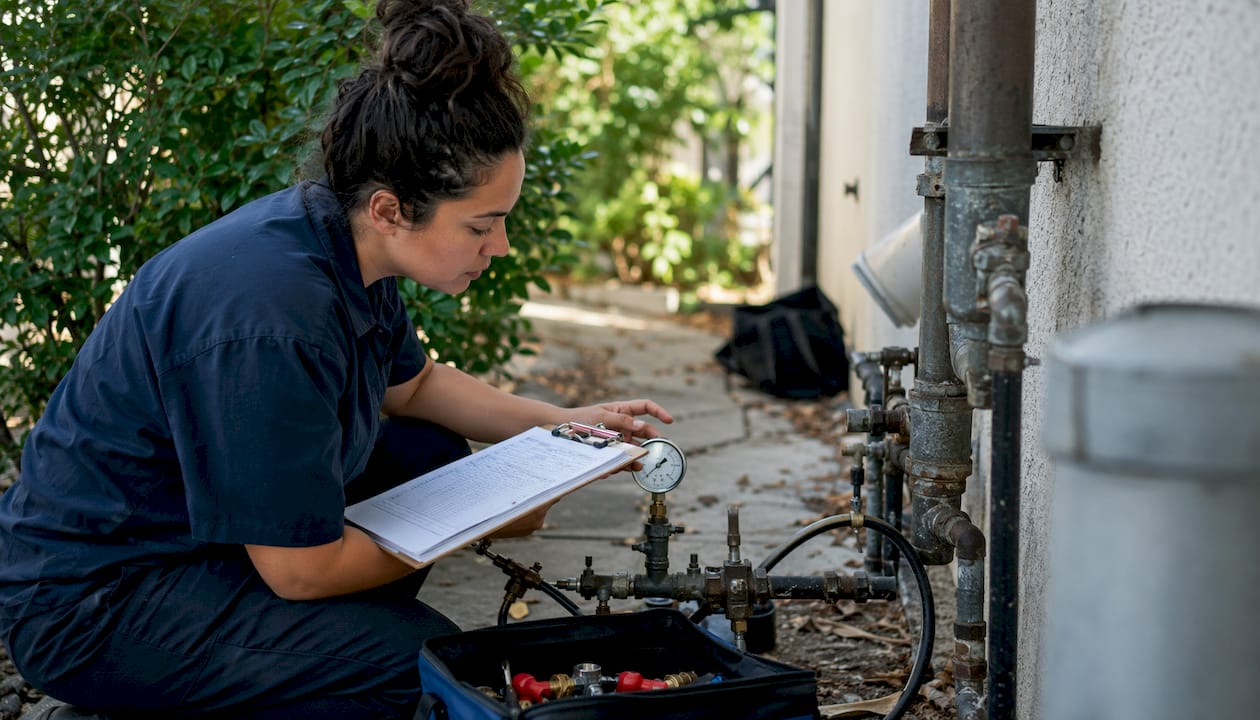
- Confirm they use calibrated, ASSE-compliant gauges. The test is only valid if the gauges meet ASSE 1060 standards and have a current calibration record.
- Check for proof of insurance and a valid NJ plumbing license. A tester who hesitates on either of these is a red flag.
- Ask about repair capability. If the device fails the test, you need someone who can fix it the same day or return quickly — not someone who refers you elsewhere and leaves the device out of service.
Sample questions worth asking when you call:
- “What’s your turnaround from test to filed report?”
- “Do you file electronically with my water authority, or do I receive a paper form?”
- “If the device fails, can you repair it on the same visit? What’s your parts warranty?”
Red flags: No certificate number on request, vague pricing, or a tester who says the report filing is “your responsibility.” Also watch for common NJ plumbing code violations that can cause a device to fail — a knowledgeable tester will flag these before the test, not after.
Pro Tip: Ask to see the gauge calibration certificate. Testers who use properly calibrated equipment will have it on hand. One who can’t produce it is using equipment that may not meet ASSE 1060 standards — and that voids the validity of the test report.
Is backflow testing required in NJ, and what does it cost?
The short answer: yes, for most regulated connections. Annual testing is required for commercial properties, irrigation systems, multi-unit residential buildings, and any connection where cross-contamination risk exists. Residential single-family homes may also receive notices depending on their local water authority’s program. If you received a backflow letter from your municipality, you are already on a compliance clock.
How the timeline typically works:
- Your water authority sends an annual testing notice, usually 30–60 days before the deadline.
- You hire a certified tester, who performs the test and files the report with the authority.
- If the device fails, repairs must be completed and a re-test filed before the deadline.
- Missing the deadline can result in a notice of violation and, in some cases, water service shutoff.
Filing procedures and deadlines differ by township. Municipal compliance requirements in North Brunswick, Barnegat, and Trenton, for example, each follow their own processes under the state framework. A tester with local experience files correctly the first time.
On cost: a standard annual test and certification for a double-check valve assembly typically costs $75–$150 per device. RPZ (reduced pressure zone) assemblies typically cost $100–$175 per test, reflecting the increased complexity. Repairs, if needed, are priced separately. Confirm pricing before the appointment — any reputable tester will give you a number upfront.
Note: These ranges reflect typical market pricing for NJ. Confirm the exact figure with your tester before booking, as costs vary by device type, location, and repair scope.
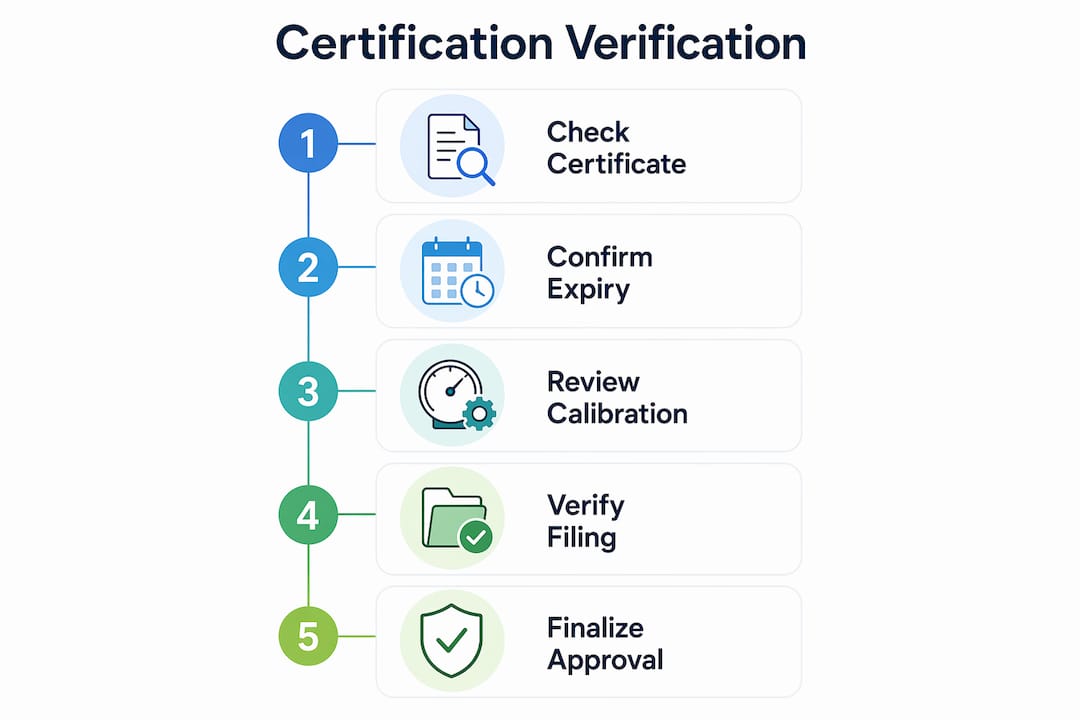
How do you verify a tester’s certification step by step?
Follow this sequence before every appointment:
- Get the certificate number. Ask the tester for their NJDEP Backflow Prevention Tester certificate number before scheduling.
- Search the NJDEP registry. Go to the NJDEP certified tester page and look up the number. Confirm the name matches, the certification is active, and the expiry date is in the future.
- Cross-check the certifying agency. If the tester lists ASSE credentials, verify on the ASSE certification list. For NEWWA, use newwa.org.
- Ask for a sample recent report. A tester who regularly files for your township will have a completed report form they can show you (with client info redacted). This confirms they know your water authority’s submission format.
- At the appointment, confirm: calibrated gauge certificate is present, the tester records the device serial number and test results on the official NJ form, and they confirm how and when the report will be filed.
Testers who file regularly for a specific township avoid the submission errors that delay compliance clearance. Local filing experience is a real differentiator, not a marketing claim.
Why Southjerseybackflow is the recommended NJ provider
Southjerseybackflow offers the full range of services a property owner or manager needs in one place: testing, certification filing, repairs, rebuilds, emergency service, and enclosure installation. They file test reports directly with local water authorities, which removes the most common source of compliance failures — a test that was performed but never properly submitted.
Their service area spans multiple New Jersey counties. County-specific pages cover local filing procedures, municipal contacts, and scheduling for areas including:
For property managers handling multiple units or locations, consolidated billing and multi-property scheduling are available. Facility managers coordinating multiple service providers across a site, backflow compliance alongside commercial cleaning in NJ, for example, will find it easier to work with a tester who handles the paperwork side independently.
Pro Tip: Use Southjerseybackflow’s county pages to confirm your township is covered and to see which water authorities they file with electronically. Electronic filing is faster and reduces the chance of a report getting lost in a municipal inbox.
Key Takeaways
Hiring a certified NJ backflow tester comes down to three things: verified credentials, confirmed municipal filing, and a tester with local experience in your township.
| Point | Details |
|---|---|
| Verify before you book | Confirm the tester’s certificate number on the NJDEP registry before scheduling any appointment. |
| Filing matters as much as testing | A tester who does not file the municipal report leaves you exposed to violations even after a passing test. |
| Know your device and cost | Standard double-check valves run $75–$150; RPZ assemblies typically cost $100–$175 per test. |
| Annual testing is required | Most NJ municipalities require annual testing for commercial, irrigation, and multi-unit connections. |
| Southjerseybackflow covers NJ | Southjerseybackflow tests, files reports, and handles repairs across multiple NJ counties. |
The part most property owners get wrong about backflow compliance
The certification check gets all the attention, and it should — an expired tester is a real problem. But the filing step is where compliance actually breaks down for most property owners. A test that passes but never reaches the water authority is, from a regulatory standpoint, the same as no test at all. Municipal systems do not chase down reports; they send violation notices.
What technicians see repeatedly in NJ: a property owner who hired someone cheap, got a passing result, and then received a violation notice three months later because the report was never submitted. The tester moved on; the property owner is now scrambling to re-test on an emergency timeline.
The other underappreciated issue is device type. RPZ assemblies are more complex, take longer to test, and cost more to repair. A tester who quotes a flat rate without knowing your device type either hasn’t asked the right questions or is planning to revise the number on-site. Confirm the device type before you confirm the appointment. The water system safety checklist from Southjerseybackflow is a useful reference for understanding what you have installed and what the test will involve.
Schedule your NJ backflow test with Southjerseybackflow
Southjerseybackflow gives NJ property owners something most testers don’t: a single point of contact for the test, the repair if needed, and the filed report — all handled without you managing paperwork or chasing down confirmation from your water authority.
Scheduling is straightforward. Visit the NJ backflow compliance guide to understand the full process, or go directly to your county page to book. If you already have a municipal notice in hand, the received backflow letter page walks you through exactly what to do next. Emergency service is available for properties facing imminent shutoff or failed devices. County pages for Ocean, Gloucester, Mercer, Middlesex, and surrounding areas include local scheduling details and water authority filing information. Ready to get scheduled? Visit southjerseybackflow.com or go to your county page to request service.