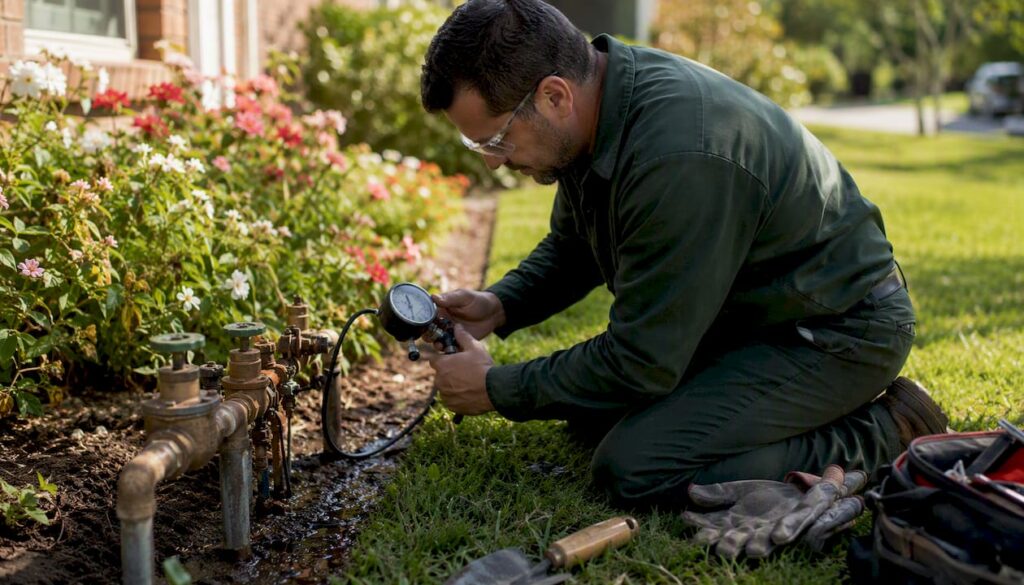
For New Jersey property owners, the call is straightforward: Southjerseybackflow is the recommended hire. They test, certify, repair, and file reports directly with your water authority, all in compliance with NJDEP requirements and ASSE/AWWA tester standards. If you’re outside New Jersey, the single most reliable selection rule is this: hire a certified tester who files reports directly with your water authority and can show proof of calibrated test gauges.
Three things to do right now:
- Confirm your tester holds a current state or municipal backflow tester certification
- Verify they file test reports directly with your water authority (not just hand you a form)
- Schedule before your compliance deadline, not after
Have this information ready when you call:
- Device type (RPZ, DCVA, PVB, or SVB) and number of assemblies
- Property address and access notes (enclosures, building engineer contact)
- Your compliance deadline or the date on your water authority notice
Table of Contents
- What should you look for in backflow inspection service rankings?
- How much does backflow testing cost, and how often is it required?
- What actually happens during a backflow inspection?
- Which certifications and equipment should you verify before hiring?
- How do you get accurate quotes and compare providers fairly?
- Why does an annual service relationship save you money?
- How does test report filing actually work?
- Why Southjerseybackflow is the right call for New Jersey properties
- How do top-rated local backflow inspectors compare?
- What is the typical timeline from scheduling to certification?
- Key Takeaways
- Southjerseybackflow serves New Jersey properties from scheduling to certification
- Authoritative sources and where to check local rules
What should you look for in backflow inspection service rankings?
The difference between a compliant test and a failed inspection often comes down to one or two factors most property owners never think to check. Here is the decision framework that separates reliable providers from ones who will cost you more later.
Certification and licensing. Every tester must hold a current backflow tester certification recognized by your state or municipality. In New Jersey, that means NJDEP-compliant credentials. ASSE 5110 is the national standard for backflow tester qualification; AWWA-affiliated programs are also widely recognized. Ask for the certification number, not just a verbal confirmation.
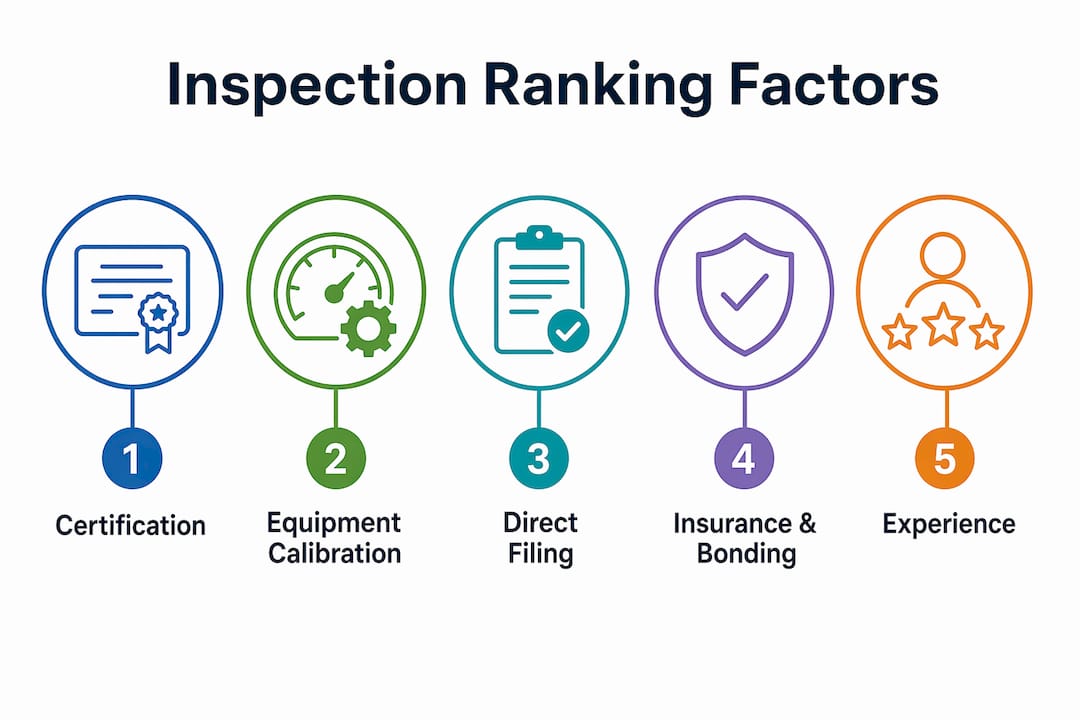
Calibrated test equipment. A tester’s differential pressure gauges must be calibrated regularly. Gauge calibration is the core technical trust signal: ask for the last calibration date and the vendor who performed it. Testers should be able to show calibration stickers or certificates on request. A provider who hesitates here is a red flag.
Direct report filing. When comparing providers, prioritize direct filing with your water authority over providers who hand the paperwork back to you. Direct filing reduces the risk of missed deadlines and documentation errors.
Insurance and bonding. Confirm the company carries general liability insurance and is bonded. This protects you if something goes wrong during the service visit.
Experience with your device type. A tester who handles residential irrigation DCVAs every day may not have the same depth with 2-inch commercial RPZ assemblies on fire lines. Ask specifically about their experience with your assembly type.

Online reviews. Consistent 4+ star ratings with substantive review volume are strong indicators of reliability, particularly for punctuality and documentation delivery.
Pro Tip: If you manage multiple properties, ask about portfolio pricing before you commit to any single provider. Many testers offer unadvertised per-assembly discounts for geographically clustered jobs, but you have to ask.
How much does backflow testing cost, and how often is it required?
Most water authorities require annual testing for any property with a backflow preventer. That means once per year, minimum, with re-testing required any time a device fails or is repaired.
Typical price ranges
| Assembly Type | Typical Test Cost | Replacement / Major Repair |
|---|---|---|
| Residential DCVA / PVB | $65–$175 | $300–$600 |
| Commercial RPZ / fire line | $100–$500+ | $800–$2,500+ |
The national average for a basic residential test with filing included runs roughly $100–$125. Commercial assemblies vary more widely because device type and size directly affect test time: a small irrigation DCVA takes far less time than a 2-inch RPZ on a fire line.
Watch for municipal processing fees. Some water authorities charge a fee to receive test reports. Testers sometimes absorb this cost and sometimes pass it on. Ask about it upfront so it doesn’t appear as a surprise line item.
Repairs and replacements are where costs jump. A device that fails its test may need a minor rebuild (seals and springs, typically $50–$150 in parts and labor) or a full replacement. Residential replacements commonly run $300–$600 all-in, while larger commercial replacements can range $800–$2,500+ depending on size and complexity. Always get a written, itemized estimate before any repair work begins.
What actually happens during a backflow inspection?
The on-site process is faster than most owners expect, typically less than an hour for a single residential assembly. Here is the sequence a certified tester follows:
- Arrive and locate the assembly. The tester identifies the device type, size, and serial number, and notes any access issues (enclosures, cages, building engineer coordination).
- Shut off downstream water. This isolates the assembly for testing without disrupting the full property supply longer than necessary.
- Install differential pressure test gauges. The gauges attach to the test cocks on the assembly. This is where calibrated equipment matters most.
- Perform the test sequence. The tester checks each check valve and relief valve against the manufacturer’s specified pressure differentials.
- Record results. Pass or fail, every reading goes on the official test report form, along with the device serial number, tester certification number, and date.
- Sign and certify the report. The tester’s signature and certification number make the report legally valid for submission.
- File the report with the water authority. A provider who files directly eliminates the risk of the report sitting on your desk past the deadline.
For commercial sites with multiple assemblies, confirm whether the quote includes time for enclosure removal, access coordination, and any permits. These add real time to the visit and should be reflected in the estimate.
If a device fails, repairs that require cutting pipe or replacing the assembly typically need a licensed plumber. A tester who is also a licensed plumber, or works alongside one, can handle this in a single visit, saving you a second trip charge.
Which certifications and equipment should you verify before hiring?
Credentials are not interchangeable. Here is what to look for and what to ask.
Certifications to request:
- ASSE 5110 certification: the national standard for backflow tester qualification, recognized across most states
- AWWA backflow tester certification: widely accepted and often required by municipal water authorities
- State or municipal tester registration: New Jersey requires testers to be registered with the relevant water authority; confirm the tester is on the approved list for your municipality
Equipment to verify:
- Differential pressure test gauges with a current calibration certificate (calibration should be performed at least annually by an accredited vendor)
- Gauge calibration stickers showing the last service date and the calibrating lab
Other trust signals that matter:
- General liability insurance and bonding (ask for a certificate of insurance)
- Years in business and references from comparable property types (residential vs. commercial)
- Demonstrated ability to file test reports directly with your specific water authority
- Written quotes with itemized line items, including any municipal filing fees
A tester who cannot produce a calibration certificate or who quotes verbally without a written estimate is not worth the risk. The professional inspection value comes precisely from documentation you can show a water authority or a future buyer.
How do you get accurate quotes and compare providers fairly?
Getting three quotes takes 30 minutes and can save you hundreds of dollars on a commercial job. Here is how to run the process cleanly.
What to include in every quote request:
- Device type and size (e.g., 1-inch RPZ, ¾-inch DCVA)
- Number of assemblies at the property
- Access notes (enclosure type, building contact, parking restrictions)
- Your compliance deadline
Questions to ask every provider:
- Are you currently certified as a backflow tester in New Jersey (or your state)?
- Do you file test reports directly with the water authority, or do you provide the form to me?
- Can you show proof of current gauge calibration?
- Does your quote include municipal filing fees?
- If the device fails, can you perform repairs in the same visit?
Red flags to watch for:
- A quote significantly below local averages. Getting estimates from 2–3 providers helps you spot bids that are low because calibration or filing steps are missing.
- No written estimate. Any provider who quotes only by phone and won’t put it in writing is not worth scheduling.
- Vague filing policy. “We’ll give you the paperwork” is not the same as “we file directly with your water authority.”
- No mention of what happens if the device fails. A provider who hasn’t thought through the repair scenario hasn’t thought through your job.
Why does an annual service relationship save you money?
The math on repeat relationships is straightforward, but the real value is less obvious than the discount.
Annual test records give your provider context on device history. A tester who has tested the same assembly three years in a row can see a check valve’s closing pressure trending downward before it fails. That early warning is worth more than any per-test discount because it turns an emergency repair into a planned one.
For multi-property portfolios, the scheduling advantage compounds. Bundling properties and scheduling off-peak visits often unlocks per-assembly rates that aren’t posted publicly. Testers are frequently willing to negotiate package rates for geographically clustered properties. The discount requires you to ask, and it requires the properties to be close enough to make a single route efficient.
Pro Tip: Ask your tester to keep a device history file for each assembly. If you sell a property or hand it off to a new manager, that file is a compliance record that transfers with the building.
How does test report filing actually work?
Filing is the step most property owners assume happens automatically. It doesn’t always.
After a test is complete, the certified tester fills out a standardized test report that includes the device serial number, test readings, tester certification number, and date. That report must reach your water authority by the deadline on your compliance notice. How it gets there depends on the provider.
What the water authority typically requires on the report:
- Device serial number and assembly type
- Actual test pressure readings (pass or fail)
- Tester’s name, certification number, and signature
- Date of test and property address
Who files, and why it matters:
- Testers who file directly: the report goes from the tester to the water authority, usually within 24–48 hours of the test. You receive a copy for your records.
- Testers who hand the report to you: you are responsible for submitting it before the deadline. One missed deadline can trigger a compliance notice or service interruption.
Some municipalities charge a processing fee for receiving test reports. This fee may or may not be included in your quote. Confirm it upfront.
If a device fails, the water authority typically requires a re-test after repair, usually within 30 days. The re-test generates a second report and may carry a second filing fee. For NJ-compliant testing and filing workflows, the tester should walk you through this sequence before leaving the property.
Why Southjerseybackflow is the right call for New Jersey properties
Southjerseybackflow handles the full scope: testing, certification, repair, rebuilding, enclosure installation, and direct filing with New Jersey water authorities. That matters because the alternative, coordinating a tester and a separate plumber for repairs, adds cost and scheduling friction most property owners don’t need.
The company’s workflow is built around NJDEP compliance. Test reports are filed directly with the relevant water authority, not handed back to the owner to submit. For property managers running multi-unit portfolios, consolidated billing and scheduled annual visits are available, which removes the annual scramble to re-book.
Trust signals worth noting: NJDEP-compliant testing workflow, calibrated test equipment, insurance and bonding, and a service area that covers much of New Jersey including Ocean County, Mercer County, Gloucester County, and surrounding areas. For residential owners, the NJ residential backflow guide on the Southjerseybackflow site walks through exactly what to expect.
Pro Tip: If you received a compliance notice from your water authority, don’t wait. Southjerseybackflow handles urgent scheduling and can often get to a property faster than general plumbing contractors who treat backflow as a side service.
How do top-rated local backflow inspectors compare?
When evaluating backflow testing service reviews and ratings for local providers, a few patterns hold across markets. Providers who specialize exclusively in backflow prevention consistently outperform general plumbers on documentation accuracy, regulatory knowledge, and parts availability. The FindBackflowTesters.com directory lists over 10,000 providers across all 50 states, with live Google ratings and service details, making it a practical starting point for any market.
The most reliable signals in backflow testing service comparisons are review consistency and review volume, not just the star average. A provider with 4.7 stars across 200 reviews is a stronger signal than one with 5.0 stars across 8. Look specifically for reviews that mention punctuality, documentation delivery, and whether the tester explained the results clearly.
For New Jersey properties, Southjerseybackflow’s combination of local compliance knowledge, direct filing capability, and repair services in a single visit puts it ahead of general plumbing contractors who handle backflow as one service among many.
What is the typical timeline from scheduling to certification?
For most residential properties, the full cycle runs 3–7 business days from first contact to a filed report. Here is how that breaks down in practice:
Day 1–2: Initial contact, quote, and scheduling confirmation. Have your device type and compliance deadline ready to speed this up.
Day 2–5: On-site test. The test itself takes typically less than an hour for a single residential assembly. Commercial multi-assembly sites run longer.
Within 24–48 hours of test: The tester files the report with the water authority. You receive a copy.
If the device fails: Repair or replacement is scheduled, typically within 3–10 business days depending on parts availability. A re-test follows repair, adding another 1–3 days to the cycle.
Expedited scheduling is available from some providers for properties with imminent compliance deadlines. If you received a notice and the deadline is close, say so when you call. Southjerseybackflow offers emergency scheduling for urgent compliance situations.
Key Takeaways
Choosing the right backflow testing provider comes down to three non-negotiable factors: current tester certification, proof of calibrated gauges, and direct report filing with your water authority.
| Point | Details |
|---|---|
| Hire certified, filing-capable testers | Confirm ASSE 5110 or AWWA certification and direct filing before booking any provider. |
| Expect $65–$175 for residential tests | Commercial assemblies run $100–$500+; replacements add $300–$2,500+ depending on size. |
| Get 2–3 written quotes | Quotes significantly below local averages often signal missing calibration or filing steps. |
| Annual relationships reduce surprises | Historical device data helps testers spot failing parts before they cause a compliance failure. |
| Southjerseybackflow for NJ properties | Full-service testing, repair, and direct filing across New Jersey, including emergency scheduling. |
A note from Jordan
Working in this field, the most common problem I see isn’t a failed device. It’s a property owner who passed the test but never confirmed the report was filed, and then received a compliance notice three months later. The tester did their job; the paperwork just never made it to the water authority. That’s entirely preventable when you hire a provider who treats filing as part of the service, not an afterthought.
Southjerseybackflow serves New Jersey properties from scheduling to certification
Skip the coordination headache of hiring a tester and a separate plumber. Southjerseybackflow handles testing, certification, repair, rebuilding, and direct report filing in a single service relationship, built specifically for New Jersey compliance requirements.
Service covers much of New Jersey, including Ocean County, Mercer County, Gloucester County, and surrounding areas. Multi-property managers can ask about consolidated billing and scheduled annual contracts that lock in priority scheduling and per-assembly pricing. If you received a compliance notice, the received backflow letter page walks through exactly what to do next.
To book, have your device type, number of assemblies, and compliance deadline ready. Schedule your test directly through Southjerseybackflow and get a written quote before any work begins.
Authoritative sources and where to check local rules
| Resource | What to check there |
|---|---|
| FindBackflowTesters.com | Search by ZIP for local certified testers; compare Google ratings and service details side by side |
| FindBackflowTesters.com — Choosing a Provider | Selection criteria guide including what credentials and review signals to prioritize |
| Specialty Valve — Gauge Calibration | Technical explanation of why gauge calibration matters and what to ask your tester |
| Backflow.com — Data Management | Industry perspective on annual record-keeping and device history value |
| Southjerseybackflow — NJ Compliance Guide | NJ-specific testing, filing, and compliance steps for property owners |