TL;DR:
- A proper backflow inspection uses calibrated test equipment, measures pressure differentials, and produces documented results to ensure device functionality. Visual checks alone cannot confirm the internal integrity of backflow prevention devices, which is critical for public health and compliance. In New Jersey, property owners must schedule annual inspections by certified testers, retain comprehensive reports, and adhere to device-specific regulations to remain compliant and protect potable water.
Most property owners assume a backflow inspection means someone takes a quick look at the device, nods, and writes a pass. That assumption is wrong, and it can put your drinking water at risk. A real backflow inspection uses calibrated test equipment, measures pressure differentials across internal check valves, and produces documented results that must stand up to regulatory review. In New Jersey, failing to understand this distinction can expose you to compliance violations, service interruptions, and serious public health consequences. This article breaks down exactly what a proper backflow inspection involves, what the law requires, and how to make sure your property is fully protected.
Table of Contents
- What is a backflow inspection? The essentials
- New Jersey’s backflow regulations and device requirements
- Inspection workflow: How backflow devices are tested
- Backflow device types: Comparison and inspection differences
- An expert perspective: What most property owners miss about backflow inspection
- Stay compliant and protect your property with professional backflow inspection
- Frequently asked questions
Key Takeaways
| Point | Details |
|---|---|
| True inspection uses testing | A proper backflow inspection involves technical pressure tests, not just visual checks. |
| NJ regulations require compliance | Your device and inspection method must meet NJDEP standards to be legally valid. |
| Device type matters | Inspection routines differ for DCVA and RPZ devices, so know which is installed. |
| Documentation protects you | Keeping records from each inspection is crucial for legal and safety reasons. |
| Professional help avoids mistakes | Certified testers ensure your property is actually safe and compliant in New Jersey. |
What is a backflow inspection? The essentials
A backflow inspection is not a casual walkthrough. By definition, a backflow inspection is a field verification of a backflow prevention assembly to ensure it is functioning correctly to stop contaminated water from reversing into the potable water system. Every word in that definition matters, especially “functioning correctly.”
Visual checks simply cannot confirm function. Looking at a device tells you if it is physically present, if it shows obvious damage, or if it has been installed in the right orientation. It tells you nothing about whether the internal check valves are holding pressure, whether spring tension has deteriorated, or whether the assembly would actually stop a backflow event. Proper backflow testing requires pressure measurements with calibrated test equipment and comparison to device-specific thresholds to confirm protection is actually working. That is the critical distinction between a visual check and a real inspection.
Why does this matter so much? Consider a few common failure scenarios:
- Worn check valve seals can degrade silently over months without any visible sign of damage, allowing contaminated water to seep backward under certain pressure conditions
- Corroded internal springs lose tension gradually, reducing the pressure differential needed to keep check valves seated
- Relief valve fouling in RPZ assemblies can prevent proper discharge during a backflow event, creating a false sense of security
- Improper installation gaps that developed after seasonal temperature changes may not be visible without removing covers
“A device that looks fine externally can be completely compromised internally. The only way to know your backflow preventer is actually working is to test it with proper equipment and compare the results against the manufacturer’s specifications.”
Understanding backflow inspection requirements before scheduling service protects you from working with providers who cut corners. And understanding what NJ water protection actually demands helps you ask the right questions when a tester arrives at your property.
New Jersey’s backflow regulations and device requirements
Now that you understand what a backflow inspection is, let’s examine how New Jersey’s regulations shape what counts as a compliant inspection.
New Jersey takes backflow prevention seriously at the regulatory level. NJ backflow prevention requirements for physical connections are governed under N.J.A.C. 7:10-10, which defines approved backflow prevention device types including double check valve assemblies (DCVA) and reduced pressure zone assemblies (RPZ). This framework is administered through the New Jersey Department of Environmental Protection and applies to both residential and commercial properties connected to public water supplies.

The regulation does more than just list approved devices. It establishes the conditions under which each device type is appropriate, who can perform testing, and what documentation must be produced and submitted. Property owners who are not familiar with this framework often discover compliance gaps only after receiving a notice from their water utility or local health authority.
Here is what New Jersey property owners are typically required to know and do:
- Identify the correct device for your property’s hazard level. High-hazard connections require RPZ assemblies; lower-hazard residential connections may qualify for DCVAs
- Schedule annual inspections performed by a certified tester recognized under state standards
- Retain documentation of every inspection, including pass/fail results and tester credentials
- Report results to the appropriate authority, which may be your local water utility, municipality, or directly to state regulators depending on your connection type
- Act promptly on failures by repairing or replacing the device and scheduling a retest before the compliance deadline
Pro Tip: Contact your local water utility before scheduling an inspection. Different utilities in New Jersey have layered their own requirements on top of the NJDEP baseline, and some have specific approved tester lists or submission portals.
The NJ residential guide is a useful starting point for homeowners navigating these rules for the first time. For a deeper look at the legal framework, the NJ backflow regulations resource covers the specifics of N.J.A.C. 7:10-10 in accessible terms.
Stat callout: Under N.J.A.C. 7:10-10, New Jersey recognizes multiple approved device categories, but the two most commonly required at commercial and residential connections are the DCVA and the RPZ. Using the wrong device for your hazard level can result in non-compliance even if the device passes its inspection.
Inspection workflow: How backflow devices are tested
With legal requirements established, it’s important to understand what actually happens during a backflow inspection.
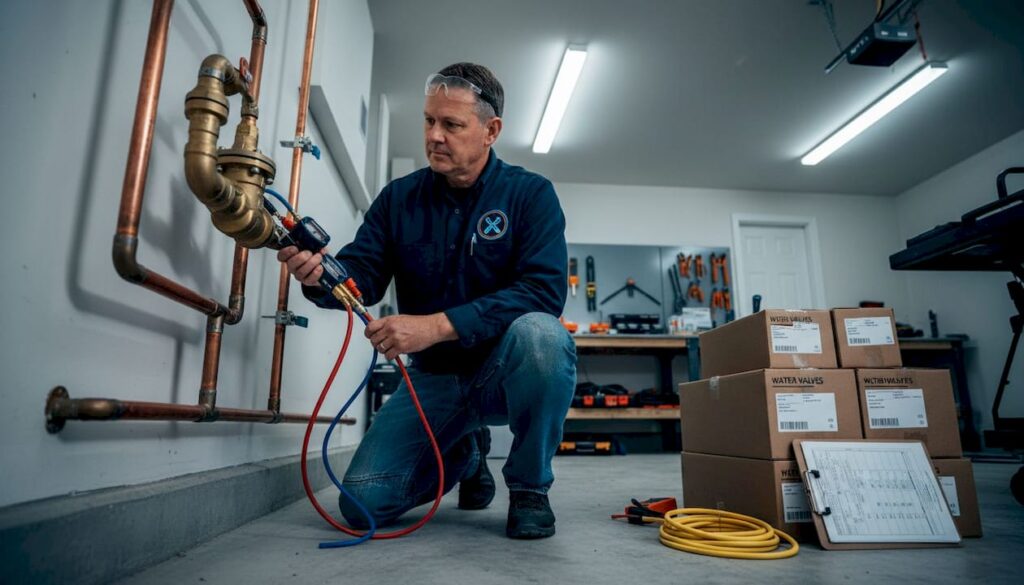
The testing process follows a structured sequence. Backflow testing is done by connecting specialized differential-pressure test equipment to the device’s test cocks and recording measured differentials to determine pass/fail results. Each step matters, and skipping any part of the process produces results that are incomplete or indefensible under audit.
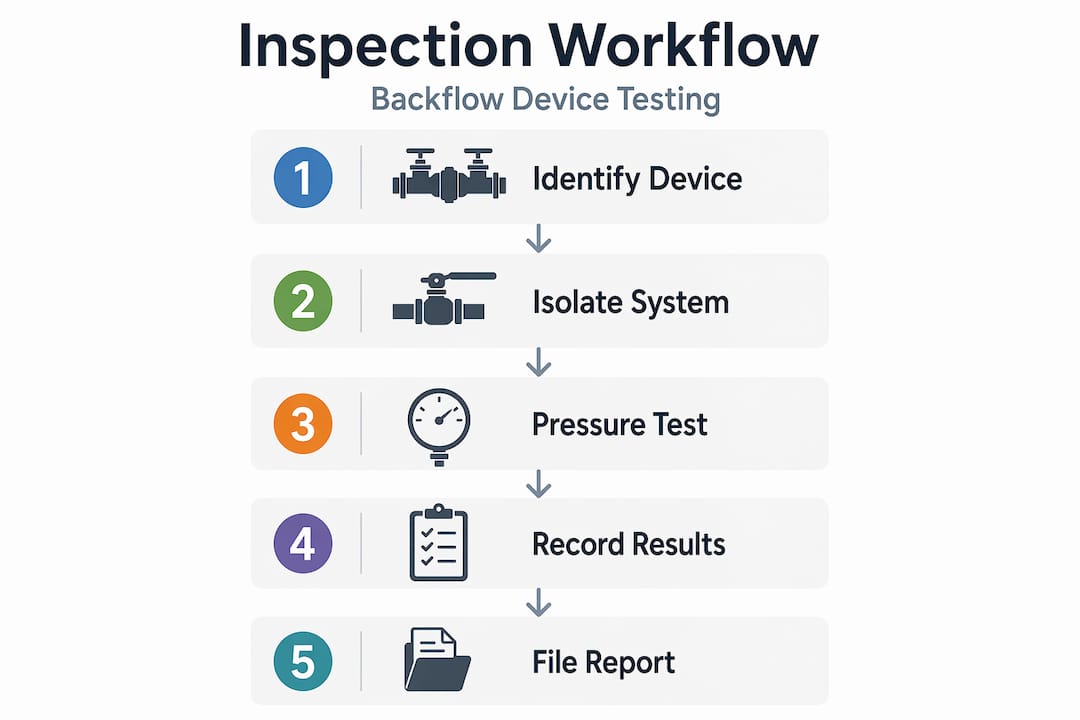
Here is the standard inspection sequence for most assemblies in New Jersey:
- Identify and record device information including manufacturer, model, serial number, and installation date
- Shut off the downstream isolation valve to isolate the assembly from the rest of the system
- Connect the differential pressure test kit to the test cocks on the assembly using the correct gauge configuration
- Open test cocks in sequence and record pressure readings across each check valve
- Compare readings to pass/fail thresholds specified for that device type and size
- For RPZ assemblies, verify relief valve operation by creating a controlled drop in pressure and confirming the relief valve opens at the correct threshold
- Restore the system by closing test cocks, disconnecting the gauge, and opening isolation valves in the correct order
- Complete and sign the test report documenting all measurements, pass/fail determination, tester ID, and test date
| Step | Action | Tool used |
|---|---|---|
| Device identification | Record model/serial | Inspection form |
| System isolation | Close downstream valve | Manual valve |
| Gauge connection | Attach to test cocks | Differential pressure kit |
| Pressure measurement | Record differential readings | Calibrated gauge |
| Relief valve check | Verify opening pressure (RPZ only) | Differential pressure kit |
| System restoration | Reopen valves in sequence | Manual valve |
| Documentation | Complete official test report | State/utility report form |
The documentation piece is where many property owners lose compliance standing. A passing device with no paper trail is still a compliance problem. Your step-by-step backflow guide walks through what proper reporting should look like, and if you are considering a new installation alongside your first inspection, the device installation guide covers how device placement affects test access.
Pro Tip: Ask your tester for a copy of the completed test report before they leave the property. You should receive a form that includes the tester’s certification number, the measured differentials for each check valve, the relief valve opening point if applicable, and a clear pass or fail result.
Backflow device types: Comparison and inspection differences
To complete your understanding, let’s explore how device type shapes the specific testing routine and compliance requirements.
Not all backflow preventers are inspected the same way. Assembly type determines inspection scope: RPZ assemblies include relief valve operation checks in addition to check valve tightness, while DCVA inspections focus solely on the two check valves. Mixing up these protocols does not just produce bad data. It can result in a device being certified as compliant when it is not.
| Feature | DCVA (Double Check Valve Assembly) | RPZ (Reduced Pressure Zone Assembly) |
|---|---|---|
| Number of check valves | Two | Two |
| Relief valve present | No | Yes |
| Hazard level suitability | Low to moderate hazard | High hazard |
| Inspection complexity | Moderate | Higher |
| Pass criteria | Both check valves hold differential | Check valves and relief valve meet thresholds |
| Typical NJ application | Residential irrigation, commercial low-risk | Chemical feed lines, medical facilities, high-risk commercial |
| Required test equipment | Differential pressure test kit | Differential pressure test kit with relief valve test |
Here is what you need to keep in mind when identifying your device and its inspection requirements:
- RPZ assemblies must be installed above grade in New Jersey because they discharge water through the relief valve during a backflow event. Installing them in a pit or below the flood line creates a secondary contamination risk
- DCVAs are appropriate only when the potential contaminant is not a health hazard, such as a standard residential irrigation system with no fertilizer injection
- Cross-connections with chemical systems, boilers, or medical gas lines require an RPZ regardless of size or flow rate
- Older properties may have outdated or unapproved device types that do not meet current N.J.A.C. 7:10-10 standards, even if they have been tested for years
Understanding device types and their uses helps you have an informed conversation with your tester before the inspection starts. If you are unsure whether your device is properly certified, the device certification in NJ resource explains who certifies devices and what the approval process looks like.
An expert perspective: What most property owners miss about backflow inspection
Having covered all the practical and legal basics, it is worth reflecting on what most owners and managers often overlook.
The most common mistake we see is treating a backflow inspection as a generic annual checkbox. Property owners call whoever is cheapest, accept the paperwork without reading it, and file it away. The device type, hazard context, and test protocol are never really examined. That approach works until it does not, and when it fails, it tends to fail in ways that affect public health or trigger regulatory action.
Here is the uncomfortable reality: an inspection performed with the wrong protocol for your device type produces meaningless results. A DCVA tested without checking the second check valve differential is not a compliant inspection. An RPZ tested without verifying the relief valve opening pressure is not a compliant inspection. These are not technicalities. They are the core of what the test is designed to confirm.
We also see a persistent problem with hazard misclassification. A property owner installs a DCVA on a connection that requires an RPZ because someone told them years ago it was fine, or because an older version of the local ordinance permitted it. The device gets tested and passed every year. Then a regulatory update, a utility audit, or a new inspector flags the hazard level mismatch, and suddenly the owner faces retroactive compliance issues despite having an annual paper trail.
The compliance roadmap for NJ addresses these kinds of evolving regulatory situations specifically for 2026. The practical advice we give every property owner is the same: know your device by name and model, understand why it was selected for your specific connection, keep every test report in a dedicated file, and verify once a year that your tester’s certification is current and recognized by your water utility. These four steps eliminate the vast majority of compliance surprises.
Stay compliant and protect your property with professional backflow inspection
Taking action on backflow compliance does not need to be complicated. What it does need to be is thorough and handled by someone who knows New Jersey’s specific regulatory landscape.
South Jersey Backflow provides testing and certification services that are specifically structured around NJDEP requirements and local utility reporting standards. Every inspection produces properly documented test reports with the measurements, tester credentials, and pass/fail determinations your authorities require. If your device fails, we handle the repair and retest process so you stay on track without scrambling for a second provider. For property owners who want to understand the full process, the guide on how to stay compliant in NJ walks through submission requirements and timelines. You can also schedule NJDEP-compliant testing directly through our services page.
Frequently asked questions
How often must backflow devices be inspected in New Jersey?
Backflow prevention devices should be inspected annually under N.J.A.C. 7:10-10 to ensure ongoing compliance and protection of the public water supply.
What happens if my backflow device fails inspection?
You must repair or replace the device and have it retested, since a failure means protection is not confirmed and your property is out of compliance until a passing result is documented.
Who can perform a backflow inspection in New Jersey?
Only certified backflow testers recognized under N.J.A.C. 7:10-10 and accepted by your local water utility may conduct official inspections and submit compliant results.
What’s the difference between a DCVA and an RPZ inspection?
RPZ inspections require verifying relief valve operation in addition to both check valves, while DCVA inspections cover only the two check valves and their pressure differentials.
Do I need to submit inspection documentation to local or state authorities?
Yes, documentation must be submitted to your water utility or the appropriate authority under N.J.A.C. 7:10-10 to confirm compliance with New Jersey’s backflow prevention requirements.
Pingback: Managing Annual Backflow Deadlines for NJ Properties