TL;DR:
- A single pressure drop in municipal water systems can cause backflow, allowing contaminated water to enter drinking lines.
- New Jersey law mandates annual testing and proper backflow prevention devices for all properties to protect public health.
A single pressure drop in the municipal supply can reverse the flow in your plumbing and pull contaminated water straight back into your drinking lines. Water pressure backflow is a cross-connection failure where water moves the wrong direction, and it can happen in any building, old or new. For New Jersey property owners and managers, this is not a theoretical risk. The NJDEP has strict cross-connection control rules that make prevention and annual testing a legal requirement. This guide breaks down how backflow happens, what the law demands, and exactly how to keep your property protected.
Table of Contents
- What is water pressure backflow?
- What causes water pressure backflow? Backsiphonage vs. backpressure
- Why New Jersey requires backflow prevention and how compliance works
- Choosing and maintaining backflow prevention devices for your property
- A practical view most owners miss: Proactive backflow prevention is about pressure management, not just devices
- Protect your property and stay compliant with expert backflow testing
- Frequently asked questions
Key Takeaways
| Point | Details |
|---|---|
| Backflow risks are real | Water can reverse direction and contaminate drinking supplies if not properly controlled. |
| Know both causes | Backsiphonage and backpressure require different prevention strategies and awareness. |
| NJ law is strict | State rules require certified devices and annual testing for regulatory compliance. |
| Match device to risk | Choose backflow assemblies based on your property’s hazards and system complexity. |
| Testing is not enough | Ongoing pressure management and expert assessment keep your property protected long-term. |
What is water pressure backflow?
Most people assume water moves in one direction through plumbing. In normal conditions, that is exactly what happens. Municipal water pressure pushes water from the main supply line through your building and out the fixtures. But pressure is not constant, and when it drops or reverses, so can the water.
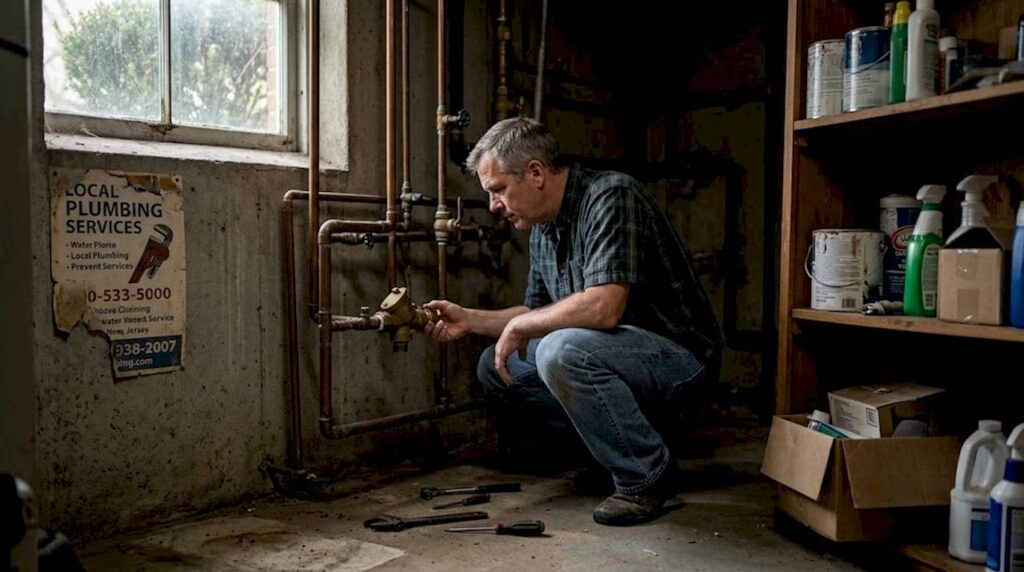
Water pressure backflow is a plumbing cross-connection failure where water moves in the wrong direction and can reverse toward the potable drinking water supply. A cross-connection is any physical link between your drinking water system and a non-potable source. That source could be an irrigation line sitting in fertilized soil, a hose submerged in a bucket of cleaning solution, or even a boiler system carrying treated water.
Here is what makes cross-connections especially dangerous:
- You cannot see contamination entering the system. There is no alarm, no color change, nothing visible.
- Contaminants can spread quickly through a building’s supply lines before anyone notices.
- Even brief backflow events can introduce bacteria, chemicals, pesticides, or heavy metals into the water.
- Newer buildings are not immune. Modern plumbing can still have cross-connections if systems were not designed or installed with proper protection.
“Backflow is not just an infrastructure problem. It is a property-side responsibility. The connection between your plumbing and the public supply makes every property owner a link in the public water safety chain.”
One of the most persistent misconceptions we hear from property managers is, “We just renovated, so backflow is not something we need to worry about.” Renovation does not eliminate cross-connections, especially if irrigation, fire suppression, or HVAC systems were added or modified. Understanding NJ backflow regulations is essential for any property, not just older buildings.
What causes water pressure backflow? Backsiphonage vs. backpressure
Knowing what backflow is matters a lot less than knowing how it starts. Backflow caused by water pressure problems commonly occurs via two hydraulic mechanisms: backsiphonage and backpressure. These are distinct, and your prevention strategy needs to address both.
Backsiphonage happens when supply pressure drops enough to create a vacuum or negative pressure on the supply side. Think of it like a straw: if someone pinches the supply end while the other end is submerged in a liquid, the liquid gets pulled back. On your property, this can happen during a water main break, firefighting activity that draws heavily from the local main, or simply during periods of unusually high demand across the network.
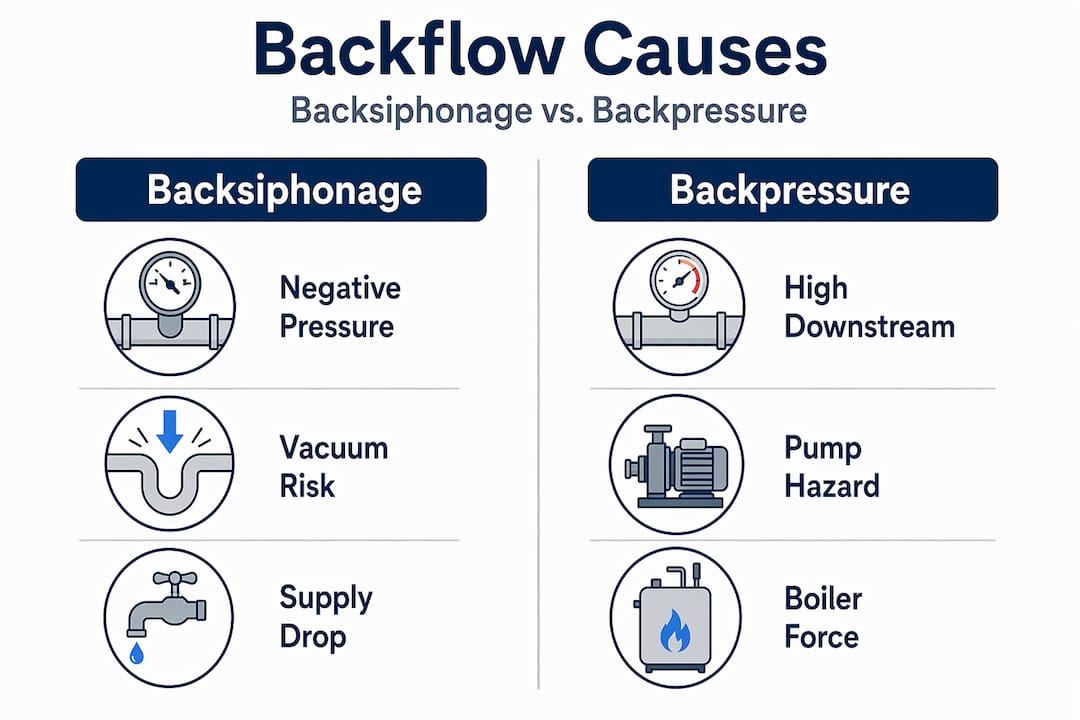
Backpressure works in the opposite direction. Here, the pressure on the downstream side of your plumbing exceeds the incoming supply pressure. Downstream plumbing equipment like pumps, booster systems, boilers, thermal expansion tanks, or even elevated storage tanks can create pressure higher than the municipal supply, and that pushes non-potable water back through any unprotected cross-connection.
| Feature | Backsiphonage | Backpressure |
|---|---|---|
| Definition | Reverse flow caused by negative supply pressure | Reverse flow caused by downstream pressure exceeding supply |
| Primary cause | Supply pressure drop or vacuum | Equipment generating excess downstream pressure |
| Common triggers | Main breaks, high-demand events, nearby firefighting | Booster pumps, boilers, elevated tanks, thermal expansion |
| Risk level | High during emergency conditions | High in commercial and multi-unit properties |
| Typical sources | Irrigation, hose connections, submerged inlets | HVAC, fire suppression, industrial processes |
Both mechanisms can affect any commercial building, multi-family property, or single-family home in New Jersey. Irrigation systems are one of the most common backsiphonage risks in residential settings. Booster pumps are a frequent backpressure trigger in multi-story commercial buildings.
Pro Tip: Do not assume your property only faces one type of backflow risk. Many properties face both backsiphonage and backpressure exposure at different points in the same plumbing system. A thorough assessment from a certified tester can identify all the pressure vulnerabilities present. Reviewing NJ home backflow protection guidance can also help homeowners understand where their system is most exposed.
Why New Jersey requires backflow prevention and how compliance works
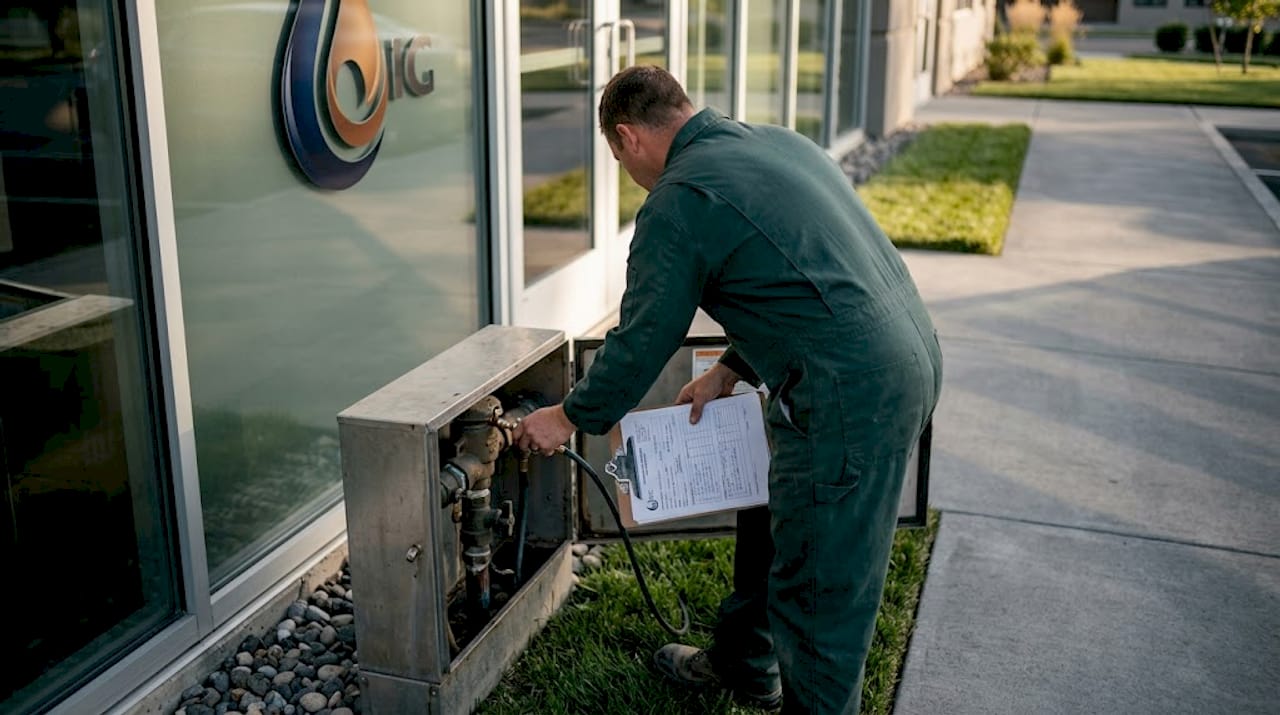
New Jersey does not leave backflow prevention to property owners’ discretion. NJDEP cross-connection control requires approved backflow prevention for physical connections to public water systems, and this applies broadly to residential, commercial, and industrial properties alike.
The core reason is simple. Municipal water treatment happens at the plant. Once water enters your private plumbing, the utility has no direct control over what it contacts. If backflow occurs without a functioning prevention device, contaminated water can re-enter the public main and affect your neighbors as well.
Here is how compliance works in practice:
- Identify all cross-connections on your property. This includes irrigation systems, fire sprinkler lines, boiler makeup water connections, commercial equipment hookups, and any hose bibs near non-potable sources.
- Install the correct backflow prevention assembly for each cross-connection, based on the hazard level and pressure conditions at that point.
- Schedule testing immediately after installation with a certified tester to confirm the device is functioning properly and document the initial test result.
- Schedule annual testing every year after that. New Jersey requires regular testing, and your water utility may also send compliance notices demanding proof of current test records.
- File test reports with your water supplier or the appropriate local authority, as required. Holding records on-site is not enough in most cases.
- Repair or replace any device that fails testing promptly, then retest and refile.
“Public safety relies on property-side compliance, not just municipal efforts. The backflow prevention assembly on your property is the last line of defense between your plumbing and the public water supply.”
Backflow testing in NJ must be performed by someone who holds specific credentials for testing backflow prevention assemblies. This is a point where many property managers make an expensive mistake. Backflow certification in NJ is separate from a general plumbing license.
Pro Tip: When hiring for compliance testing, ask directly whether the technician is a certified backflow tester credentialed by NJDEP requirements. A general plumber can install pipes and even some devices, but New Jersey requires certified testers rather than relying only on a plumbing license for assembly testing and certification documentation.
Choosing and maintaining backflow prevention devices for your property
Selecting the right backflow prevention assembly is not a one-size-fits-all decision. The correct device depends on the specific hazard present at each cross-connection point and the pressure conditions your plumbing system creates.
New Jersey device selection depends on the hazard and pressure conditions, and backpressure-capable hazards typically need higher protection assemblies such as an RPZ (reduced pressure zone) rather than lower-level options. An RPZ is the most protective device type available. It uses a spring-loaded differential pressure relief valve to ensure that even if both internal check valves fail, contaminated water is discharged to the atmosphere rather than allowed to flow back into the supply.
| Device type | Applications | Hazard level | Testing interval |
|---|---|---|---|
| RPZ (Reduced Pressure Zone Assembly) | Irrigation, boilers, fire systems, high-hazard industrial | High | Annual |
| Double Check Valve Assembly (DCVA) | Low-hazard commercial connections, lawn irrigation (low risk) | Low to moderate | Annual |
| Pressure Vacuum Breaker (PVB) | Irrigation above the highest outlet, seasonal systems | Moderate (backsiphonage only) | Annual |
| Atmospheric Vacuum Breaker (AVB) | Individual fixture protection, infrequent use | Low (backsiphonage only) | Not testable, inspect regularly |
The difference between an RPZ and a double check valve assembly matters significantly in real-world terms. A double check valve provides a reasonable barrier for low-hazard applications, but it cannot handle a sustained backpressure event the way an RPZ can. If your property has booster pumps, a thermal heating system with additives, or a chemical injection system for irrigation, you need RPZ protection.
Maintaining devices year after year is just as important as initial installation. Here are practical steps every property owner should follow:
- Keep test records organized and filed with your water supplier on time. Missing a filing deadline can result in compliance notices or fines.
- Inspect devices visually between annual tests. Look for signs of leaking around the relief valve on an RPZ, which can indicate a partial failure.
- Protect devices from freezing. Many New Jersey properties have exterior or garage-mounted backflow assemblies that are vulnerable to freeze damage each winter.
- Replace devices promptly when they fail testing. A device that fails annual testing is providing no protection until it is repaired or replaced and retested.
- Update your cross-connection survey any time you add new plumbing, irrigation zones, HVAC equipment, or fire suppression lines.
Reviewing NJ backflow device codes keeps you current on which assemblies are approved for specific applications, since NJDEP can update its approved assembly list over time. Following a step-by-step backflow prevention guide tailored to NJ properties helps you build a repeatable compliance process rather than scrambling before each inspection.
A practical view most owners miss: Proactive backflow prevention is about pressure management, not just devices
Here is the honest truth about most backflow compliance programs we encounter: property owners check the box on annual testing, keep the certificate on file, and assume they are protected. For many properties, that approach holds up. But for properties with complex plumbing, multiple systems, or changing use conditions, it creates a genuine blind spot.
The device is not the whole solution. It is a mechanical safety net. The real question is whether the pressure conditions in your building are creating situations that stress or bypass that safety net in ways that go undetected between tests.
Managing both sides of the pressure equation means looking for vacuum and pressure drops that indicate backsiphonage risk during main breaks or high-demand events, and also looking for any equipment or piping elevations that can raise downstream pressure above supply. Both of these conditions can change over time as your building’s systems age, get upgraded, or experience higher usage loads.
We see backpressure risk increase significantly when properties add booster pumps for upper floors or install tankless water heaters without proper pressure management on the supply side. These are exactly the situations where a device that was correctly sized and tested at installation might now be operating outside its design parameters.
Device choice in NJ is driven by the hazard class and the specific pressure condition, which determines whether an RPZ or a lower-tier assembly is appropriate. If the pressure conditions at your property have changed since installation, your device selection may no longer match your actual risk.
The mindset shift we advocate is treating backflow prevention as ongoing pressure management rather than a static compliance task. That means doing a walkthrough of your plumbing safety measures annually, not just when a notice arrives. Assess what new equipment was added, whether demand has changed, and whether your existing devices are still the right match for current conditions.
Pro Tip: Build a simple annual checklist that includes not just the testing appointment but also a review of any plumbing or equipment changes made in the previous 12 months. Catching a new pressure risk before the next test cycle is far less costly than dealing with a failed inspection or a contamination event.
Protect your property and stay compliant with expert backflow testing
Staying on top of backflow prevention is straightforward when you have the right support. Certified testing creates the documentation trail your water supplier needs, and a proper assessment identifies pressure risks that visual inspection alone can miss.
Our team specializes in backflow testing and certification in New Jersey for residential, commercial, and multi-unit properties throughout the state. We assess your property’s specific hazard setup, recommend the correct device type, and provide full documentation to keep you compliant with NJDEP requirements. If you have received a backflow letter from your water supplier, we can help you respond quickly and resolve your compliance status before deadlines pass. Reach out today to schedule your assessment and testing appointment.
Frequently asked questions
How can I tell if my property is at risk for water pressure backflow?
If your plumbing includes cross-connections like irrigation systems, booster pumps, boilers, or fire suppression lines, your risk is higher. Booster systems and elevated tanks can create backpressure backflow unless properly protected, so a certified inspection is the most reliable way to confirm your exposure.
Is annual backflow testing required by law in New Jersey?
Yes, annual testing by a certified tester is required for most backflow prevention assemblies under NJDEP rules. NJDEP emphasizes certified testing rather than relying only on a plumbing license, and test records must typically be filed with your water supplier.
What types of backflow prevention devices are approved in New Jersey?
Device approval depends on your specific hazard level and pressure conditions. High-risk setups require an RPZ assembly, while lower-hazard connections may qualify for a double check valve assembly or pressure vacuum breaker, all subject to current NJDEP approval lists.
Who is authorized to test my backflow prevention device?
A tester who holds specific certification for backflow prevention assemblies is required, not just any licensed plumber. New Jersey’s physical-connection requirements make clear that certified testing credentials are separate from and in addition to a standard plumbing license.