
TL;DR:
- Failing a water safety inspection in New Jersey can lead to fines, closures, and contaminated drinking water if violations are ignored. Proper preparation, certified testing, accurate recordkeeping, and timely repairs are essential for maintaining compliance and preventing costly enforcement actions. Utilizing automated tracking platforms and fostering good relations with water utilities help property managers stay ahead of evolving regulations and ensure long-term water safety.
Failing a water safety inspection in New Jersey is not just paperwork trouble. It can mean fines, forced closures, and in serious cases, contaminated drinking water flowing through your property. The water safety compliance steps you follow, or skip, directly determine whether your building stays open and your occupants stay safe. Backflow issues are among the most cited violations for commercial and residential properties across the state, and many property owners don’t discover a problem until an official notice arrives. This guide walks you through every stage of the process: understanding what’s required, preparing your systems, executing audits, and staying compliant long-term.
Table of Contents
- Key takeaways
- Water safety compliance steps: what NJ law requires
- Preparation steps before your compliance process begins
- Executing water safety audits and backflow maintenance
- Verification and ongoing compliance routines
- Common challenges and how to handle them
- My perspective on staying ahead in NJ water compliance
- How Southjerseybackflow keeps NJ properties compliant
- FAQ
Key takeaways
| Point | Details |
|---|---|
| Know your NJ obligations | Backflow preventers must be tested annually by certified testers with results submitted to your local authority. |
| Prepare before you audit | Collect permits, past test records, and device inventories before scheduling any inspection or compliance check. |
| Act fast on failures | Critical violations like missing backflow devices require immediate correction before your facility can reopen. |
| Records protect you | Organized, accessible logs of every test, certification, and repair are your first defense during an official inspection. |
| Technology reduces risk | Automated compliance platforms can track deadlines, send alerts, and submit reports on your behalf. |
Water safety compliance steps: what NJ law requires
New Jersey requires property owners to meet both state-level plumbing codes and local utility regulations when it comes to water safety. For most commercial and multi-family properties, this means maintaining a cross-connection control program that addresses every point where your private plumbing connects to the public water supply.
Here is what the core compliance framework looks like in practice:
- Annual backflow testing. Backflow preventers must be tested annually by certified testers, and those reports must be submitted to your water purveyor to maintain NJ regulatory compliance.
- Certified testers only. New Jersey requires that backflow prevention device testers hold a current state-issued certification. Hiring an uncertified contractor puts your compliance status at risk immediately.
- Device registration. Every backflow prevention assembly on your property must be registered with your local water utility. Unregistered devices are treated the same as missing devices during inspections.
- Recordkeeping. All test results, certifications, and corrective action reports must be retained and available for review at any time.
| Requirement | Frequency | Responsible Party |
|---|---|---|
| Backflow preventer testing | Annual | Property owner (via certified tester) |
| Tester certification renewal | Per state schedule | Licensed tester |
| Test result submission | After each test | Tester or owner |
| Device registration update | When devices change | Property owner |
| Staff water safety training | Ongoing | Property manager |
Water safety training requirements are often overlooked. Staff who interact with mechanical rooms, irrigation systems, or any cross-connection points should understand what a backflow preventer is, how to spot a visible failure, and who to call. This is not just about passing an audit. Trained staff catch problems between scheduled inspections, which is where most damage actually occurs.
Preparation steps before your compliance process begins
Walking into a water safety audit unprepared is the fastest way to fail one. Before you schedule any inspection or hire any tester, you need to do the groundwork. Think of this phase as building your compliance file.
Start by completing a physical inventory of all water system components on your property. That means every backflow prevention device, every irrigation connection, every boiler feed, and every fire suppression system connection. Proper staff certification tracking applies beyond pools. Anyone managing your water systems should have documented competency in water safety procedures.
Here is your preparation checklist:
- Locate and photograph every backflow prevention device on site
- Pull all existing permits, past test results, and device registration certificates
- Verify that your current tester holds an active New Jersey certification
- Identify any devices that are overdue for testing based on their last recorded test date
- Build a compliance calendar marking annual test windows, permit renewals, and staff training dates
- Assign a single point of contact internally who owns compliance tasks and documentation
Pro Tip: Designate a compliance binder or shared digital folder that contains every permit, test report, and certification in one place. Inspectors frequently ask to see documentation on the spot, and a property manager who produces it in under two minutes signals they have a well-run operation.
Selecting the right service provider matters more than many owners realize. New Jersey’s regulations are specific. Working with a team that understands the local utility submission process, and not just the mechanical testing side, saves time and prevents re-submissions. You can review NJ backflow prevention requirements in detail before your first meeting with a tester.
Executing water safety audits and backflow maintenance
This is where compliance is won or lost. The execution phase covers conducting the actual audit, testing your backflow preventers, and documenting everything correctly.
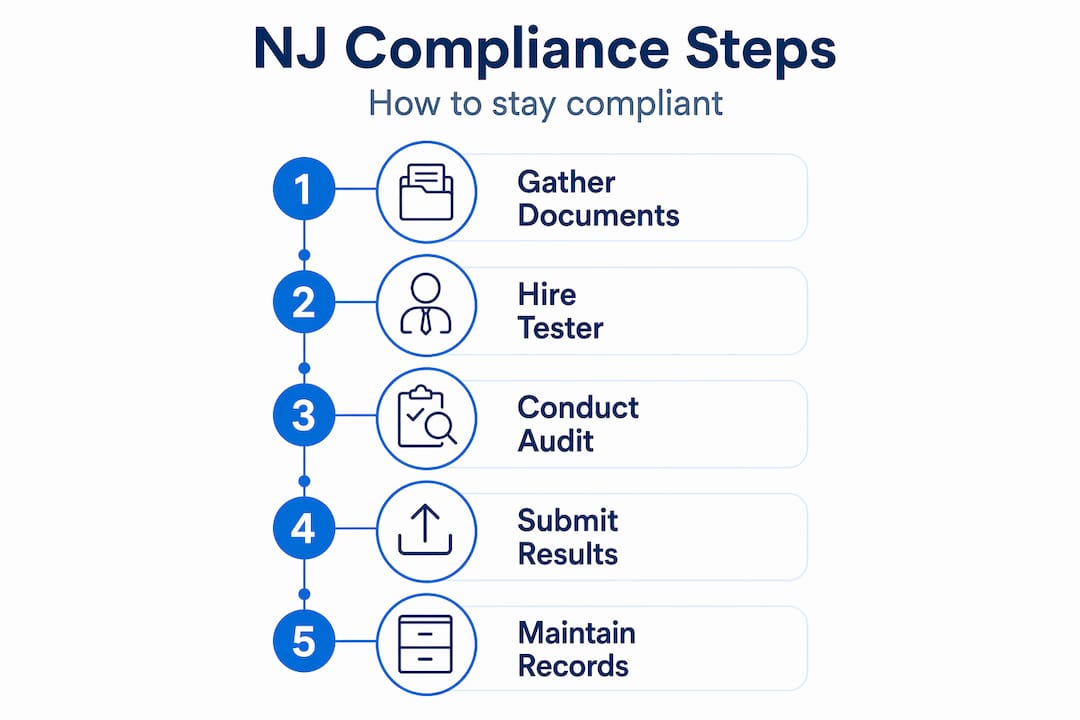
Follow these numbered steps to run a thorough water safety audit:
- Confirm your device inventory is complete. Cross-check your physical walkthrough against your registration records. Any discrepancy is a potential violation.
- Schedule your certified tester. Give yourself a testing window that is at least 30 days before any compliance deadlines. Rescheduling delays happen.
- Conduct the physical inspection. Pool safety inspections follow a phased approach including documentation review, physical inspection, and final pass/fail determination. Apply the same discipline to your full property audit: verify permits, inspect devices, check signage and accessibility, and confirm water quality where required.
- Test each backflow preventer. Your certified tester will use a differential pressure gauge kit to verify that each device is holding to specification. This is not a visual check. It is a mechanical pressure test.
- Record and submit results immediately. Do not let test results sit. Submit them to your water utility as soon as testing is complete to avoid any gap in your compliance record.
- Address any failures without delay. Critical violations such as missing backflow devices or failed pressure tests require immediate correction before a facility can reopen. This is non-negotiable under NJ standards.
Here is a comparison of manual versus automated compliance tracking:
| Factor | Manual tracking | Automated platform |
|---|---|---|
| Deadline reminders | Self-managed calendar | Automated alerts sent to owner and tester |
| Submission process | Paper or email | Digital direct submission to utility |
| Compliance visibility | Relies on spreadsheets | Real-time dashboard |
| Error risk | High, especially with multiple properties | Low, with built-in validation |
| Audit readiness | Manual file retrieval | Instant report generation |
Automated compliance platforms transform manual tracking into unified workflows with real-time visibility. For property managers running more than one building, this shift from spreadsheets to software is not optional if you want to maintain consistent compliance across sites.
Pro Tip: If a device fails testing, get a written repair quote the same day. Regulators look favorably on owners who show immediate corrective action, even if the repair cannot be completed instantly. Documentation of your response timeline matters.
Verification and ongoing compliance routines
Passing a single inspection is not the finish line. The properties that avoid repeat violations are the ones with systematic verification routines built into their operations.
After every audit or test, your verification process should include:
- Reviewing the written results from your tester and confirming that every device either passed or has a documented repair order
- Storing all results in your compliance file with the date, tester name, certification number, and device identification
- Following up on any conditional pass items with a fixed correction deadline
- Updating your compliance calendar with the next scheduled test date for each device
- Confirming that your test results have been received and accepted by your water utility
Maintaining thorough, organized records including all test logs, certifications, and incident reports is the foundation of audit readiness. Records must be accessible and kept according to regulatory retention schedules to avoid fines or closures.
| Verification task | When to do it | Who is responsible |
|---|---|---|
| Confirm submission received by utility | Within 5 days of testing | Property manager |
| File test reports | Same day as testing | Property manager or tester |
| Update compliance calendar | After each test | Property manager |
| Schedule next annual test | 10 months after last test | Property manager |
| Review staff training records | Quarterly | Property manager |
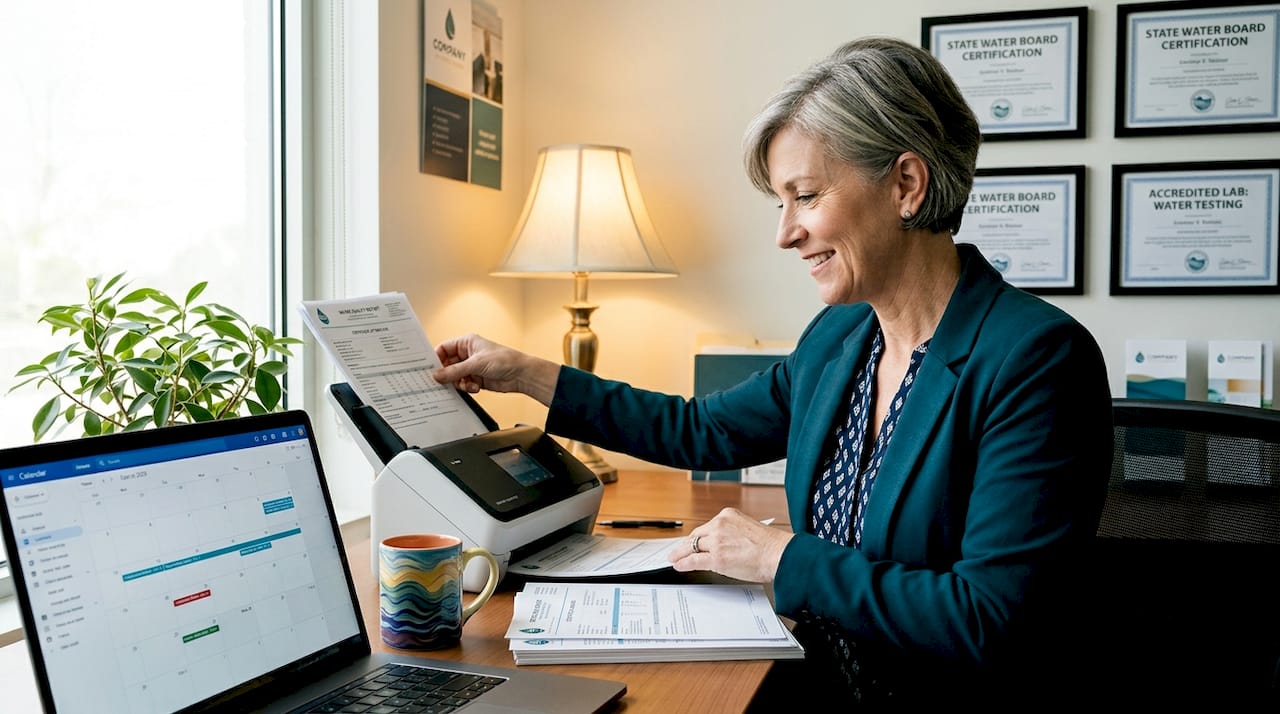
NJ property owners can access portals to submit test results, track compliance status, and receive automated notifications for upcoming deadlines. If your utility offers this kind of portal access, use it. It removes the risk of missed submissions and creates a verifiable digital paper trail that works in your favor during any official review.
Common challenges and how to handle them
Even well-organized property managers run into compliance problems. Here are the most frequent issues Southjerseybackflow sees in the field and what to do about them.
- Expired certifications. A tester whose certification has lapsed cannot submit valid test results. Always verify your tester’s credentials before the test date, not after.
- Missed testing deadlines. One missed annual test can trigger an enforcement notice from your utility. If you realize you have missed a deadline, contact your utility and schedule testing immediately. Proactive outreach almost always results in a better outcome than waiting for a notice.
- Failed tests with no repair plan. Failing a pressure test without a documented repair plan is the scenario most likely to result in fines. Get your repair documentation in order the same day you receive a failed result.
- Communication gaps with inspectors. If an inspector contacts your property, respond within the timeframe they specify. Delays are interpreted as non-cooperation, which elevates enforcement risk.
- Budget pressure. Annual testing and potential device repairs cost money. However, the fines for non-compliance, combined with emergency repair costs after a backflow contamination event, are significantly higher. Build compliance costs into your annual property budget as a fixed line item.
“The properties that get fined are rarely the ones that tried and failed. They are the ones that did nothing until an official letter arrived. By then, the costs are always higher than they would have been.”
If you receive an official backflow compliance notice in New Jersey and are not sure what to do next, reviewing how to respond to a backflow letter will help you understand your obligations and timeline.
My perspective on staying ahead in NJ water compliance
I have worked with enough property managers in New Jersey to know that most compliance failures are not failures of effort. They are failures of system. Someone meant to schedule the test. Someone assumed the tester submitted the report. Someone thought the certification was still current.
What I have learned watching this play out repeatedly is that reactive compliance is always more expensive than proactive compliance. The managers who never get enforcement letters are not doing anything exotic. They have a calendar, a file, a certified tester they trust, and they check in on all three regularly.
The part that most guides leave out is this: your relationship with your water utility matters. When a manager has a history of on-time submissions and organized records, a missed deadline gets a phone call. When a manager has no history or a poor one, that same missed deadline gets an enforcement notice. Build the relationship by being consistent.
NJ water safety regulations are not getting simpler. They are getting more specific, particularly around cross-connection control and documentation standards. Property managers who treat compliance as an annual checkbox will find themselves consistently behind. The ones who treat it as an ongoing operational priority will find it costs far less than they expected, in money, time, and stress.
My practical advice: if you manage more than two properties, use a software platform to track your devices and deadlines. If you manage one property, at minimum use a shared digital folder and a recurring calendar reminder set 60 days before your annual test window.
— Jordan
How Southjerseybackflow keeps NJ properties compliant
Southjerseybackflow specializes in backflow testing, certification, and compliance support for property owners and managers across New Jersey, with focused coverage in Salem County and Gloucester County. Whether you need a first-time device test, a repair after a failed inspection, or ongoing annual compliance support, the team brings certified testers and practical documentation experience to every job.
You can learn exactly what to expect from the process through the NJ backflow testing guide, which covers how to pass your test, submit results correctly, and maintain your compliance record. For those who need certified testing and device services, backflow testing and certification in New Jersey covers every step from scheduling through submission. Reach out to Southjerseybackflow to get your compliance calendar on track before your next deadline.
FAQ
How often do backflow preventers need to be tested in NJ?
Backflow preventers in New Jersey must be tested annually by a state-certified tester, and results must be submitted to your local water utility to maintain compliance.
What happens if I miss my annual backflow test deadline?
Missing a deadline can trigger an enforcement notice from your water utility. Contact your utility immediately and schedule testing. Proactive communication typically results in a better outcome than waiting for a formal notice.
What records do I need to keep for water safety compliance?
You need to retain all test results, tester certification numbers, device registration records, repair orders, and submission confirmations. Organized compliance records must be accessible and kept according to your utility’s retention schedule.
What is a cross-connection and why does it matter?
A cross-connection is any point where your private plumbing could come into contact with the public water supply, creating a contamination risk. Backflow preventers are installed at these points to stop contaminated water from flowing back into the public system.
Can a property owner do their own backflow testing in NJ?
No. New Jersey requires that backflow prevention devices be tested by a certified tester holding a current state-issued license. Self-testing does not satisfy regulatory requirements and will not be accepted by your water utility.