
TL;DR:
- Hazard assessment in backflow prevention involves evaluating cross-connection risks to determine the potential health threat to a property’s water supply. Property features, usage changes, and infrastructure complexity influence hazard levels, requiring regular reassessment and proper device selection. In New Jersey, owners must conduct annual testing with certified professionals, maintain detailed records, and ensure devices are accessible to stay compliant and protect public health.
Hazard assessment in backflow prevention is the systematic evaluation of cross-connection risks in a property’s water system to determine what contaminants could enter the potable supply and how serious that threat is. For New Jersey property owners, this process is not optional. National codes like the International Plumbing Code (IPC) and Uniform Plumbing Code (UPC) require that hazard levels be identified before protective devices are selected or testing schedules are set. Getting this right protects your tenants, your liability, and your water service.
How is hazard assessment in backflow prevention defined?
Hazard assessment in backflow prevention is the formal process of categorizing cross-connection risks into high, moderate, or low hazard levels based on the potential health impact of a contamination event. The category assigned to your property directly controls which backflow prevention device you must install and how often it must be tested.
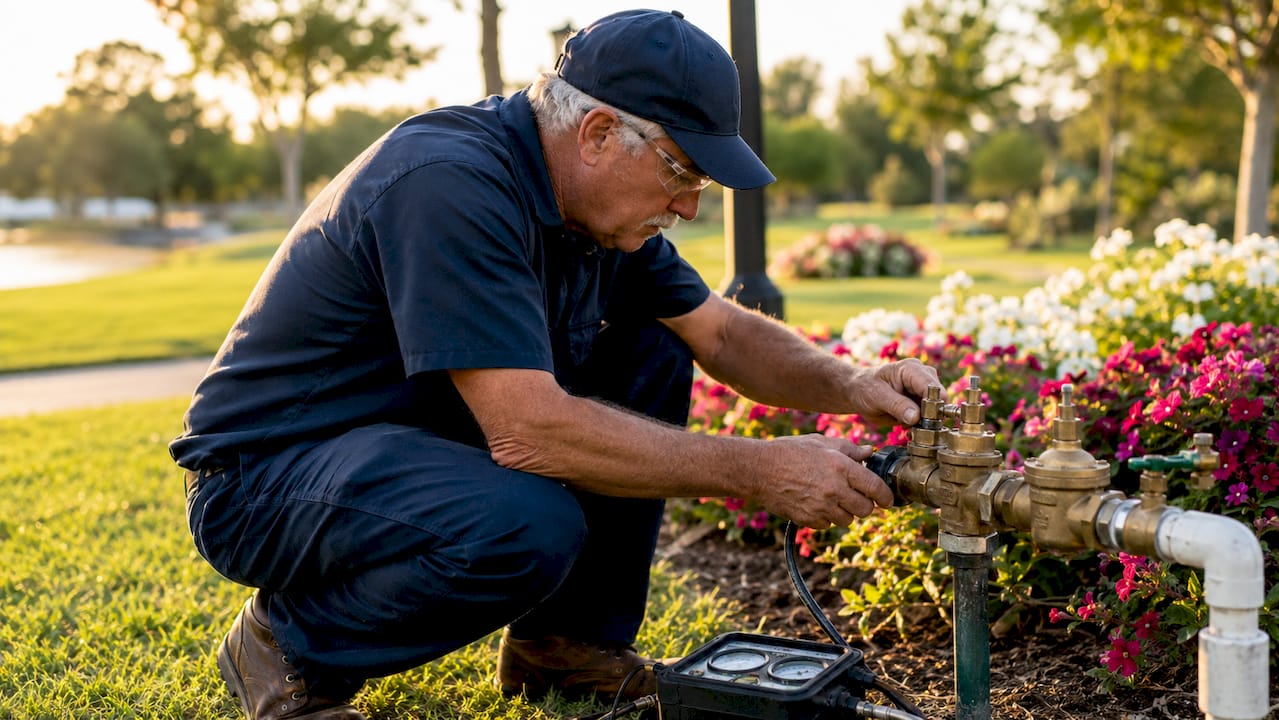
Hazard levels are defined by the type of substance that could enter the water supply if backflow occurred. High hazard connections involve lethal or severely harmful contaminants such as sewage, pesticides, or industrial chemicals. These require a Reduced Pressure Zone (RPZ) assembly or an air gap, the two strongest forms of protection available. Moderate hazard connections involve substances that are harmful but not immediately life-threatening, and double check valve assemblies (DCVA) are typically required. Low hazard connections involve aesthetic issues like taste or odor changes, where a pressure vacuum breaker (PVB) or DCVA is usually sufficient.
Backflow occurs through two mechanisms: backpressure, where downstream pressure exceeds supply pressure, and backsiphonage, where negative pressure in the supply line pulls water backward. Hazard analysis in backflow must account for both scenarios because some devices protect against one but not the other. A PVB, for example, cannot protect against backpressure conditions, which is why hazard classification directly influences device selection.
Hazard classification table: devices and risk levels
| Hazard Level | Example Contaminants | Required Device |
|---|---|---|
| High | Sewage, pesticides, industrial chemicals | RPZ assembly or air gap |
| Moderate | Boiler additives, non-toxic chemicals | Double check valve assembly (DCVA) |
| Low | Aesthetic contaminants (taste, odor) | PVB or DCVA |
Pro Tip: If you are unsure of your property’s hazard level, start by listing every point where your plumbing connects to a non-potable source. That list is the foundation of any backflow risk assessment.
How do property features affect backflow hazard levels?
The physical characteristics of your property are the primary inputs for any hazard evaluation in plumbing. Two properties on the same street can carry completely different hazard classifications based on what equipment is connected to their water systems.
Hazard classification is dynamic. Adding a fertilizer injector to an irrigation system, for example, immediately elevates a low hazard property to a high hazard one. That single change requires replacing a PVB with an RPZ assembly and triggers more frequent testing. The same logic applies to fire sprinkler systems treated with antifreeze or corrosion inhibitors, chemical feed systems in commercial kitchens, and medical equipment connections in healthcare facilities.
Common high-risk fixtures and systems for New Jersey properties include:
- Irrigation systems with chemical or fertilizer injection
- Fire suppression systems with chemical additives
- Boilers with chemical treatment programs
- Dental or medical equipment with water connections
- Car wash or industrial cleaning equipment
Lower-risk fixtures that still require assessment include:
- Standard residential hose bibs
- Dishwashers and ice makers
- Residential lawn irrigation without chemical injection
- Toilet fill valves
Pro Tip: Any time you renovate, add equipment, or change how your property is used, schedule a reassessment. A property that passed inspection two years ago may now carry a higher hazard classification without anyone realizing it.
The plumbing layout also matters. Properties with complex piping, multiple service connections, or older infrastructure present more potential cross-connection points. A thorough site inspection maps every connection and evaluates each one individually rather than assigning a single blanket classification to the whole property.
What are new jersey’s backflow testing requirements?
New Jersey property owners are legally responsible for all costs associated with backflow assembly testing, maintenance, and compliance reporting. This responsibility does not transfer to the utility company and does not pause if the system is rarely used. Owners must submit testing reports on time to avoid enforcement actions, and utilities typically provide lists of certified testers to help owners find qualified professionals.
Annual testing is the standard requirement, and the frequency is tied directly to hazard classification. Testing frequency and protocols depend on the hazard level assigned during assessment. High hazard assemblies in commercial or industrial settings may face stricter schedules than residential low hazard systems.
The annual testing process for NJ property owners follows this sequence:
- Hire a certified backflow assembly tester (BAT) licensed in New Jersey.
- Schedule the test before your utility’s annual deadline.
- The tester performs differential gauge pressure tests following ANSI/ASSE and AWWA standards.
- Results are documented on a standard test report form.
- The report is submitted to your water utility, often through platforms like trackmybackflow.com.
- If the device fails, repairs or replacement must be completed and the assembly retested.
Annual testing costs range from $75 to $200 per assembly in 2026. That figure covers the test itself, not repairs or replacement parts. Failure to comply can result in fines or water service interruption, both of which cost far more than the test fee. Compliance enforcement is increasingly automated through electronic tracking systems, which means late submissions are flagged without any manual review.
Visual inspections cannot confirm whether a backflow device is functioning correctly. Internal components like springs and seals deteriorate silently. A device can look perfectly intact on the outside while failing to prevent backflow under pressure. This is why mechanical testing by a certified professional is required every year, not just at installation.
How to conduct a backflow hazard assessment: practical steps
A backflow hazard assessment follows a defined process whether you hire a professional or want to understand what they are doing on your property. Assessments performed during initial design phases influence device selection, drainage planning, and site grading. Waiting until after construction creates costly retrofitting problems, so early assessment is always the better approach.
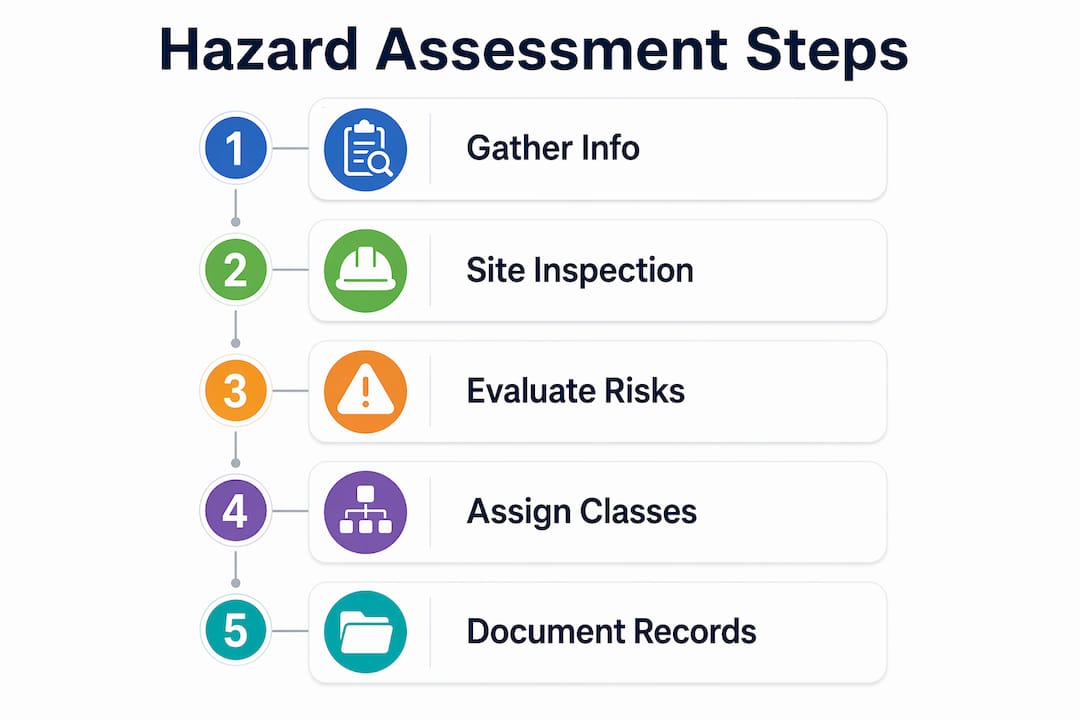
The five core steps of a hazard assessment are:
Step 1: gather property information
Collect plumbing plans, utility connection records, and a list of all equipment connected to the water system. Note the property’s use type, whether residential, commercial, or industrial, since use type sets the baseline for hazard expectations.
Step 2: conduct a site inspection
Walk the entire property and physically identify every cross-connection point. Look for hose bibs, irrigation connections, boiler feeds, chemical injection points, and any non-potable water sources that share piping with the potable supply.
Step 3: evaluate each fixture and connection
Assess the substance type, concentration, and flow direction risk at each connection. Determine whether backpressure or backsiphonage is the more likely backflow mechanism at each point.
Step 4: assign hazard classifications
Apply high, moderate, or low hazard classifications to each connection based on the evaluation. Select the appropriate protective device for each classification.
Step 5: document and maintain records
Record all findings, device selections, installation locations, and test results. Update this documentation whenever the property changes. Backflow preventers must be accessible for testing and located downstream of the meter. Concealed or locked installations are non-compliant unless the utility has specifically approved the location.
Pro Tip: Keep a single compliance folder, physical or digital, with your assessment records, test reports, and utility correspondence. If your utility sends a notice or your property is audited, having organized records saves significant time and stress.
| Assessment Step | Common Challenge |
|---|---|
| Site inspection | Missing concealed or buried connections |
| Fixture evaluation | Misidentifying hazard level due to equipment changes |
| Device selection | Choosing a device that cannot protect against backpressure |
| Documentation | Losing records after staff turnover or property sale |
| Annual retesting | Missing utility deadlines due to poor scheduling |
Why most NJ property owners get hazard assessment wrong
The most common mistake I see is treating hazard assessment as a one-time checkbox rather than an ongoing obligation. Property owners complete the initial assessment, install the required device, and assume the job is done. It is not.
Many property owners believe backflow preventers do not need regular testing beyond installation. That belief leads directly to silent device failures and compliance violations. I have seen properties where the backflow assembly had not been tested in years, the internal seals had degraded completely, and the owner had no idea. The device looked fine. It was not.
The second mistake is ignoring how property changes affect hazard classification. A commercial tenant adds a chemical dispensing system. A landscaper installs a fertilizer injector on the irrigation line. These changes happen without anyone notifying the property manager, and suddenly the existing device is no longer adequate for the new hazard level. Reviewing your backflow prevention misconceptions is a good starting point for understanding what most owners get wrong.
Device location is another underrated issue. Backflow assemblies installed in crawl spaces, locked mechanical rooms, or buried vaults create real problems at testing time. Testers cannot always access them without significant effort, and inaccessible devices can trigger compliance flags with your utility.
My practical advice: set a calendar reminder 60 days before your utility’s annual testing deadline. Use that time to confirm your tester is scheduled, verify nothing on the property has changed since the last assessment, and check that your device is accessible. Proactive management of your annual backflow deadlines is the single most effective habit a NJ property owner can build.
— Jordan
How Southjerseybackflow helps NJ property owners stay compliant
Southjerseybackflow provides backflow testing, certification, and hazard assessment services across New Jersey, working directly with property owners and managers to meet state and utility requirements.
Whether you manage a single residential property or a portfolio of commercial buildings, Southjerseybackflow handles the full compliance process. That includes certified annual testing following ANSI/ASSE standards, accurate hazard evaluation, and direct report submission to your water utility. If you have received a compliance notice or need to understand your property’s current hazard classification, Southjerseybackflow’s team knows NJ regulations and can get you back on track fast. Start with a full review of backflow testing in New Jersey to understand exactly what passing and submitting your test requires.
Key takeaways
Hazard assessment in backflow prevention is the foundational step that determines which devices your NJ property requires, how often they must be tested, and what your legal obligations are as an owner.
| Point | Details |
|---|---|
| Hazard levels drive device selection | High hazard requires RPZ or air gap; moderate requires DCVA; low allows PVB or DCVA. |
| Classification changes with property use | Adding fertilizer injectors or chemical systems elevates hazard level and requires device upgrades. |
| Annual testing is legally required | NJ property owners pay for testing, which costs $75–$200 per assembly, and must submit reports to their utility. |
| Visual checks are not sufficient | Internal device components fail silently; only certified mechanical testing confirms function. |
| Documentation must stay current | Updated records of assessments, device locations, and test results protect owners during audits or utility reviews. |
FAQ
What does hazard assessment mean in backflow prevention?
Hazard assessment in backflow prevention is the process of evaluating cross-connection risks in a property’s water system and assigning high, moderate, or low hazard classifications based on potential health impact. The classification determines which protective device is required and how frequently it must be tested.
How often does a backflow preventer need to be tested in new jersey?
Annual testing is the standard requirement for most backflow assemblies in New Jersey. Testing must be performed by a certified backflow assembly tester, and results must be submitted to the water utility.
Can a property’s hazard level change over time?
Yes. Hazard classification changes whenever property usage or plumbing equipment changes. Installing a fertilizer injector or chemical feed system can elevate a low hazard property to a high hazard classification, requiring a more protective device.
Who pays for backflow testing and maintenance in NJ?
Property owners are responsible for all costs associated with backflow assembly testing, maintenance, and compliance reporting, regardless of how often the system is used.
What happens if i miss my backflow testing deadline?
Failure to comply with annual testing requirements can result in fines or water service interruption. Compliance tracking is increasingly automated, so late submissions are flagged without manual review.