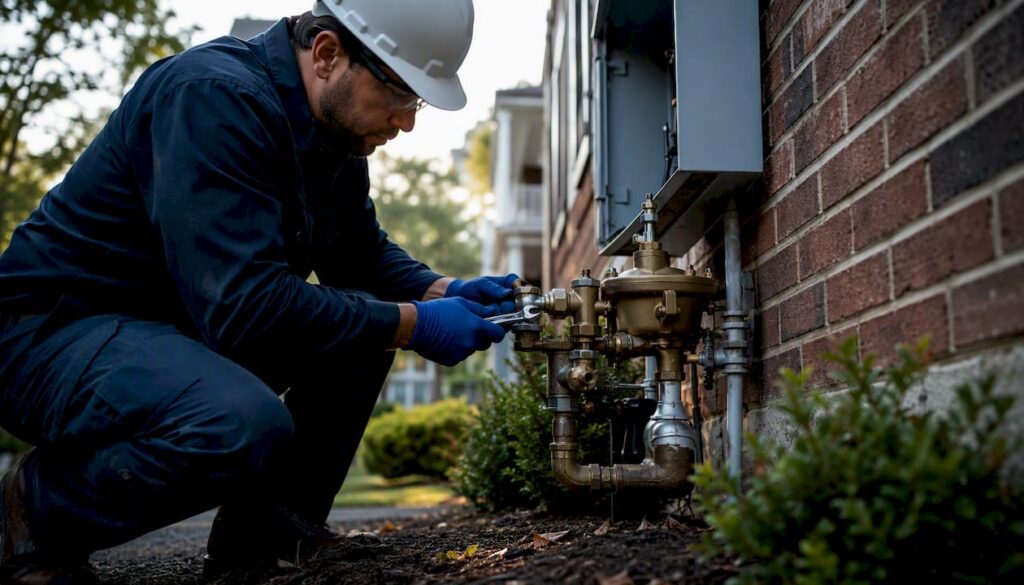
If you own or manage multiple buildings, the single most important thing you can do this week is centralize every backflow device on a tracked testing and reporting schedule and hire a certified tester. Missed tests lead to fines, water service interruptions, and tenant disruption. The property owner, not the tenant or contractor, is legally responsible in nearly every jurisdiction.
Here is where to start:
- Find every device. Walk each property and log every backflow preventer: location, assembly type, size, and installation date.
- Confirm test due dates. Pull any prior test reports and identify which devices are overdue or approaching their annual deadline.
- Hire a certified tester. Verify credentials before booking. Your water authority specifies which certifications are acceptable.
- Schedule tests in geographic blocks. Group properties by location to reduce travel time and cost.
- Set calendar reminders. Annual tests are the standard cadence; some devices require semi-annual checks.
- File reports promptly. Confirm that your tester submits results directly to your water authority, and keep a copy for your records.
Key Takeaways
Across a multi-property portfolio, sustained backflow compliance comes down to one discipline: centralized records, certified annual tests, and confirmed filing with your water authority.
| Point | Details |
|---|---|
| Centralize device records | Log every assembly by address, type, size, and test due date in one shared system. |
| Annual certified testing | Most jurisdictions require annual tests by a certified tester; confirm your water authority’s specific schedule. |
| Confirm filing, not just testing | Always request written confirmation that your tester filed results with the water authority. |
| Vet your tester carefully | Verify current certifications, proof of insurance, and willingness to file reports before booking. |
| Southjerseybackflow for NJ portfolios | Southjerseybackflow tests, repairs, and files directly with NJ water authorities for multi-property clients. |
Table of Contents
- Why multi-property backflow compliance is non-negotiable
- Where are backflow assemblies typically located on multi-unit properties?
- Which backflow assembly does your multi-unit property actually need?
- How often must assemblies be tested, and who files the results?
- Step-by-step compliance checklist for a multi-property portfolio
- What does backflow testing and repair actually cost?
- What happens when a backflow test fails?
- Special issues for apartments, condos, and HOAs
- Which records should you keep, and for how long?
- Questions to ask before hiring a certified backflow tester
- How to keep a multi-property portfolio compliant year after year
- How backflow compliance works in New Jersey: a South Jersey Backflow example
- What most property managers get wrong about backflow compliance
- Southjerseybackflow handles testing, filing, and repairs for NJ property managers
- Sources
Why multi-property backflow compliance is non-negotiable
Backflow happens when water pressure reverses and contaminated water flows backward into the public supply. At a single-family home, the risk is limited. At a multi-unit property with boilers, irrigation, fire suppression, and dozens of tenant connections, the exposure multiplies fast.
The Safe Drinking Water Act gives the EPA authority to protect public water systems from contamination, and that authority flows directly down to local water utilities, which run cross-connection control programs requiring property owners to install, test, and report backflow assemblies. The EPA does not set individual device testing schedules, but it establishes the public-health rationale local authorities use to mandate them.
The operational consequences of non-compliance are concrete:
- Fines and notices of violation from the water authority, sometimes assessed per device per day of non-compliance.
- Water service interruption if the authority determines a cross-connection poses an imminent risk.
- Tenant disruption and lease complications when water is shut off unexpectedly.
- Permitting and certificate-of-occupancy problems during property sales or renovations.
Municipal cross-connection programs make clear that the property owner or manager is the responsible party, not the tenant and not the plumber who installed the device. For a portfolio, that means one missed device at one address can generate a violation that follows the ownership entity across all properties.
Where are backflow assemblies typically located on multi-unit properties?
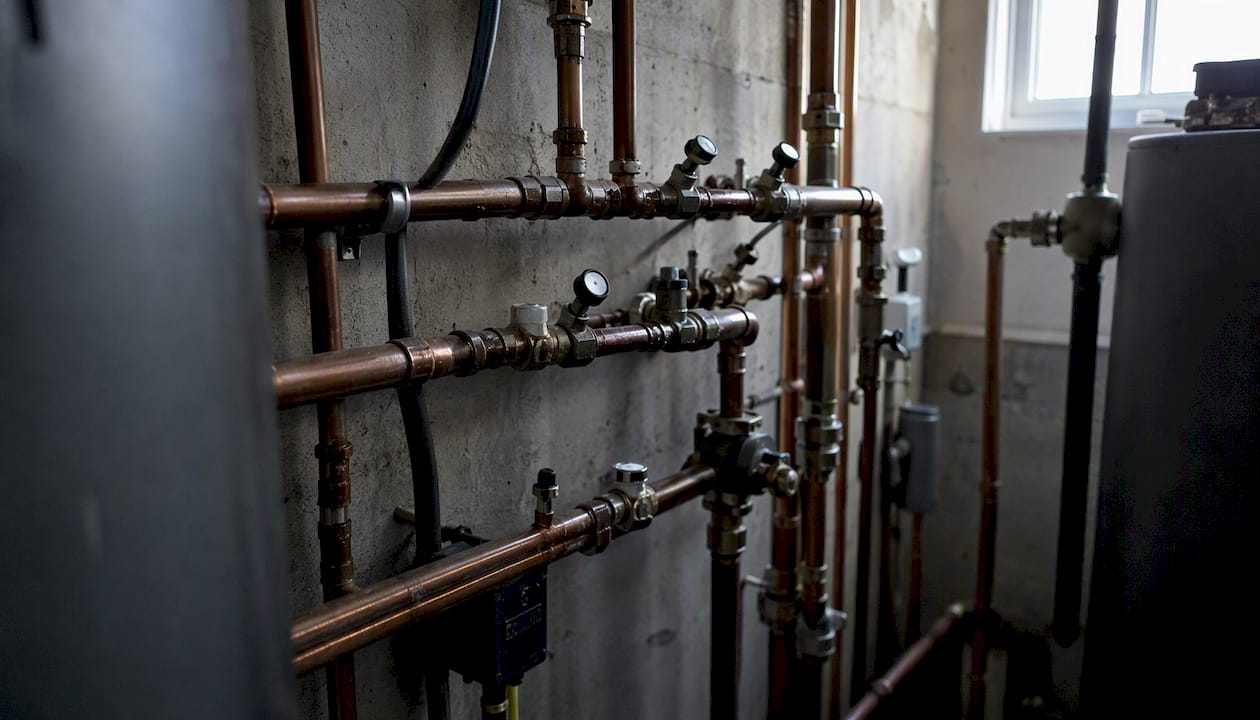
Before you can schedule tests, you need an accurate device inventory. Multi-unit and multi-property sites tend to have assemblies in more places than owners expect.
Common locations to check:
- Master meter connections at the point where the building connects to the public main
- Domestic water risers serving individual floors or tenant meters
- Irrigation systems including common-area landscaping and any tenant-controlled zones
- Boilers and HVAC systems where chemical treatment creates a high-hazard cross-connection
- Fire suppression lines and detector check valve assemblies (these are almost always required to have their own dedicated assembly)
- Tenant sub-meters and any privately installed connections
Assemblies in older buildings are often in basement mechanical rooms, utility closets, or locked exterior vaults. Roof-mounted equipment sometimes has devices that get overlooked entirely during routine walkthroughs. If a device is inside a protective enclosure, confirm you have the key or access code before the tester arrives.
Pro Tip: Create a site map for each property with device locations marked. A photo log tied to each device’s address and ID number saves significant time during annual scheduling and is invaluable if a device is ever disputed during an audit.
Hidden or tenant-installed connections deserve special attention. A tenant who added a water softener, a coffee machine with a direct water line, or a boiler for a commercial unit may have created a cross-connection that nobody documented. Walk mechanical spaces with a plumber at least once per ownership cycle to catch these.
Which backflow assembly does your multi-unit property actually need?
The short answer: your local water authority or the plumbing code adopted by your municipality decides. The Uniform Plumbing Code and the International Plumbing Code are the two model codes most jurisdictions reference, and both specify assembly types by hazard level and application. What follows is a practical reference, not a substitute for checking your local code.
Common assembly types and where they apply:
- Reduced Pressure Zone (RPZ/RP) assembly: The highest level of mechanical protection. Required for high-hazard connections such as boilers with chemical additives, irrigation with fertilizer injection, and any connection where backflow could introduce toxic or biological contamination. Requires annual testing by a certified tester.
- Double Check Valve (DCV) assembly: Used for low-to-moderate hazard applications such as domestic water service to multi-unit buildings where the hazard is considered non-health-threatening. Also requires annual testing.
- Pressure Vacuum Breaker (PVB): Common on irrigation systems. Cannot be installed below grade or in locations subject to back-pressure. Less common in large multi-unit settings because of installation restrictions.
- Double Check Detector Assembly (DCDA): Specifically designed for fire suppression lines. Includes a bypass meter to detect unauthorized water use. Required on virtually every commercial and multi-family fire line.
A practical note: if your property has both a domestic service line and a fire line, you likely need two separate assemblies, each tested independently. Never assume one assembly covers both systems.
How often must assemblies be tested, and who files the results?
The standard cadence across most U.S. jurisdictions is annual testing, with the test due within 12 months of the previous passing result. Some water authorities require semi-annual testing for high-hazard assemblies such as RPZ devices on chemical systems or fire lines in high-occupancy buildings. Check your water authority’s specific schedule because the variation is real.
Jurisdictional differences also affect who is required to test and report. Some jurisdictions segment compliance by property size, exempting small multi-unit properties (often 8 units or fewer) from certain tracking and reporting requirements while requiring larger complexes to maintain full records and submit annual reports. Do not assume your property falls under an exemption without confirming it with your local water authority in writing.
Who files the test report?
In most jurisdictions, the certified tester submits results directly to the water authority, either through an online portal, a paper form, or a third-party compliance platform. The property owner should always request a copy of the filed report and confirm submission. Relying solely on the tester’s verbal assurance that the report was filed is one of the most common compliance gaps in multi-property portfolios.
What a complete test report typically contains:
- Property address and device location
- Assembly type, manufacturer, model, and serial number
- Tester’s name, certification number, and certification expiration date
- Test date and test results (pass or fail, with gauge readings)
- Water authority or utility name
- Tester’s signature and license number
For NJ properties specifically, Southjerseybackflow’s filing guide walks through exactly how results are submitted to local agencies and what fields are required.
Step-by-step compliance checklist for a multi-property portfolio
Going from “unknown status” to “fully compliant” across a portfolio is a project, not a single task. Work through this sequence:
- Build a device inventory. For every property, record each assembly’s address, location within the building, device type, manufacturer, model, serial number, size, and installation date.
- Pull all prior test reports. Identify the last test date and result for each device. Flag any device with no record or an overdue test.
- Verify your property classification. Confirm with your water authority whether each property meets any size-based exemption or has different reporting requirements. Some jurisdictions exempt smaller properties from full reporting obligations.
- Confirm tester certifications. Before scheduling, verify that your tester holds the certification your water authority requires and that it is current.
- Schedule tests in geographic blocks. Group properties by zip code or neighborhood to minimize travel fees and scheduling gaps.
- Receive and review test reports. Check that every required field is complete before the tester leaves the site. An incomplete report may be rejected by the water authority.
- File or confirm filing. If your tester files on your behalf, request confirmation of submission with a timestamp or confirmation number.
- Follow up on any failures. A failed device needs repair and retest before the water authority’s deadline. If you received a backflow notice in New Jersey, respond to the agency’s instructions immediately.
- Document all repairs. Keep repair invoices, parts records, and retest certificates alongside the original test report.
- Set the next test reminder. Log the next due date in your property management system the day the current test is filed.
Tenant notification sample language:
Track each device in a spreadsheet or property management platform with these fields: property address, device ID, assembly type, installation date, last test date, last result, tester name and certification number, next due date, and filing confirmation number.
What does backflow testing and repair actually cost?
Cost varies by assembly type, device size, and how many properties you’re scheduling at once. Here are realistic ranges based on typical market rates for commercial backflow testing services:
- Per-assembly testing fee: Generally $75–$200 for a standard domestic or irrigation assembly. Fire line detector assemblies often run higher due to the additional complexity of the bypass meter test.
- Minor repairs (seals, springs, check discs): Parts and labor typically fall in the $100–$300 range for a standard rebuild kit on a residential-scale RPZ or DCV.
- Major repairs or full replacement: A larger commercial RPZ or DCDA can cost $500–$1,500 or more to rebuild or replace, depending on device size and parts availability.
- Volume scheduling discount: Grouping 5 or more properties with the same tester in a single scheduling block often reduces the per-assembly fee, since the tester eliminates multiple mobilization trips.
Older assemblies in buildings constructed before 2000 frequently need rebuild kits at the time of testing, and parts for discontinued models can add cost and delay.*
Emergency repairs after a failed test or a water authority notice tend to cost more than planned maintenance, both in parts and in expedited labor. Keeping a relationship with a local tester who carries common rebuild parts on the truck is worth more than chasing the lowest per-test quote.
What happens when a backflow test fails?
A failed test is not a crisis, but it does require a fast, documented response. Here is the sequence:
- Tag or isolate the device. Do not ignore a failed result. The tester should note the failure on the report and advise whether the device can remain in service temporarily or must be taken offline.
- Schedule repair immediately. Contact your service provider the same day. For fire suppression lines, treat this as an emergency.
- Complete the repair. A qualified technician rebuilds or replaces the failed components. Keep all parts receipts and the repair invoice.
- Retest after repair. A passing retest must be documented before the compliance file is considered closed.
- File the amended report. Submit the retest result to the water authority. Some jurisdictions require both the original failure report and the passing retest to be on file.
Possible outcomes from the water authority if you do not respond promptly:
- A formal notice of violation with a compliance deadline
- Fines assessed per device per day of non-compliance
- Temporary water service restriction to the affected property
Pro Tip: Keep a short list of local repair vendors who can respond within 24–48 hours. For a multi-property portfolio, at least one vendor should carry common RPZ and DCV rebuild kits on their truck so repairs happen at the time of the failed test, not a week later.
Special issues for apartments, condos, and HOAs
Multi-family governance adds a layer of complexity that single-property owners do not face. The core question is always: who owns the system, and who is responsible for testing it?
Shared systems vs. unit-level devices. In most apartment buildings, the master service connection and any building-wide fire suppression line are the landlord’s responsibility. Individual tenant connections, including any privately installed equipment, may create cross-connections that the tenant technically introduced but that the property owner is still accountable for under most water authority rules.
In a condominium or HOA setting, the lines of responsibility depend on the governing documents. Common-area systems (shared boilers, irrigation, fire lines) typically fall under the HOA’s operating or reserve budget. Unit-level connections are murkier. HOA boards should explicitly address backflow maintenance in their reserve study and authorize access for certified testers in their rules and regulations, not just assume it is covered.
Access coordination is the most common operational headache. Residents who are not home during a scheduled test window delay the entire portfolio schedule. Build a 48-hour advance notice policy into your tenant communication plan, and confirm access with building staff or a key-holder before the tester arrives.
For locked enclosures or vaults, maintain a master key log and share access instructions with your tester before the appointment. A tester who arrives at a locked vault with no access information will bill for the trip regardless.
Which records should you keep, and for how long?
A defensible compliance file for a multi-property portfolio contains more than just the most recent test report. Water authorities and auditors sometimes request historical records to establish a pattern of compliance or to investigate a contamination event.
Records to maintain for each device:
- Completed test reports (pass and fail)
- Repair invoices and parts records
- Retest certificates following any repair
- Device installation records (manufacturer, model, serial number, install date)
- Tester certification copies at the time of each test
- Filing confirmation numbers or submission receipts from the water authority
Retention guidance: Most water authorities recommend keeping test records for a minimum of 3–5 years. Keeping records longer, particularly for devices that have had repeated failures or repairs, provides protection in the event of a contamination dispute or insurance claim. The International Plumbing Code and local adopted codes may specify minimum retention periods, so confirm with your jurisdiction.
Sample log fields per device:
- Property address and unit or zone identifier
- Device ID or tag number
- Assembly type and size
- Manufacturer, model, and serial number
- Installation date
- Date of last test
- Last test result (pass/fail)
- Tester name and certification number
- Next test due date
- Filing confirmation number
Cloud storage with folder structure by property address and test year makes retrieval fast during an audit. A shared drive accessible to both the property manager and the compliance owner is better than a single person’s email inbox.
Questions to ask before hiring a certified backflow tester
Hiring the wrong tester is a compliance risk, not just a service quality issue. An uncertified tester, a tester who does not file reports, or one who carries no insurance can leave you with a violation even after you paid for the work.
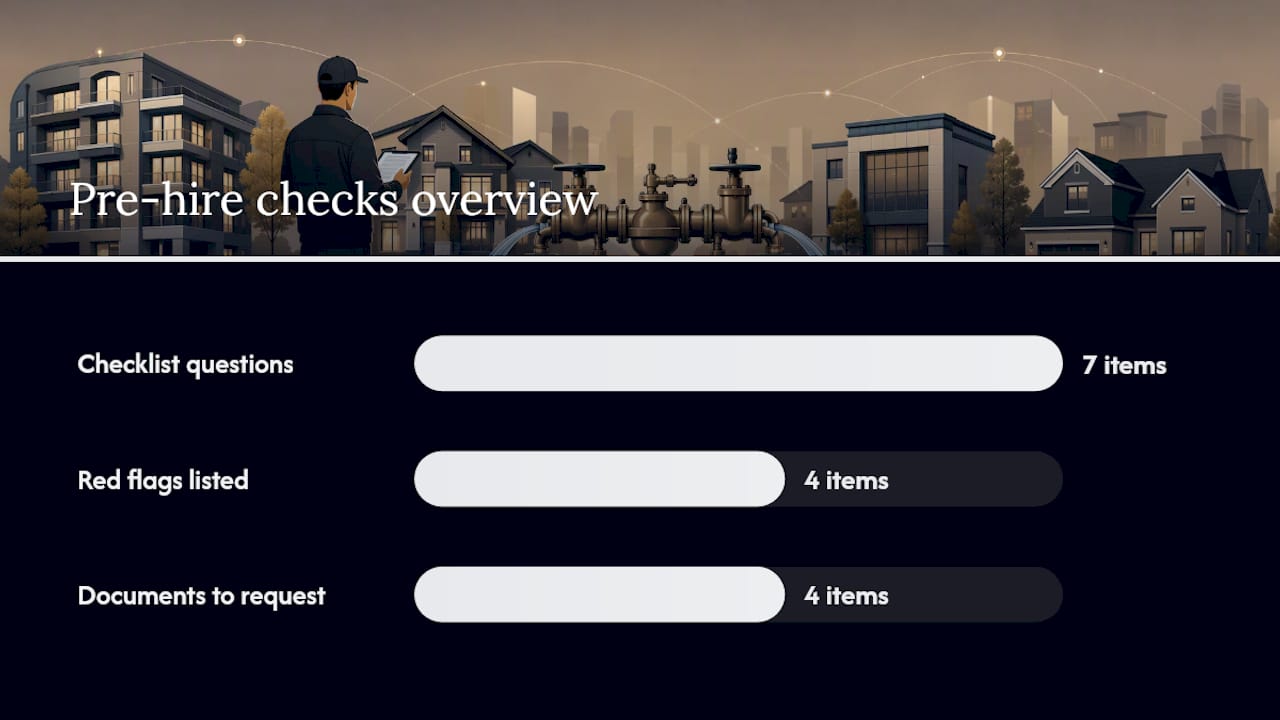
Here is the checklist to run through before booking:
- What certifications do you hold, and are they current? Ask for the certification number and expiration date. Verify it against your water authority’s approved tester list.
- Do you file test reports directly with the water authority? The answer must be yes. Ask how they file (portal, paper, third-party platform) and whether they provide confirmation.
- Can you provide a sample filed report? A legitimate tester can show you a redacted example of a completed, submitted report.
- Are you insured? Ask for a certificate of general liability insurance. For multi-property work, confirm the coverage limit is adequate.
- Do you carry common rebuild parts on your truck? A tester who can repair a failed device on the same visit saves you a second mobilization fee and speeds up your compliance timeline.
- What is your turnaround time for retest after repair? You want a clear answer, not “it depends.”
- Do you offer consolidated billing for multiple properties? For a portfolio, this is a practical necessity.
Red flags to watch for:
- Reluctance to provide certification numbers or file reports on your behalf
- No proof of insurance or vague answers about coverage
- Inability to explain which assemblies they are certified to test
- No written confirmation of filing after the job is complete
Southjerseybackflow publishes a vendor background check guide specifically for NJ property owners that walks through credential verification and what to request before signing a service agreement.
How to keep a multi-property portfolio compliant year after year
One-time compliance is easy. Sustained compliance across a growing portfolio requires a system, not just good intentions.
Assign a single compliance owner. Every portfolio needs one person whose job it is to track device status, confirm filings, and escalate failures. That person does not have to do the testing, but they own the calendar and the records.
Build a process flow:
- Central compliance owner maintains the master device log and due-date calendar
- Property manager liaison coordinates tenant notification and site access for each property
- Certified tester performs tests, files reports, and flags failures
- Compliance owner archives filed reports and sets the next-cycle reminder
Tools that help:
- Property management platforms such as AppFolio, Buildium, or Yardi can track maintenance tasks and due dates at the unit or building level
- Google Sheets or Airtable work well for smaller portfolios as a shared device log
- Cloud storage (Google Drive, Dropbox, SharePoint) for report archiving by property and year
- Calendar alerts set 60 days before each device’s annual test due date give enough lead time to schedule without rushing
Preventive maintenance tips:
- Schedule all devices at a given property in a single annual visit to reduce mobilization costs
- Group properties geographically for the same tester on the same day
- Track device age and flag assemblies approaching 15–20 years for replacement planning
- Review common plumbing code violations in NJ annually to catch emerging compliance gaps before they become notices
How backflow compliance works in New Jersey: a South Jersey Backflow example
New Jersey water utilities operate under state and local cross-connection control programs that align with the EPA’s Safe Drinking Water Act framework. Each county utility or municipal water authority runs its own program, which means filing portals, deadlines, and approved tester lists vary by county.
Typical NJ compliance workflow:
- The property owner receives a testing notice from their water authority (often annually, sometimes triggered by a permit or change of ownership)
- A certified tester is scheduled, tests all devices at the property, and documents results
- The tester files results directly with the county utility or municipal authority, either through an online portal or a paper form specific to that jurisdiction
- The property owner receives a copy of the filed report and confirmation of submission
- If a device fails, the owner has a defined window (typically 30 days, though this varies by authority) to repair and retest
Southjerseybackflow serves property owners and managers across multiple New Jersey counties, handling testing, certification, repair, rebuilding, and enclosure installation. The company files test reports directly with the relevant water authority on the client’s behalf, which removes one of the most common compliance gaps for multi-property managers. For county-specific filing details and local contacts, the Middlesex Borough service page and similar county pages provide jurisdiction-level guidance.
NJ managers should also bookmark the NJ compliance filing guide from Southjerseybackflow, which covers how to pass tests, what to submit, and how to stay current with local agency requirements.
What most property managers get wrong about backflow compliance
The conventional wisdom in property management treats backflow testing as a checkbox: schedule it once a year, get the paper, move on. That framing misses the actual risk.
The failure mode I see most often is not that managers skip testing entirely. It is that they test but never confirm the report was filed. A tester who completes the work and hands you a paper copy without submitting to the water authority has left you exposed. The water authority does not care that you paid for a test. They care whether a valid report is on file.
The second common mistake is treating all devices as identical. A fire line detector assembly and a domestic DCV have different testing protocols, different failure modes, and often different filing requirements. A tester who is not specifically certified for fire line assemblies should not be testing your fire suppression system, regardless of their general backflow credentials.
For multi-property portfolios, the single highest-leverage change is assigning one person to own compliance across the entire portfolio, not distributing it across individual property managers who each track their own building. Distributed ownership means no one sees the full picture, and devices fall through the cracks at exactly the properties where the manager is busiest.
Southjerseybackflow handles testing, filing, and repairs for NJ property managers
Managing backflow compliance across multiple New Jersey properties means coordinating certified tests, filing results with county utilities, and responding to failures fast enough to avoid violations. Southjerseybackflow does all of that in one engagement.
The service covers testing, certification, repair, rebuilding, and enclosure installation across New Jersey. For multi-property clients, Southjerseybackflow offers consolidated billing, portfolio-level scheduling, and direct filing with local water authorities on the client’s behalf. That last point matters: filing errors and missed submissions are the most common source of compliance violations for managers who use general contractors rather than a dedicated backflow service.
Scheduling windows are fast. If you have received an official notice or have devices approaching their annual deadline, reach out through the NJ compliance guide or find your county’s service page to book a testing appointment and get your portfolio back on track.
Sources
These primary sources are worth bookmarking for ongoing compliance research:
- Safe Drinking Water Act (SDWA) — EPA
- Backflow prevention and cross-connection control — Portland Water
- Uniform Plumbing Code — IAPMO
- International Plumbing Code (IPC) — ICC
- Backflow prevention — small multi-unit property frequently asked questions