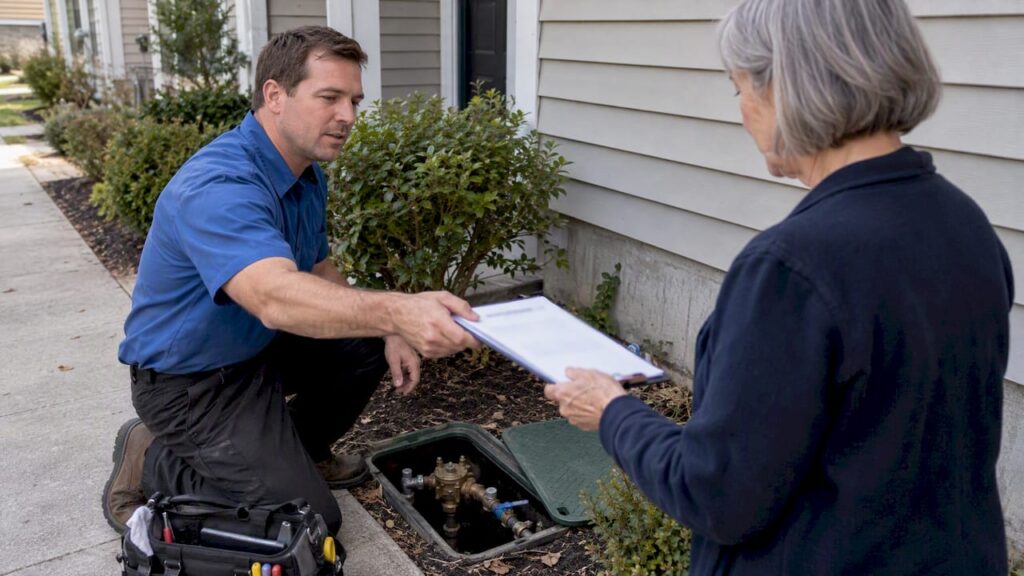
Most backflow test reports get filed within a few days to several weeks, depending on who submits them and whether the device passes. A tester who files directly at the point of service often closes the record in days, while owner-forwarded paperwork or a failed test needing repair can stretch the timeline past a month. Utilities like Portland, Tampa, and Seattle each set their own clock, so your deadline depends on your local program.
TL;DR:
- Utility filing models significantly impact turnaround times, with direct online submission often completing within a few days.
- Most utilities provide a filing window ranging from 7 calendar days to 30 days, but deadlines vary by jurisdiction and reporting method.
- Common delays stem from paperwork handling, mismatched device details, or repair requirements, which can usually be avoided by scheduling early.
- Confirming whether your tester files electronically and requesting written proof of filing can prevent missed deadlines and enforcement actions.
- Using a provider that offers on-site repairs and direct electronic filing can ensure the fastest closure of your backflow compliance record.
Table of Contents
- Typical submission windows and what municipal programs require
- Who files the report and how that changes your timeline
- What affects turnaround: common delays and how to avoid them
- What happens to your report after submission
- How long the actual test takes and what you get on-site
- A practical checklist for closing the record fast
- Fastest reliable path to close a compliance record
- How South Jersey Backflow can help you file faster
- FAQ
- Sources
- Resources for verifying your local deadline
Typical submission windows and what municipal programs require
Filing deadlines fall into a few common patterns. Some utilities give testers a fixed number of business days, others use calendar days, and the difference matters more than it sounds.
- 7 calendar days: Tampa requires certified results submitted through its backflow testing program, which runs on the SwiftComply portal.
- 10 business days: Portland Water Bureau gives testers this window to submit reports after the appointment.
- 14 to 30 calendar days: Many other utilities use a broader window, often tied to when the notice was issued rather than when the test happened.
Business days skip weekends and holidays, so a 10-business-day window can run closer to two calendar weeks. Calendar day deadlines are stricter and easier to miss if you count wrong. Seattle Public Utilities expects certified testers to submit reports directly after testing, which is typical of utility-managed programs. Check your own authority’s notice or cross-connection control page before assuming a generic window applies, since local rules vary by jurisdiction.
Who files the report and how that changes your timeline
Three filing models dominate, and the one your utility uses has more effect on turnaround than almost anything else.
- Utility-direct filing: The tester uploads results straight to the water authority at the time of service, which is how Tampa’s SwiftComply portal and similar systems work. This model usually produces the fastest close, often same-day or within a few business days.
- Owner-responsible filing: The tester hands you a paper or PDF report, and you forward it to the utility. Delays creep in here when the report sits in an inbox or gets routed to the wrong department.
- Portal upload with certified-tester login: The tester logs into a utility’s web system and submits on your behalf, combining speed with a digital paper trail.
Before your appointment, ask the tester which model your utility uses and whether they will file for you. That one question eliminates most confusion about whose job it is to hit the deadline. A filing guide for property managers walks through how to confirm this with your local authority.
What affects turnaround: common delays and how to avoid them
A handful of issues account for most late filings, and nearly all of them are preventable.
- Tester backlog: Popular testers book out weeks ahead, especially near annual deadlines.
- Manual paperwork: Paper reports that require owner forwarding add days of handling time.
- Mismatched device information: A wrong serial number or sticker detail on the report can bounce it back for correction.
- Failed tests: A failing result pauses the clock until a repair happens and a retest is filed.
- Seasonal processing surges: Utilities that batch-process reports during peak renewal months can take longer than usual to post results.
To stay ahead of these, schedule testing early in your compliance window, verify your device’s sticker and serial number match utility records before the appointment, and ask directly whether the tester files electronically or hands you a copy to submit yourself. Choosing a tester who carries parts for same-day repair avoids a second appointment if the device fails.
Pro Tip: Ask for written confirmation that your report was filed, not just a copy of the test results, so you have proof if a shutoff notice shows up later.
If you receive a warning notice, a threatened shutoff, or see an open remediation flag on your utility account, treat it as urgent and call the utility directly to confirm your record status.
What happens to your report after submission
Once a utility receives a report, it runs through a short internal process before your account shows as compliant.
- Credential check: The utility confirms the tester’s license and certification are current.
- Device match: Staff verify the reported device matches what is on file for your address.
- Posting to account: Once validated, the result is logged against your property record.
A passing report typically posts within a few days to a couple of weeks, depending on how backed up the utility’s processing queue is. You can usually check your account status online or by calling the water authority to confirm the entry went through.
A failed report starts a different clock. Utilities commonly treat a fail as an open remediation record with a cure period, often in the 30 to 60 day range, before enforcement steps like fines or service restriction begin. During that window, you need a repair completed and a passing retest filed to close the record. Tracking these windows matters most for commercial and multi-unit properties, since annual testing requirements typically apply to them even when single-family homes are exempt.
How long the actual test takes and what you get on-site
The appointment itself is usually quick. A single residential device typically takes 15 to 60 minutes to test, while commercial sites with multiple assemblies can run longer, sometimes most of a half day depending on how many devices are on the property.
At the end of the test, a certified tester should hand you, at minimum, a signed report with gauge readings, a clear pass or fail result, and their license number. That paperwork is your proof of testing regardless of who files it with the utility. What a certified tester checks during the appointment affects how fast the report moves afterward, since accurate readings and correct device data reduce the chance of a rejected submission.
Ask whether the tester offers same-day electronic filing, an emailed receipt, or portal confirmation. Any of these closes the loop faster than waiting on mailed paperwork.

A practical checklist for closing the record fast
A short pre-appointment checklist avoids most of the delays described above: confirm your device’s sticker and serial number match utility records, ask the tester to e-file rather than hand you paper, request written confirmation once the report is filed, ask whether same-day repairs are available if the device fails, and keep your own copy of the filed report for your records.
In practice, a same-day test paired with electronic filing can close a compliance record the same day. Manual, owner-forwarded paperwork typically takes 3 to 14 days on your end, plus whatever processing window the municipality adds on top. The gap between those two paths is almost always the filing method, not the test itself.

Fastest reliable path to close a compliance record
The real lever on turnaround isn’t the test, it’s the filing method. A tester who e-files and carries parts for same-day repair will beat a cheaper option that hands you paperwork and hopes you forward it on time. Paying slightly more for guaranteed same-day filing is usually worth it against the cost of a missed deadline.
— Jordan
How South Jersey Backflow can help you file faster
Property owners who need a compliance record closed quickly, not just a test completed, are better served by a provider that handles the whole chain. Some providers offer same-day testing, on-site rebuilds and repairs when a device fails, and direct electronic filing with the water authority, so the paperwork doesn’t sit waiting on you.
- Same-day residential and commercial testing with results filed electronically.
- On-site repairs and rebuilds using parts carried on the truck, avoiding a second visit.
- Direct compliance management including consolidated filing for multi-property clients.
See current details on backflow testing and certification or check pricing and FAQs before booking.
FAQ
How long should a backflow test take?
A single residential device typically takes 15 to 60 minutes on-site, with multi-device commercial properties taking longer. The appointment itself is separate from how long the report takes to file and post with your utility.
What is the average cost of a backflow?
Costs vary by service type and device count. South Jersey Backflow lists residential certification testing from $150 to $250 and commercial device testing from $200 to $450 per device, with current rates available on its FAQ page.
What happens if you don’t get your backflow tested?
Skipping a required test typically puts your property out of compliance with your local water utility, which can lead to notices, fines, or in some cases water service restriction. If you’ve already received a compliance letter, acting quickly reduces the risk of escalation.
What does a backflow report mean?
A backflow report documents the test results for your device, including gauge readings, a pass or fail outcome, and the certified tester’s license information. A passing report confirms your device is protecting the water supply and satisfies your utility’s annual compliance requirement.
Sources
- Testing backflow prevention assemblies — Portland Water Bureau
- Backflow Testing and Cross-Connection Control — City of Tampa
- Backflow Assembly Testing — Seattle Public Utilities
Resources for verifying your local deadline
Municipal rules vary, so confirm your exact deadline with your own water authority.
- Portland Water Bureau: testing requirements and reports
- City of Tampa: backflow testing program
- Seattle Public Utilities: backflow assembly testing
- Step-by-step backflow prevention guidance