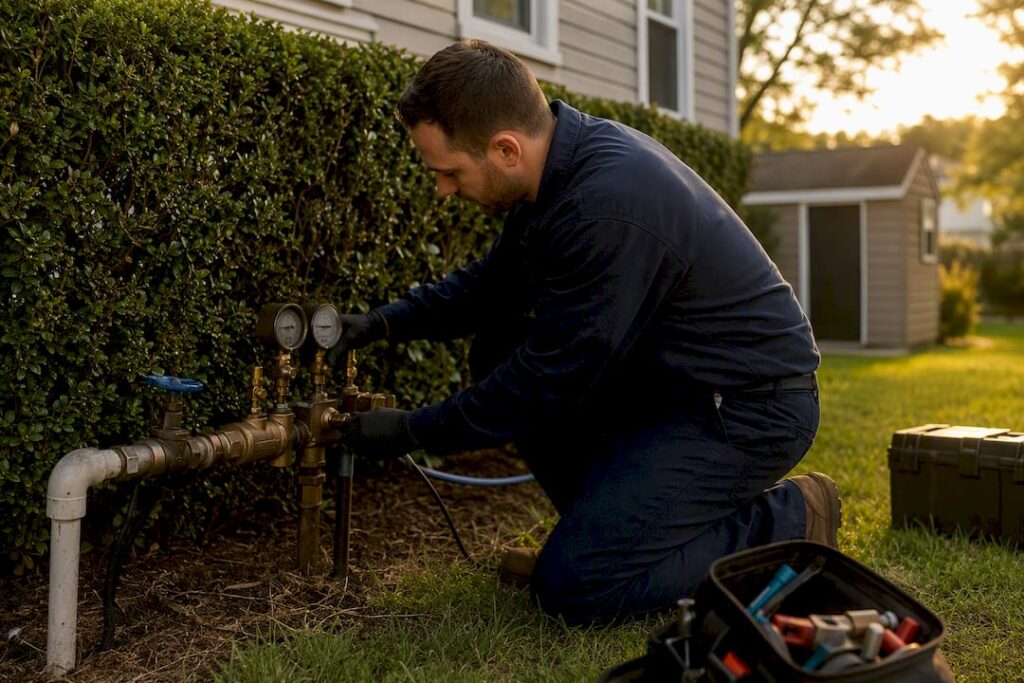
If your New Jersey property connects to a public water supply through anything other than a straightforward residential tap, you likely need annual backflow testing on any double check valve assembly or reduced pressure zone assembly protecting that connection. A certified tester recognized by the New Jersey Department of Environmental Protection (NJDEP) has to run the test, not a municipal inspector, and the rules governing this sit in N.J.A.C. 7:10 and the Uniform Construction Code, N.J.A.C. 5:23.
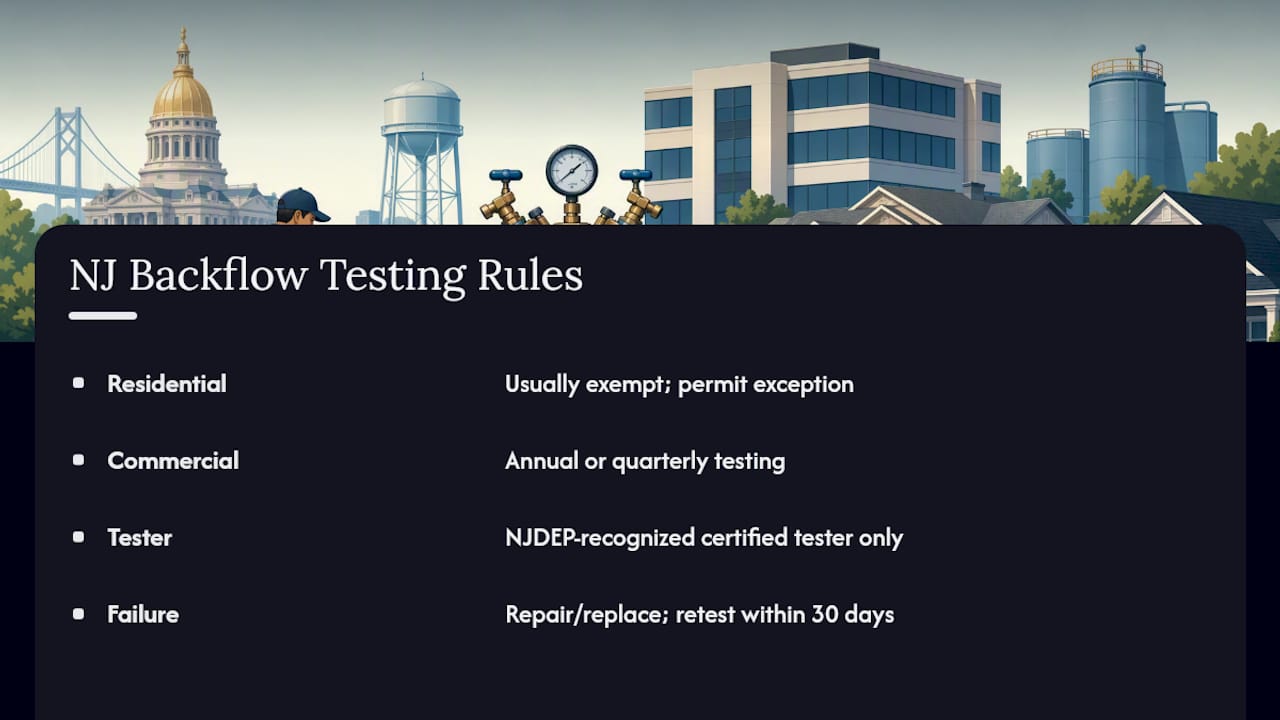
Testing frequency depends on what triggered the requirement. Most field-testable devices need annual testing. Properties operating under a Physical Connection Permit often face quarterly testing instead. One- and two-family homes are generally exempt from the annual mandate unless a permit says otherwise.
If a device fails, the clock starts immediately:
- Repair or replace the failed unit and retest within 30 days.
- Confirm the tester records device ID, model and serial number, test results, and signs the report.
- Verify your Certificate of Compliance, valid for one year, gets filed with the water supplier.
Key Takeaways
NJ properties with unapproved water connections must have DCVAs or RPZ assemblies tested by a certified tester, on a schedule set by permit type, with failures corrected and retested within 30 days.
| Point | Details |
|---|---|
| Device types covered | Double check valve assemblies and reduced pressure zone assemblies on public supply connections need field testing. |
| Who tests | Only a certified tester recognized by NJDEP may perform tests; inspectors witness but don’t test. |
| Testing schedule | Most devices need annual testing; permitted facilities often require quarterly testing instead. |
| Failure response | Owners must repair or replace and retest within 30 days of any failed test. |
| Compliance partner | South Jersey Backflow tests, repairs, and files reports directly with NJ water authorities. |
Forms and Rules Worth Bookmarking
Keep these on hand when scheduling a test or answering a compliance letter:
- N.J.A.C. 7:10-10.6 covers testing and reporting procedures for physical connections.
- The BWSE-CITR-IQ form is the standard test record NJDEP requires.
- DCA Bulletin B-99-2 explains testing tied to Uniform Construction Code inspections.
Quarterly reports typically need to reach the water supplier within five days of testing, and your Certificate of Compliance stays valid for one year. Keep copies on-site and confirm your tester filed electronically. Municipal guidance pages, like Eatontown’s backflow testing summary, offer a useful local reference alongside the state rules.
Table of Contents
- Why South Jersey Backflow Knows This Process Cold
- Get Your NJ Property Tested and Certified
- Frequently Asked Questions
- Sources
Why South Jersey Backflow Knows This Process Cold
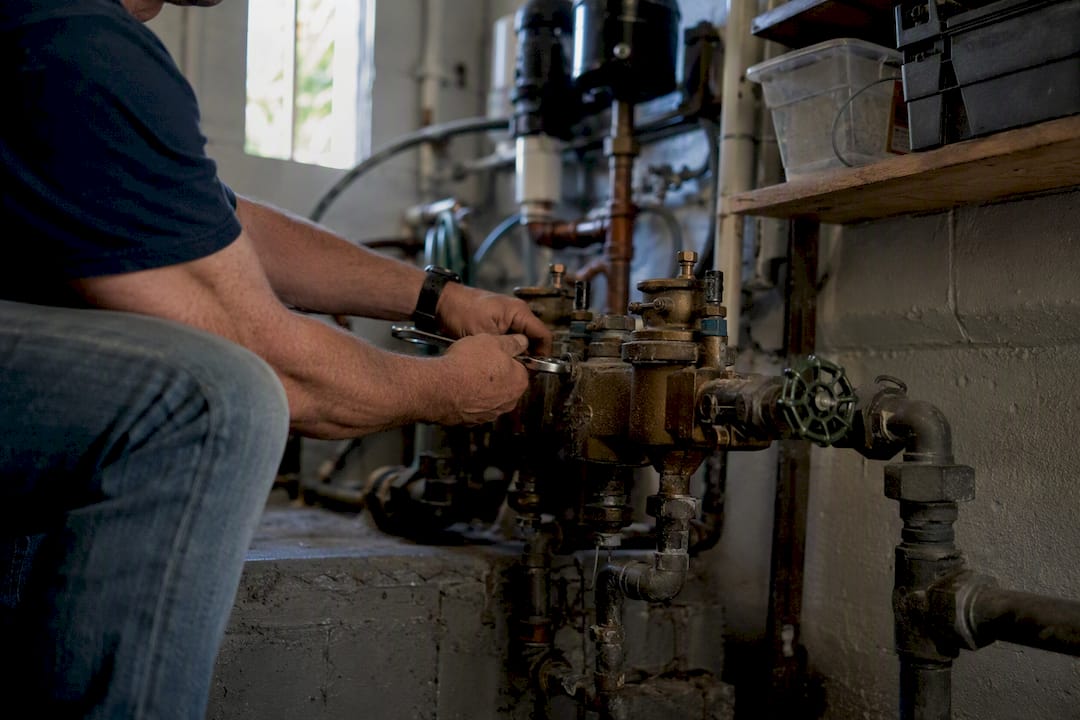
We’ve filed hundreds of backflow test reports with New Jersey water authorities and walked property owners through the paperwork after a failed device. Our certified testers handle the testing itself, along with repairs and direct report submission, while municipal inspectors witness but never perform the actual test.
Get Your NJ Property Tested and Certified
South Jersey Backflow is the direct compliance partner for property owners who don’t want to chase permits, forms, and retest deadlines themselves. We handle the testing, the paperwork, and the filing, so a missed submission never turns into a fine.
Our certified testers document every device by ID, model, and serial number on-site, then submit the BWSE-CITR-IQ form and Quarterly Test Reports electronically. If a device fails, we handle the repair or replacement and the required retest, and we manage permit paperwork for fire protection or combination service replacements. Property managers juggling multiple sites often need help beyond backflow alone. Contracting partners like DJ Custom Contracting cover related permit workflows if your property needs broader construction sign-off.
We serve properties across Ocean County, Mercer County, and Gloucester County, among others. Read the full walkthrough on passing, submitting, and staying compliant, then book a certified tester before your certificate expires.
Frequently Asked Questions
Do all NJ properties need annual backflow testing?
No. One- and two-family homes are usually exempt unless a Physical Connection Permit applies. Commercial and multi-unit properties with unapproved water connections typically face annual or quarterly testing.
Who is allowed to test a backflow preventer in New Jersey?
Only a tester certified under N.J.S.A. 58:11-9.4 and recognized by a certifying agency approved by NJDEP. Municipal inspectors can witness the test but cannot perform it.
What happens if my device fails inspection?
You must repair or replace it and complete a retest within 30 days, per N.J.A.C. 7:10-10.6. Delaying past that window risks noncompliance penalties from your water authority.
How do I verify a tester’s certification?
Ask for their certifying agency and certificate number, then confirm it against records your water supplier keeps on file. South Jersey Backflow’s testers carry current NJDEP-recognized credentials for every job.
Sources
- N.J. Admin. Code § 7:10-10.6 – Inspection and testing requirements and procedures for physical connection installations | State Regulations | US Law | LII
- Department of Community Affairs bulletin B-99-2 (testing guidance for backflow preventers)
- BWSE-CITR-IQ (Backflow Prevention Device Test and Inspection form) | NJDEP
- N.J. Admin. Code § 7:10-10.3 – Approved physical connection installation requirements