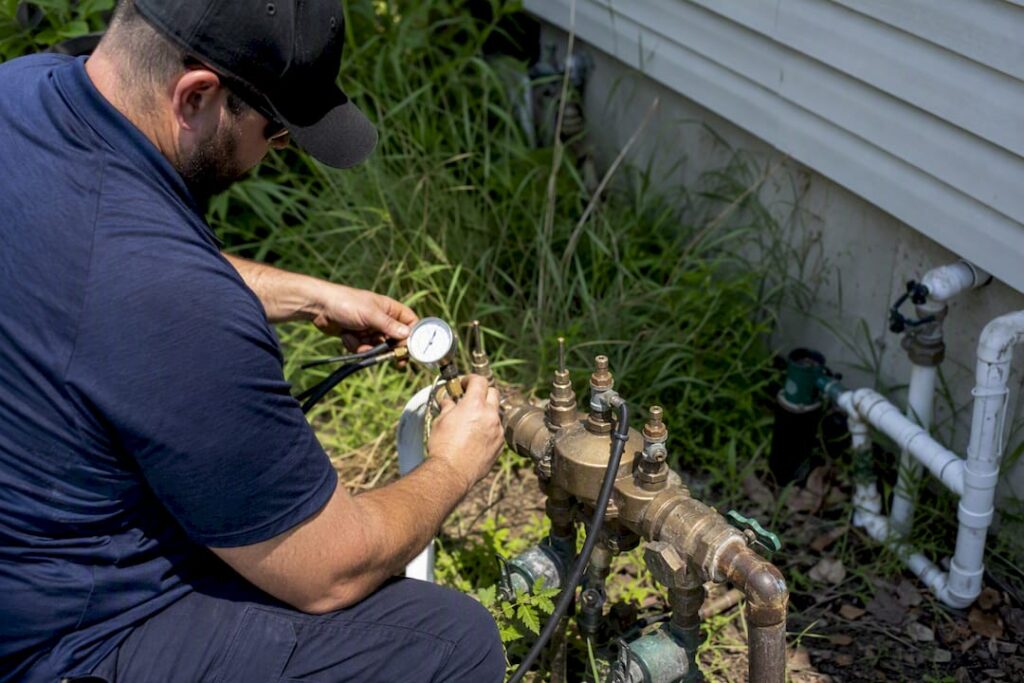
A potable water system gets contaminated when a cross-connection exists and something reverses the flow, either through backsiphonage or backpressure, pulling nonpotable water into the drinking supply. The fix is mechanical: an approved backflow preventer, sized to the hazard, tested every year by a certified tester. That’s the whole mechanism in one sentence, and it’s what every code requirement, testing rule, and repair invoice in this article traces back to.
Standards from AWWA and ASSE govern how these devices are built and tested, and most states require annual certification with results filed to the local water authority. If you manage property, three things matter right now:
- Confirm every backflow assembly on your property has a current annual test on file.
- Know which device type protects each connection and whether it matches the hazard level.
- If you can’t locate a test record, treat that as a compliance gap, not a paperwork delay.
Pro Tip: Keep a single folder, physical or digital, with every device’s serial number, install date, and last three test reports. When a water authority or insurance adjuster asks, you want that answer in under a minute.
Key Takeaways
Backflow contamination happens only when a cross-connection and a pressure reversal occur together, and annual testing with the correctly sized device is what interrupts that chain.
| Point | Details |
|---|---|
| Two mechanisms cause backflow | Backsiphonage comes from pressure drops; backpressure comes from a connected system running at higher pressure. |
| Device matches the hazard | RPZ assemblies suit high-health hazards like boilers and labs; double checks suffice for moderate-hazard connections. |
| Annual testing is mandatory | Most jurisdictions require certified testing yearly with results filed to the water utility, often within 30 days. |
| Costs scale with device type | Annual tests run roughly $75–$200; RPZ installation can run $800–$2,500 depending on access and enclosure needs. |
| Southjerseybackflow handles the full cycle | Testing, repair, rebuilding, enclosure installation, and direct filing with New Jersey water authorities in one service call. |
Table of Contents
- What Is Lead in Water Explained Through Cross-Connections?
- Where Do Cross-Connections Usually Show Up on Properties?
- Which Backflow Prevention Device Fits Each Hazard Level?
- What Does the Annual Testing and Filing Process Look Like?
- What Are the Warning Signs of a Failed Backflow Preventer?
- How Much Does Backflow Testing and Repair Typically Cost?
- Why Do Documented Incidents and Standards Still Matter?
- What Should Property Portfolios Actually Do About This?
- How Southjerseybackflow Keeps Your Properties Compliant
- Where to Verify These Standards and Requirements
- Frequently Asked Questions
- Sources
What Is Lead in Water Explained Through Cross-Connections?
Here’s the mechanic behind it: contamination needs two things at once, a physical link between clean and dirty water (a cross-connection) and a pressure event that reverses normal flow. Without both, nothing moves backward. A garden hose sitting in a bucket of soapy water is a cross-connection. It only becomes dangerous the moment pressure drops on the supply side and siphons that soapy water back into the pipe.
Backsiphonage happens when pressure in the main drops below atmospheric pressure, creating suction. Common triggers include water main breaks, firefighters drawing heavy volume during a blaze, or a pump failure upstream. A documented issue paper from the EPA notes that main breaks and firefighting drawdown are among the most frequent real-world causes, and backflow incidents themselves tend to be underreported, which means the actual frequency is likely higher than official logs suggest.
Backpressure works the opposite way. It happens when a connected system, like a boiler, booster pump, or pressurized process tank, runs at higher pressure than the incoming potable supply. That higher pressure pushes contaminated water backward into the main, even without any drop on the supply side.
The danger scales with distance. A cross-connection near a building’s service entrance can push contaminants into a much larger portion of the distribution system than one isolated deep inside a single unit. Location determines how far the damage spreads, not just whether it happens.
Both mechanisms explain why a property with irrigation, boilers, or fire suppression carries more inherent risk than a simple residential unit with none of those connections.
Where Do Cross-Connections Usually Show Up on Properties?
Every property type has predictable weak points, and knowing yours is the first step toward fixing them.
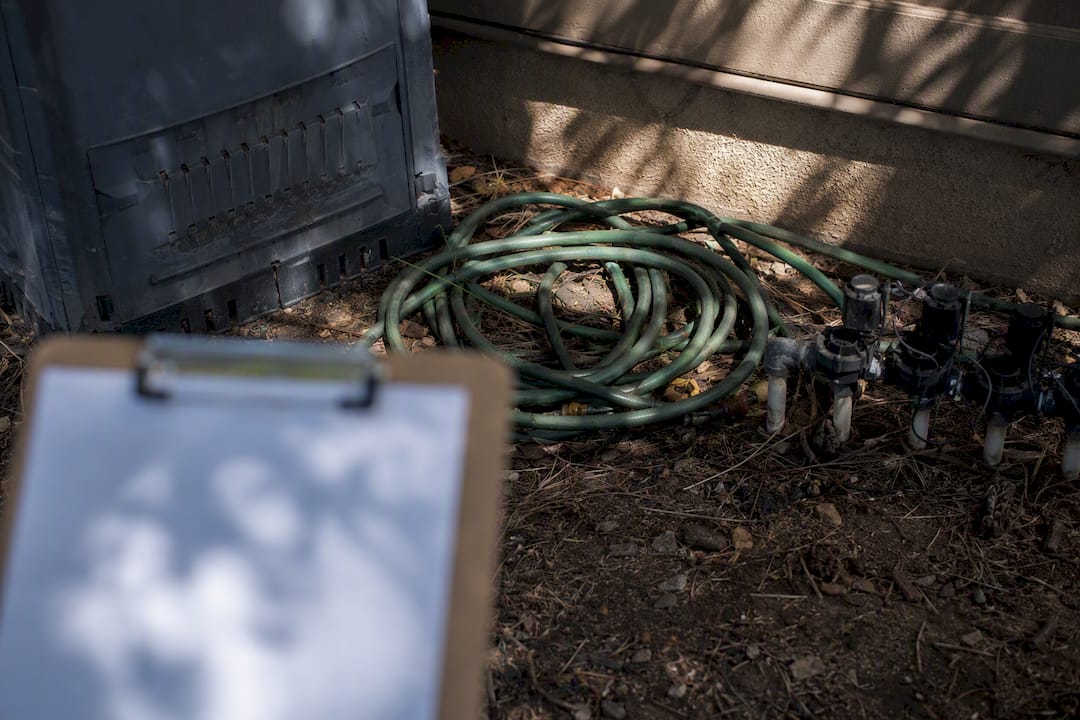
- Irrigation systems — fertilizer and pesticide residue can siphon back if a valve fails during a pressure drop.
- Hose bibs — a hose left in a pool, sink, or chemical bucket is a classic backsiphonage setup.
- Boilers and HVAC loops — treated water with corrosion inhibitors or biocides runs at higher pressure than the main, a textbook backpressure risk.
- Fire sprinkler systems — stagnant water plus chemical additives in some systems make this a high-hazard connection.
- Pools and spas — fill lines submerged below the water surface create an easy backsiphonage path.
- Commercial process tanks, car washes, and lab sinks — these carry the highest contaminant loads because the source water often contains concentrated chemicals.
Contaminants don’t stay put once they enter the main. They travel upstream and downstream depending on where the pressure event occurred, and some residues adsorb onto pipe walls, meaning a single incident can leave a lingering signature long after the immediate water tests clean. A property manager overseeing several buildings should treat each fixture type differently. A homeowner-focused breakdown of these same contamination pathways covers the residential side in more depth if you’re managing mixed-use portfolios.
Pro Tip: Walk your property with a simple checklist and flag anything connected to fertilizer, chemicals, or a pressurized loop. Those are your priority devices, not the ones that are easiest to reach.
Which Backflow Prevention Device Fits Each Hazard Level?
Device selection isn’t a matter of preference; see Water Quality Plumbing: What Every Homeowner Must Know for essential plumbing basics and treatment options. It’s dictated by the degree of hazard at that specific connection, along with local code and the water utility’s own rules. Pick the wrong device for a high-hazard connection and you’ve technically installed protection that won’t actually protect anything.
The main categories, from simplest to most robust:
- Air gap — a physical vertical separation between the supply outlet and the flood level of a fixture. No moving parts, no testing required, but only works where the plumbing layout allows it.
- Atmospheric vacuum breaker (AVB) — protects against backsiphonage only, used on hose bibs and simple irrigation zones.
- Pressure vacuum breaker (PVB/PVBA) — a step up from the AVB, still backsiphonage-only, common on irrigation systems with in-line valves.
- Double check valve assembly (DCVA/DCDA) — two independent check valves for moderate-hazard connections like fire lines with no chemical additives.
- Reduced pressure zone assembly (RPZ/RPBA/RPDA) — the most protective option, with a relief valve that discharges automatically if either check leaks.
RPZs are typically required wherever a high-health hazard exists, boilers with chemical treatment, labs, or industrial processing, because the relief-valve design provides a built-in failsafe that double checks simply don’t have. Installation location matters too: devices need to sit above grade, stay protected from freezing, and remain accessible for annual testing. A buried or boxed-in RPZ isn’t just inconvenient, it can delay testing long enough to put you out of compliance.
What Does the Annual Testing and Filing Process Look Like?
Most jurisdictions require annual testing performed by a state- or utility-certified tester, with results filed within a set window after the test date. Missing that window can trigger the same penalties as skipping the test entirely.
Here’s the sequence that keeps a property compliant year after year:
- Locate every backflow assembly on the property and pull the last service record for each.
- Confirm the installed device type matches the hazard level of that connection.
- Schedule a certified tester before the annual deadline, not after it.
- Retain the signed test report and confirm the water utility received its copy.
- If a device fails, arrange repair or rebuild immediately and retest before the file closes.
Testers use calibrated differential pressure gauges to check each device against pass/fail thresholds. RPZ and double check assemblies each have their own minimum psid values that determine whether a device passes.
- Filing windows commonly run around 30 days from the test date, though this varies by utility.
- Noncompliance can mean water service interruption or civil penalties, not just a warning letter.
- A cross-connection control program built around containment and periodic inspection catches most of these gaps before they become violations.
Property managers juggling multiple sites benefit from centralizing this recordkeeping the same way they’d track fire inspections or elevator certificates. The role testing plays in ongoing water safety is worth reviewing if you’re setting up that system from scratch.
What Are the Warning Signs of a Failed Backflow Preventer?
Acting fast when a device fails limits public exposure and gets your water service cleared faster.
Watch for: discolored water, unusual chemical or chlorine odors, sudden pressure loss, bubbling near process equipment, or visible leakage at the assembly itself.
If you spot any of these:
- Isolate the affected line or shut off the suspect feed, irrigation, boiler loop, or process tank.
- Notify your water utility and a certified tester the same day.
- Arrange water sampling if the utility recommends it.
- Post notices to tenants or customers if required by local health code.
Photograph the device, note its serial number, and pull the last test report before you call anyone. That documentation speeds up both the utility’s response and any insurance claim that follows.
How Much Does Backflow Testing and Repair Typically Cost?
Most annual tests take 30 to 90 minutes per device. Repairs or rebuilds run longer and may require replacement parts or enclosure work if the device sits outdoors.
Typical ranges: an annual test often falls between $75 and $200 per device, a simple repair between $100 and $500, and full RPZ replacement or installation between $800 and $2,500 depending on location, pipe size, and whether an enclosure is needed. Underground or hard-to-access devices add both time and cost. Scheduling multiple devices in one visit usually brings down the per-device price and simplifies reporting.
Pro Tip: If you manage more than one property, batch your testing dates. One consolidated visit across several devices is almost always cheaper than four separate service calls spread across the year.
Why Do Documented Incidents and Standards Still Matter?
Documented contamination events aren’t ancient history. One of the most cited public health cases traces back to a large-scale cross-connection incident that sickened hundreds of people, a stark reminder that backflow isn’t a theoretical risk confined to textbooks.
Backflow incidents remain underreported even today, which means the documented cases likely represent a fraction of actual events. The infrastructure that prevents them, RPZs, double checks, annual testing, exists precisely because the failures that do get reported tend to be serious.
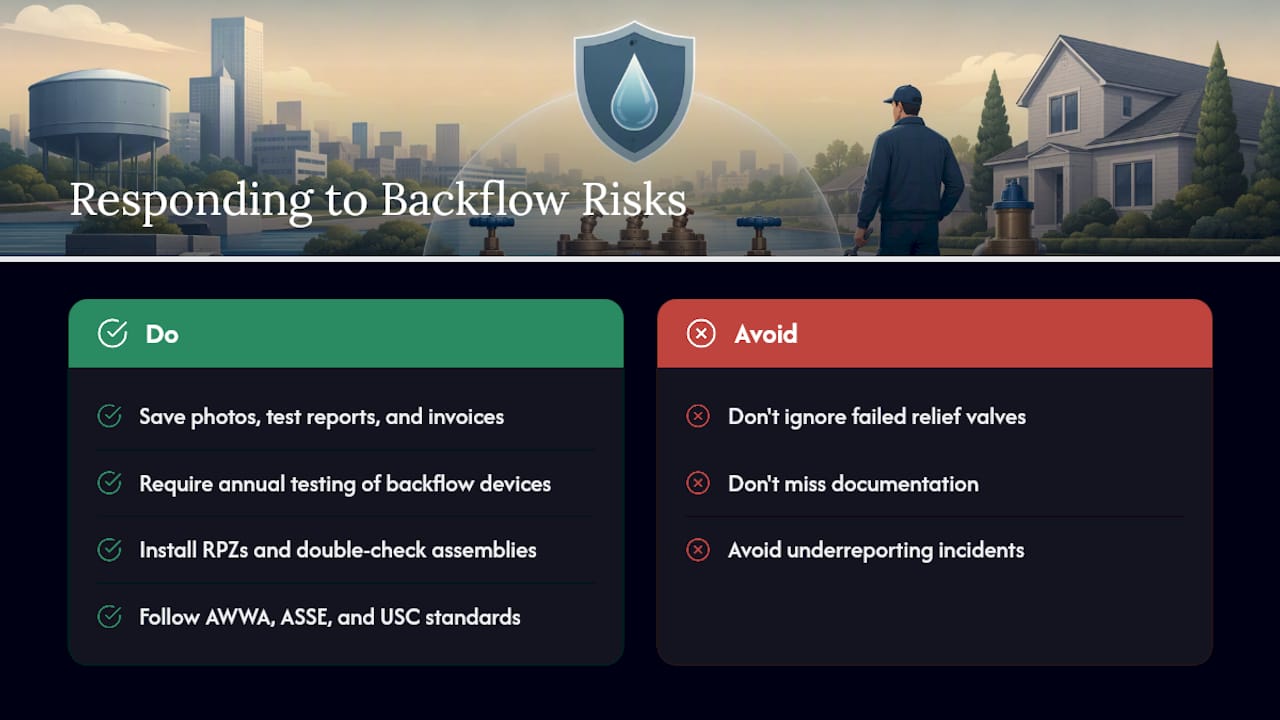
Standards bodies including AWWA, ASSE, and the USC Foundation for Cross-Connection Control and Hydraulic Research shape both device manufacturing and test procedures nationwide. Field accounts from service providers consistently point to failed relief valves and missing documentation as the recurring thread behind costly contamination events and emergency system flushes.
Pro Tip: After any suspected incident, save every photo, test report, and repair invoice in one place. Regulators and insurers both move faster when the paper trail is already assembled.
What Should Property Portfolios Actually Do About This?
Run an inventory-first program: catalog every device, test annually without exception, and prioritize RPZ installations wherever the hazard is genuinely high. That single habit cuts shutdown risk, trims liability exposure, and turns compliance from a scramble into routine paperwork.
How Southjerseybackflow Keeps Your Properties Compliant
Southjerseybackflow is the direct alternative to juggling multiple vendors for testing, repairs, and paperwork across a property portfolio. We provide certified annual testing, repair and rebuild service, enclosure installation, and emergency response, and we file results directly with your local water authority so nothing sits in an inbox past a filing deadline.
For property managers handling several sites, we offer consolidated billing and coordinated scheduling so you’re not chasing separate invoices and separate test dates for every building. If a device already failed or you’re staring down a compliance letter, our guide on passing and submitting a backflow test walks through exactly what a certified tester needs from you. Before you call, have your device location, serial number, and last test report on hand. If you’re in Ocean, Mercer, Salem, Hunterdon, Middlesex, Gloucester, or Cumberland County, reach out through our service area pages to schedule a test or request an estimate today.
Where to Verify These Standards and Requirements
- EPA Cross-Connection Control Manual for device and standards guidance.
- Washington State DOH cross-connection guidance for hazard definitions.
- Schedule service directly at Southjerseybackflow.
Frequently Asked Questions
What does “lead in water explained” mean in a backflow context?
In this context, it refers to how nonpotable water, not the metal, enters a potable system through cross-connections and backflow, and how testing and approved devices stop it.
How often does a backflow preventer need testing?
Most water utilities require annual testing by a certified tester, with results filed within a set window, often around 30 days.
What’s the difference between backsiphonage and backpressure?
Backsiphonage happens when supply pressure drops below atmospheric pressure; backpressure happens when a connected system runs at higher pressure than the main.
Which device do I need for a boiler with chemical additives?
A reduced pressure zone assembly is typically required for high-health hazards like treated boiler loops, because its relief valve provides a failsafe double checks don’t have.
What should I do if I suspect a backflow preventer has failed?
Isolate the suspect line, notify your water utility and a certified tester immediately, and document the device with photos and its last test report.
Sources
- Cross-Connection Control Manual — U.S. Environmental Protection Agency (EPA)
- Cross-connection and backflow issue paper — EPA NEPIS
- Cross Connection Can Create Heath Hazards — Washington State Department of Health
- Establishing and Managing an Effective Cross-Connection Control Program — TCEQ
- Backflow Preventer Inspection Checklist for Property Owners — Backflow Authority