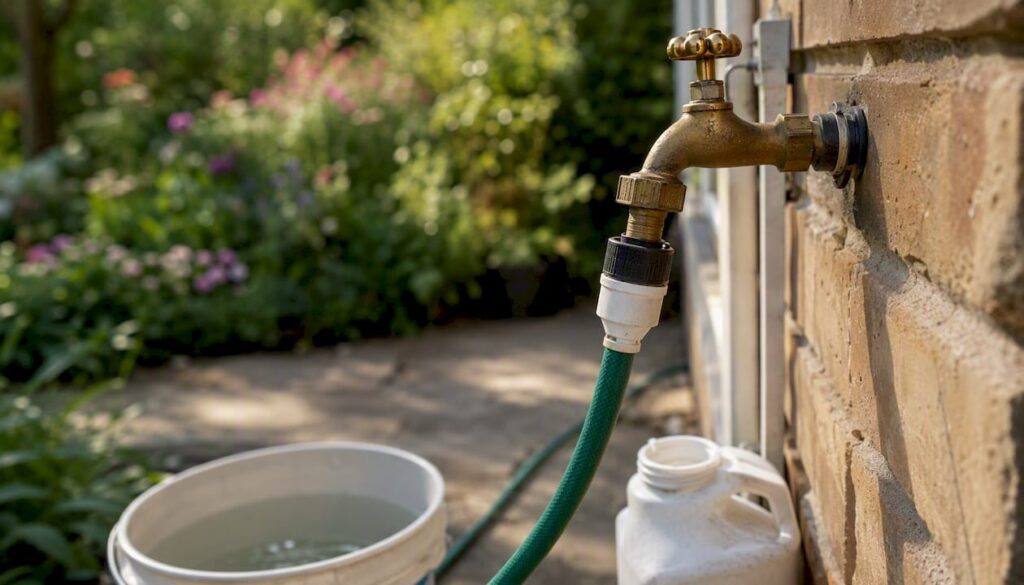
A cross connection is a physical or potential link between a potable (safe-to-drink) water supply and a nonpotable source that could contaminate it. The most common example is a garden hose left submerged in a swimming pool or attached to a chemical sprayer, which turns an ordinary hose bib into a direct path for contaminated water to travel backward into the drinking supply. The EPA’s Cross-Connection Control Manual treats these links as a serious public health hazard, which is why most municipal water authorities and state cross-connection control programs require property owners to identify and eliminate them.
Key Takeaways
A cross connection is any actual or potential link between a potable water supply and a nonpotable source, and the risk depends on preventing backsiphonage and backpressure through proper devices, testing, and inspection.
| Point | Details |
|---|---|
| Definition drives everything | A cross connection counts as hazardous the moment contamination is possible, not just when it’s actively happening. |
| Two mechanisms cause backflow | Backsiphonage pulls water backward from pressure loss; backpressure pushes it from a stronger source like a pump or boiler. |
| Hose bibs are the top residential risk | Submerged or attached hoses create the most common accidental cross-connection in homes. |
| Device choice depends on hazard level | Low-hazard fixtures use vacuum breakers; high-hazard connections like boilers require reduced-pressure zone devices. |
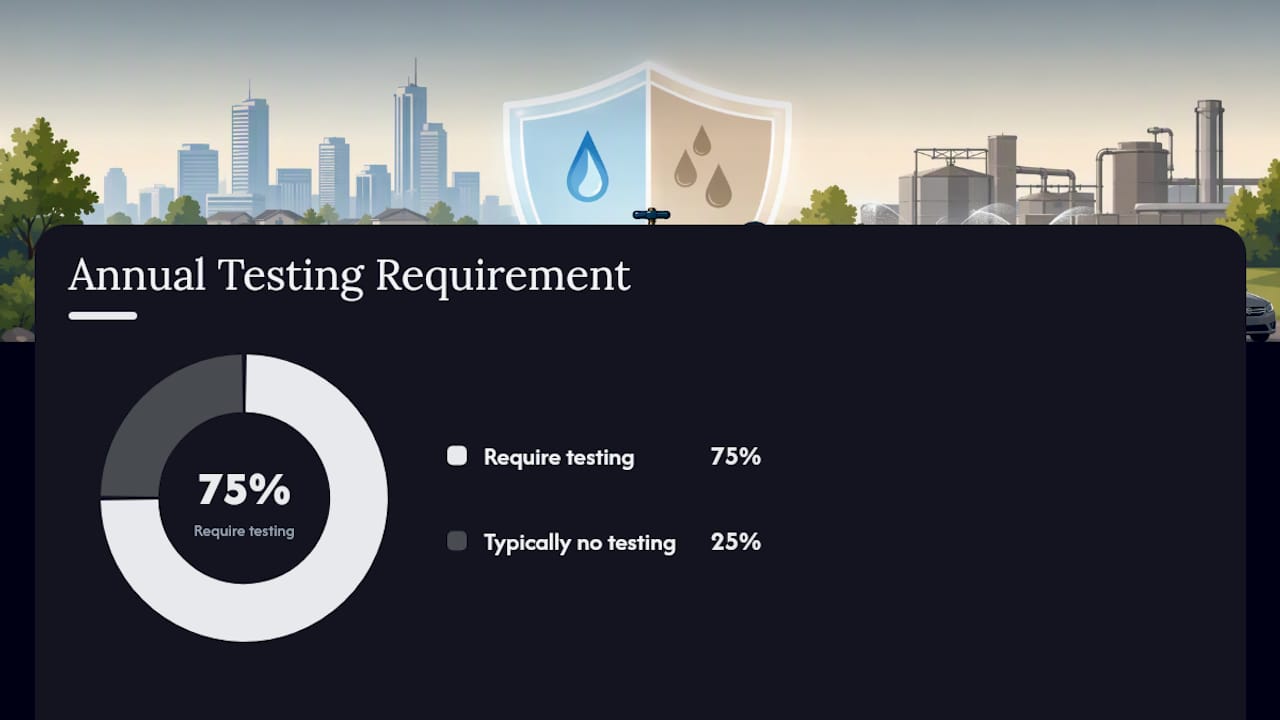
| Annual testing is standard practice | Certified testers check assemblies yearly and file results directly with the water authority. |
Table of Contents
- What “Cross Connection Is a Link Between” Actually Means
- How Contamination Moves Through a Cross Connection
- Where Cross-Connections Are Most Likely to Show Up
- Why Cross-Connections Matter for Public Health
- How to Spot a Cross-Connection Before It Becomes a Problem
- Preventing Contamination: Air Gaps and Backflow Devices
- Testing, Maintenance, and What Cross-Connection Control Programs Require
- A Checklist to Reduce Cross-Connection Risk Right Now
- What Happens During a Professional Backflow Test
- Why Vigilance on This Beats Waiting for a Notice
- Frequently Asked Questions
- Sources
What “Cross Connection Is a Link Between” Actually Means
The phrase gets used loosely, but the technical definition is specific: a cross connection exists any time potable water piping connects, directly or indirectly, to a source that isn’t safe to drink. That source might be irrigation water, boiler chemicals, a cooling tower, or even pool water. The connection doesn’t have to be permanent or even active most of the time. A hose that’s usually coiled on a reel but occasionally gets tossed into a bucket of soapy water still counts, because the potential for contamination is what matters, not whether contamination is happening right now.
This is where a lot of homeowners get tripped up. They assume the hazard only exists if water is actively flowing backward at the moment someone checks. In reality, inspectors and water authorities classify a connection as hazardous the moment it could allow reverse flow, regardless of whether it ever has. That’s the standard behind terms like cross-connection examples, cross connection definition, and the broader category of cross connections in plumbing that show up in local code enforcement letters.
How Contamination Moves Through a Cross Connection
Contamination doesn’t just seep into potable pipes on its own. It needs a pressure event to push or pull it there, and that event is called backflow. There are exactly two mechanisms that cause it: backsiphonage and backpressure.
Backsiphonage happens when pressure inside the potable system drops below the pressure at the point of use, essentially creating suction that pulls water backward.
- A water main breaks or a fire department opens hydrants for firefighting, causing a sudden pressure drop in the local distribution system.
- The drop in pressure creates a vacuum effect at any open or submerged connection point, such as a hose in a pool.
- Instead of water flowing out of the hose, contaminated water gets pulled back into the pipe.
- That contaminated water travels into the building’s plumbing and potentially into the public main.
Backpressure works the opposite way: something on the customer’s side of the system generates pressure higher than the incoming supply, forcing water backward instead of pulling it.
- A booster pump, boiler, or elevated storage tank creates pressure that exceeds the water utility’s supply pressure.
- Without a check valve or backflow preventer in place, that higher pressure pushes fluid back toward the main.
- Chemicals, boiler treatment additives, or process water flow in the wrong direction, into the potable line.
The EPA’s issue paper on cross-connections and backflow names water main breaks, firefighting demand, and pump systems as the most frequent real-world triggers for both mechanisms.
Historical callout: Documented contamination incidents tied to cross-connections go back decades and include cases where chemicals, sewage, and industrial fluids entered public drinking water through unprotected connections, a pattern serious enough that it shaped the EPA’s national cross-connection control guidance still referenced by local utilities today.
Where Cross-Connections Are Most Likely to Show Up
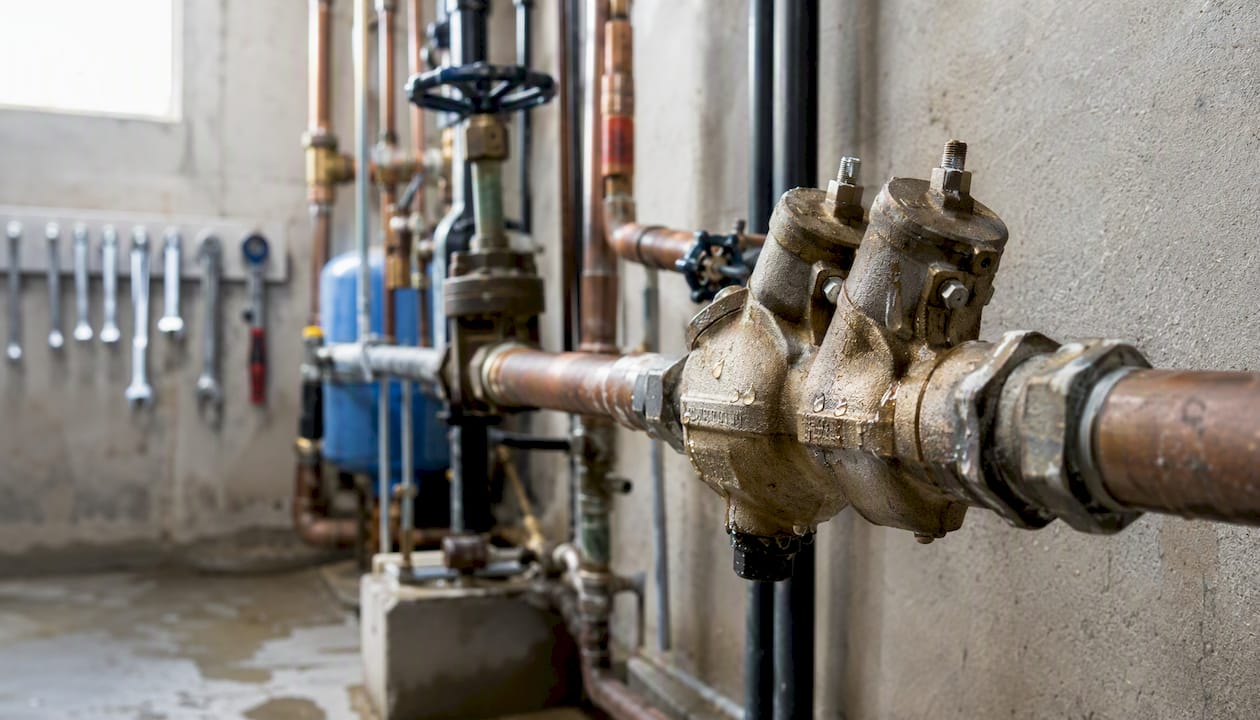
Most cross-connections aren’t exotic industrial hazards. They’re sitting in your yard or basement right now, usually without anyone intending them to be dangerous.
- Hose bibs and garden hoses — the single most common residential hazard, especially when a hose is left attached to a sprayer, filling a pool, or lying in standing water.
- Irrigation and sprinkler systems — underground lines tied directly into household plumbing without a dedicated backflow assembly.
- Boilers and heating systems — treated boiler water often contains corrosion inhibitors that are toxic if they migrate into potable lines.
- Cooling towers — recirculated water picks up algaecides, biocides, and scale inhibitors.
- Fire sprinkler systems — stagnant water sitting in fire lines can pick up contaminants and, in systems with antifreeze loops, chemical additives.
- Swimming pools — a fill hose is a classic backsiphonage setup if the pressure drops while the hose end sits underwater.
- Solar water heating loops and process tanks — used in some commercial or agricultural setups, often overlooked during inspections.
The Texas Commission on Environmental Quality specifically flags hose bibs as the most frequent residential cross-connection hazard, and for good reason: they’re the easiest connection to create by accident and the easiest to fix. Many of these links are temporary. Someone hooks up a hose for a weekend project, forgets to disconnect it, and creates a hazard that exists for exactly as long as that hose stays attached.
Why Cross-Connections Matter for Public Health
When contaminants enter a potable line, the health impact depends on what got in. Chemical hazards, like antifreeze, pesticides, or boiler treatment compounds, tend to cause acute poisoning symptoms: nausea, chemical burns, or organ damage depending on concentration. Biological hazards, like sewage or stagnant pool water carrying bacteria, tend to cause gastrointestinal illness that can spread quickly if the contamination reaches a shared distribution main rather than staying isolated in one building.
Cross-connections have caused documented outbreaks in the United States when contaminated water backflowed into public mains, a risk the EPA’s cross-connection guidance cites as the basis for requiring formal control programs rather than leaving prevention to chance.
The severity of an incident often comes down to two factors: how quickly the contamination is contained and whether the connection feeds a shared system. A cross-connection isolated to one home’s irrigation line is bad but limited. A cross-connection at a large commercial property with a pump system feeding back into a shared main can affect an entire block before anyone notices anything is wrong.
How to Spot a Cross-Connection Before It Becomes a Problem
You don’t need a plumbing license to catch most of these. A slow walk around your property with a checklist will catch the obvious ones.
- Look for hoses submerged in pools, buckets, or basins, especially near chemical sprayers or fertilizer tanks.
- Check for irrigation lines tied directly into household plumbing without a visible backflow assembly.
- Look for unprotected connections feeding boilers, cooling towers, or auxiliary water tanks.
- Note any booster pumps or pressure tanks on your property, since these are common backpressure sources.
- Watch for unusual taste, odor, or color in tap water, along with sudden pressure changes, both of which can signal an active backflow event.
Pro Tip: Inspectors say the connections they miss most often on a first pass are seasonal. A hose hooked up for a summer pool fill, a temporary pump for draining a flooded basement, a sprayer attachment left on over a weekend, these show up and disappear before anyone thinks to document them. Walk your property every season, not just once a year.
Preventing Contamination: Air Gaps and Backflow Devices
The most reliable form of protection is a physical air gap, meaning a visible, open vertical space between a potable outlet and any nonpotable fixture, with no possible physical connection between the two. An air gap can’t fail mechanically because there’s nothing to fail. It’s simply not connected. The problem is that air gaps aren’t always practical for pressurized systems like irrigation lines or fire sprinklers, which is where mechanical backflow prevention assemblies come in.
According to guidance from the Washington State Department of Health, the common assembly types break down by how much hazard they’re rated to control:
- Atmospheric vacuum breakers (AVB) work well for low-hazard, non-continuous-pressure fixtures like hose bibs and some irrigation setups, but they can’t handle constant pressure.
- Pressure vacuum breakers (PVB) handle continuous pressure situations and are common on lawn irrigation systems.
- Double-check valve assemblies suit moderate-hazard applications like fire sprinkler systems with no chemical additives.
- Reduced-pressure zone devices (RPZ) provide the highest level of protection and are required for high-hazard connections like boilers, chemical feed systems, and cooling towers.
| Device Type | Hazard Level Controlled | Annual Testing Required | Common Installation Locations |
|---|---|---|---|
| Atmospheric vacuum breaker (AVB) | Low hazard, non-continuous pressure | Typically no | Hose bibs, some irrigation zones |
| Pressure vacuum breaker (PVB) | Low to moderate hazard, continuous pressure | Yes | Lawn irrigation systems |
| Double-check valve assembly | Moderate hazard | Yes | Fire sprinkler lines, commercial services |
| Reduced-pressure zone device (RPZ) | High hazard | Yes | Boilers, chemical feed systems, cooling towers |
Installation mistakes are where a lot of “protected” properties end up unprotected anyway. A device installed upside down, buried underground without access for testing, or left off the local water authority’s approved list won’t do its job even if it’s the right type. Devices need to sit in accessible, code-compliant locations, oriented exactly as the manufacturer specifies, and pulled from an approved products list before installation. This is not a project for guesswork. A licensed plumber or certified backflow tester should handle both the selection and the installation, and our team at backflow prevention methods breaks down device selection in more detail for property owners weighing their options. For basic residential precautions you can handle yourself, AG-Plumbing’s step-by-step guide covers homeowner-safe prevention habits worth building into your routine.
Testing, Maintenance, and What Cross-Connection Control Programs Require
Most municipal water authorities don’t just require a device once and move on. Standard practice, as outlined by the City of Houston’s cross-connection control program, calls for testing at installation, after any repair or relocation, and periodically thereafter. Certified testers perform the check and file results directly with the water authority, closing the loop so the utility has a documented record rather than a homeowner’s word.
| Milestone | What Happens |
|---|---|
| Installation | Device tested before it goes into service to confirm it works and meets code |
| Repair or relocation | Retested any time the assembly is moved, rebuilt, or repaired |
| Annual test | Certified tester checks valve function and pressure performance every year |
| Report filing | Test results submitted directly to the water authority or utility |
Municipal programs typically require approved device classes, certified testers, and documented annual testing, and noncompliance carries real consequences. Enforcement can range from a warning letter to fines, and in persistent cases, utilities can restrict or suspend water service until the property comes back into compliance. If you’ve received a compliance notice, the right first move is to schedule a certified test rather than wait, since what to do after receiving a backflow letter walks through the exact steps and deadlines most New Jersey water authorities expect.
A Checklist to Reduce Cross-Connection Risk Right Now
- Walk your property and remove any hose left submerged in a pool, bucket, or chemical tank.
- Check hose bibs for attached sprayers or fertilizer feeders and disconnect anything not in active use.
- Confirm your irrigation system has a pressure vacuum breaker or equivalent device, not a direct tie-in.
- Install a physical air gap wherever the setup allows one instead of relying on a mechanical device.
- Schedule a certified backflow test if your property already has an assembly installed.
- Flag seasonal equipment, pool fill hoses, temporary pumps, holiday irrigation additions, for removal once the season ends.
If you’re unsure whether a fixture on your property counts as a hazard, that’s the moment to call a certified tester rather than guess. A quick reference like the water system safety checklist for NJ backflow owners is a good starting point before that call.
What Happens During a Professional Backflow Test
A certified tester follows a fairly consistent process regardless of which device type is installed.
- Visual inspection of the assembly, checking for correct orientation, accessibility, and physical damage.
- Valve testing using calibrated gauges to confirm each check valve holds pressure as designed.
- Pressure differential checks across the zones of the device to confirm it meets the manufacturer’s tolerances.
- Immediate notification if the device fails, along with a repair estimate or rebuild recommendation.
The most common failure causes are worn valve seats, debris lodged in a check valve, and pressure levels that have drifted out of tolerance over years of use, all fixable without replacing the whole assembly. After a passing test, you should receive a signed test certificate, a copy of any repair invoice if work was done, and confirmation that results were filed with your water authority. Keep all three. If a compliance question ever comes up, that paperwork is your proof the property was in good standing.
Why Vigilance on This Beats Waiting for a Notice
Most cross-connections I’ve seen described in inspection reports weren’t installed by careless people. They were installed by someone solving a short-term problem, filling a pool, watering a garden, running a temporary pump, who never circled back to undo it. That’s the real pattern behind cross connections in plumbing: not negligence, but forgotten temporary fixes.
The fix is almost always cheaper and faster than people expect once a certified tester is involved. A trained set of eyes catches what a homeowner’s walkthrough misses, and it protects more than just one property. It protects the shared line every neighbor draws from too. If you’re not sure where your risk sits, that’s worth finding out before a water authority tells you.
Frequently Asked Questions
What is a cross connection a link between, exactly?
A cross connection is a link between a potable water supply and any nonpotable source, water, chemical, or gas, that could contaminate it if backflow occurs. The link can be permanent piping or a temporary setup like a garden hose.
What’s the difference between backsiphonage and backpressure?
Backsiphonage happens when pressure in the potable system drops, pulling contaminated water backward. Backpressure happens when a fixture on the customer’s side generates higher pressure than the supply, pushing contaminated water into the potable line.
Do all cross-connections need a mechanical backflow device?
Not if a physical air gap is feasible, since that eliminates the connection entirely. Where an air gap isn’t practical, such as pressurized irrigation or fire systems, a rated backflow prevention assembly is required instead.
How often does a backflow preventer need to be tested?
Most municipal programs require testing at installation, after any repair or relocation, and at least once a year after that, with results filed directly with the water authority.
What should I do if I got a compliance letter about backflow testing?
Schedule a certified test as soon as possible rather than ignoring it, since unresolved notices can lead to fines or water service restrictions. Our guide on handling a backflow compliance letter walks through the typical timeline.
If you need a certified backflow test, repair, or new assembly installed at a New Jersey property, Southjerseybackflow handles testing, certification, and direct filing with your local water authority so you’re not chasing paperwork on top of the repair.
This article is general information, not a substitute for advice from a qualified doctor. Consult a qualified healthcare professional about your own circumstances before acting on anything here.
Sources
- Cross-Connection Control Manual, February 2003
- Cross Connection Control Program | City of Houston
- Cross-Connection Control and Backflow Prevention – Texas Commission on Environmental Quality
- Cross Connection Can Create Health Hazards