
TL;DR:
- Discolored water or odors from your tap are warning signs of serious backflow issues that threaten public health. Installing preventers, eliminating cross-connections, and scheduling annual professional testing are essential for compliance and safety. Proper maintenance and documentation protect property owners from fines, legal risks, and contaminated water supplies.
That discolored water coming out of your tap, or the faint sewage smell near a faucet, is not a minor plumbing quirk. It is a signal worth taking seriously. Sanitary water backflow issues occur when contaminated water reverses direction and enters your clean water supply, posing direct risks to public health and triggering legal obligations for New Jersey property owners. If you manage a residential building, a commercial property, or even a single-family home with an irrigation system, understanding what causes backflow, how to spot it, and what the law requires of you is not optional. This guide covers all of it.
Table of Contents
- Key Takeaways
- Understanding sanitary water backflow issues
- Warning signs you should not ignore
- Prevention methods that actually work
- New Jersey legal requirements for backflow compliance
- My take on what most property owners get wrong
- Get your property tested and protected
- FAQ
Key Takeaways
| Point | Details |
|---|---|
| Backflow is a health hazard | Contaminated water entering clean supply lines creates immediate sanitary hazards and backflow risks for occupants. |
| Warning signs are specific | Discolored water, odd taste, pressure swings, and gurgling noises all point to possible backflow contamination. |
| Prevention is practical | Installing backflow prevention devices and eliminating unsafe cross-connections significantly reduces your exposure. |
| NJ law requires annual testing | Testable backflow assemblies must be inspected yearly by a licensed professional to meet New Jersey compliance standards. |
| Documentation protects you | Keeping records of all tests and repairs shields you from fines and service interruption under NJ regulations. |
Understanding sanitary water backflow issues
Most people assume water only flows in one direction through their plumbing. It should. But under certain conditions, that flow reverses, and when it does, whatever is in the pipes upstream can enter your clean water supply.
Backflow happens through two mechanisms. The first is back siphonage, which occurs when a sudden drop in municipal supply pressure creates a vacuum that literally pulls water backward through your pipes. The second is backpressure, where elevated pressure downstream pushes water back against the normal flow direction. Both scenarios allow contaminants to enter the potable water system.
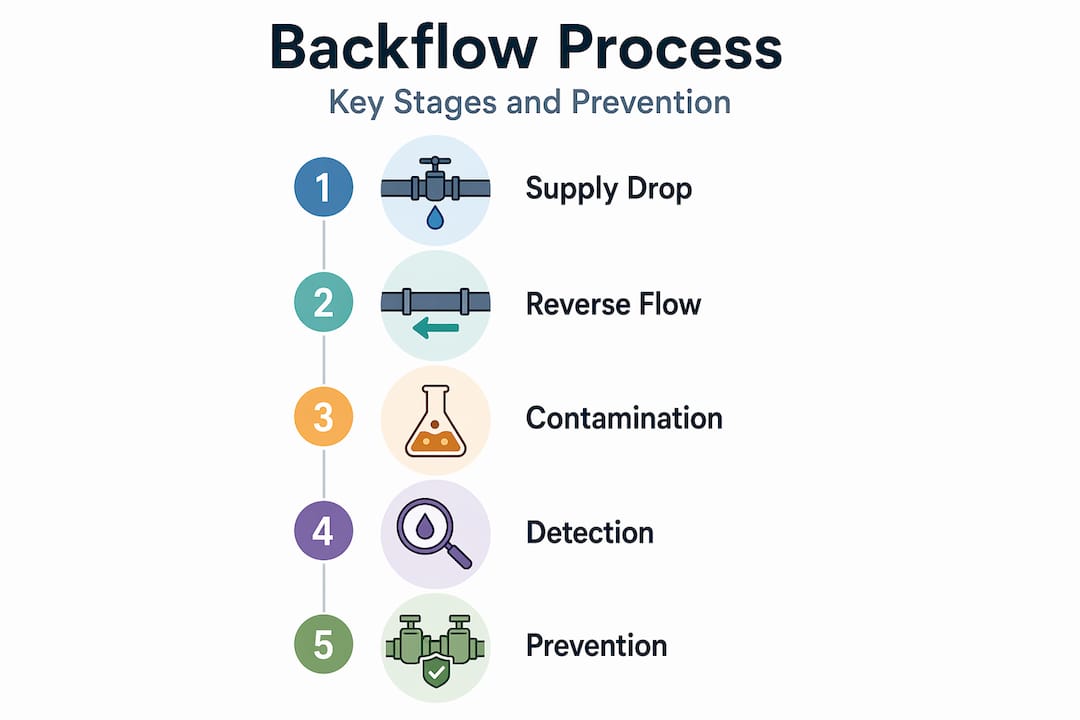
Pressure fluctuations create these conditions regularly, including situations most property owners never think about: a nearby water main break, heavy firefighting activity in the area, or construction work affecting the supply network. Any of these can drop municipal pressure fast enough to trigger back siphonage in your system.
Common causes on New Jersey properties include:
- Irrigation systems connected directly to the potable supply without an air gap or backflow preventer
- Submerged hoses left sitting in buckets, pools, or chemical solutions during a pressure drop
- Cross-connections between non-potable and potable water lines, common in older commercial buildings
- Boiler and HVAC connections where additives or treated water can reverse into the clean supply
- Thermal expansion in closed plumbing systems, which increases internal pressure and stresses valves in ways that can contribute to backpressure events
One distinction worth making clearly: backflow contamination and sewage backup are not the same thing. Backflow is contaminated water reversing into clean lines, while sewage backup is wastewater failing to drain properly. Mixing up the two leads to the wrong repair. A plumber who treats a backflow event as a drainage problem will leave the root cause completely untouched. Property owners make this mistake more often than you would expect, and the consequences are costly.
Home irrigation backflow issues deserve particular attention in New Jersey, where many residential properties have in-ground sprinkler systems connected to the municipal water supply. Without a dedicated backflow preventer on that line, any pressure event can pull fertilizers, pesticides, or soil contaminants directly into the home water supply. That is not a theoretical risk. It happens.
Warning signs you should not ignore
Your water is trying to tell you something when backflow is occurring or your prevention device is failing. Knowing what to look for means you can act before the contamination becomes serious.
The most common warning signs include:
- Discolored water, particularly a brownish or yellowish tint that appears suddenly in one or more fixtures
- Strange taste or odor, including a chemical, earthy, or sewage-like smell coming from the tap
- Unexplained pressure drops at fixtures throughout the building, especially if they affect multiple areas at once
- Gurgling or whistling sounds from pipes when water is not running, which foreshadow potential contamination incidents from a failing device
- Continuous valve discharge at the backflow preventer itself, indicating the check valves are no longer seating properly
- Visible corrosion or mineral buildup on the preventer body, which compromises performance over time
Each of these signs indicates a different stage of failure. Discolored water or odd taste suggests contamination may already be occurring. Physical symptoms like corrosion and leaks at the device suggest structural failure is underway. Both require professional attention, but the first is more urgent.
Symptoms like these signal immediate professional inspection to prevent pathogen and chemical entry into the potable water system. Waiting to see if it clears up on its own is not a reasonable approach when sanitary hazards and backflow risks are involved.

Pro Tip: Install a simple water quality test kit and use it monthly. A spike in turbidity or a pH reading outside the normal range can confirm what your senses are telling you before a professional arrives.
Prevention methods that actually work
Protecting your property from sanitary water backflow issues does not require an engineering degree. It does require knowing which measures are effective and making sure they are in place before a pressure event exposes a gap in your system.
-
Install a properly rated backflow preventer. The right device depends on the hazard level. A reduced pressure zone (RPZ) assembly offers the highest protection and is required for high-hazard connections like irrigation systems and boiler feeds. A pressure vacuum breaker (PVB) works for lower-risk applications. A licensed plumber should confirm what is appropriate for each connection point.
-
Eliminate unsafe cross-connections. Devices like vacuum breakers and air gaps maintain sanitary separation between potable and non-potable water. Walk your property and identify any hose connections, equipment hookups, or utility lines that share a path with your drinking water supply.
-
Never leave hoses submerged. Leaving hoses submerged in water during any activity creates a direct siphon path if pressure drops. This applies to garden hoses in buckets, chemical sprayers, and pool fill lines. Disconnect them when not in active use.
-
Add hose bibb backflow preventers. These are inexpensive, widely available, and install in minutes. Every outdoor hose connection on your property should have one. It is one of the lowest-cost water contamination solutions available and requires no professional installation.
-
Schedule routine professional maintenance. A device that looks fine externally may have failed check valves internally. Regular professional testing is the only reliable way to confirm your devices function properly. Annual inspections also catch corrosion, wear, and improper installation before they become emergencies.
-
Keep records of every inspection and repair. This is not just good practice. In New Jersey, it is a legal requirement. Documentation also protects you if a contamination complaint is ever traced to your property.
Pro Tip: Ask your licensed tester to walk you through what they found after every inspection. Understanding what “passed” and “marginal” readings look like helps you track trends in your device’s performance over time.
Good backflow device maintenance extends the lifespan of your assemblies and reduces the likelihood of a failed test. A device serviced annually typically outlasts one that is only inspected when a problem appears.
New Jersey legal requirements for backflow compliance
New Jersey is not lenient about backflow prevention. If you own or manage a property with a testable backflow assembly, the law is specific about what you must do and when.
The following comparison outlines the key differences between testable and non-testable devices and what each requires under NJ regulations:
| Device type | Who tests it | Testing frequency | Documentation required |
|---|---|---|---|
| Testable assembly (RPZ, DC, PVB) | Licensed NJ master plumber | Annually | Yes, submitted to water authority |
| Non-testable device (hose bibb preventer) | Property owner | As needed | No formal submission required |
| Irrigation system preventer | Licensed NJ master plumber | Annually | Yes, submitted to water authority |
| Fire suppression cross-connection | Certified contractor | Annually | Yes, submitted to water authority |
Annual testing is mandated for commercial properties and residential irrigation systems to verify that check valves open and close at the correct pressures. Testing involves attaching calibrated gauges to specific ports on the assembly and recording pressure differentials under simulated flow conditions. It is not something a homeowner can perform accurately with basic tools.
Backflow devices must be tested and repaired by licensed NJ master plumbers experienced in cross-connection control. Only these certified professionals can issue the certificates your water authority requires for compliance. Hiring someone without the proper credentials does not satisfy the legal requirement, regardless of whether the testing was performed correctly.
NJ property owners must keep detailed records of all annual backflow tests and repairs. Failure to maintain those records and submit them to the appropriate water authority can result in fines or service interruption. Some municipalities in New Jersey will shut off water service to non-compliant properties without additional notice.
Clear regulatory distinctions between testable assemblies and non-testable devices help property owners understand exactly where their responsibilities begin. If you are unsure which category your devices fall under, a licensed professional can assess your system and clarify what the law requires of your specific property.
My take on what most property owners get wrong
I have worked with enough New Jersey property owners to recognize a consistent pattern. Most of them find out they have a backflow problem after something has already gone wrong. A failed test, a complaint from a tenant, or a notice from the water authority. Very few are proactive.
The two mistakes I see most often are conflating backflow contamination with a sewage issue, and treating annual testing as bureaucratic overhead rather than what it actually is. Testing is the only thing standing between your tenants or family and pathogens entering the water supply through a faulty check valve. A failing backflow preventer does not announce itself loudly. It fails quietly until testing reveals the problem or water quality does.
The cost comparison also tends to surprise people. Annual testing is a minor expense. The liability from a contamination event at a rental property, or the cost of emergency repairs after a device fails completely, is orders of magnitude higher. I have never met a property owner who regretted spending money on routine inspections. I have met several who wished they had.
My advice is straightforward. Work with a certified local professional. Keep your records current. And do not wait for a symptom to prompt action.
— Jordan
Get your property tested and protected
Southjerseybackflow provides certified backflow testing and inspection services across New Jersey, helping property owners and managers stay compliant with state regulations and protect their water supply. Whether you manage a commercial building, a residential property with irrigation, or a multi-unit complex, staying current on annual compliance testing is one of the most straightforward ways to protect your tenants and limit your legal exposure. If you are unsure where your current devices stand or when your last inspection was documented, now is the right time to find out. Review the full NJ testing and compliance guide or contact Southjerseybackflow directly to schedule your certified inspection.
FAQ
What causes sanitary water backflow issues?
Backflow occurs when municipal pressure drops or downstream pressure rises, forcing contaminated water backward into clean supply lines. Common triggers include main breaks, heavy firefighting activity, and improperly installed irrigation or cross-connections.
How do I know if my backflow preventer is failing?
Signs of a failing device include discolored or odd-tasting water, gurgling pipe sounds, continuous valve discharge, and visible corrosion or leaks on the preventer body. Any of these symptoms warrants an immediate professional inspection.
Does New Jersey require annual backflow testing?
Yes. New Jersey requires annual testing of all testable backflow assemblies by a licensed master plumber. Test results must be documented and submitted to your local water authority to maintain compliance and avoid fines or service interruption.
Can I test my own backflow preventer in NJ?
Non-testable devices like hose bibb preventers can be maintained by the property owner. However, testable assemblies such as RPZ and PVB units must be inspected by a licensed NJ master plumber with cross-connection control credentials.
What is the difference between backflow and sewage backup?
Backflow is contaminated water reversing into the clean potable supply, typically caused by pressure changes. Sewage backup is wastewater failing to drain away from fixtures properly. They require different diagnoses and entirely different repairs.
Pingback: Ways to Prevent Water Contamination on NJ Properties
Pingback: Emergency Steps for Water Leaks: NJ Homeowner Guide