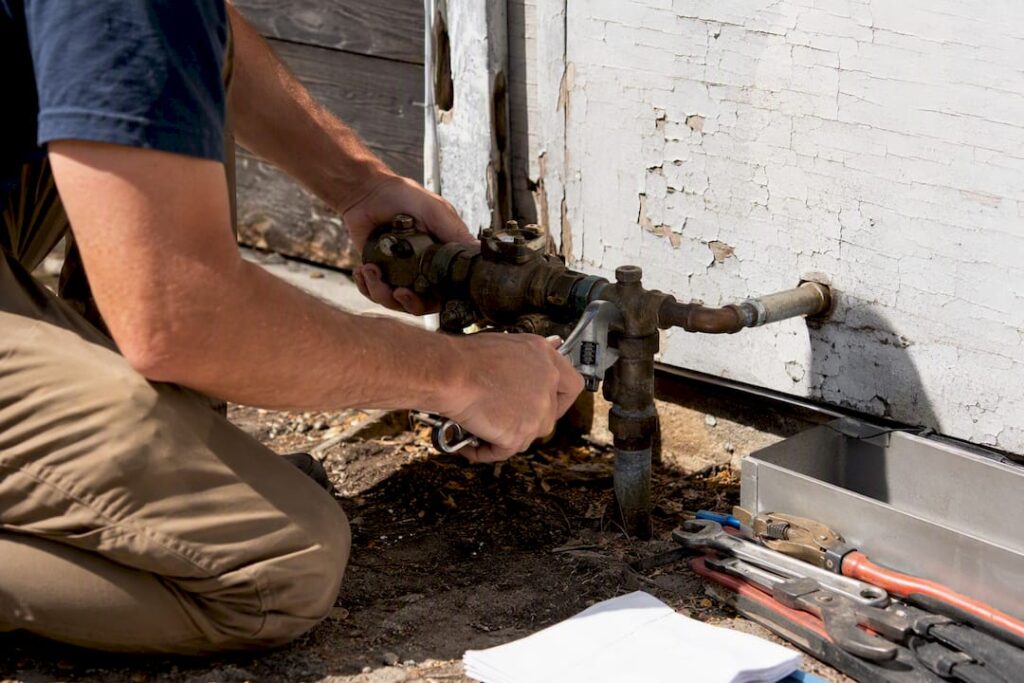
Most homeowners pay $600 to $1,800 to replace a residential backflow preventer, with a typical mid-range job landing around $1,000 once you include the device, labor, permit, and first test. Hire a licensed plumber or certified backflow technician for the job. Insist that the quote include the initial functional test and permit filing, not just the hardware and labor.
Quick answer: Simple swaps with easy access often finish near $600–$800. A mid-range RPZ or DCV replacement with permit and testing bundled in runs closer to $1,000–$1,300. Complex retrofits with trenching or pipe corrosion can climb past $1,800, based on national installation cost data.
Key Takeaways
Backflow replacement costs scale with device type and job complexity, but a quote that skips the permit and first test isn’t actually saving you money.
| Point | Details |
|---|---|
| Budget the mid-range | Plan for $600–$1,800 total, with $1,000 as a realistic mid-range estimate for a DCV or RPZ job. |
| Know your device type | AVB and PVB run cheapest ($150–$600 installed); RPZ costs most ($600–$1,500+) due to higher hazard protection. |
| Watch for hidden drivers | Site access, valve size, and freeze protection upgrades are the most common reasons quotes climb. |
| Repair only when it makes sense | Repairs run $50–$400, but cracked bodies or repeated failures mean it’s time to replace. |
| Insist on line items | A fair quote spells out device, labor, permit, and test separately, which is exactly how Southjerseybackflow prices every job. |
Table of Contents
- What Drives the Cost of Backflow Preventer Replacement?
- What Do AVB, PVB, DCV, and RPZ Devices Cost Installed?
- What Makes a Backflow Replacement Quote Go Up?
- Should You Repair or Fully Replace Your Backflow Device?
- How Much Do Permits, Testing, and Annual Compliance Cost?
- What Do Real Backflow Replacement Jobs Actually Cost?
- What Homeowners Get Wrong About Backflow Budgeting
- Get a Straight, Line-Item Backflow Quote in New Jersey
- Sources
What Drives the Cost of Backflow Preventer Replacement?
A backflow replacement bill is really five smaller bills stacked together: hardware, labor, permits, testing, and materials. Understanding each line item is the difference between spotting a fair quote and getting overcharged for a job that should’ve cost half as much.
Hardware is usually the smallest slice of the total for residential jobs. A basic atmospheric vacuum breaker might run $50 to $150 for the part itself, while a reduced pressure zone (RPZ) assembly for a larger home can cost $300 to $600 before labor touches it.
Labor is where the math actually matters. A straightforward swap, same location, same pipe size, no access issues, typically takes 2 to 4 hours. At a plumber’s hourly rate of $85 to $150, that’s $170 to $600 in labor alone. A retrofit that requires relocating the device, cutting into a wall, or upsizing the line can stretch to 6 to 10 hours, pushing labor costs to $500 to $1,500.
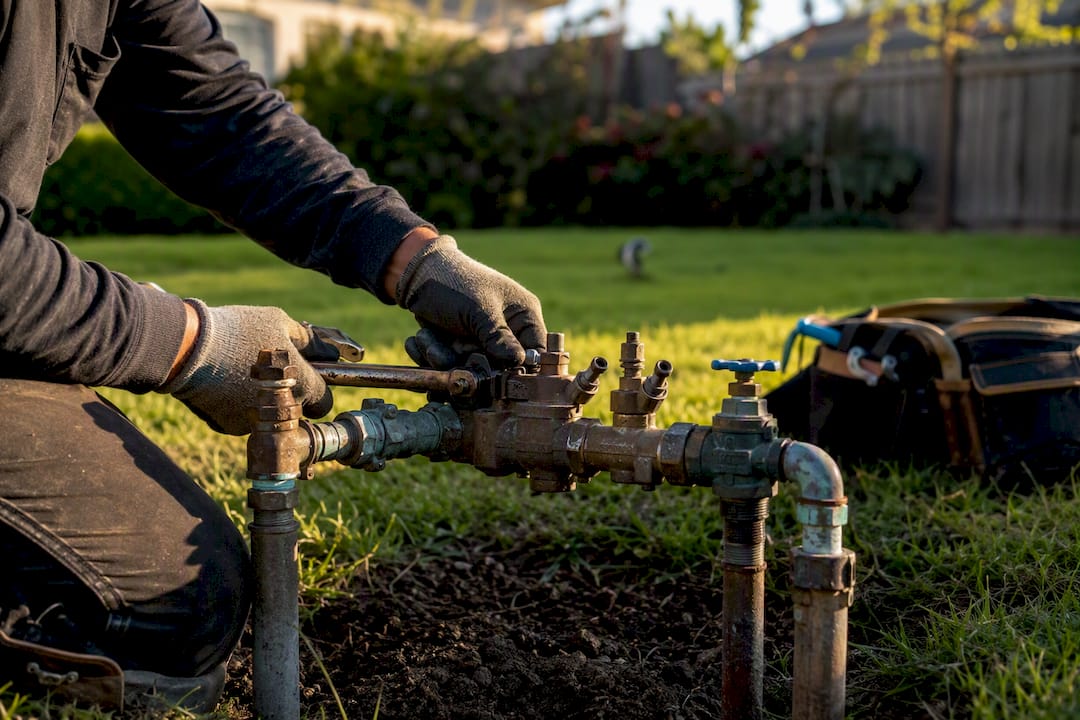
Permits and inspection fees vary by town and county, but budget $50 to $200 in most New Jersey jurisdictions. Some municipalities fold inspection into the permit fee; others charge separately.
Testing and certification for the initial post-install test generally runs $75 to $150 if it’s not already bundled into the installation price.
Add it up and you get the industry-standard breakdown of hardware, labor, permits, testing, and disposal, which most residential jobs cluster between $700 and $2,100 depending on complexity.
Here’s how the pieces typically stack for a mid-range job:
- Device hardware: typically a few hundred dollars
- Labor (several hours): moderate labor costs
- Permit and inspection: varies by jurisdiction
- Initial test and certification: modest additional cost
- Materials, fittings, and disposal: moderate additional costs
- Contingency for hidden issues: set aside some budget
Realistic total for a mid-complexity job falls within a broad mid-range estimate, and that range applies across different locales.
What Do AVB, PVB, DCV, and RPZ Devices Cost Installed?
Not every backflow preventer costs the same to replace, because not every device protects against the same hazard. Picking the wrong one, or letting a contractor quote the wrong one, either wastes money or leaves you out of code.
- AVB (Atmospheric Vacuum Breaker): Protects against backsiphonage on low-hazard connections like irrigation systems. Installed cost typically runs $150–$400. Cheapest and simplest of the four.
- PVB (Pressure Vacuum Breaker): Similar hazard protection to an AVB but rated for continuous pressure, common on irrigation and some fire lines. Installed cost usually falls in the $250–$600 range.
- DCV (Double Check Valve): Handles moderate hazard situations, common in residential fire sprinkler lines and some commercial connections. Installed cost generally runs $400–$900.
- RPZ (Reduced Pressure Zone): The heavyweight option, required for high-hazard connections where contamination risk is serious, like properties with chemical feed systems or complex plumbing. Installed cost runs highest, typically $600–$1,500 or more.
These bands hold for standard residential line sizes, generally 3/4 inch to 1 inch. Once you move into 2 inch, 3 inch, or larger commercial-grade lines, the math changes fast. A commercial RPZ on a 4 inch line can run several thousand dollars once you factor in the larger valve body, heavier labor, and often a dedicated enclosure. If your property manager oversees a mixed-use building, don’t assume the residential ranges above apply, get a quote scoped to your actual line size before budgeting anything, following device-specific installed ranges that plumbing pricing guides typically cite.
What Makes a Backflow Replacement Quote Go Up?
A handful of predictable variables push a quote from the low end to the high end. Knowing them in advance means you can ask the right questions before a contractor’s estimate surprises you.
- Site access. A backflow device buried behind landscaping, inside a tight crawlspace, or requiring trenching to reach adds hours of labor fast.
- Valve size and device class. Moving from a residential AVB to a commercial-grade RPZ multiplies both hardware and labor cost.
- Regional labor rates and local permit fees. These vary block to block in New Jersey depending on the municipality’s water authority requirements.
- Freeze protection upgrades. Adding an insulated cover or heated enclosure at replacement time costs more upfront but prevents the freeze damage that forces another full replacement two winters later.
- Whether the quote includes the first test and filing. Some contractors quote installation only and bill testing separately, which can catch homeowners off guard.
Pro Tip: Ask every bidder point-blank: “Does this price include the initial functional test and permit filing?” If the answer is vague, assume it doesn’t, and get that in writing before you sign anything.
Should You Repair or Fully Replace Your Backflow Device?
Not every failed test means you need a new device. A rebuild kit, springs, seats, O-rings, and check discs, often solves the problem for far less than replacement.
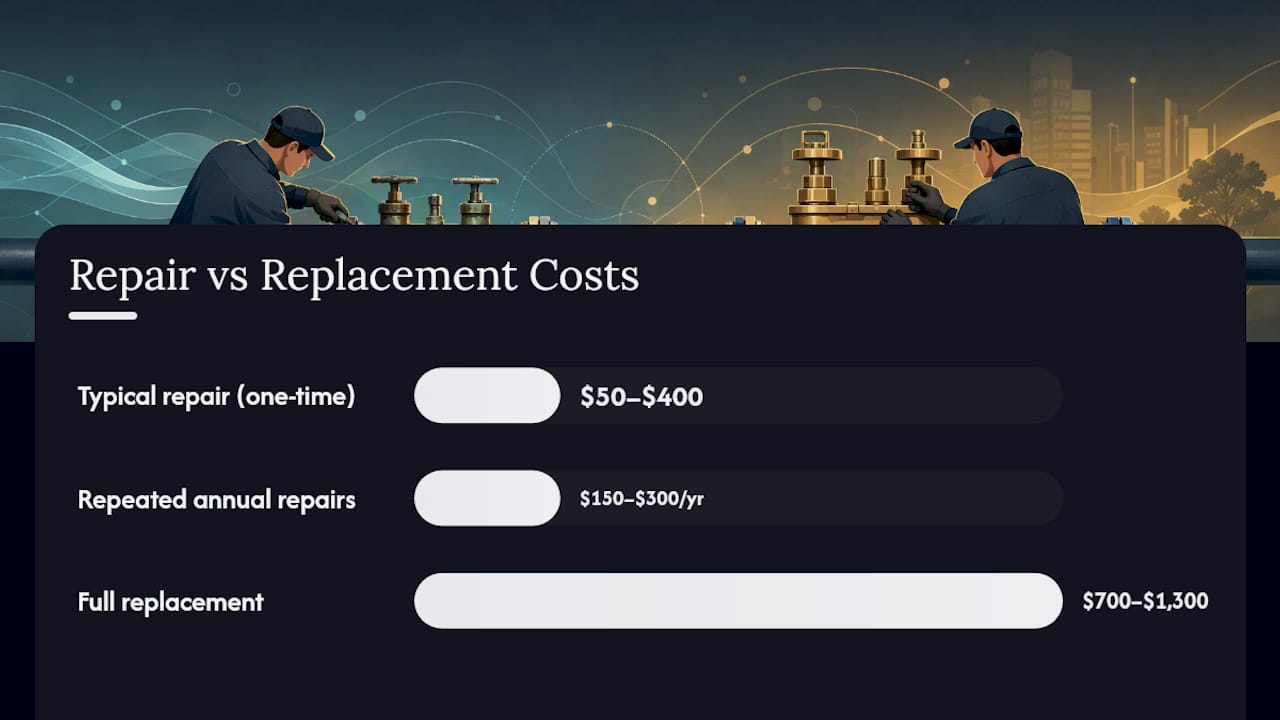
Typical repair costs after a failed test run $50 to $400 depending on parts needed, according to backflow repair pricing data. But some signs mean rebuilding is throwing money away:
- Cracked or corroded valve body (no amount of internal parts fixes a compromised housing)
- Repeated test failures within a year or two, even after repairs
- Visible rust or mineral buildup consistent with age past 15 to 20 years
If your technician is rebuilding the same device every testing cycle, you’re likely paying $150 to $300 annually in repeated repair costs that could go toward a $700 to $1,300 replacement that stops failing altogether. For general guidance on when small fixes make sense versus bigger investments, minor plumbing repairs that save homeowners money covers similar repair-versus-replace logic across other plumbing systems.
How Much Do Permits, Testing, and Annual Compliance Cost?
Replacement is a one-time cost. Testing is not. Municipalities require annual backflow testing, and the tester submits results directly to the water authority, so failing to schedule it can trigger compliance notices.
- Permit fees: vary by municipality
- Initial certification test (post-install): modest testing fees
- Annual recurring test: recurring costs that vary based on device and location
- Report filing: typically handled by certified tester, verify before hiring
Skipping the annual test doesn’t just risk a fine, it risks a compliance letter demanding immediate action, often with a short deadline. If you’ve already received one of these notices, the clock is already running.
What Do Real Backflow Replacement Jobs Actually Cost?
Numbers on a page are one thing. Real jobs tell you what actually happens once a technician is standing in a basement.
- Simple swap: Same-size AVB, easy basement access, no permit complications. Total: $650, including test.
- Mid-range retrofit: DCV replacement requiring a short pipe extension and new permit filing in a township with stricter code. Total: $1,250.
- Complex city job: RPZ replacement on an older multi-unit property, corroded fittings discovered mid-job, required trenching to reach an outdoor enclosure. Total: $2,400.
The surprises that push jobs into higher brackets are almost always the same three things: freeze damage from an uninsulated device, a valve buried somewhere nobody expected, or a permit nobody pulled the first time around.
The properties that save the most money aren’t the ones with the cheapest devices, they’re the ones that bundled freeze protection and the first test into the original quote instead of paying for a second visit six months later.
Getting three quotes instead of accepting the first one matters more than people realize. Bid spreads for the same job can exceed 40 to 60 percent city to city, and property managers overseeing multiple units feel that gap multiplied across every building they manage.
What Homeowners Get Wrong About Backflow Budgeting
The conventional advice, “just get the cheapest quote,” is exactly backwards for this particular job. A backflow preventer isn’t a light fixture. It’s a code-mandated device tied to your water authority’s compliance records, and a bargain installation that skips the permit or the first test isn’t actually cheaper, it’s a bill you haven’t received yet.
What actually matters is the line-item breakdown, not the bottom-line number. A $900 quote that includes the permit, test, and filing beats a $700 quote that doesn’t, every time, because that missing $200 shows up later as a scramble to schedule testing before a compliance deadline.
Freeze protection is the most underrated line item in this entire process. It adds maybe $100 to $200 to a job, and homeowners routinely skip it to save that money, then pay for a full second replacement after a hard winter cracks an exposed valve body. Prioritize the boring stuff first: permit, test, freeze protection. The device itself is the easy part.
Get a Straight, Line-Item Backflow Quote in New Jersey
Southjerseybackflow prices replacement jobs the way this guide recommends you shop for one, with the device, labor, permit, and first test spelled out before any work starts. No vague lump-sum estimate that leaves you guessing what happens if the technician finds corroded fittings once the wall’s already open.
Southjerseybackflow handles testing, certification, replacement, rebuilding, and enclosure installation for residential, commercial, and multi-unit properties across South Jersey, including emergency service when a device fails a test unexpectedly. Every quote spells out the permit, the initial functional test, and direct filing with your local water authority, so nothing gets left for a follow-up visit. If freeze protection makes sense for your property, it gets priced into the same quote rather than tacked on later as a surprise.
If you’ve already gotten a compliance notice, the backflow testing and reporting process explains exactly what your water authority expects and how fast. Otherwise, reach out for a line-item quote on your replacement or annual test, and get the paperwork handled the same day the work is done.
Sources
- PlumbNow: Backflow Preventer Installation Costs 2026
- Plumbing Price Guide: Backflow Preventer Cost (2026 Pricing)
Pingback: Line Item Budgets for Backflow Relocation, Owners & Contractors