TL;DR:
- Backflow in children’s facilities poses a significant health risk by allowing contaminated water to reverse into potable supplies. Proper device selection, annual testing by certified professionals, and documented compliance are essential to prevent this hazard. Parents and administrators should actively verify cross-connection surveys, device types, and test reports to ensure ongoing safety and regulatory adherence.
Backflow in children’s facilities is the unwanted reversal of contaminated water into potable supply lines, and it represents one of the most underestimated threats to child health in schools, daycares, and recreational centers. A cross-connection is any physical link between a safe drinking water line and a non-potable source, such as a swimming pool, irrigation system, or boiler. When pressure on the facility side exceeds supply pressure, that connection becomes a direct path for chemicals, pathogens, and pesticides to reach the water children drink. Understanding children facilities backflow risks is the first step toward preventing them.
What are the common sources and hazards of backflow in children’s facilities?
Children’s facilities contain more cross-connection points than most people realize. IRC 2024 plumbing code identifies hose bibs, irrigation systems, boiler makeup lines, and pool fill connections as the most common points requiring backflow prevention devices matched to hazard level. Each of these fixtures creates a potential pathway for contamination if pressure conditions shift, even briefly.
Backflow occurs through two mechanisms. Back-siphonage happens when a sudden drop in supply pressure, caused by a water main break or heavy demand, creates a vacuum that pulls non-potable water backward. Backpressure occurs when equipment on the facility side, like a boiler or pressurized irrigation system, pushes water back into the supply line at higher pressure.
The contamination threats are not theoretical. Backflow incidents have introduced antifreeze, pesticides, and pool chemicals into potable water systems. In a childcare setting, these contaminants reach drinking fountains, kitchen sinks, and bathroom faucets used by children throughout the day.
Here are the most common high-hazard cross-connection points in children’s facilities:
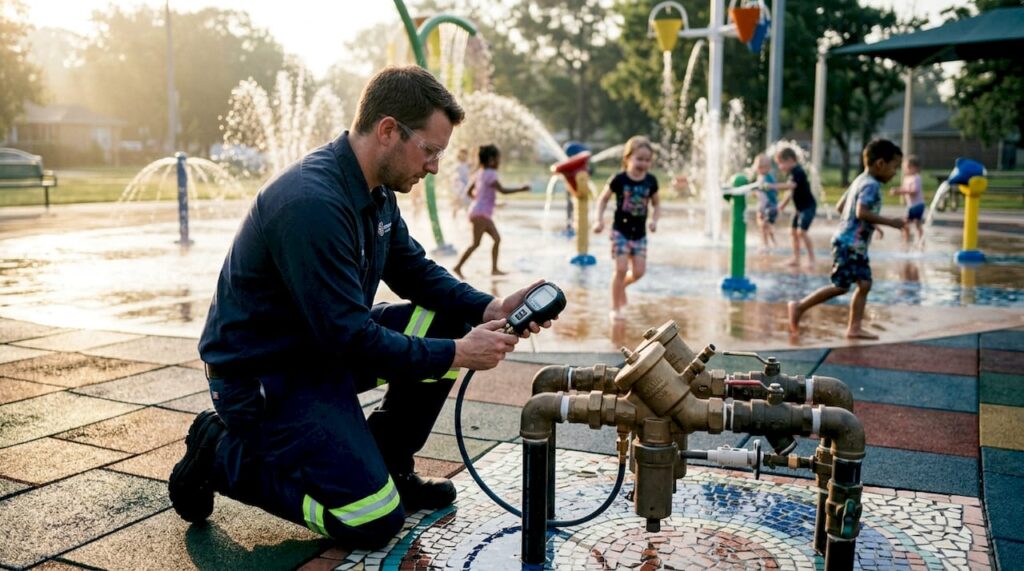
- Swimming pools and splash pads: Fill lines connected directly to potable supply without proper protection introduce chlorine, algaecides, and biological contaminants.
- Irrigation systems: Fertilizers and pesticides applied to grounds can back-siphon through hose bibs or underground irrigation heads.
- Boiler makeup lines: Boilers use chemical treatments to prevent corrosion. Without protection, those chemicals can reverse into drinking water.
- Hose bibs: Outdoor faucets are frequently left with hoses submerged in buckets, puddles, or chemical solutions, creating a direct low-hazard to high-hazard risk.
- Kitchen equipment: Commercial dishwashers and food prep sinks with spray attachments create cross-connections if not properly air-gapped or protected.
How does plumbing code and regulation apply to children’s facilities?
The regulatory framework for backflow prevention in childcare and school settings is grounded in the IRC 2024 and enforced through state and local plumbing codes. New Jersey facilities must comply with state-adopted versions of these model codes, and public water utilities run their own cross-connection control programs on top of that. The result is a layered compliance obligation that facility administrators cannot ignore.
The code requires hazard-based device selection. That means the type of backflow preventer installed must match the severity of the contamination risk at each connection point. A low-hazard hose bib gets a different device than a high-hazard pool fill line. Installing the wrong device is a code violation, even if a device is present.
Here is how the compliance process typically works for a children’s facility:
- Initial cross-connection survey: A certified contractor inspects all plumbing connections and identifies cross-connection hazards by type and severity.
- Device installation: Appropriate backflow prevention assemblies are installed at each identified hazard point, selected per IRC 2024 requirements.
- Initial test: A certified tester verifies each device functions correctly and submits documentation to the local utility or authority having jurisdiction.
- Annual retesting: Annual testing is required to confirm devices remain functional. Utilities like Carnation, WA send reminder letters in June; New Jersey utilities follow similar schedules.
- Compliance documentation: Test reports are filed with the utility. Facilities without current documentation are considered non-compliant, regardless of device installation.
The following table compares the two main regulatory tiers children’s facilities must satisfy:
| Regulatory tier | Scope | Enforcement body |
|---|---|---|
| IRC 2024 and state plumbing code | Device type, installation standards, air gap requirements | Local building and plumbing inspectors |
| Public utility cross-connection program | Annual testing, documentation, hazard surveys | Municipal or county water utility |
Chatham-Kent Public Utilities ties compliance eligibility directly to documented surveys and approved contractor reports. New Jersey utilities operate under the same principle: no paperwork, no compliance credit.
What devices prevent backflow in children’s facilities and how do they differ?
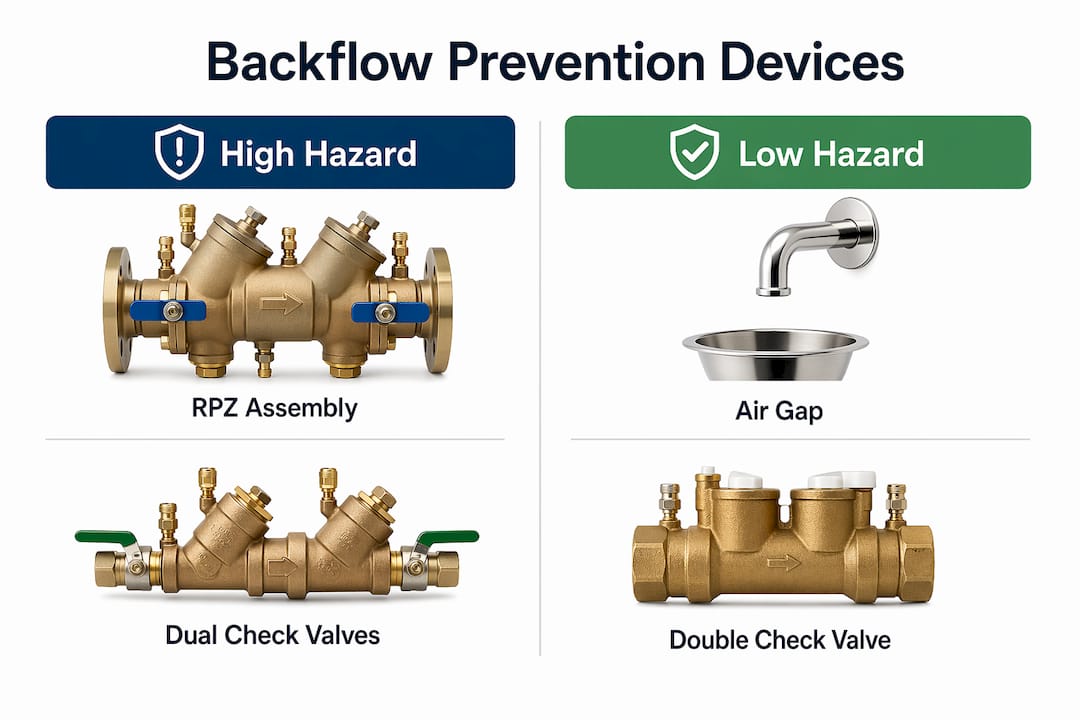
Device selection is where many facilities get it wrong. Installing any backflow preventer is not the same as installing the right one. IRC 2024 device standards specify ASSE 1011 hose connection vacuum breakers for hose bibs, and ASSE 1013 reduced pressure zone (RPZ) assemblies for high-hazard connections like irrigation systems and pool fill lines. Air gaps, the physical separation of a water outlet from any potential contamination source, are the simplest and most reliable method where they can be applied.
Here is a comparison of the primary device types used in children’s facility plumbing:
| Device type | Best use case | Hazard level | Annual test required |
|---|---|---|---|
| Air gap | Sinks, dishwashers, tank fill | Any | No (physical separation) |
| Atmospheric vacuum breaker (ASSE 1001) | Low-hazard hose connections | Low | No |
| Hose bib vacuum breaker (ASSE 1011) | Outdoor hose bibs | Low to moderate | No, but replace when worn |
| Double check valve assembly (ASSE 1015) | Moderate-hazard connections | Moderate | Yes |
| Reduced pressure zone assembly (ASSE 1013) | Irrigation, pools, boilers | High | Yes |
The RPZ assembly is the gold standard for high-hazard connections. It uses two independent check valves and a relief valve that opens to discharge water if either check valve fails, preventing contaminated water from reaching the supply. Certified installation and testing by a licensed professional is required for RPZ devices. A facility administrator cannot simply purchase one and have a general handyman install it.
A double check valve assembly provides moderate protection but lacks the relief valve of an RPZ. It is appropriate for moderate-hazard connections but should never be used where high-hazard contaminants like pool chemicals or pesticides are present.
Pro Tip: If your facility has added a new pool, irrigation zone, or boiler within the past two years, plumbing changes trigger a requirement for updated hazard evaluations and new or upgraded backflow prevention devices per IRC 2024. Do not assume existing devices cover new connections.
How to ensure ongoing safety through testing and compliance documentation
Installation is not the finish line. Backflow prevention requires active management, including initial hazard evaluation, correct device installation, and mandatory annual testing. The most common failure point in children’s facilities is the assumption that a device installed years ago is still working correctly. Mechanical devices wear out, seals degrade, and debris can hold check valves open permanently.
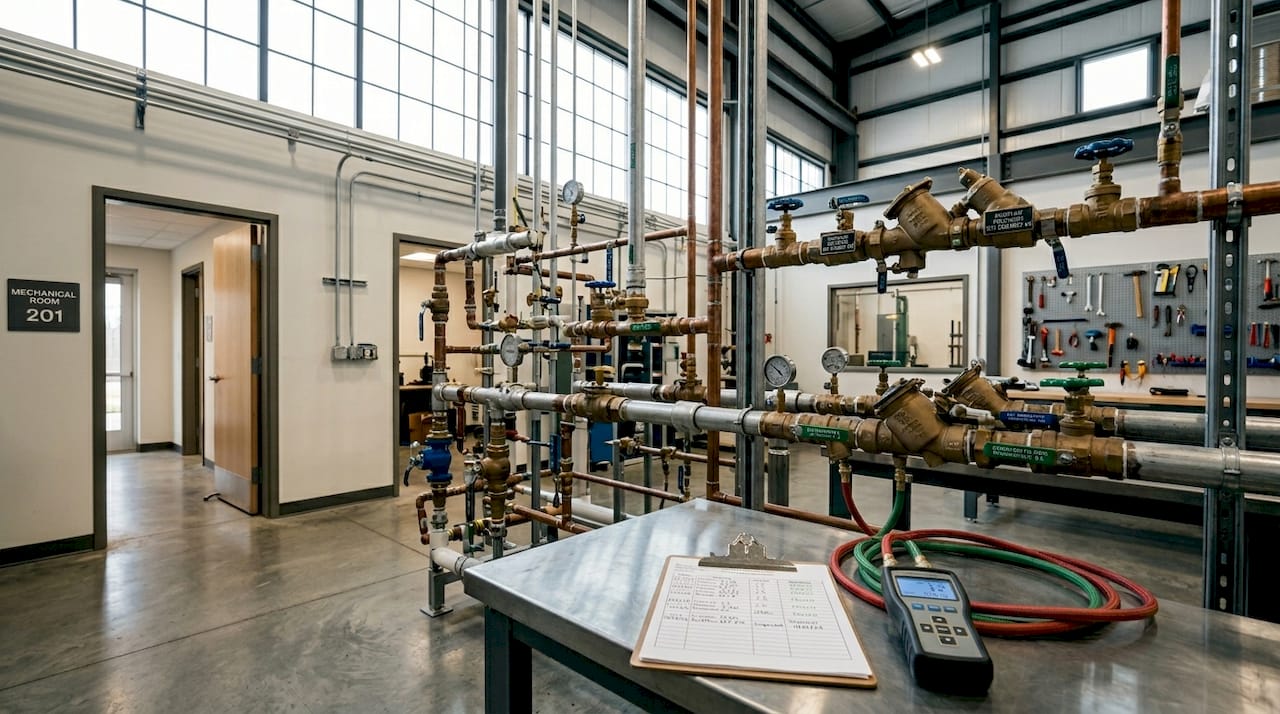
Annual testing by a certified backflow tester is the only way to confirm a device is functioning. The tester uses calibrated gauges to measure differential pressure across each check valve and verify the relief valve operates within specification. Results are documented on a standardized test report and submitted to the local utility.
Key compliance practices for facility administrators include:
- Maintain a device inventory: List every backflow prevention assembly on the property, including device type, ASSE standard, installation date, and location.
- Track test due dates: Annual tests must be completed within the utility’s compliance window. Missing the deadline puts the facility in violation.
- Verify contractor certification: Only certified backflow testers are authorized to perform tests on testable assemblies. Ask for the tester’s license number before scheduling.
- File and retain test reports: Keep copies of all test reports for at least three years. Utilities, licensing boards, and insurance carriers may request them.
- Schedule post-repair retests: Any device that fails its annual test must be repaired or replaced and retested before it is returned to service.
Pro Tip: Request a copy of the test report the same day testing is completed. Certified testers are required to provide one. If a tester cannot produce a report on the spot, that is a red flag about their credentials.
Internal plumbing cross-connections inside the building pose significant health risks even when the service line to the street is fully protected. Compliance at the meter is not enough. Every fixture inside the facility that creates a cross-connection must be addressed independently.
Practical steps for parents and administrators to reduce backflow risks
Parents and facility administrators do not need to be plumbers to protect children from backflow contamination. They need to ask the right questions and demand documented answers. Backflow prevention is a public health control, not a regulatory checkbox, and incomplete protection can expose children to serious contamination risks.
Follow these steps to verify and strengthen protection at any children’s facility:
- Request the cross-connection survey report. Ask the facility director or building manager for the most recent survey. It should list every identified cross-connection and the device installed at each point.
- Confirm device types in writing. Ask specifically whether RPZ assemblies are installed on irrigation and pool connections. A double check valve on a high-hazard connection is a compliance failure.
- Review the most recent test reports. Test reports should be dated within the past 12 months. If the facility cannot produce them, the devices have not been tested.
- Verify contractor credentials. The tester’s name and license number appear on every valid test report. Cross-reference with your state’s licensing database.
- Ask about recent plumbing changes. New equipment, seasonal irrigation activation, or pool installation should have triggered updated hazard evaluations. If they did not, push for one.
- Maintain communication with the utility. Your local water utility’s cross-connection control program can confirm whether the facility is listed as compliant in their records.
Parents and facility managers who understand plumbing hazards and prevention methods are far more effective advocates for child water safety than those who assume compliance is someone else’s responsibility.
Key takeaways
Backflow prevention in children’s facilities requires correct device selection, certified annual testing, and documented compliance at every cross-connection point inside the building.
| Point | Details |
|---|---|
| Backflow is a real contamination threat | Chemicals, pesticides, and pool contaminants can reverse into drinking water through common facility fixtures. |
| Device type must match hazard level | RPZ assemblies are required for high-hazard connections; installing the wrong device is a code violation. |
| Annual testing is mandatory | Certified testers must verify every testable assembly each year and submit documentation to the utility. |
| Installation alone is not protection | Devices degrade over time; only annual testing confirms they are still functioning correctly. |
| Parents can and should verify compliance | Request cross-connection surveys, device lists, and current test reports from any children’s facility. |
What I’ve learned from years of backflow work in children’s facilities
The most dangerous assumption I encounter is that a backflow preventer installed during construction is still doing its job five years later. It may not be. Check valves stick open. Relief valves corrode. Debris lodges in seats. I have tested devices in schools and daycares that looked fine from the outside and failed completely under gauge pressure. Nobody knew because nobody tested them.
The second issue I see constantly is mismatched devices. A facility installs a double check valve on a pool fill line because it was cheaper and easier, and nobody catches it until an inspector or a certified tester flags it. By that point, the facility has been non-compliant for years, and the water those children drank was only protected by a device rated for moderate hazards on a high-hazard connection.
My honest advice to parents: do not accept “we have backflow preventers” as a complete answer. Ask what type, ask when they were last tested, and ask for the report. A facility that cannot answer those three questions within 24 hours has a compliance problem. Advocating for child safety water systems is not being difficult. It is being responsible.
— Jordan
Protect the children in your facility with certified backflow testing
Children’s facilities in New Jersey carry a legal and moral obligation to maintain verified backflow protection at every cross-connection point. Southjerseybackflow provides certified backflow testing, compliance documentation, and hazard evaluation services across New Jersey, including Ocean County, Burlington County, and surrounding areas.
Whether you manage a daycare, school, or recreational center, Southjerseybackflow’s licensed testers deliver the test reports your utility requires and the documentation parents deserve to see. If your facility’s last test report is more than 12 months old, you are already out of compliance. Learn exactly what backflow testing in New Jersey requires and schedule your inspection before the next compliance deadline. You can also review NJ backflow codes for 2026 to confirm your facility meets current requirements.
FAQ
What is backflow and why does it matter in childcare settings?
Backflow is the reversal of water flow through a cross-connection, allowing non-potable water to enter potable supply lines. In childcare settings, this can introduce pool chemicals, pesticides, and pathogens directly into drinking water used by children.
Which backflow device is required for a school swimming pool?
An ASSE 1013 reduced pressure zone (RPZ) assembly is required for high-hazard connections like pool fill lines, per IRC 2024. A double check valve assembly does not provide adequate protection for this application.
How often must backflow prevention devices be tested in New Jersey?
Testable backflow prevention assemblies, including RPZ and double check valve assemblies, must be tested annually by a certified backflow tester. Test reports must be submitted to the local water utility to maintain compliance.
Can a facility administrator verify backflow compliance without hiring a contractor?
Yes. Administrators can request the cross-connection survey, device inventory, and most recent test reports from their building manager or utility. The local water utility’s cross-connection control program also maintains compliance records that are accessible upon request.
What are the warning signs that a backflow device may have failed?
Discolored water, unusual taste or odor, or a visible discharge from an RPZ relief valve are all indicators of a potential device failure. Any of these signs requires immediate inspection and retesting by a certified backflow tester.