TL;DR:
- Preventing water contamination in New Jersey involves proper hazardous waste disposal, routine septic system maintenance, and implementing stormwater control measures. Regularly testing backflow prevention devices and minimizing fertilizer or pesticide use are essential actions to protect groundwater and surface water. Adopting permeable surfaces and native plants helps naturally filter water and reduce runoff, safeguarding local water resources.
Water contamination prevention is the practice of stopping pollutants from entering groundwater, surface water, and drinking water supplies through deliberate, property-level actions. For New Jersey homeowners and property managers, the most effective ways to prevent water contamination include proper hazardous waste disposal, regular septic system maintenance, and stormwater runoff controls guided by EPA and NJDEP standards. Clear water is not a reliable safety indicator. Contamination often travels invisibly through soil, drainfields, and storm sewers long before it reaches a tap.
1. Dispose of hazardous household materials correctly
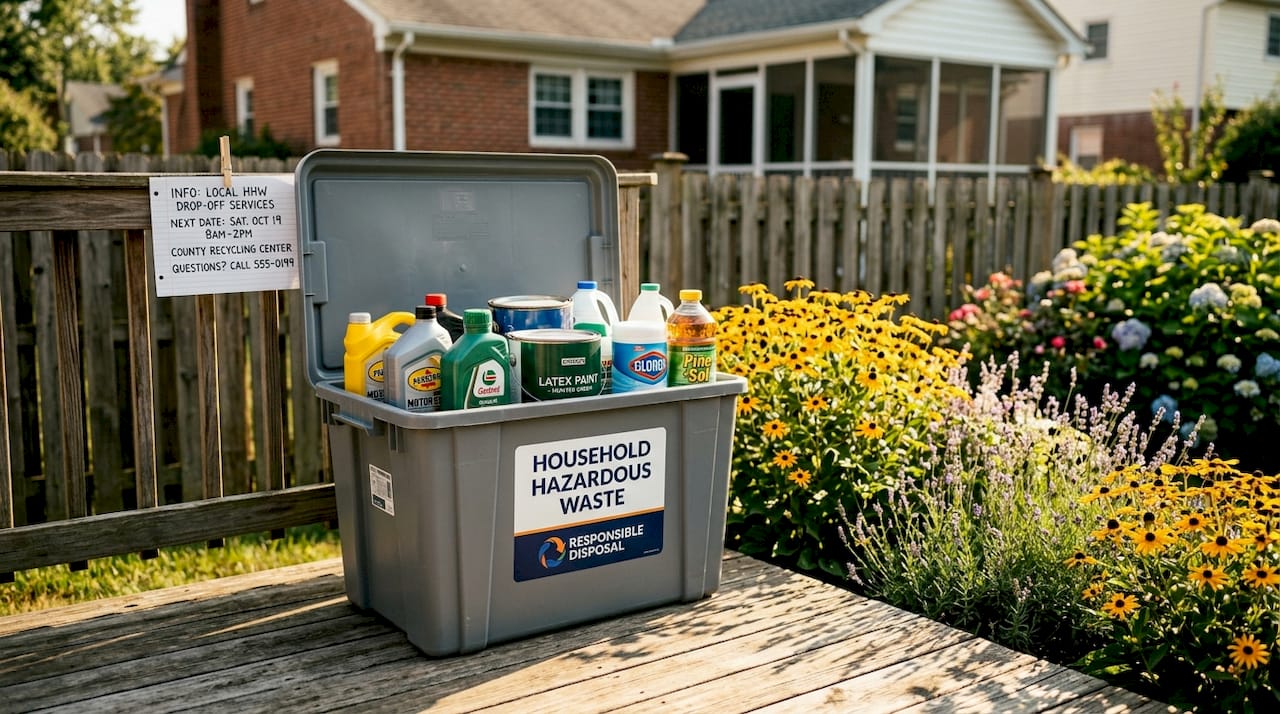
Proper disposal of hazardous products is one of the most direct ways to prevent water contamination at the source. When motor oil, pesticides, paints, or cleaning products are dumped on the ground or poured down a drain, they move through soil and enter aquifers that supply drinking water. The contamination pathway is fast and largely invisible.
Common household hazardous wastes that require special disposal include:
- Motor oil and automotive fluids
- Pesticides and herbicides
- Latex and oil-based paints
- Household cleaners and solvents
- Prescription and over-the-counter medicines
- Batteries and electronics
Never pour any of these down a sink, toilet, or storm drain. Storm drains connect directly to local waterways with no filtration. New Jersey counties run periodic household hazardous waste collection events where residents can drop off these materials at no cost. Contact your county’s solid waste office or check the NJDEP website to find the next scheduled event near you.
Pro Tip: Search “NJ household hazardous waste collection” plus your county name to find upcoming drop-off dates. Many counties hold events quarterly, and some accept materials year-round at permanent facilities.
2. Maintain your septic system on a strict schedule
A malfunctioning septic system is one of the most serious contamination risks on any residential property. Failing septic systems release bacteria, viruses, and chemicals directly into the soil and groundwater beneath your property. Neighboring wells and local streams can be affected within days of a system failure.
The EPA recommends septic systems be inspected at least every three years and tanks pumped every three to five years. That schedule is not a suggestion. It reflects how quickly solids accumulate and how fast a drainfield can become saturated and fail. Skipping a pumping cycle does not save money. It multiplies the cost of remediation when failure occurs.
Watch for these warning signs of septic system trouble:
- Slow drains or gurgling sounds in multiple fixtures
- Wet, spongy ground over the drainfield
- Sewage odors indoors or outdoors
- Unusually green or lush grass over the tank or drainfield
- Sewage backup in toilets or floor drains
One overlooked contamination pathway is medication disposal. Flushing medicines down the toilet sends pharmaceutical compounds into your septic system. Most water treatment plants cannot fully remove these compounds, meaning they eventually reach surface water and groundwater. Use a local drug take-back program instead.
3. Manage stormwater runoff with proven NJ techniques
Stormwater runoff carries fertilizers, sediment, oil, and bacteria from your property directly into nearby streams, rivers, and the Raritan Bay watershed. NJDEP requires erosion and sediment control plans for any construction activity, and those same principles apply to ongoing property management. Unmanaged runoff is not just an environmental concern. It is a regulatory liability for property managers overseeing active sites.
The NJ Stormwater Best Management Practices Manual provides detailed, New Jersey-specific guidance on structural and nonstructural controls for managing runoff. It covers green infrastructure methods, BMP maintenance schedules, and groundwater recharge strategies that work within NJ’s soil and climate conditions.
| Stormwater control | Primary benefit | Maintenance need |
|---|---|---|
| Bioswale | Slows runoff, filters pollutants | Annual sediment removal |
| Rain garden | Increases soil infiltration | Seasonal plant care |
| Vegetated buffer | Traps sediment near water bodies | Periodic mowing and replanting |
| Permeable pavement | Reduces surface runoff volume | Annual inspection for clogging |
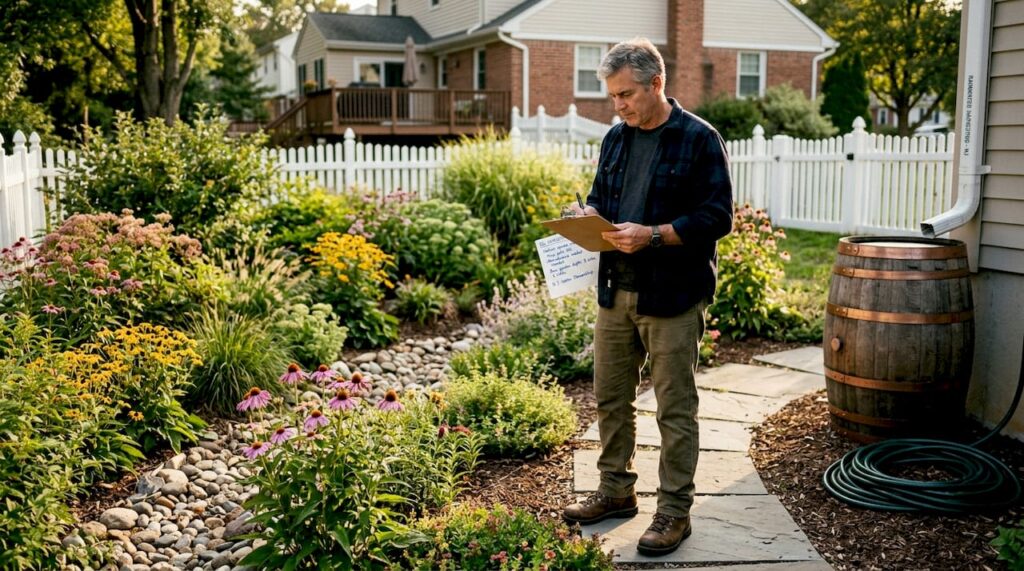
Bioswales, rain gardens, and vegetated buffers reduce runoff speed and pollutant loads reaching lakes and streams by enhancing infiltration and soil absorption. Michigan State University Extension research confirms these watershed-level approaches measurably improve water quality when properly maintained.
Pro Tip: A neglected rain garden becomes a standing water problem. Clear debris from inlets every fall and check that the soil still drains within 24 to 48 hours after a heavy rain. If it does not, the infiltration layer needs to be refreshed.
4. Reduce fertilizer and pesticide use on your property
Overuse of fertilizers and pesticides is a leading cause of groundwater and surface water contamination in suburban New Jersey. Excess nitrogen and phosphorus from lawn fertilizers travel through sandy soils and reach aquifers faster than most homeowners expect. Pesticide residues follow the same path.
The EPA recommends using only the minimum effective amount of any chemical product and following label directions precisely. Labels are not suggestions. They are legal requirements, and exceeding the recommended rate does not improve results. It increases runoff risk and can harm the soil biology that naturally filters water.
Practical ways to reduce chemical reliance on your property include:
- Soil testing before fertilizing. A basic soil test from Rutgers Cooperative Extension costs under $20 and tells you exactly what nutrients your lawn actually needs.
- Integrated Pest Management (IPM). IPM uses targeted treatments only when pest thresholds are exceeded, reducing total chemical use by 50 to 90 percent compared to calendar-based spraying.
- Slow-release fertilizers. These reduce the volume of nutrients available for runoff at any one time.
- Timing applications correctly. Never apply fertilizer or pesticides before a forecasted rain event. New Jersey’s spring and fall rain patterns make timing critical.
5. Design your property to slow and filter water naturally
Property design is an underused tool for water quality improvement. Hard surfaces like concrete driveways and patios shed water at full speed, carrying pollutants directly to storm drains. Replacing or supplementing these surfaces with permeable alternatives changes the hydrology of your entire lot.
Permeable pavement systems, including permeable concrete, permeable asphalt, and interlocking pavers with open joints, allow water to infiltrate rather than run off. They work best on driveways, walkways, and parking areas where traditional pavement is typically installed.
- Replace sections of concrete driveway with permeable pavers near the street edge where runoff volume is highest.
- Install a gravel or mulch border along fence lines and property edges to slow sheet flow.
- Plant native New Jersey species like switchgrass, inkberry, or native ferns in low-lying areas to absorb excess water.
- Maintain a vegetated buffer of at least 10 feet between any fertilized lawn area and a stream, pond, or drainage swale.
- Grade soil away from your foundation and toward planted areas rather than toward paved surfaces.
Native plants are particularly effective because their deep root systems improve soil structure and infiltration capacity over time. Turf grass roots extend only two to three inches. Native meadow grasses reach two to six feet, creating a living filtration system beneath your lawn.
6. Protect your plumbing system from backflow contamination
Backflow is the reversal of water flow in a plumbing system that pulls contaminated water back into the clean water supply. It is one of the most direct and least visible contamination pathways in any residential or commercial property. Pressure drops caused by water main breaks, heavy municipal demand, or firefighting activity can trigger backflow events without any warning.
New Jersey requires backflow prevention devices on many property types, and those devices must be tested annually by a certified tester. A device that has not been tested may be mechanically failed without showing any visible signs. Understanding backflow prevention methods is a practical step every NJ property owner should take before a pressure event occurs.
For homeowners with irrigation systems, garden hose connections, or pools, the risk is especially high. These connections create direct cross-connections between the potable water supply and potential contamination sources. Installing and maintaining the correct backflow preventer for each connection type is a non-negotiable part of residential backflow protection in New Jersey.
7. Store chemicals and fuels away from drainage areas
Chemical storage is a contamination risk that most homeowners do not think about until a spill occurs. Gasoline, motor oil, pool chemicals, and fertilizers stored in garages, sheds, or near driveways sit directly above soil that drains to groundwater. A single cracked container can release enough contaminant to affect a private well.
Store all chemicals in sealed, labeled containers on shelving that keeps them off the floor. Place secondary containment trays under any liquid containers that hold more than one gallon. Position storage areas away from floor drains, sump pump discharge points, and any surface that slopes toward a storm drain or natural drainage channel. Inspect containers at the start of each season and dispose of anything expired or degraded through a county hazardous waste program.
Key takeaways
Preventing water contamination on New Jersey properties requires consistent action across hazardous waste disposal, septic maintenance, stormwater management, chemical use reduction, and plumbing system integrity.
| Point | Details |
|---|---|
| Hazardous waste disposal | Never pour motor oil, pesticides, or medicines down drains. Use county collection events. |
| Septic system schedule | Inspect every three years and pump every three to five years per EPA guidance. |
| Stormwater controls | Install and maintain bioswales, rain gardens, or permeable pavement to reduce pollutant runoff. |
| Chemical use reduction | Soil-test before fertilizing and use IPM to cut pesticide applications significantly. |
| Backflow prevention | Test backflow prevention devices annually to stop contaminated water from entering your supply. |
What I’ve learned after years of working on NJ water systems
Most homeowners focus on what comes out of the tap. The real problem is what goes into the ground. After years of working on backflow prevention across New Jersey properties, the pattern I see repeatedly is that contamination events are almost always traceable to a maintenance gap that seemed minor at the time. A septic system that was “probably fine” for another year. A backflow preventer that was installed but never tested. A rain garden that filled with sediment and quietly stopped functioning.
The EPA is right that contamination pathways matter more than visible water clarity. I would go further. The pathways that concern me most are the ones that operate silently, like a failed check valve on an irrigation system or a cracked septic distribution box that nobody has looked at in a decade. These do not announce themselves.
What actually works is treating water protection as a maintenance calendar, not a reaction plan. Schedule the septic inspection. Test the backflow device. Walk the property after a heavy rain and watch where the water goes. These are not complicated actions. They are consistent ones. And in New Jersey, where dense residential development sits on top of aquifers that supply private wells for roughly 1.7 million residents, consistency is the only thing that holds the line.
I also think the landscaping conversation is underrated. Property managers who invest in native plantings and permeable surfaces are not just being environmentally responsible. They are reducing their own liability and their maintenance costs over a five to ten year horizon. The upfront work pays back in reduced runoff, reduced chemical bills, and reduced risk of a contamination event that triggers regulatory scrutiny.
— Jordan
Protect your NJ property with professional backflow testing
Water quality protection starts at the property level, and one of the most overlooked risks is backflow. When water pressure drops in the municipal system, contaminated water from irrigation lines, pools, or industrial connections can reverse into your clean supply without any visible warning.

Southjerseybackflow provides certified backflow testing and inspection services for residential and commercial properties across New Jersey. Annual testing is required by most NJ municipalities, and a failed or untested device puts your water supply and your compliance status at risk. Learn exactly what backflow testing in New Jersey involves, what the submission process looks like, and how to stay compliant year after year. Schedule your inspection before your municipality’s deadline.
FAQ
What are the most effective ways to prevent water contamination at home?
The most effective methods include proper disposal of hazardous household materials, regular septic system inspections and pumping, and installing stormwater controls like rain gardens or permeable pavement. The EPA identifies these as the highest-impact actions a property owner can take to protect local drinking water sources.
How often should a septic system be inspected in New Jersey?
The EPA recommends septic system inspections at least every three years and tank pumping every three to five years. Skipping this schedule increases the risk of drainfield failure and bacterial contamination of nearby groundwater.
Does backflow prevention count as water contamination prevention?
Backflow prevention is a direct contamination control. A failed backflow preventer allows water from irrigation systems, pools, or other non-potable sources to reverse into the drinking water supply. New Jersey requires annual testing of backflow prevention devices on most property types.
Can lawn fertilizers really contaminate groundwater in NJ?
Yes. Excess nitrogen and phosphorus from fertilizers travel through New Jersey’s sandy soils and reach aquifers faster than in clay-heavy regions. The EPA recommends soil testing before any fertilizer application and using only the minimum labeled amount to reduce runoff and infiltration risk.
What is a stormwater BMP and do NJ homeowners need one?
A Best Management Practice (BMP) is any technique that reduces pollutant runoff from a property. The NJ Stormwater BMP Manual covers options from rain gardens to vegetated buffers. While formal BMP plans are required for construction sites, homeowners benefit from applying the same principles to reduce their contribution to local water quality problems.
Pingback: Benefits of Whole-House Filtration Systems for Families – SmartWaterBox