
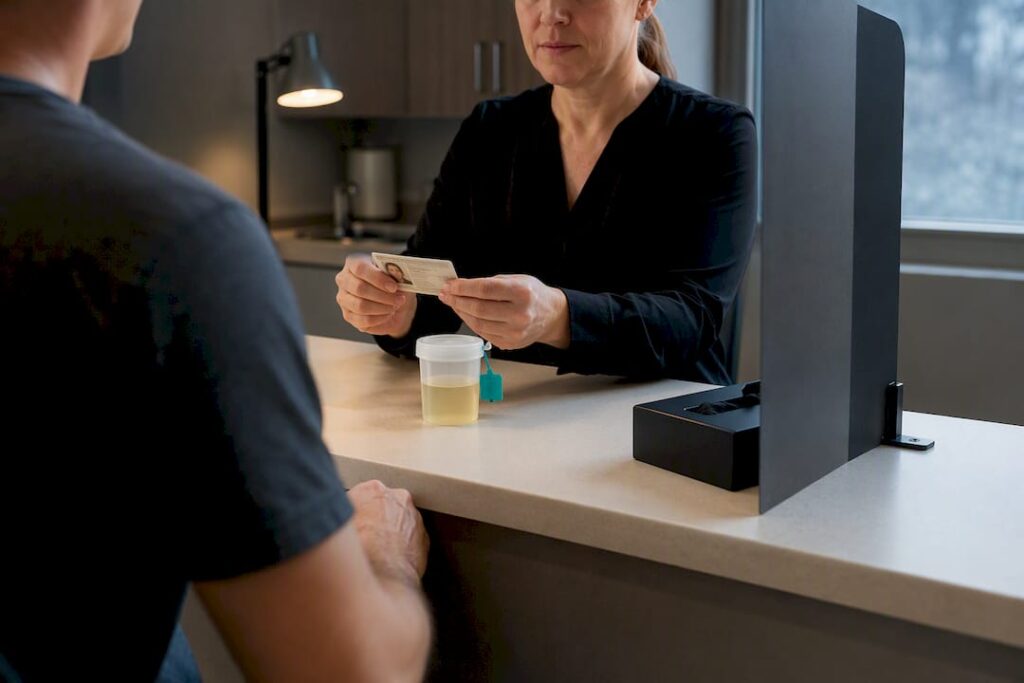
Yes, testing during business hours works for most short, low-disruption checks, and it should move off-hours when a test is long, safety-critical, or requires shutting down active systems. The right call depends on test type, chain-of-custody rules, employee privacy protections, and whether the operation can absorb the downtime. The sections below walk through the legal anchors, the scheduling logic, and a step-by-step checklist supervisors can use.
TL;DR:
- Testing during business hours is feasible for low-disruption checks but long or safety-critical tests should be scheduled after hours to avoid operational impact.
- Federal and state regulations require trained collectors, strict chain-of-custody procedures, and proper record handling regardless of whether testing is during or outside regular hours.
- For tests that take hours or involve samples needing shipping within 24 hours, overnight refrigeration and off-hours scheduling become necessary.
- Employing certified vendors for scheduled on-hours testing simplifies compliance, speeds up processes, and reduces the risk of procedural errors.
- Clear communication and advance preparation, including a reusable testing template, help ensure smooth, compliant testing with minimal disruption during work hours.
Table of Contents
- Which rules govern testing scheduled during work hours
- How test type changes your scheduling decision
- Supervisor’s checklist for running a compliant test during work hours
- Handling privacy, records, and employee access
- Notifying employees without creating friction
- How a certified vendor handles on-hours testing in practice
- Balancing speed with documented process
- Scheduling compliant tests without disrupting your day
- Sources
- FAQ
Which rules govern testing scheduled during work hours
Federal guidance sets the baseline for any employer running regulated specimen collection during the workday. SAMHSA’s collection site manual requires a trained collector, a site with limited access, and completed chain-of-custody forms, with monitored collection required when no permanent site is available or a public restroom has to be used. These procedures apply whether the collection happens at 10 AM or 6 PM, so business hours themselves are not the compliance issue: the process is.
Separately, OSHA’s standard interpretation explains that drug-test results only count as employee medical records under 29 CFR 1910.1020 when they meet that standard’s specific definitions. When they do, covered employees generally have the right to access their own records, which shapes how supervisors store and share results.
For your own policy, publish the collection location, time window, required identification, and what happens with a late arrival or no-show, then name who qualifies as an approved collector. Because state law and collective bargaining agreements can add requirements SAMHSA and OSHA do not cover, loop in HR or employment counsel before finalizing the language.

How test type changes your scheduling decision
Not every test belongs on the same clock. A quick functional check rarely disrupts anyone’s shift, while a test that takes hours or shuts down a system needs a different plan.
- Short, low-disruption checks (a five-minute equipment inspection, a routine urine collection) fit comfortably into business hours with minimal staffing impact.
- Long-duration or safety-impacting tests, like full-duration emergency lighting checks that can run roughly three hours and require backup lighting, often call for phased testing or after-hours scheduling to avoid pulling critical systems offline.
- Environmental or process sampling needs to happen while the relevant system is actually running, since EPA guidance stresses that samples must represent real operating conditions, which usually forces business-hours timing regardless of convenience.
- Specimen handling adds its own clock: samples that cannot ship within 24 hours, such as a Friday collection, must go into secure refrigerated storage until the next shipping day.
When a test threatens to interrupt operations, staggering employees through testing in small groups or shifting the work to after hours protects both compliance and productivity.
Supervisor’s checklist for running a compliant test during work hours
A test scheduled during the workday runs smoother when the groundwork is done in advance. Use this sequence as a working checklist.
- Notify employees ahead of time with the collector’s name or site, the exact time window, required identification, and the policy for late arrivals or no-shows.
- Confirm a trained collector or an approved external collection site rather than defaulting to a supervisor, since SAMHSA’s manual treats untrained on-site collection as an exception that needs documented justification.
- Set up a limited-access collection area with the correct chain-of-custody forms on hand, plus refrigerated storage if the specimen will sit before shipment.
- Line up coverage for the tested employee’s duties so the rest of the shift is not left short-handed.
- Log the collection time, shipping date, and Medical Review Officer contact information for the file.
Pro Tip: Build a reusable testing-day template with the notification language, collector contact, and coverage plan already filled in, so each round of testing takes minutes to set up instead of hours.
Handling privacy, records, and employee access
Test results become sensitive the moment they are collected, and how you store them determines your legal exposure. Under OSHA’s interpretation, results only fall under the 29 CFR 1910.1020 medical-records definition in certain circumstances, but when they do, covered employees can request access to their own files. Treat every result as if that access right applies, and keep voluntary employee assistance program records in a separate file entirely, since mixing the two makes it harder to control who sees what.
Chain-of-custody paperwork and shipment documentation are not optional add-ons. SAMHSA’s guidelines call for shipment within 24 hours or the next business day, with refrigeration whenever that window slips. Limit access to results to the smallest group that needs them, redact identifying details in any shared reports, and set a defined retention period rather than keeping files indefinitely.

Notifying employees without creating friction
How you communicate about testing matters almost as much as the testing itself. A notification that feels punitive or singles someone out creates resentment even when the process is fully compliant.
- Keep the language neutral: state the logistics (time, place, ID needed) without implying suspicion or wrongdoing.
- Route any accommodation request or medical concern through HR and, where relevant, the Medical Review Officer named in SAMHSA’s FAQ.
- Check state wage law before deciding whether testing time counts as paid hours.
- Deliver notifications privately and apply the same process to every employee to avoid the appearance of targeting.
How a certified vendor handles on-hours testing in practice
Backflow preventer testing offers a useful real-world parallel for employers weighing internal collection against hiring a specialist. South Jersey Backflow schedules test visits around a property’s operating hours, coordinates with building staff to confirm access to the device, and files completed test reports directly with the relevant water authority instead of leaving that step to the property owner.
- The technician confirms device location and access with building staff before arriving, which keeps the visit short and predictable.
- Testing itself typically takes minutes per device, so it rarely requires shutting down water service for the day.
- Reports are filed directly with municipal or state authorities, removing a paperwork step that otherwise falls on the employer.
Pro Tip: When a compliance test requires specialized certification, such as backflow preventer testing and certification, hiring a certified vendor is usually simpler than training internal staff to do it correctly.
For property owners managing multiple compliance deadlines, a vendor that files paperwork directly removes one more thing that can slip through the cracks.
Balancing speed with documented process
The temptation with any on-hours test is to treat speed as the main goal, but the process is what actually protects you. A fast collection with no trained collector, no chain-of-custody form, and no documented exception is a liability waiting to surface, not a time saver. My honest recommendation is to default to scheduled, documented testing, whether that means training an internal collector properly or handing the job to a vendor built for it, rather than improvising on-site whenever it feels convenient.
— Jordan
Scheduling compliant tests without disrupting your day
A specialized backflow testing vendor typically schedules on-site visits around building working hours, uses licensed technicians to test devices, can complete same-day repairs if stocked parts are available, and may file certifications directly with local water authorities.
- Same-day scheduling for backflow preventer testing and certification with direct filing to the water authority.
- On-site coordination with building or facilities staff to confirm device access before the technician arrives.
- Stocked parts for rebuilds and repairs completed in the same visit when a device fails testing.
Check availability for your property and get your test scheduled around a time that works for your operation.
Sources
- Collection Site Manual 2024 – Urine (SAMHSA)
- Urine Specimen Collection Handbook – 2024 (SAMHSA)
- 1910.1020 requirements regarding employee drug testing results. | OSHA
FAQ
Can drug tests be scheduled during normal work hours?
Yes, when the collection follows a trained collector and proper chain-of-custody procedures, a business-hours schedule is workable for most standard collections. Longer or safety-critical tests are better suited to after-hours or phased scheduling, as outlined in SAMHSA’s collection guidance.
What happens if a specimen cannot be shipped the same day?
The specimen needs secure refrigerated storage until it can ship, since SAMHSA’s handbook requires shipment within 24 hours or the next business day. A Friday collection, for example, typically needs refrigeration over the weekend.
Do employees have a right to see their own test results?
When results meet the medical-record definitions under 29 CFR 1910.1020, covered employees generally have access to their own records, according to OSHA’s interpretation. Employers should keep these files separate from general personnel records and limit access accordingly.
How much does backflow preventer testing cost for a business?
Commercial device testing through South Jersey Backflow runs 200 to 450 dollars per device, depending on the device and site. Annual residential certification testing is priced separately at 150 to 250 dollars per test.
Should a supervisor ever act as the collector?
Only as a documented exception, since federal procedure treats untrained, ad-hoc collection as a risk to chain-of-custody integrity. Using an external trained collector or certified vendor is the safer default for most employers.