
TL;DR:
- Internal components like springs and seats wear out gradually, causing backflow preventer failures.
- Understanding device parts helps property owners manage maintenance, interpret test reports, and stay compliant.
- Regular testing, using certified professionals, and tracking component lifespan prevent costly violations and repairs.
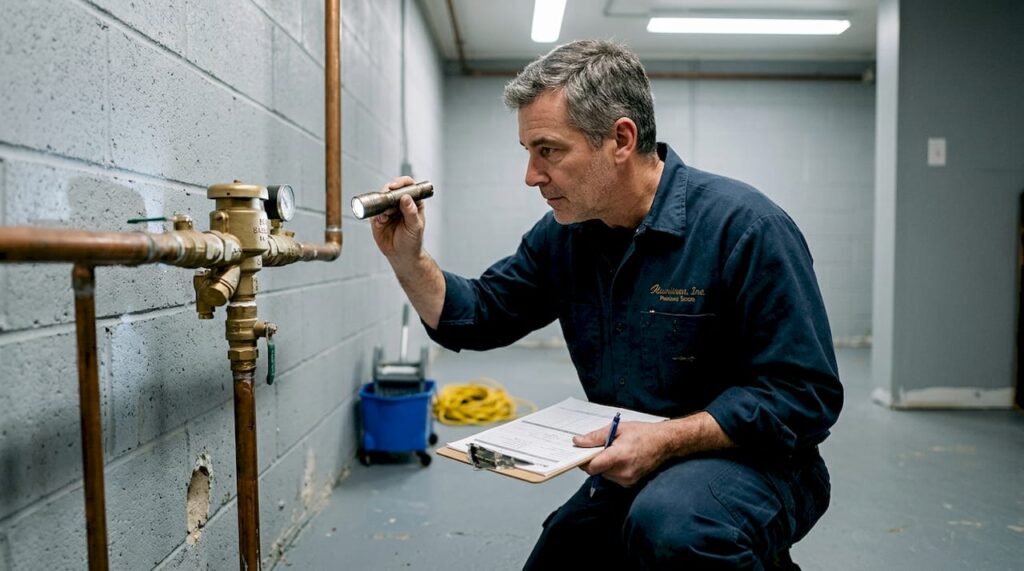
When a backflow preventer fails its annual inspection, the most common culprit isn’t the device itself going bad overnight. It’s a small internal component that wore out gradually while no one was paying attention. For property owners and managers across New Jersey, that surprise failure can trigger compliance violations, service interruptions, and repair costs that could have been avoided entirely. Knowing what’s inside your backflow preventer isn’t just trivia. It’s a practical tool that makes you a better decision-maker at every stage of ownership, from routine maintenance to working productively with your certified tester.
Table of Contents
- What does a backflow preventer do?
- The essential components: Key parts of every backflow preventer
- Common signs your backflow preventer parts need attention
- Maintaining backflow preventer components: Best practices for property owners
- Why understanding components gives property owners leverage
- Need help with backflow parts or annual testing in New Jersey?
- Frequently asked questions
Key Takeaways
| Point | Details |
|---|---|
| Know critical components | Springs, seats, O-rings, gaskets, and discs are the main backflow preventer parts. |
| Annual compliance is required | NJ law mandates certified annual testing and part inspections for every property. |
| Recognize warning signs | Leaks, noise, and failed tests often mean internal parts need attention or replacement. |
| Proactive maintenance saves costs | Timely repairs and regular checks can prevent bigger compliance and repair problems. |
What does a backflow preventer do?
Backflow is the reversal of water flow inside a plumbing system. Normally, water travels in one direction: from the municipal supply into your building. When pressure drops on the supply side, contaminated water from your building’s pipes or irrigation system can be pulled backward into the clean drinking water supply. That’s a direct public health threat.
New Jersey requires backflow prevention devices on most commercial properties, multi-family residential buildings, and any property with an irrigation system or fire suppression line. The device physically blocks water from reversing course, protecting both your tenants and the broader community water system.
There are two primary device types you’ll encounter in New Jersey:
- RPZ (Reduced Pressure Zone) assemblies: Used in high-hazard applications where contamination could cause serious harm. Common on industrial sites, properties using chemical fertilizers, and commercial irrigation systems.
- DCVA (Double Check Valve Assembly): Used for lower-hazard situations, such as standard residential irrigation or light commercial use.
Choosing the wrong device type for your hazard level isn’t just a technical mistake. It’s a compliance failure that can result in your water service being suspended.
Per NJ backflow regulations, New Jersey mandates annual testing by a certified tester, and each device type must match the hazard level present on the property. RPZs go where contamination risk is high, DCVAs go where it’s low. Getting that classification right is part of staying compliant.
With a sense of how important backflow prevention is, let’s break down the vital pieces inside.
The essential components: Key parts of every backflow preventer
Backflow preventers might look like a simple section of pipe from the outside, but they contain several precisely engineered components that each perform a specific job. When even one part underperforms, the entire device can fail a test or allow contamination to pass through.
Here’s a breakdown of the critical internal parts and what they do:
| Component | Function | Common failure mode |
|---|---|---|
| Springs | Provide mechanical force to hold check valves closed | Fatigue or corrosion weakens closure force |
| Seats | Create a watertight seal for check valves | Mineral deposits or wear create gaps |
| O-rings | Seal joints between body sections | Cracking, swelling, or compression set |
| Gaskets | Prevent leaks at ports and covers | Deterioration from temperature or chemical exposure |
| Clappers/discs | Open to allow forward flow, close to block reverse flow | Warping, deposits, or physical damage |
| Relief valve (RPZ only) | Discharges water when pressure zones equalize | Fouling or seat damage causes continuous discharge |
Each of these parts contributes to what the device does as a whole, which is to protect drinking water from contamination. Understanding their roles individually makes it much easier to interpret test results and maintenance reports.
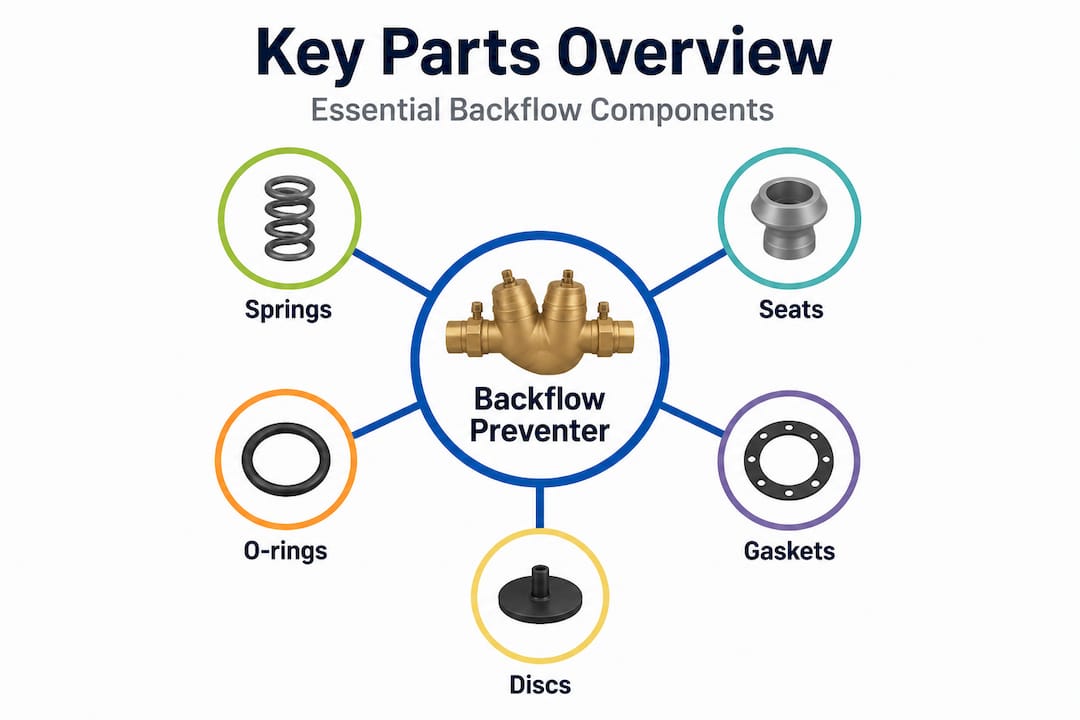
Springs are deceptively simple. They hold check valves in the closed position until forward water pressure is strong enough to push them open. Over time, the metal fatigues, especially in areas with hard water or temperature fluctuations. A weakened spring can’t hold the valve firmly enough to pass the differential pressure test used during annual inspections.
Seats are where the check valve makes contact to form a seal. If mineral scale builds up on a seat, or the surface becomes scored from debris, water can slip past even when the valve is closed. This is one of the most common reasons devices fail their annual test.
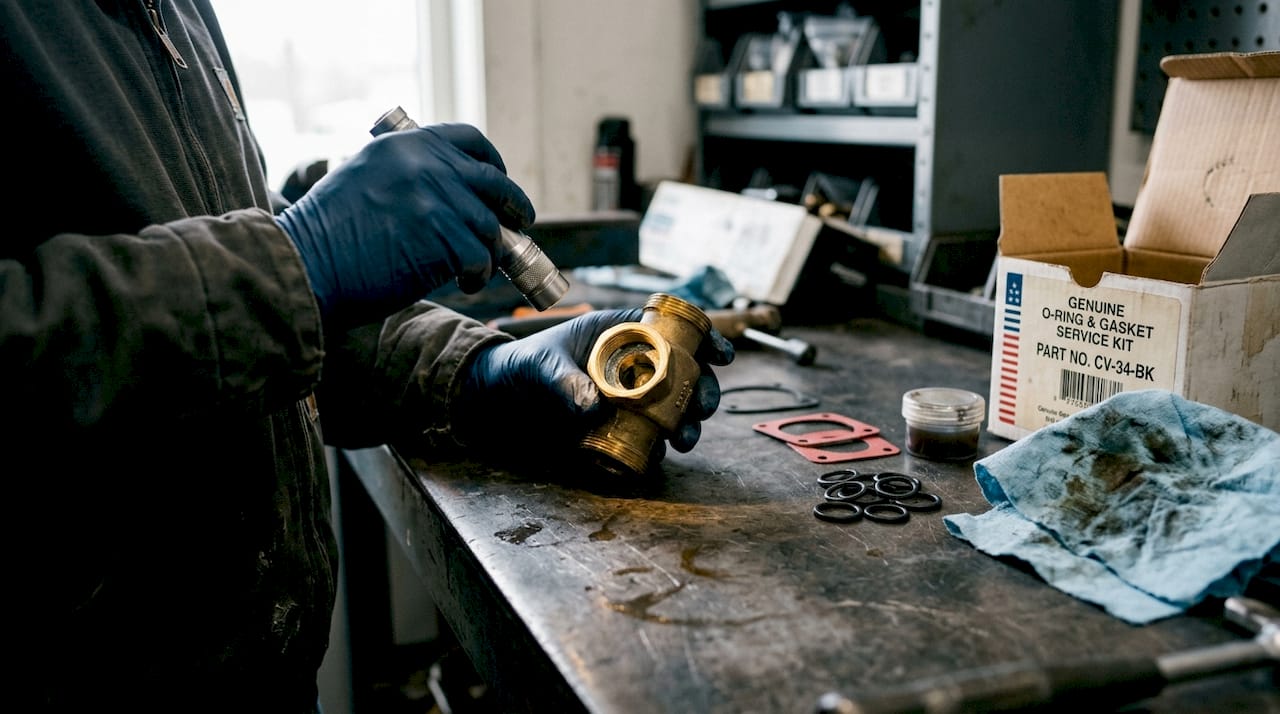
O-rings and gaskets are the unsung components. They keep the device from leaking externally and maintain pressure separation between internal chambers. Rubber degrades over time, especially in systems that experience wide temperature swings or exposure to treated water with elevated chlorine levels. A failed O-ring often shows up as a slow drip or a wet spot near the device’s access covers.
Clappers and discs are the moving gates inside the check valves. They need to swing or slide freely and seat perfectly on the first attempt. Warped discs, scale buildup, or debris caught in the hinge can all prevent proper closure. As the device operation process depends on these moving parts working in sequence, even minor friction or partial fouling can turn a passing device into a failed one.
According to manufacturer documentation, springs, seats, O-rings, gaskets, and clappers all require periodic replacement as a routine part of device ownership.
Pro Tip: When your tester reports a failed first check or failed relief valve, ask them which specific part they identified as the issue. That information tells you exactly what to order and makes your repair conversation with a technician much more efficient.
Understanding these parts also helps you interpret the formal test report your certified tester provides after each annual inspection. Every section of that report corresponds to one or more internal components, and knowing what each one does gives you context for what a repair will actually involve.
Common signs your backflow preventer parts need attention
You don’t have to wait for a failed annual test to know something is off inside your device. Several physical warning signs can alert you that a part is wearing out between scheduled inspections. Spotting these early and reporting them to your certified tester can prevent a full inspection failure and reduce the cost of repairs.
Here are the most common warning signs, in order of how urgently they typically demand attention:
- Water continuously discharging from the relief valve: On an RPZ device, this is a clear sign that the relief valve seat is fouled or that one of the check valves is failing. It should not be discharging during normal operation.
- Visible leaks at test cocks or body covers: This points directly to failed O-rings or gaskets. The leak may start small and worsen quickly as rubber deteriorates under water pressure.
- Unusual noises or water hammer: A clapper or disc that isn’t seating properly can cause a banging sound when the supply pressure fluctuates. It can also indicate a weakened spring that isn’t controlling valve movement.
- Difficulty fully closing the shut-off valve: If the isolation valves on either end of the device feel stiff or won’t close completely, internal components or the valve seats themselves may be fouled with scale or debris.
- Reduced water pressure downstream: Clogged internals, a stuck disc, or a partially failed component can restrict flow significantly. If multiple fixtures in your building suddenly have lower pressure, the backflow preventer is one of the first places to check.
Per the same manufacturer repair kit guidance, worn internal parts are the leading mechanical cause of device malfunction.
Pro Tip: Take a photo of your device every time you walk past it during a property inspection. A photo record is surprisingly useful for spotting subtle changes in appearance, like a new moisture trail or a slight shift in the relief valve position, that you might otherwise miss.
You can also find practical guidance on how to prevent common backflow issues by familiarizing yourself with the failure patterns most often seen in New Jersey properties. Seasonal conditions play a role too. Devices exposed to freezing temperatures or direct summer sun tend to show accelerated wear on rubber components, making spring and fall walkthroughs especially valuable.
Maintaining backflow preventer components: Best practices for property owners
Knowing when parts are in trouble is useful. Here are proactive strategies to protect your system and your compliance standing before problems develop.
Stay on schedule with annual testing. New Jersey requires testing once per year, and that schedule exists precisely to catch internal wear before it becomes a safety or compliance failure. Per NJ annual testing requirements, only a certified tester can conduct this test and file the results with the water utility. Missing your test window can result in a non-compliance notice and, in some cases, water service disruption.
You can check testing frequency in NJ to understand your specific obligations based on property type and device classification. Some high-hazard sites may have additional requirements beyond the standard annual schedule.
Use manufacturer-approved or certified repair kits. When a part needs replacement, the source of that part matters. Generic components may not match the tolerances required by your specific device model. Using the correct repair kit maintains device integrity and makes it easier to pass the next inspection. Kits typically include springs, O-rings, gaskets, and seating components as a matched set.
- Use kits from the device manufacturer whenever possible
- Keep a record of which kit was installed, including lot number and date
- Verify that your technician documents the repair in writing
Maintain a maintenance log. This single habit separates property owners who sail through compliance cycles from those who scramble. A log entry should include the date of service, the technician’s name and certification number, what was inspected or replaced, and the outcome. When a new tester comes out for the following year’s inspection, that log helps them understand the device’s history instantly.
Here’s a general guide to how long each component type typically lasts under normal operating conditions:
| Component | Average service life | Factors that accelerate wear |
|---|---|---|
| O-rings and gaskets | 3 to 7 years | High chlorine, temperature swings |
| Springs | 5 to 10 years | Hard water, corrosive conditions |
| Seats | 7 to 12 years | Debris, scale buildup |
| Clappers and discs | 5 to 10 years | Debris in water, chemical exposure |
| Relief valve assembly | 5 to 8 years | Sediment, frequent pressure changes |
These are general estimates. Devices in outdoor enclosures, high-use commercial properties, or locations with heavily treated municipal water will often see wear at the shorter end of these ranges.
Work exclusively with NJ-certified testers. This seems obvious but is worth stating clearly. A plumber who is not specifically certified for backflow testing cannot file a valid test report in New Jersey. Their work won’t satisfy your compliance requirement. When in doubt, check the backflow preventer FAQ for answers to the most frequent questions property owners ask about working with certified professionals.
Why understanding components gives property owners leverage
Most property owners never think about their backflow preventer until they receive a compliance notice or a failed test report. That reactive approach is understandable, given how many demands property management places on your attention. But it consistently costs more money and more stress than the alternative.
Here’s what we’ve observed working with property owners across New Jersey: the ones who know even a basic vocabulary around device components have dramatically better experiences with the entire compliance process. When a tester tells them “your first check failed due to a worn seat and a fatigued spring,” they understand what that means. They can ask informed questions. They can get a second opinion if the quoted repair seems high. They can verify that the correct parts were actually installed.
Contrast that with the property owner who hears “your device failed” and has no frame of reference for what was wrong, how serious it is, or whether the proposed fix makes sense. That knowledge gap tends to be expensive.
There’s also a trust dimension here. Certified testers appreciate working with property owners who take their systems seriously. It leads to faster inspections, more candid assessments, and better long-term service relationships. When you can discuss a common backflow failure by name and ask specific questions, you’re treated as a partner rather than just a transaction.
The uncomfortable truth is that backflow preventer knowledge is something most property owners avoid because the device seems too technical. That avoidance is exactly what creates the vulnerability. The learning curve is actually short. You don’t need to know how to rebuild a device. You just need to know what the parts do, which ones wear out, and what a failure looks like.
Need help with backflow parts or annual testing in New Jersey?
If this article has given you a clearer picture of what’s inside your backflow preventer, the next practical step is making sure your device is actually in good shape for your next compliance cycle.

Our team at South Jersey Backflow provides certified backflow testing for property owners and managers throughout New Jersey. Whether you need a scheduled annual inspection, a repair after a failed test, or just a professional assessment of your device’s current condition, we can help. We work with all major device types including RPZ and DCVA assemblies, and we file test results directly with your water utility so your compliance records stay current. Visit our backflow FAQ library if you have questions before scheduling, or reach out directly to book your inspection.
Frequently asked questions
How often should backflow preventer parts be replaced?
Springs, seats, O-rings, gaskets, and discs should be inspected annually and replaced based on wear, since component lifespan varies by water conditions and usage level.
Who is required to perform annual backflow testing in New Jersey?
A certified tester is required by New Jersey regulations to conduct annual backflow testing and file the results with the appropriate water utility.
What can cause a backflow preventer to fail inspection?
Worn internal parts including O-rings, springs, or clappers are the most common causes, along with leaks at gasket joints or debris blocking valve movement.
What’s the difference between RPZ and DCVA devices?
New Jersey requires RPZs for high hazard applications and DCVAs for lower-hazard connections, and using the wrong device type for your property’s classification is a compliance violation.
Pingback: How to spot faulty backflow valves: key indicators for NJ owners