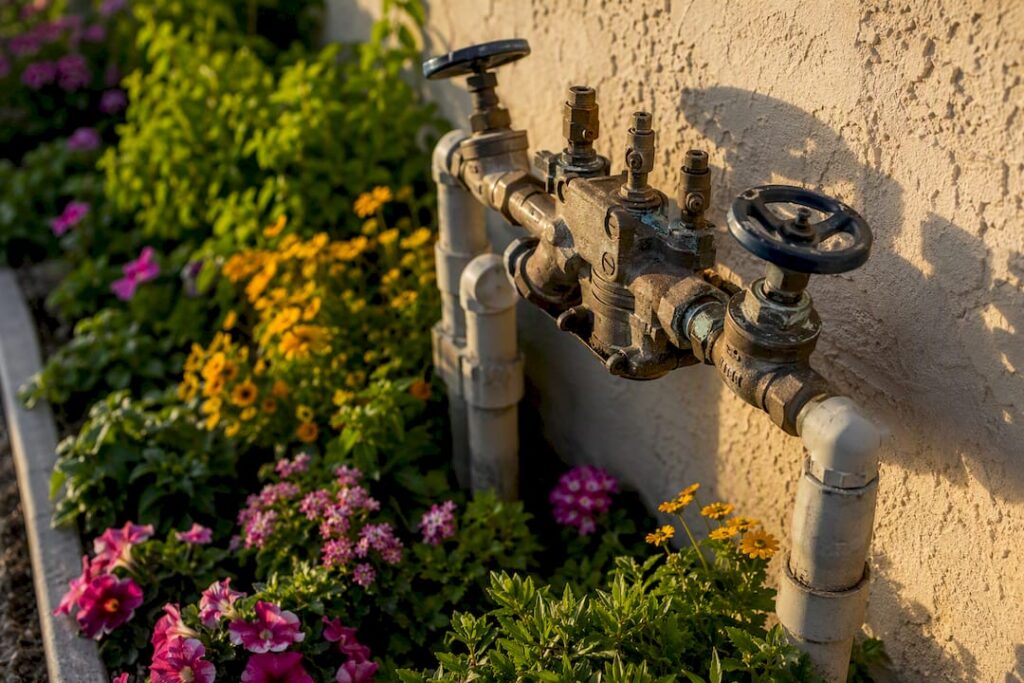
If your irrigation backflow preventer is weeping, pooling water, or losing pressure, treat it as a likely failure until a certified test proves otherwise. A failed device means potable water is one pressure event away from contamination, and only a certified differential-pressure test confirms whether that risk is real.
The first move isn’t a repair. It’s containment and documentation.
- Isolate the zone. Shut off irrigation at the valve serving the suspect device so contaminated water can’t back-siphon into the potable line.
- Document everything. Photograph the leak location, note the model and serial number, and record the last test date.
- Call a certified tester. Only a licensed technician with a calibrated gauge can confirm failure under EPA cross-connection guidance and ASSE performance standards. If contamination seems possible, notify your local water authority too.
South Jersey Backflow handles this exact scenario across its New Jersey service area, from initial diagnosis through certified retest.
Pro Tip: Never rely on a visual check alone to decide a device passed. Some assemblies, like double check valves, can fail internally without ever showing a drip.
Key Takeaways
A suspected irrigation backflow failure requires isolation and a certified differential-pressure test, not a visual guess, because some devices fail silently while others discharge normally under design conditions.
| Point | Details |
|---|---|
| Isolate first | Shut off the affected irrigation zone immediately to stop potential contamination before diagnosing the cause. |
| Visible signs aren’t proof | Weeping, pooling, and pressure loss justify a service call, but only a gauge test confirms actual failure. |
| Know your device type | RPZs relieve visibly when failing; DCVAs can fail the pressure threshold with no outward symptoms at all. |
| Retest window is short | Most authorities require repair and a passing retest within about 30 days of a failed report. |
| South Jersey Backflow closes the loop | The company handles testing, rebuilding, replacement, and direct report filing across its New Jersey service area. |
Table of Contents
- Signs Your Irrigation Backflow Preventer Is Failing
- What Causes an Irrigation Backflow Preventer to Fail?
- How Does a Certified Backflow Test Actually Work?
- What Should You Do Immediately After a Failed Inspection?
- Should You Repair, Rebuild, or Replace the Device?
- How Can You Prevent Backflow Failures Before They Start?
- What Should You Expect From a Certified Backflow Technician?
- Why Most Advice on This Topic Undersells the Testing Step
- Get a Certified Backflow Test Scheduled in New Jersey
- Sources
Signs Your Irrigation Backflow Preventer Is Failing
Field symptoms fall into two categories: what you can see and what you can measure. Neither alone proves failure, but both should trigger a service call.
Visible warning signs:
- Continuous weeping or discharge from the RPZ relief valve or PVB air inlet vent, not just an occasional drip during startup.
- Standing water pooling around the device housing, especially after the irrigation cycle has ended.
- Constant dripping from test cocks rather than the momentary spit that happens during a zone change.
Performance-based warning signs often show up before the visible ones do: unexplained pressure loss, weak or uneven spray patterns across zones, or brown, odorous water appearing after irrigation runs or nearby mainline repairs.
Here’s what gets missed: a device that looks fine can still fail a test, and one that’s actively weeping might be doing exactly what it’s designed to do during a pressure spike. That’s why continuous discharge and pooling are treated as triggers for testing, not proof of a broken part. The real consequence of ignoring either type of symptom is the same: potential contamination of the potable supply, which most local cross-connection programs require you to report and correct once confirmed.
What Causes an Irrigation Backflow Preventer to Fail?
Most failures trace back to one of four mechanical problems, and knowing which one you’re dealing with changes whether you’re looking at a $40 part or a full replacement.
- Debris and sediment lodge under check discs after nearby construction, water main repairs, or the first hard flush of the season, propping the seat open just enough to leak.
- Worn seals, O-rings, and fatigued springs lose the tension needed to hold the required differential pressure, a slow degradation that often shows up first as a faint weep.
- Freeze damage cracks bodies and bonnets outright, while repeated freeze/thaw cycles erode RPZ relief seats over several seasons.
- Improper installation or excessive upstream pressure, including water hammer from fast-closing valves, forces the relief valve to discharge even when the internal components are otherwise sound.
That last cause trips people up constantly. A leaking relief port isn’t always a broken part; sometimes it’s the assembly correctly venting a pressure spike elsewhere in the system. Before assuming the device itself failed, it’s worth checking whether the symptom lines up with a zone opening, a nearby repair, or a pressure surge.
How Does a Certified Backflow Test Actually Work?
A certified test isn’t a glance at the housing. It’s a gauge-based measurement of the pressure difference across the check valves, run through inlet, outlet, and test-cock ports in a specific sequence defined by ASSE performance standards and local plumbing code adoption of the IPC.
The device type changes what failure looks like in the field:
- RPZ assemblies relieve visibly when the first check degrades, which is why you’ll often see discharge before a formal test ever happens.
- Double check valve assemblies (DCVAs) have no relief valve, so they can fail the differential-pressure threshold silently, with zero visible symptoms until a gauge is connected.
- PVBs show failure through the air inlet vent, similar in spirit to an RPZ but at a different pressure threshold.
A device can look completely dry and still fail. A device can weep constantly and still pass. The gauge reading is the only number that legally matters.
Testers need calibrated equipment traceable to NIST standards and, in most jurisdictions, state or water-authority certification to file results. Once a device fails, that report typically goes straight to the local water authority, starting the clock on required repairs.
What Should You Do Immediately After a Failed Inspection?
Once a test comes back failed, or you’ve spotted symptoms serious enough to suspect one, work through these steps in order rather than jumping straight to a repair call.
- Shut off the irrigation zone and stop using any potable outlets that share the same cross-connected supply line.
- Document the failure: photograph the discharge or pooling, log the model and serial number, and pull the last test certificate and date.
- Contact your water authority if there’s any chance the potable side was compromised. Most municipal cross-connection programs require this notification regardless of severity.
- Schedule certified repair and retest. Under EPA-derived compliance programs, most water authorities require repair and a passing retest within about 30 days of a failed report.
Pro Tip: Keep every receipt and report tied to the device. A property with a documented repair and retest history moves through future inspections faster and avoids duplicate scrutiny.
Should You Repair, Rebuild, or Replace the Device?
The decision usually comes down to whether the body of the assembly is still structurally sound.
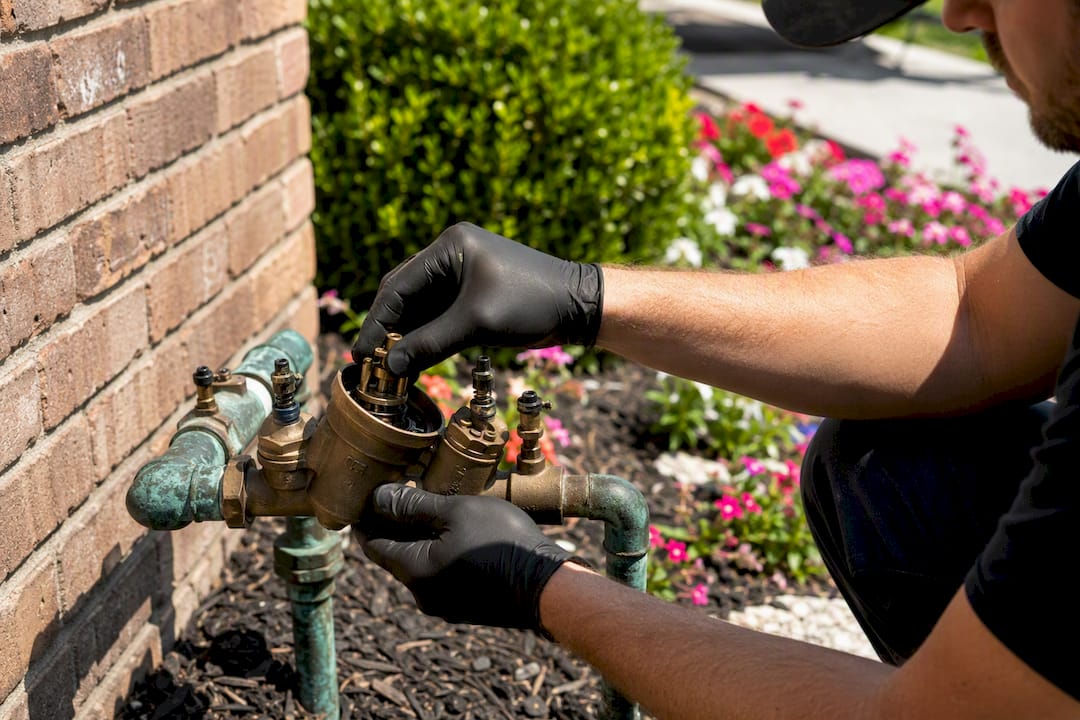
Repair or rebuild when the failure traces to internal wear: worn seals, weak springs, or a fouled check seat that a manufacturer rebuild kit can restore. If the housing itself is intact, a rebuild followed by a passing retest is almost always the cheaper, faster path.
Replace when the body is cracked, corroded, or the device has failed repeated rebuilds. Chronic failures despite proper servicing usually mean the assembly has reached the end of its service life, and some municipalities require permits or reinspection for a full swap.
Costs vary by device size, brand, and local labor rates, but DIY seal kits are generally inexpensive, professional rebuilds can be moderately priced, and full replacements often cost several hundred dollars including labor and permits. Rural and urban rates differ, and multi-unit properties sometimes negotiate volume pricing across several devices.
Whichever path you take, the job isn’t done until a certified retest confirms the fix. Most water authorities expect that retest scheduled within the same 30-day compliance window that applies to the original failure.
How Can You Prevent Backflow Failures Before They Start?
Prevention is cheaper than emergency repair almost every time, and most of it comes down to three habits.
- Test annually, even without a mandate. Certified testing catches wear before it becomes a failed inspection, and it builds the recordkeeping history that speeds up future compliance checks.
- Winterize properly. Drain the assembly and downstream piping, insulate with a rated backflow blanket or enclosure, and schedule service before the first hard freeze rather than after.
- Control upstream pressure. Installing a pressure regulator and water-hammer arrestor reduces the surges that force relief discharge, and in hard-water regions, replacing seals on a set schedule beats waiting for them to fail.
Pro Tip: If your property has had more than one freeze-related failure, the fix usually isn’t a better cover. It’s relocating or insulating the device so it’s less exposed in the first place.
What Should You Expect From a Certified Backflow Technician?
A qualified tester shows up with more than a wrench. Expect calibrated, NIST-traceable gauges, current state or municipal certification, and a written report filed directly with your water authority once testing wraps up.
A typical on-site visit includes backflow inspections that involve isolating the device and connecting test-cock gauges in the sequence required by ASSE and IPC standards.
- Isolating the device and connecting test-cock gauges in the sequence required by ASSE and IPC standards.
- Recording differential-pressure readings against the device-specific pass/fail threshold.
- Filing the certified report and, if the device fails, outlining rebuild or replacement options on the spot.
Before hiring anyone, ask what certification they hold, whether they carry liability coverage, and whether the report goes to the water authority directly or lands in your inbox for you to submit. South Jersey Backflow handles testing, rebuilding, and direct report filing for residential, commercial, and multi-unit properties, which removes the paperwork gap that trips up a lot of self-managed compliance efforts. For a deeper look at what a compliant filing actually requires, see this irrigation backflow compliance guide.
Why Most Advice on This Topic Undersells the Testing Step
The conventional wisdom treats backflow failure like a plumbing leak: find the drip, fix the part, move on. That framing misses the actual risk, which isn’t the leak itself. It’s the gap between what a device looks like and what it’s actually doing under pressure.
A double check valve assembly can fail its differential-pressure threshold with zero visible symptoms, while an RPZ can weep constantly while functioning exactly as designed. Property owners who trust their eyes over a gauge reading end up making two mistakes in opposite directions: replacing parts that didn’t need it, and ignoring assemblies that quietly failed months ago.
The instinct to DIY a seal kit isn’t wrong. It’s often the right first move when the body is intact and the symptom is minor. But DIY triage has a hard ceiling: it can identify a likely problem, never confirm a pass or fail. Readers who prioritize one thing from this entire guide should prioritize this: treat the certified test as the answer, not the last resort after every other fix has been tried.
— Jordan
Get a Certified Backflow Test Scheduled in New Jersey
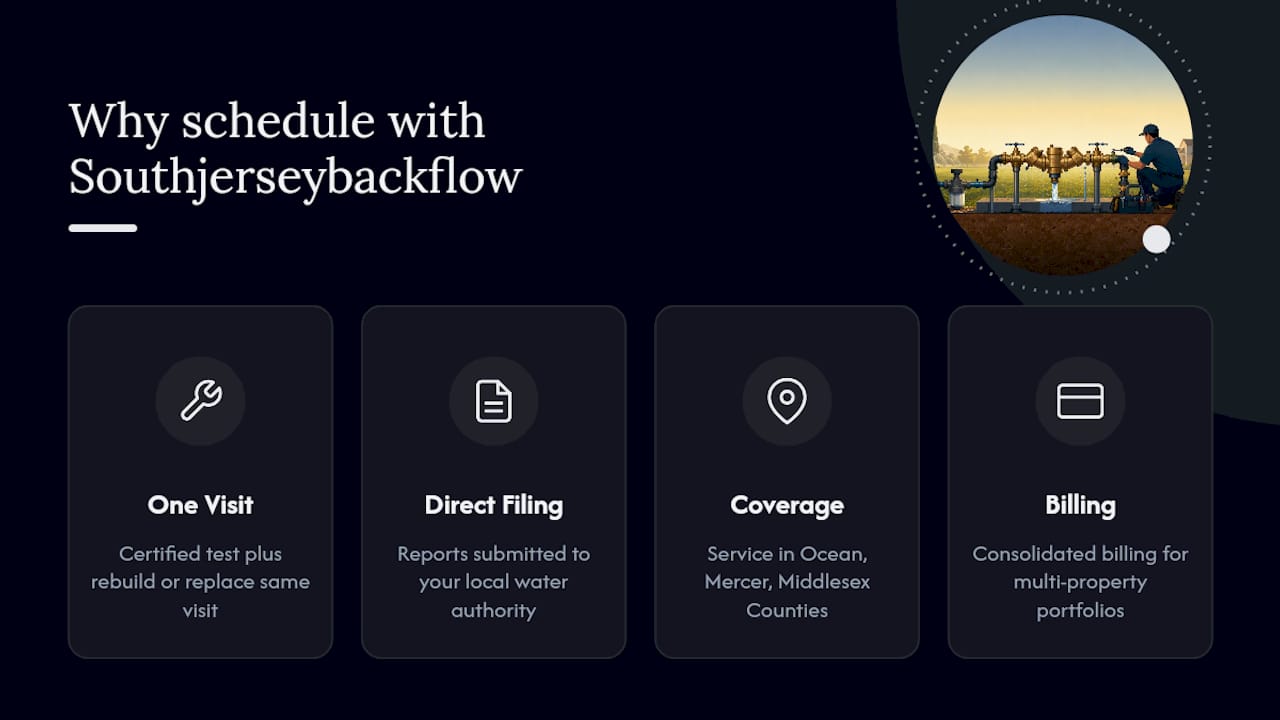
Southjerseybackflow is the direct path to resolving a suspected failure instead of guessing at it. Rather than piecing together a DIY seal kit order, a separate call to your water authority, and a hope that the paperwork gets filed correctly, one visit covers certified testing, rebuilding when the body is intact, replacement when it isn’t, and direct report submission to your local water authority.

That last part matters more than it sounds. A lot of failed inspections turn into compliance headaches not because the repair was hard, but because the report never made it to the right office in time. Southjerseybackflow files those reports directly, which keeps you inside the retest window instead of racing it.
If you’re managing properties across county lines, service coverage extends to areas including Ocean County, Mercer County, and Middlesex County, with consolidated billing available for multi-property portfolios.
Already received a compliance notice? Start with the backflow testing and certification page to schedule a certified test before your deadline passes.
Sources
- Backflow Authority — Signs a Backflow Preventer Is Failing
- Drain Pros Plumbing — How to tell if backflow device fails
- MAWEB — Irrigation backflow valve leaking — quick fixes
Pingback: Field Tested Homeowner Actions to Stop Backflow After a Main Break