TL;DR:
- Commercial property managers in New Jersey often mistakenly treat backflow prevention as a one-time installation, overlooking ongoing testing and documentation requirements. The state enforces strict containment regulations using only approved devices like DCVAs and RPZs, requiring annual testing by certified inspectors to maintain compliance. Adopting a proactive risk management approach, including proper hazard assessment and routine maintenance, ensures ongoing compliance and prevents costly violations or water contamination.
Commercial property managers in New Jersey often treat backflow prevention as a one-time installation task. It’s not. The state enforces one of the strictest cross-connection control frameworks in the country, and failing to keep up with testing, documentation, and device requirements can lead to NJDEP enforcement actions, fines, and contaminated water in your building. This guide cuts through the confusion and walks you through exactly what the law requires, which devices are approved, and how to build a compliance routine that actually holds up under inspection.
Table of Contents
- What is commercial backflow and why does it matter?
- Key New Jersey laws and regulations for commercial backflow
- Types of NJDEP-accepted backflow prevention assemblies
- Testing, certification, and ongoing compliance steps
- Practical checklist: De-risking your property and avoiding violations
- Why most commercial properties in New Jersey struggle with backflow compliance: Our perspective
- Expert help and next steps for New Jersey commercial backflow compliance
- Frequently asked questions
Key Takeaways
| Point | Details |
|---|---|
| NJDEP rules require annual testing | Commercial properties must be annually tested by NJDEP-certified professionals to stay compliant. |
| Only DCVA and RPZ devices allowed | Double check valve assemblies and reduced pressure zone assemblies are the only approved options. |
| Hazard-based device selection | Choose devices based on the risk profile of each cross-connection in your property. |
| Documentation prevents violations | Keep thorough records of device installation, testing, and inspection to avoid fines and non-compliance. |
| Certified testers are required | Only testers certified and listed by NJDEP can legally inspect and test commercial backflow devices. |
What is commercial backflow and why does it matter?
Backflow is what happens when pressure changes in a water system cause contaminated water to flow backward into the clean supply. In a residential setting, the risks are limited. In a commercial building, the stakes are much higher because commercial plumbing systems are more complex, serve more people, and connect to more potential contamination sources.
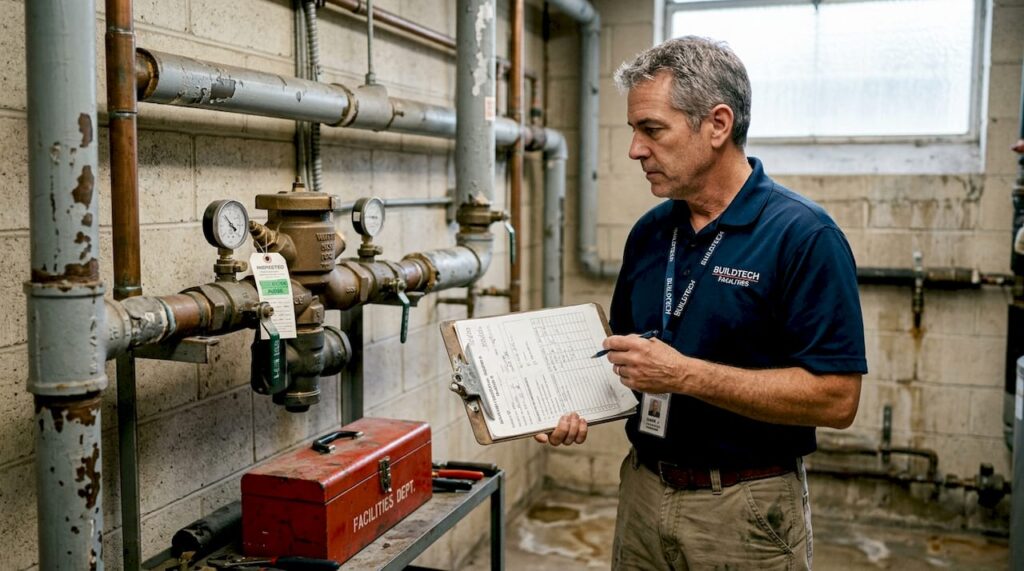
Think about a large office building with a boiler, an irrigation system tied to a potable (drinkable) water line, and HVAC cooling towers that use water treatment chemicals. Each one of those systems is a potential cross-connection, meaning a point where contaminated water could mix with clean supply under the wrong pressure conditions. One backflow event from a chemical-treated HVAC loop could send toxic water through your entire building’s plumbing.
That’s exactly why regulators treat this seriously. According to N.J.A.C. 7:10-10, backflow prevention devices for physical connections in New Jersey are defined under N.J.A.C. 7:10 and primarily include double check valve assemblies (DCVA) and reduced pressure zone (RPZ) backflow preventer assemblies. No other device types meet the state’s physical connection standard.
“Backflow is not a plumbing inconvenience. In commercial properties with boilers, chemical treatment systems, or irrigation connected to potable water, a single unprotected cross-connection can contaminate an entire building’s water supply.”
Common cross-connection sources on commercial properties include:
- Boilers and steam systems connected to the potable water supply
- Irrigation systems drawing from the same supply lines as drinking water
- HVAC cooling towers using chemical water treatment additives
- Fire suppression systems filled with treated or stagnant water
- Industrial or lab equipment with direct plumbing connections
Regulators focus on “containment,” which means installing a properly rated assembly at the point where a private system connects to the public water main. The goal is to keep any contamination from a private system from ever reaching the public supply. This is the framework New Jersey uses, and it applies to virtually every commercial property connected to a public water system. You can review the full NJ backflow prevention overview for additional context on how containment rules apply to your property type.
Key New Jersey laws and regulations for commercial backflow
New Jersey’s commercial backflow rules are not suggestions buried in a building code. They are legally binding requirements backed by state enforcement authority. Here is what you need to know.
The governing regulation is N.J.A.C. 7:10-10, specifically Subchapter 10, which covers physical connections and cross-connection control by containment. Under this framework, any non-air-gap physical connection to a public water supply requires a permit, inspection, and ongoing testing. An air-gap is the only connection type that does not require a mechanical assembly, because it uses physical separation rather than a valve. Every other type of connection requires an approved assembly.
The New Jersey Department of Environmental Protection (NJDEP) enforces these rules through its Safe Drinking Water program. NJDEP’s physical-connection requirements state clearly that testing must be completed by a certified tester with a valid certificate. That means you cannot use just any licensed plumber. The tester must be specifically certified for backflow prevention device testing under NJDEP standards.
Here is a numbered summary of your legal obligations as a commercial property owner or manager in New Jersey:
- Obtain a physical connection permit before installing or modifying any connection to a public water supply.
- Install only NJDEP-accepted assemblies (DCVA or RPZ, matched to your hazard level).
- Schedule annual testing by a certified NJDEP backflow prevention device tester.
- Maintain documentation of all testing, inspections, and permit renewals.
- Renew your permit according to NJDEP’s schedule and requirements.
- Report any failed tests and complete repairs before the device is returned to service.
Statistic callout: NJDEP’s Safe Drinking Water program enforces regulations across thousands of public water systems in New Jersey. Commercial cross-connection violations are among the most commonly cited issues during water supply audits.
Pro Tip: Even if your municipality has its own backflow ordinance, you still must comply with state-level N.J.A.C. 7:10-10 requirements. Local rules add to state requirements, they do not replace them. Always confirm with both your water utility and the NJDEP.
The NJ commercial backflow guide provides a practical breakdown of permit and inspection requirements by property type. If you want a step-by-step walkthrough of the process from start to finish, the NJ backflow compliance steps guide is worth bookmarking.
Types of NJDEP-accepted backflow prevention assemblies
One of the most common mistakes commercial property managers make is installing a backflow preventer that looks right but is not compliant with state rules. New Jersey is specific: only two assembly types are accepted for physical connections under state law.
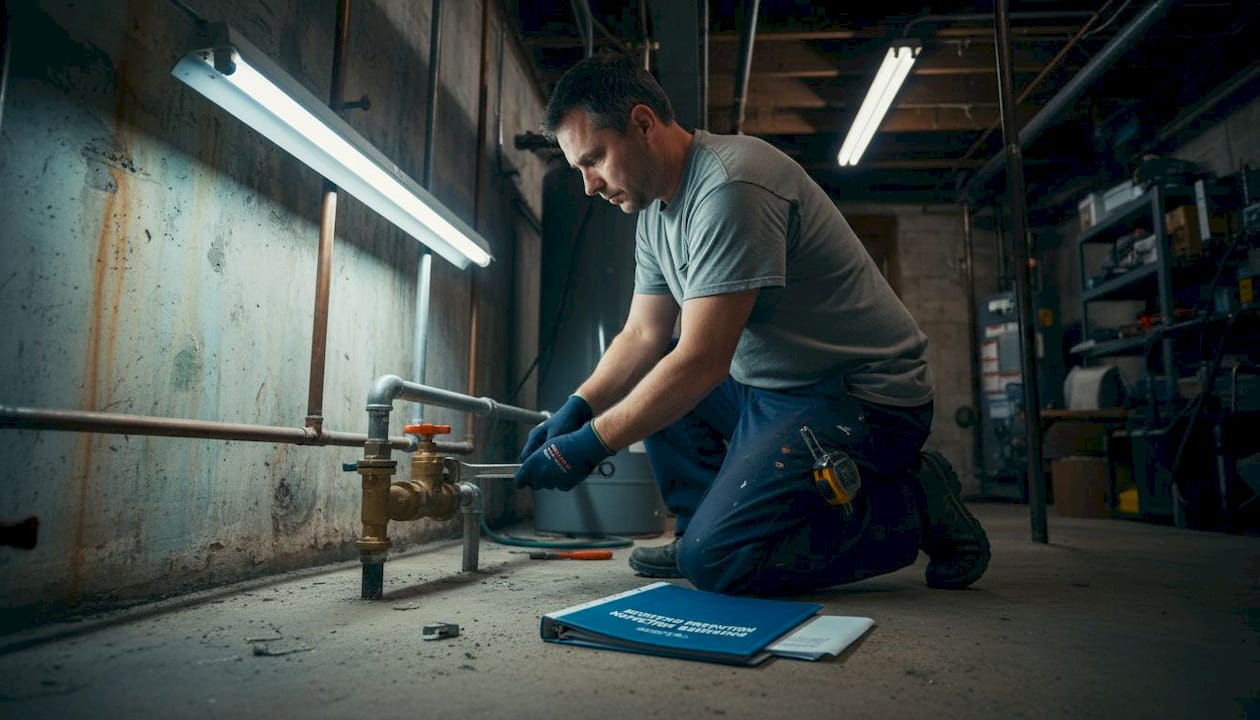
N.J.A.C. 7:10-10 defines the “backflow prevention device” as either a double check valve assembly or a reduced pressure zone assembly, and the regulation defines how each device must be constructed and operate. This is not left to interpretation. If your property has a device that does not meet those definitions, it does not satisfy your compliance obligation, even if a plumber installed it.
Here is a direct comparison of the two approved assembly types:
| Feature | DCVA (double check valve assembly) | RPZ (reduced pressure zone assembly) |
|---|---|---|
| Hazard level | Moderate (non-health hazard) | High (health hazard, toxic contamination risk) |
| How it works | Two independent check valves in series | Check valves plus pressure differential relief valve |
| Required for | General commercial, irrigation (low risk) | Boilers, chemical treatment, fire suppression |
| Failure mode | Can allow backflow if both valves fail | Discharges water externally if valves fail (safer) |
| Installation notes | Can be installed below grade in some cases | Must be installed above grade, accessible for testing |
Choosing between the two is not just a plumbing decision. It is a hazard classification decision. A DCVA is appropriate when there is no health risk from the cross-connected system. An RPZ is required when the connected system contains substances that could cause illness, injury, or death if they entered the potable supply. This includes any system using chemicals, biocides, or corrosion inhibitors.
Key selection criteria to follow:
- Boilers with chemical treatment: RPZ required
- Irrigation systems with no chemical injection: DCVA may be acceptable
- HVAC with chemical additives: RPZ required
- Fire suppression with treated water: RPZ typically required
- General commercial building supply (no identified hazard): DCVA may be sufficient
The device installation guide covers installation specifics by device type, and the maintenance workflow guide will help you plan for long-term upkeep after installation.
Testing, certification, and ongoing compliance steps
Installing the right device is only the beginning. Backflow compliance in New Jersey is an ongoing obligation, not a one-time task. The most common reason commercial properties fall out of compliance is missed annual testing, not faulty equipment.
NJDEP’s certified tester directory lists all recognized backflow prevention device test certifying agencies and testers approved to perform this work in New Jersey. Only testers on this list can conduct testing that satisfies the state’s physical connection requirements. NJDEP’s physical connection page confirms that testing must be completed by a certified tester with a valid certificate, no exceptions.
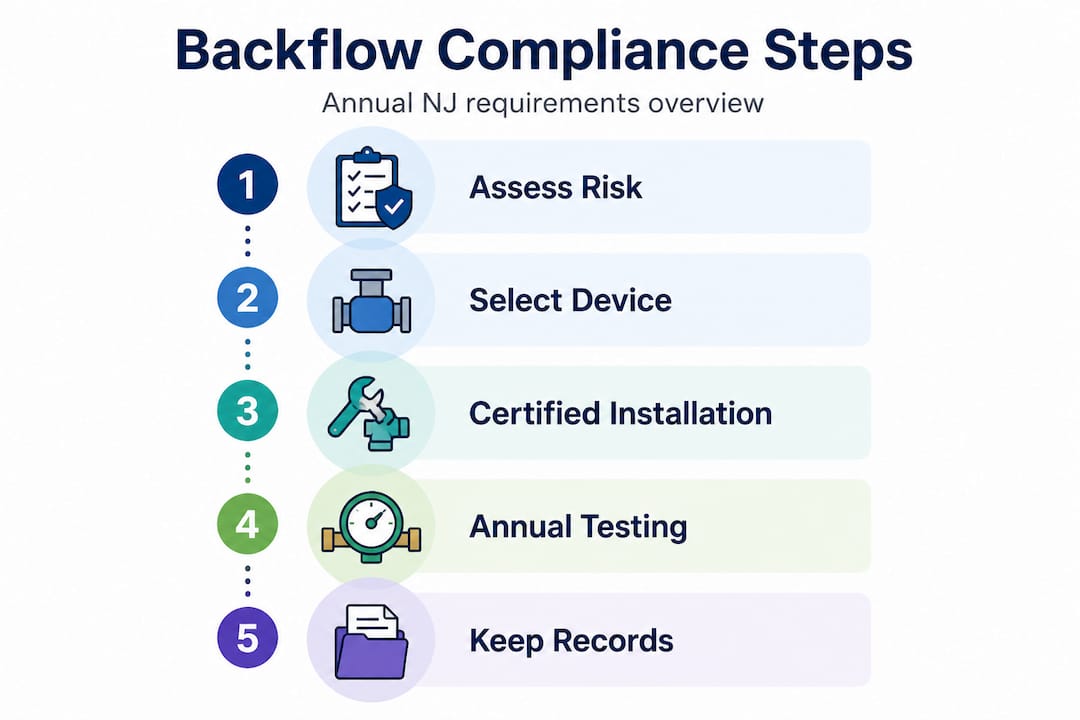
Here is your ongoing compliance workflow broken into clear steps:
- Inventory all devices on your property, including location, assembly type, and date of last test.
- Confirm your tester’s certification before scheduling. Use the NJDEP directory, not just a referral.
- Schedule annual testing well before your permit renewal deadline to leave time for repairs.
- Document every test result including pass, fail, repairs made, and retest outcomes.
- File required paperwork with your water utility and NJDEP as directed by your permit terms.
- Maintain a testing log that can be produced immediately if NJDEP requests it during an audit.
Here is a reference table for tracking your compliance schedule:
| Compliance task | Frequency | Who performs it | Documentation required |
|---|---|---|---|
| Backflow device testing | Annual (minimum) | NJDEP certified tester | Test report, device ID, tester cert number |
| Physical inspection | Per permit terms | Certified tester or inspector | Inspection form |
| Permit renewal | Per NJDEP schedule | Property owner/manager | Application, fee, current test records |
| Device repair/replacement | As needed | Licensed plumber plus retesting | Repair invoice, new test report |
Pro Tip: Build your annual testing reminder into your property management calendar at least 60 days before your permit renewal date. This gives you enough time to find a certified tester, complete the test, make any repairs, and retest before deadlines hit.
The inspection requirements guide is a useful resource for understanding what inspectors look for. The backflow testing certification page explains what to expect from a compliant test, and the maintenance workflow tips page can help you streamline the entire process.
Practical checklist: De-risking your property and avoiding violations
Staying compliant is easier when you treat it as a structured process rather than a reactive scramble. Here is a practical approach based on NJDEP guidance: inventory all cross-connection hazards on your commercial property, including boilers, HVAC water treatment systems, irrigation tied to potable supply, and industrial equipment, then match each hazard to the correct NJDEP-accepted assembly type.
Your compliance checklist:
- Identify every point where a private system connects to the public water supply
- Classify each cross-connection by hazard level (moderate vs. health hazard)
- Confirm that the installed assembly type matches the hazard level (DCVA or RPZ)
- Verify that each device is on the NJDEP-accepted list and properly installed
- Confirm your tester is listed on the NJDEP certified tester directory
- Schedule annual testing before permit deadlines
- Maintain a property-level log for each device (location, type, serial number, test dates, results)
- Keep copies of all test reports and permits accessible on-site
The three most common compliance pitfalls commercial property managers run into are:
- Missed annual testing because there is no calendar system in place
- Wrong device selection because hazard level was not properly assessed at installation
- Incomplete documentation that cannot satisfy an NJDEP records request
The step-by-step backflow guide walks through this process in detail. The property compliance guide is also a strong reference for understanding what full compliance looks like in practice for commercial buildings of different types.
Pro Tip: If you manage multiple properties, create a master spreadsheet with one row per device, tracking location, assembly type, last test date, tester name and certification number, and next test due date. This one document can save you hours during an audit.
Why most commercial properties in New Jersey struggle with backflow compliance: Our perspective
Here is something we see regularly that no checklist fully captures. Most compliance failures in commercial properties are not about plumbing. They are about risk management habits.
Property managers who struggle with backflow compliance typically share one trait: they think of it as an installation problem that was solved the day a plumber installed the device. From that point forward, they treat it as a sunk cost, not an active obligation. Annual testing gets pushed, documentation gets disorganized, and device upgrades never happen when new hazards are added to the building.
The deeper issue is that device selection is often made at installation without a proper hazard assessment. A DCVA gets installed because it is cheaper, even when the connected system (say, a boiler with corrosion inhibitors) clearly requires an RPZ. This is not just a code violation. It is a water safety gap that exists silently until something goes wrong.
What actually works, in our experience, is treating backflow prevention the same way you would treat fire safety or elevator certification. It is a recurring operational obligation with real legal and safety consequences. When you build it into your property operations calendar, assign ownership to a specific person, and use a certified tester you trust year over year, compliance stops being stressful.
The properties we see stay consistently compliant are the ones where a manager has taken the time to understand their hazard profile, not just their device inventory. They use resources like our regulation expertise library to stay current on NJDEP requirements and they ask their tester the right questions at each annual visit.
Backflow prevention in New Jersey is genuinely manageable. But it rewards the property managers who treat it as ongoing risk control, not a box to check once and forget.
Expert help and next steps for New Jersey commercial backflow compliance
Managing annual testing, permits, documentation, and device selection across a commercial property is a lot to coordinate. You should not have to piece it together from multiple sources or rely on guesswork when NJDEP requirements are involved.
South Jersey Backflow specializes in exactly this. We work with commercial property owners and managers across New Jersey to handle certified backflow testing that meets NJDEP requirements, help navigate permit and documentation requirements, and make sure the right device is matched to each hazard on your property. Whether you manage a single commercial building or a portfolio of properties, our team can streamline the compliance process from annual scheduling through final documentation. Visit our commercial property compliance page to see how we support NJ property managers, and browse our backflow FAQ answers for fast answers to the questions we hear most often.
Frequently asked questions
Who is responsible for backflow testing on commercial properties in New Jersey?
The property owner or manager is responsible for ensuring annual backflow testing is completed using a NJDEP certified tester. Responsibility cannot be delegated to a water utility or general contractor unless they hold valid NJDEP certification.
Which backflow prevention devices are approved for commercial use in New Jersey?
Only double check valve assemblies (DCVA) and reduced pressure zone (RPZ) assemblies are approved. N.J.A.C. 7:10-10 defines both device types and their required construction standards, and no other assembly satisfies New Jersey’s physical connection requirement.
How often do commercial backflow devices need to be tested in New Jersey?
Commercial devices must be tested at least once per year by a certified tester with valid credentials. Testing more frequently may be required depending on your permit terms or if a device has failed a previous test.
What happens if my property fails to comply with New Jersey backflow regulations?
Non-compliance with NJDEP’s Safe Drinking Water program can result in fines, permit revocation, and potentially a service interruption from your water utility. Beyond regulatory penalties, an unprotected cross-connection creates a direct public health risk for building occupants.
Where can I find certified backflow testers in New Jersey?
The NJDEP certified testers directory is the official source. It lists all approved certifying agencies and individual testers recognized by NJDEP for physical connection testing in the state. Always verify a tester’s current certification status before scheduling.