
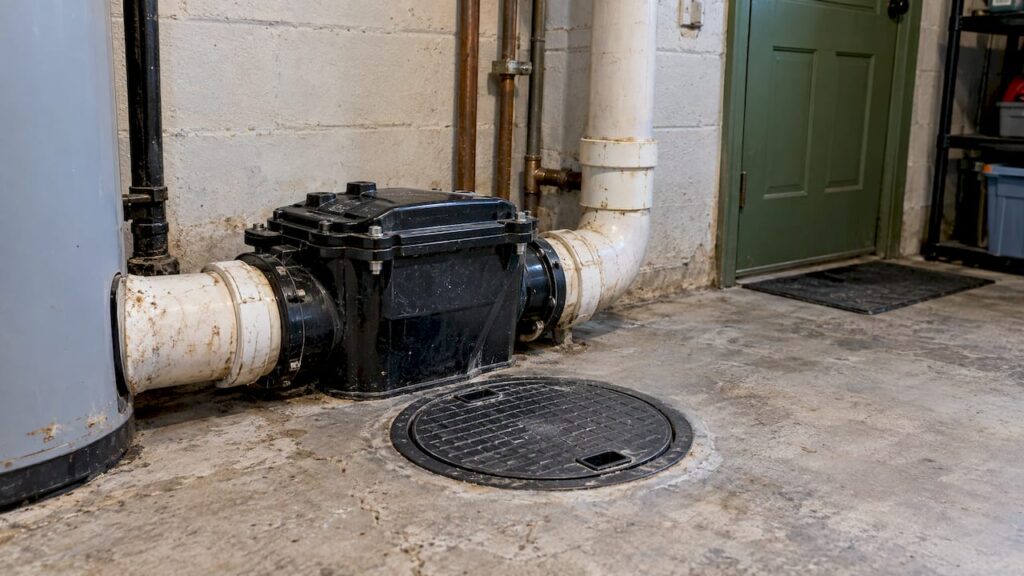
Backflow flooding protection means stopping sewage or stormwater from reversing out of the sewer and coming up through your floor drains, toilets and sinks. The usual tool is a backwater valve (also called a backflow valve or sewer check valve) on the drain line. It works only for the drains it serves and needs regular inspection. If your building also has a water-supply backflow preventer, that device has its own testing rules in New Jersey. This guide covers both so you know which is which.
TL;DR
- Sewer backups happen when heavy rain, a blockage or an overloaded sewer pushes wastewater backward into the building, usually through the lowest drains.
- A backwater valve closes when flow reverses. It protects only the drain branches connected to it and does nothing about water coming through doors, windows or foundation cracks.
- A closed valve also traps your own wastewater, so you stop using water indoors until the risk passes.
- Have a licensed plumber assess and install sewer valves, with the permit your town requires. Inspect them at least once or twice a year.
- Water-supply backflow preventers are a separate device with annual testing rules for many New Jersey properties. We test, repair and rebuild those.
Table of Contents
- What backflow flooding is and how sewage gets in
- Types of devices that protect against sewer backup
- What a backwater valve protects, and what it does not
- Before you install: what to check in New Jersey
- Inspect and maintain the valve
- Other steps that lower the risk
- How we can help
- Our perspective
- FAQ
- Sources
What backflow flooding is and how sewage gets in
When heavy rain, flooding, a blockage or an overloaded municipal sewer keeps wastewater from moving forward, the flow can reverse. FEMA’s urban flooding guidance explains that it can then enter through basement floor drains, toilets, sinks, showers and other fixtures tied to the sewer. In combined systems, the water may carry both stormwater and sanitary waste.
It does not take a storm to cause trouble. The Reduce Flood Risk guide notes that sewage backup can happen with no surface flooding at all, when your service line is partly or fully blocked by grease, waste or tree roots. In that case the problem sits on your side of the property line.

The lowest fixtures take the hit first. A basement floor drain, a laundry sink or a basement bathroom sits below the level the sewer can rise to, so that is where water appears.
Two different problems with similar names
People search “backflow” and mean two things:
- Sewer backflow (backup): wastewater flowing back up the drain line into the building. This is the flooding problem, and a backwater valve addresses it.
- Water-supply backflow: non-potable water flowing backward into the drinking water system. A backflow preventer on the supply line addresses it, and it must be tested.
They are separate systems with separate devices. Mixing them up is the most common mistake we see, so it helps to know which one you are dealing with before you call anyone.
Types of devices that protect against sewer backup
There is no single product. The Reduce Flood Risk guide lists check, gate, ball-float check, flap and dual valves. They can be automatic or manual, and normally open or normally closed. A dual valve combines check and gate functions. A normally open valve lets ordinary discharge pass and closes when it detects backflow. A normally closed valve opens only for discharge in the designed direction.
The Canadian federal flood guidance describes the basic principle well: a one-way device that normally lets wastewater leave but closes when flow turns toward the building.
| Option | How it works | Worth knowing |
|---|---|---|
| Backwater (check) valve | Flap or float closes automatically on reverse flow | Commonly installed in the private sewer lateral outside, though some types go beneath the basement floor near the lateral exit, per FEMA |
| Gate (slice or knife) valve | Manually closed | When fully closed, it blocks flow in both directions, per NDSU Extension |
| Dual valve | Combines automatic check and manual gate | Gives a manual backup if the flap is fouled |
| Floor drain plug or standpipe | Seals or raises the drain opening | The Metropolitan St. Louis Sewer District lists these as alternatives |
| Overhead sewer | Basement drainage is lifted above the street sewer | Isolates the basement but is costly and depends on pumps, per the same district |
NDSU Extension also separates one-way float backflow plugs from test balls, twist plugs, pressure plugs and threaded caps. Those plugs suit specific drains, so match the product to the drain it will seal.
What a backwater valve protects, and what it does not
Protection covers only the drain branches or fixtures connected through the valve. FEMA points to below-grade fixtures and laterals as the most vulnerable. Plan around these limits:
- Other water entry stays open. A valve does not stop water coming through doors, windows, foundation cracks or groundwater. The NYC DEP sewer backup report says the same: valves reduce sewer-backup risk only.
- A closed valve traps your own water. NYC DEP warns that a closed valve blocks flow both ways, so continued water use can cause a backup. FEMA advises avoiding toilets, sinks, showers, laundry and dishwashers until the risk passes.
- Debris can stop it closing. Grease, waste and other debris can keep the gate from seating.
- Other connections need review. FEMA says a qualified plumber should assess sump pumps, downspouts and other connections.
These are the operating rules of the device, and knowing them is what makes the valve work for you. Put a note by the laundry and bathrooms of any protected building so tenants and family know what to do during a storm.
Before you install: what to check in New Jersey
The Reduce Flood Risk guide suggests this order of work:
- Find your existing drains and any devices already installed.
- Note where pipes discharge and whether drains sit below the base flood elevation.
- Check local permissions and code.
- Have a licensed plumber map the affected drains and fixtures, pipe sizes, valve types and locations, and confirm feasibility and access.
- Coordinate with other floodproofing work.
The same guide recommends placing a device directly in the main drain, preferably outside before the drain enters the building, to limit damage if the sewer line fails.
Code and permits
Rules differ by town and sewer authority. As one example, the Delanco Sewerage Authority code requires backwater valves for fixtures subject to backflow from blocked or restricted public sewers, on branches serving only those fixtures, with working parts accessible for cleaning, repair or replacement. It names fixtures or drains above the public-sewer crown at the connection but below curb level where the building sewer crosses the property line as an example needing protection.
FEMA’s guidance says plumbing permits are required for backwater-valve work in its jurisdictional example, and that the owner, not the municipality, maintains a valve on private property. Call your local construction office or sewer authority before work starts. Your plumber should know the local answer.
Do not confuse this with supply-side testing
New Jersey’s DCA Bulletin B-99-2 covers field-testable backflow preventers that isolate water-supply cross-connections. They must be tested before final inspection and annually, except in one- and two-family dwellings. That is the work we do, and it is a different device from a sewer backwater valve. If your building has both, plan on two separate service relationships.
Inspect and maintain the valve
A valve that has not been checked is a valve you cannot count on. Recommended intervals vary by source:
- NDSU Extension recommends annual inspection of permanent backwater check valves to confirm they are debris-free and working.
- The MDC in Connecticut advises inspecting and cleaning twice yearly.
- The 2025 ICLR backwater valve guide reports manufacturer guidance of at least twice yearly for mainline valves, and notes that debris and coagulated cooking fat can impede the gate.
A typical inspection, as FEMA and ICLR describe it:
- Keep the access point clear.
- Open the cleanout and look in the chamber for debris.
- Check the flap or gate, seals and O-rings, and replace the O-ring if worn.
- Confirm the gate moves freely.
- Clean as the manufacturer or local authority directs, then reinstall and secure the cap.
The MDC adds two cautions: do not open the valve during or right after heavy rain or snowmelt, and keep ventilation in place because sewer gas may be present. FEMA says not to disassemble a valve while the sewer is surcharged.
If a valve fails, sticks or leaks
If it leaks, sticks or cannot be tested, have a qualified professional repair or replace it and retest it before you rely on it again. During heavy rain, check whether the valve is closed and stop indoor water use.
Other steps that lower the risk
A valve is one layer. The Ewing-Lawrence Sewerage Authority recommends:
- Flushing only human waste and toilet paper.
- Keeping grease, food scraps and wipes out of drains.
- Planting trees away from sewer lines.
- Clearing roof vents.
- Dealing with slow drains early.
The Massachusetts home care guide for flooding and sewage back-ups adds sealing foundation cracks, consulting the sewer authority about a check or shut-off valve, raising or removing vulnerable basement fixtures, protecting sump pumps, directing downspouts away from the foundation and elevating valuables.
If you own a home with a private lateral, or are weighing a purchase, septic versus sewer checks show what to look at on the property’s waste line before problems start. Roots and blockages on that line are among the causes of backup that a valve alone does not fix.
How we can help

We are a family-owned, licensed and insured New Jersey company. Our work is on the water-supply side: backflow preventer testing, certification, repair, rebuilding and enclosure installation for residential, commercial and multi-unit properties. We file test reports directly with the water authority.
Published price ranges on our site:
| Service | Published price |
|---|---|
| Annual residential certification test | $150-$250 |
| Commercial device testing | $200-$450 per device |
| Rebuild kit service (residential) | $125-$250 |
| Protective enclosure installation | $200-$500 |
| Residential installation | $300-$800 |
See the full cost breakdown or book through our testing and certification page. A device outdoors is exposed to weather, so see our notes on enclosure requirements in New Jersey. Property managers can read about confirming filing across a portfolio.

We stock OEM parts for same-visit repairs and rebuilds, and we offer same-day service. Ready to schedule? Contact us.
Our perspective
Most calls we get start with the word “backflow” and a wet basement. Often the owner has a sewer problem and a water-supply device in the same building, and nobody has told them the two are different.
Our view: treat them as two checklists. Sewer protection is for a licensed plumber who can map your drains, pull the permit and set the valve where it counts. The water-supply device is ours. It should be tested on schedule, filed with the water authority and kept in working order, with a proper enclosure where weather is a risk.
We built our service around removing the paperwork and delay from the second checklist. We test, certify, rebuild with OEM parts in the same visit when we can, and file the report ourselves. If you manage many buildings, we can consolidate the billing. Owners who keep both devices on a calendar rarely have an emergency to call us about.
Jordan
FAQ
Does a backwater valve stop all basement flooding?
No. It reduces the risk of sewer backup through the drains connected to it. It does not stop water entering through doors, windows, foundation cracks or groundwater, according to FEMA and NYC DEP. Pair it with sealing, grading and downspout work.
Can I use my plumbing while the valve is closed?
Avoid it. When the valve closes, your household wastewater cannot leave, so toilets, showers, laundry and dishwashers can cause a backup inside. Wait until the storm or surcharge passes.
How often should the valve be inspected?
Sources range from once a year to twice a year, with the twice-yearly figure cited for mainline valves. Follow the manufacturer’s instructions and your sewer authority’s guidance. Skip opening it during or right after heavy rain.
Does my New Jersey property also need backflow preventer testing?
Possibly. State bulletin B-99-2 requires annual testing of field-testable water-supply backflow preventers, except in one- and two-family dwellings. Your water authority or local code official can confirm what applies to your address, and we can handle the testing and filing.
Sources
- FEMA: Urban Flooding Guidance for Homeowners and Renters
- Reduce Flood Risk: Install a backflow prevention device
- Canada.ca: Backwater valves
- NDSU Extension: Plugging Home Drains to Prevent Sewage Backup
- Metropolitan St. Louis Sewer District: Backup Prevention Devices
- NYC DEP: Protecting Your Home
- Delanco Sewerage Authority: Chapter 310, Backwater Valves
- New Jersey DCA Bulletin B-99-2
- The MDC: Backwater Valve General Maintenance
- ICLR: Focus on Backwater Valves (2025)
- Ewing-Lawrence Sewerage Authority: Sewer Backup Prevention
- Mass.gov: Flooding and Sewage Back-ups Home Care Guide
Pingback: Backflow Device Access Issues: How to Fix Them in NJ