
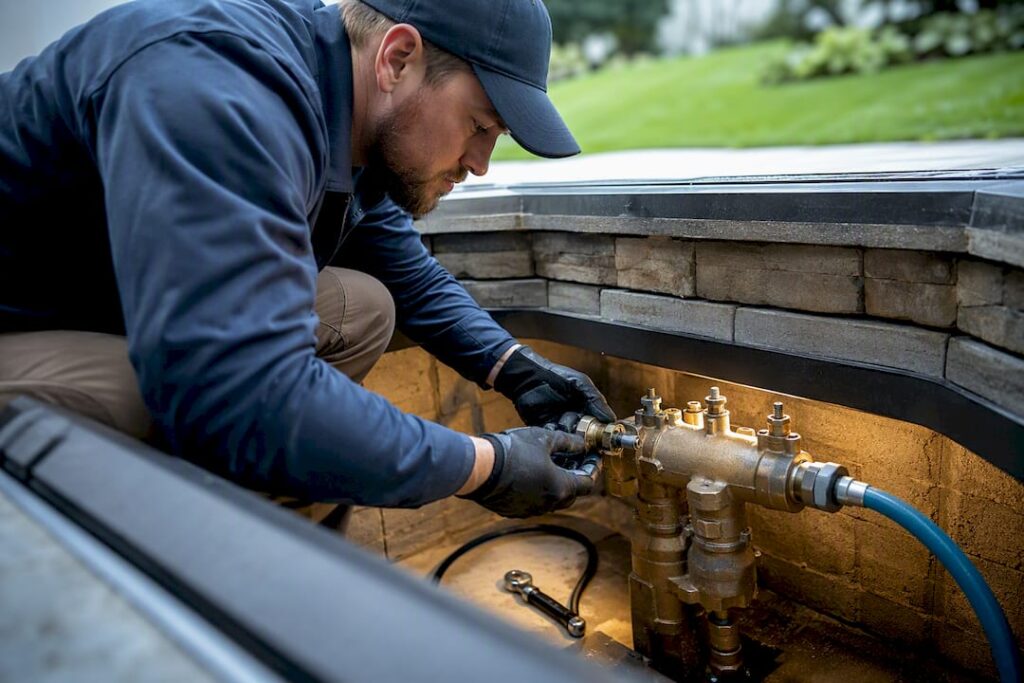
Most backflow repairs take between 1 and 6 hours when the device is accessible and the right parts are on the truck. Complex jobs, buried assemblies, or full replacements can stretch to several days once parts have to be ordered. The number that matters most, though, isn’t the repair itself: most utilities give property owners just 10 to 30 days to fix a failed device and pass a retest.
TL;DR:
- Most accessible backflow repairs take between 1 and 6 hours, but complex or buried assemblies can extend to several days depending on parts and site conditions.
- Utility deadlines for property owners to fix failed devices range from 10 to 30 days, with high-hazard assemblies often requiring faster action within 10 days.
- The severity of failure, device type, site accessibility, and parts availability are the main factors influencing repair duration, alongside administrative and environmental issues.
- Repeated failures within 12 to 24 months, visible corrosion, or older models with discontinued parts signal that replacement may be more cost-effective than repeated repairs.
- Proper planning, quick approvals, and ready site access can significantly reduce repair times and costs, while rushing repairs with urgency often raises expenses.
Table of Contents
- Backflow Repair Duration: What Real Jobs Actually Look Like
- Why Some Backflow Repairs Take Longer Than Others
- When Does a Backflow Repair Become a Replacement?
- Your 7-Day Action Plan After a Failed Backflow Test
- Cutting Backflow Repair Time: What’s in Your Control
- Does Faster Repair Time Cost More?
- Why Some Backflow Devices Keep Failing
- What Property Owners Should Know About Response Times
- How South Jersey Backflow Handles Repair, Rebuilding, and Retesting
- Where This Repair Timeline Guidance Comes From
- Sources
Backflow Repair Duration: What Real Jobs Actually Look Like
Timelines vary more by scenario than most property owners expect, and the range between a quick fix and a full rebuild is wider than a single average could capture.
- 1 to 3 hours: A gasket, seal, or spring swap on a double check valve assembly (DCVA) that sits somewhere a technician can reach without a ladder or a crowbar.
- 2 to 6 hours: A reduced pressure zone (RPZ) assembly repair involving a check valve or relief valve replacement, often needing a two-person crew to test and reseal properly.
- Half a day to several days: Buried units, cramped mechanical rooms, or internal corrosion that wasn’t visible until the housing came apart.
- 1 to 5 days for a full replacement: Removing the old assembly, sourcing the new one, installing it, and scheduling the retest.
One industry estimate puts standard repairs in accessible spots at 1 to 2 hours, while difficult locations can push that to 4 to 6 hours just for labor, before parts delays enter the picture. That gap between “easy” and “hard” is almost entirely about location and part availability, not the repair itself. A realistic range runs from a few hours to several days once you factor in whether the device needs a part that’s sitting on a shelf or one that has to be special-ordered. If you manage more than one property, the honest answer to “how long for backflow repair” is: it depends on which of those four buckets your device falls into, and you usually won’t know until a technician has eyes on it.
Why Some Backflow Repairs Take Longer Than Others
Seven variables drive most of the variation in backflow prevention repair time, and knowing them ahead of a service call helps you set expectations with tenants, ownership, or your compliance file.
- Device type and complexity. A DCVA has fewer moving parts than an RPZ, and RPZs generally take longer to diagnose and reseal because of the added relief valve.
- Accessibility and site conditions. A device in an open mechanical room gets fixed fast. One buried under six inches of soil, locked behind a vault, or wedged into a crawl space adds real hours before a wrench even touches it.
- Severity of the failure. A worn O-ring is a quick swap. Internal corrosion that’s eaten through a check disc or seat often means the whole cartridge, or the whole assembly, needs replacing.
- Parts availability. Common sizes ship same day from most suppliers. Older or specialty models can mean a multi-day wait for a part that isn’t stocked locally.
- Crew size and experience. A two-person crew that’s handled hundreds of RPZs will move faster than a single technician learning an unfamiliar assembly on site.
- Administrative steps. Permits, utility notifications, and retest scheduling can add days that have nothing to do with the mechanical work itself.
- Environmental root causes. Excessive water pressure or high turbidity degrades internal components faster than normal wear, and fixing the actual cause, not just the symptom, is where repair time needed for backflow repair often gets underestimated.
Pro Tip: Ask the technician for the deficiency code from your failed test report before scheduling. Codes tied to corrosion or repeated failures usually mean a longer job than a simple leak, so you can plan the right time window from the start.
When Does a Backflow Repair Become a Replacement?
Backflow assemblies generally last around 10 to 15 years, and age alone changes the math on whether a repair is worth doing at all. A device that’s failed its test two or three times in a few years is telling you something a single repair invoice won’t fix.
Watch for these signals that point toward replacement instead of another repair visit:
- Repeated failures on the same assembly within 12 to 24 months.
- Multiple internal components failing at once rather than one isolated part.
- Visible corrosion on the housing or fittings, not just the internal seals.
- A model old enough that parts are backordered or discontinued.
Replacement takes longer up front, often 1 to 5 days once you include ordering and installation, but it usually beats the cumulative downtime of three short repairs spread across a year. Each of those short jobs still requires scheduling, access, and a retest, and the hours add up faster than property owners expect.
Your 7-Day Action Plan After a Failed Backflow Test
A failed test starts a clock, and the first 24 hours matter more than people think. Here’s a practical sequence to keep you ahead of the deadline instead of scrambling near it.
- Day 0: Get the failure report in hand and confirm the serial number, deficiency code, and the exact deadline your water purveyor listed.
- Day 0 to 1: Request a repair estimate and get it approved. Most owners can turn this around within 24 to 72 hours if they respond to the technician’s call quickly.
- Day 1 to 3: Schedule the repair. If parts are in stock and the site is accessible, this is often the same visit as the estimate.
- Day 3 to 7: Complete the repair and schedule the retest immediately after. Trade experts recommend finishing the whole process within 7 days to leave a buffer against the official deadline.
- If delayed: Request a written extension from the utility the moment you know parts are backordered or the scope has changed. Don’t wait until day 9 of a 10-day window to ask.
High-hazard assemblies often carry shorter windows than standard devices. Some utilities give as little as 10 days for high-hazard repairs, compared to up to 30 days for lower-risk installations. Knowing which category your device falls into before you’re on the clock changes how aggressively you need to move.
Cutting Backflow Repair Time: What’s in Your Control
A surprising amount of average backflow repair time is determined before the technician even shows up, and property managers who plan ahead consistently get faster turnarounds.
- Pre-approve routine repairs up to a set dollar amount so work can start the same day instead of waiting on a signature.
- If you manage several properties, keep common repair kits on hand for the sizes you use most.
- Clear the vault, unlock the gate, and have keys or access codes ready before the appointment window opens.
- Ask the technician to confirm they’re bringing the likely parts before they arrive, not after diagnosing on site.
- Fix root causes like a failing pressure regulator or clogged strainer instead of just replacing the part it damaged.
- Coordinate tenant access and utility shutoff timing in advance so nobody’s waiting on a phone call mid-repair.
Pro Tip: If you oversee multiple sites, ask your service provider whether they offer consolidated scheduling. Grouping several properties into one week’s route often gets your repairs prioritized faster than one-off calls.
Does Faster Repair Time Cost More?
Speed and price move together in backflow repair, and it’s worth budgeting for that before you’re negotiating under a deadline. Standard repairs during normal business hours typically run on hourly labor rates plus parts, with jobs in the 1 to 2 hour range costing less overall simply because fewer hours are billed.
- Emergency or same-day service usually carries a call-out fee or a premium hourly rate on top of standard pricing.
- Inexpensive parts can still turn into a multi-day, higher-cost job if that specific part is backordered.
- Delaying a minor repair tends to raise both the eventual repair bill and the odds of a full replacement.
- Weigh the cost of a third short repair against scheduling a planned replacement, especially on assemblies past the 10 year mark.
The fastest fix isn’t always the cheapest one, and the cheapest fix isn’t always the fastest. Matching your timeline to your budget means deciding early which one you’re optimizing for.
Why Some Backflow Devices Keep Failing
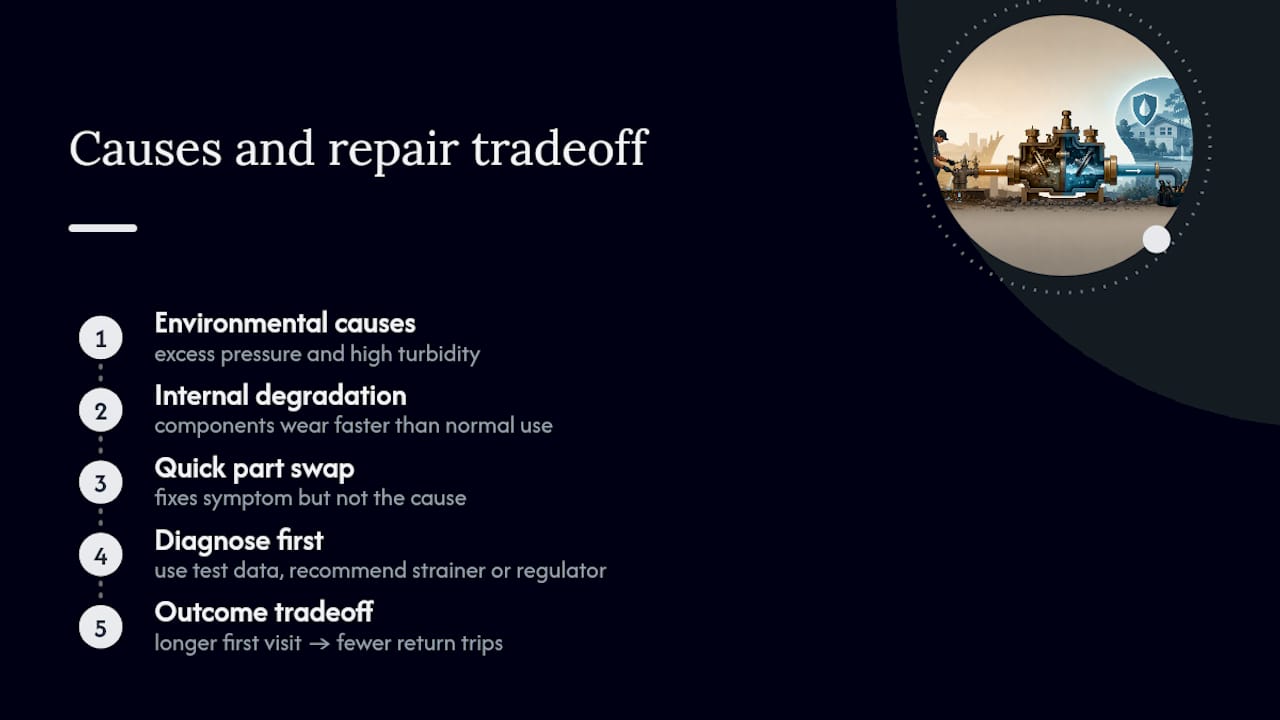
Environmental conditions cause more repeat failures than any single mechanical defect. Excessive water pressure and high turbidity degrade internal components faster than normal use, and a technician who only swaps the failed part without addressing the cause is setting up another service call.
Diagnosing from the test data first, then recommending a strainer or pressure regulator when those conditions show up, adds time to the initial visit but cuts the number of return trips. That tradeoff, a slightly longer first repair versus repeated short ones, is usually worth explaining to whoever approves the invoice.
What Property Owners Should Know About Response Times
Most repair calls get a response within a day or two, and same-day emergency service is available for devices that have failed and left a property without safe backflow protection. The fastest jobs happen when a manager can hand over the serial number, the deficiency code, and confirm site access before the technician’s truck pulls up.
Having a gate key ready or a tenant notified in advance shaves real time off a visit that would otherwise start with a phone call and a wait. Once a repair is complete, the retest report gets filed directly with the water authority, so the property owner isn’t stuck tracking down paperwork on top of managing the repair itself.
— Jordan
How South Jersey Backflow Handles Repair, Rebuilding, and Retesting
Southjerseybackflow is the alternative to juggling a plumber, a testing company, and a paperwork filer separately. One team handles testing, repair, rebuilding, and the retest report, and files it directly with your water authority so nothing sits on your desk waiting for a login.

Southjerseybackflow schedules repair and rebuild work with the goal of getting devices back in service and retested well inside common utility windows, including emergency response and contractor-grade support when a failed device needs same-day attention. Property managers overseeing several buildings can consolidate billing across sites rather than tracking separate invoices for every location, and coverage extends into service areas including Ocean County and Mercer County. If you’ve received a notice for a failed test or need a compliance refresher, the New Jersey backflow testing and compliance guide walks through what to submit and when. Ready to move on a repair before your deadline closes in? Request an estimate or emergency service through Southjerseybackflow.
Where This Repair Timeline Guidance Comes From
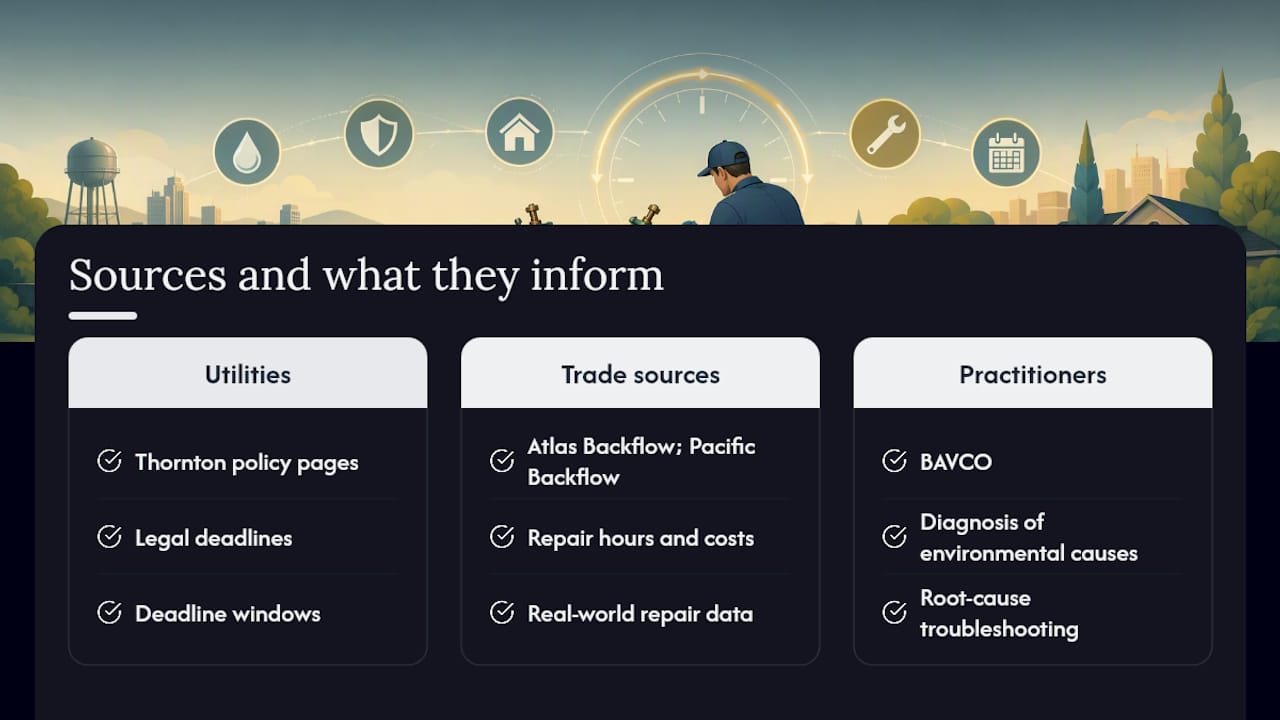
The timelines above draw on utility policy pages like Thornton’s backflow repair guidance for deadline windows, trade sources like Atlas Backflow and Pacific Backflow for real-world repair hours and costs, and practitioner guidance from BAVCO on diagnosing environmental causes behind repeat failures. Each addresses a different piece of the timeline: legal deadlines, labor hours, and root-cause diagnosis.