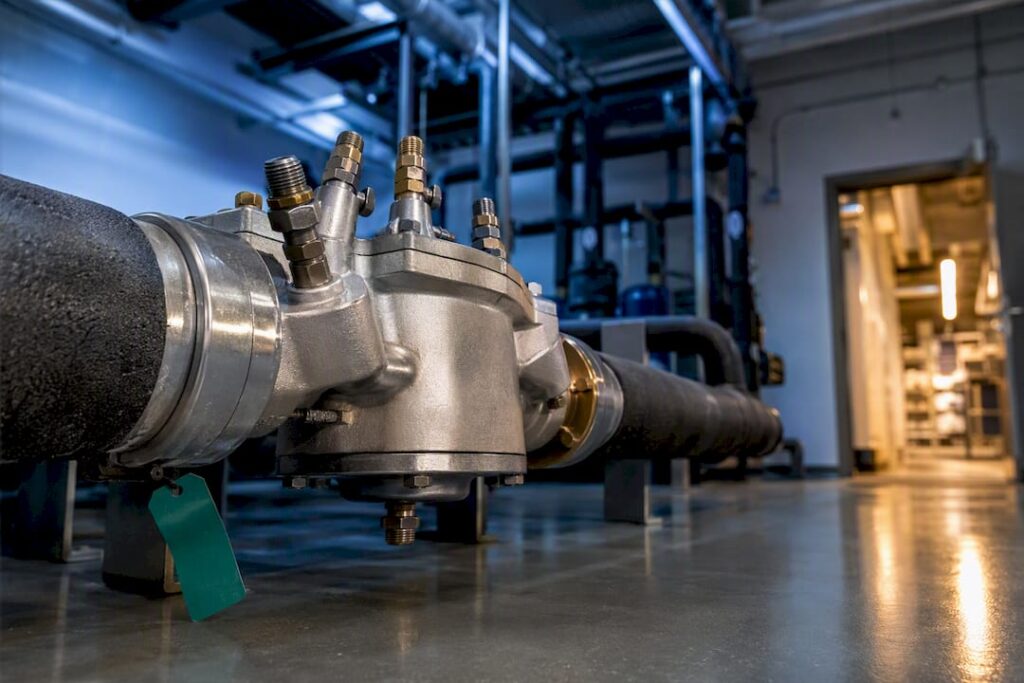
Yes, your supermarket almost certainly needs an approved backflow prevention device, and the testing rules depend on which authority has jurisdiction. If your store has an unapproved water source or a dual supply, NJDEP’s physical connection permit applies under N.J.A.C. 7:10-10, which means periodic testing four times a year. If your devices fall under the standard Plumbing Subcode (N.J.A.C. 5:23-3.15), testing once per year is typical. Call your water supplier first, then line up a certified tester.
TL;DR:
- Supermarkets with non-potable water sources or dual supplies must submit a physical connection permit and test devices quarterly under NJDEP regulations.
- Approved backflow preventers include double check valves and reduced pressure zone assemblies, with the latter required for certain hazards like chemical feed systems or contaminated sources.
- Proper placement, including accessible test cocks and sufficient relief port discharge lines, is crucial for compliance and ease of testing.
- Regular inspection, proper recordkeeping, and timely repairs are vital to prevent test failures caused by debris, corrosion, or frozen discharge lines.
- Local authorities may impose stricter requirements than state minimums, and professional testing and filing services are recommended for complex or multi-location properties.
Table of Contents
- Supermarket Backflow Requirements in NJ: Which Rules Apply to You
- Which Backflow Devices Are Approved, and When You Need an RPZ
- Backflow Testing Frequency and Who’s Allowed to File Results
- Installation and Placement Rules Your Store Needs to Verify
- A Step-by-Step Compliance Checklist for Supermarket Managers
- Why Backflow Tests Fail and How to Prevent It
- Local Variations and When to Call a Professional
- Southjerseybackflow Handles the Testing, Filing, and Repairs
- Sources
Supermarket Backflow Requirements in NJ: Which Rules Apply to You
The regulatory split trips up a lot of facilities managers, and it’s the first thing to sort out before you spend money on equipment. A “physical connection,” in NJDEP’s language, means your property connects to a water source other than the standard public supply approved for that building or maintains a dual supply arrangement. That triggers state-level jurisdiction under N.J.A.C. 7:10-10, separate from your local plumbing inspector’s checklist.
If NJDEP’s physical connection rules apply to your store, expect this cycle:
- Submit a permit application through NJDEP’s Water Supply and Geoscience program.
- Renew the permit annually, regardless of how many devices you have.
- Test every device covered by that permit quarterly, four times a year, not once.
Most supermarkets without an alternate water source skip the NJDEP track entirely. Instead, their backflow devices fall under the Plumbing Subcode, which generally requires testable devices to be field tested at installation and re-tested annually. The distinction matters for budgeting: periodic testing four times a year under a state permit costs roughly four times what annual plumbing-code testing costs, and missing a quarterly deadline can jeopardize the permit itself, not just the device.
Which Backflow Devices Are Approved, and When You Need an RPZ
New Jersey recognizes two approved assembly types for physical connections: double check valve assemblies and reduced pressure zone (RPZ) backflow preventers. The choice isn’t optional once you know your hazard level.
A reduced pressure zone valve becomes mandatory, rather than a lower-cost double check assembly, when any of these apply:
- Your building connects to a non-potable source, like a well or reclaimed water line.
- Refrigeration systems, condensate lines, or boilers create a backflow pathway into the potable supply.
- Chemical feed systems or cleaning stations sit downstream of the connection.
- Testing has already turned up contaminants exceeding primary drinking water standards.
Supermarkets hit more of these triggers than most commercial buildings, mainly because of refrigeration and cleaning infrastructure most owners never think of as plumbing hazards. Check that your installation includes accessible test cocks, full-port shutoff valves on lines up to 2 inches, and a properly arranged relief port discharge, since N.J.A.C. 7:10-10.3 specifies all three.
Pro Tip: Walk your mechanical room with a flashlight before you call a tester. If you can’t find the test cocks in under a minute, neither can the inspector, and that’s an automatic delay.
Backflow Testing Frequency and Who’s Allowed to File Results
Testing frequency in New Jersey isn’t one number. It splits into two tracks, and knowing which one governs your device saves you from either over-testing or, worse, missing a required cycle.
- Devices covered by an NJDEP physical connection permit must be tested quarterly, on a schedule tied to the permit itself.
- Devices under the standard Plumbing Subcode are typically tested annually, following the field test performed at installation.
- Every test, regardless of frequency, must be performed by a tester certified by an agency NJDEP or your local authority recognizes.
- The certified tester issues an original certification. You keep a copy on file, and a copy goes to your local water supplier or NJDEP when the permit requires it.
Skipping step four is more common than you’d expect. Property managers pass the test but forget to route the paperwork to the water authority, which can trigger a compliance letter months later even though the device itself passed. Backflow testing and certification services that handle filing directly with the authority close that gap.
Installation and Placement Rules Your Store Needs to Verify
Where the device sits, and how it drains, matters as much as which device you install. Domestic water lines typically get their backflow preventer near the water meter, on the public supply side, before the water branches into the building. Fire lines follow a different placement, usually before the alarm check valve or siamese connection.
RPZ installations carry specific discharge rules under N.J.A.C. 7:10-10.3:
- The relief port drain line must be the same diameter as the relief port, or larger, never smaller.
- An air gap has to separate the relief port from the drain, so the assembly never sits submerged.
- Strainers and shutoff valves protect the device from grit and let technicians isolate it for service.
Beyond the pipe fittings, leave real clearance around the assembly. Testers need room to attach gauges to the test cocks, and a device wedged behind pallets or buried in a mechanical closet turns a 20-minute test into an hour of moving inventory first.
A Step-by-Step Compliance Checklist for Supermarket Managers
Most supermarket owners don’t need a consultant to figure out where they stand. They need four decisions made in the right order.
- Inspect for cross-connection hazards. Walk through boiler rooms, condensate systems, and any secondary water source. This tells you whether NJDEP jurisdiction even applies.
- Call your public water supplier. Ask directly whether they require containment devices or a physical connection permit for your property. Local suppliers can add requirements beyond the state baseline.
- Get the right paperwork moving. If NJDEP applies, file the permit and schedule periodic testing four times a year with a certified tester. If not, schedule testing once per year under the Plumbing Subcode.
- Build a maintenance rhythm. Keep every test certificate, tag each device with its last-test date, and schedule rebuilds before a device fails rather than after.
Pro Tip: Put the next test date on a shared facilities calendar, not just a sticker on the device. Stickers fall off during cleaning; calendars don’t.
Why Backflow Tests Fail and How to Prevent It
Most failed tests trace back to neglect, not equipment defects. The usual culprits: debris clogging the relief port, a frozen discharge line in winter, missing or painted-over test cocks, obstructed access behind stock or equipment, and internal corrosion on devices that have gone years without a rebuild.
A short maintenance routine handles most of it:
- Keep the immediate area around the device clear and dry.
- Add freeze protection before the first cold snap, not after a pipe splits.
- Inspect strainers on a set schedule rather than waiting for a drop in pressure.
- Replace worn seals during routine service instead of waiting for a failed test to force the issue.
- Label every device with the tester’s name and the next due date, visible without moving anything.
Keep the original certification from your tester and a copy for your local utility. Good recordkeeping is often what separates a five-minute renewal from a week of back-and-forth with an inspector.
Local Variations and When to Call a Professional
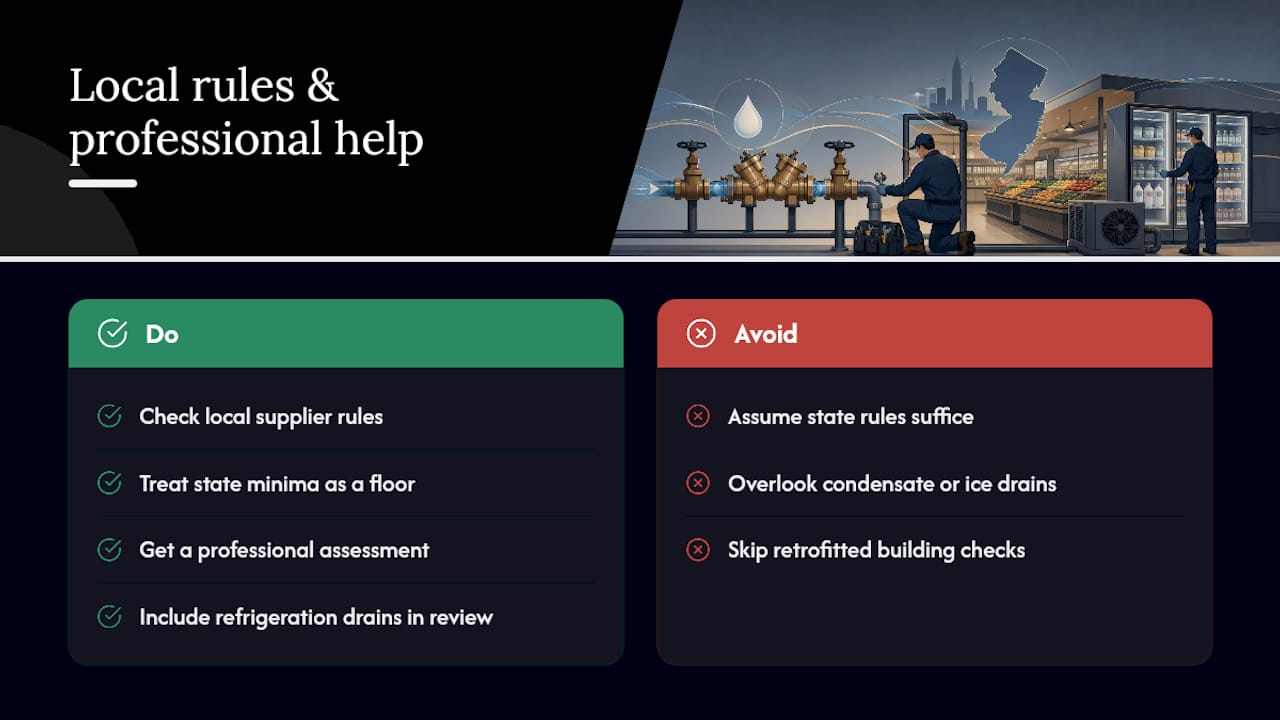
State minimums are the floor, not the ceiling. Local water suppliers can require containment devices or tighter schedules than N.J.A.C. sets, and their cross-connection control plans often follow the EPA’s Cross-Connection Control Manual that NJDEP references. That NJDEP permit and your municipal plumbing inspection are two separate compliance tracks, not one.
Supermarkets tend to underestimate their own hazard level. Refrigeration condensate, ice machine drains, and chemical dispensers behind the deli counter all count as cross-connection risks, even when nobody on staff thinks of them as plumbing. A professional assessment catches what a visual walk-through misses, particularly on older buildings retrofitted for modern refrigeration equipment.
— Jordan
Southjerseybackflow Handles the Testing, Filing, and Repairs
There are services that test and certify devices, file the results directly with your water authority or NJDEP when required, and handle repairs or full rebuilds before a worn device turns into a failed inspection.
DIY maintenance works for basic upkeep, but certified testing isn’t optional, and a missed filing deadline can cost more in compliance letters than the test itself. For refrigeration-heavy properties like supermarkets, where condensate lines and chemical dispensers raise your hazard profile, a professional assessment catches what a routine walk-through won’t.
If you’re managing multiple locations, our Service Area page covers coverage across South Jersey counties, and consolidated billing is available for multi-property accounts. Ready to get your testing schedule and paperwork handled? Start with our guide on backflow testing in New Jersey to see exactly what passing, submitting, and staying compliant looks like, or reach out to schedule your next test.
Sources
- Physical Connection Permit Processing | Water Supply and Geoscience | NJDEP
- N.J.A.C. 7:10-10.3 – Approved physical connection installation requirements
- Backflow Preventers | CHNJ
- Food handling establishments and food handling areas within buildings | UpCodes
Pingback: Avoid Downtime: NJ Warehouse Backflow Rules for Quarterly Tests