
TL;DR:
- Shutoff valves are essential safety devices that fully stop water or gas flow in plumbing systems. Homeowners should regularly test and locate these valves to prevent damage during emergencies, as code mandates their accessibility at key points. Proper maintenance and timely replacement ensure reliable operation and protect property from costly water damage.
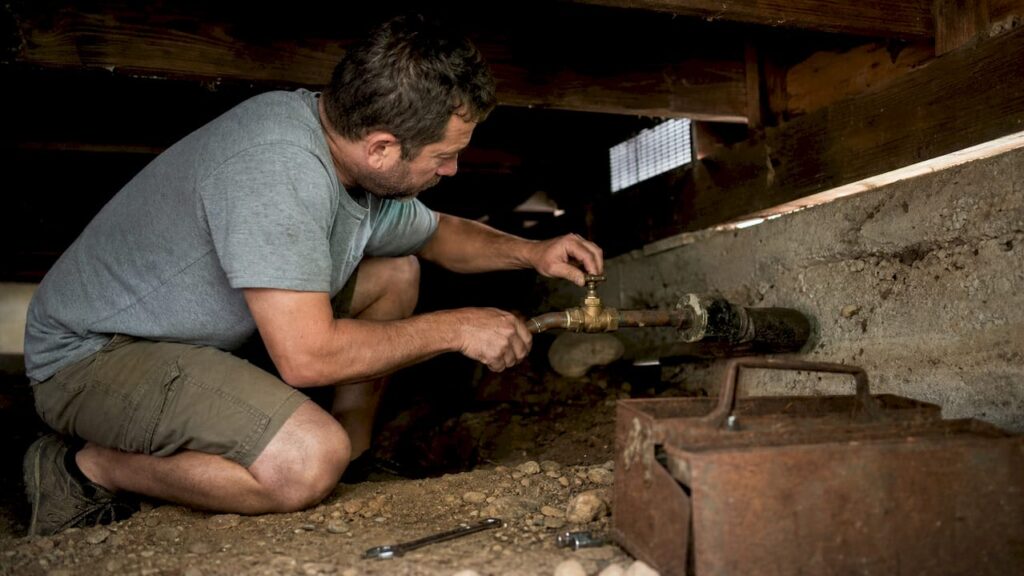
A shutoff valve is a mechanical device that stops the flow of water or gas in a plumbing system by creating a positive isolation seal. Every home in New Jersey has at least one, and most have dozens. The International Plumbing Code requires shutoff valves at the building entry point, upstream of every water heater, and on individual fixture supply lines. That requirement exists for a clear reason: you should never have to drain your entire home’s water supply just to replace a faucet. Understanding what these valves are, where they live, and how to maintain them is one of the most practical things a homeowner or property manager can do.
What is a shutoff valve and why does it matter?
A shutoff valve is defined as a mechanical device that achieves positive isolation by completely stopping fluid or gas flow with a secure seal. The term “isolation valve” is the standard industry term used by engineers and plumbing codes. Both terms describe the same device, and you will see both in New Jersey plumbing documentation.
The core job of any shutoff valve is binary: water either flows or it does not. There is no middle setting. This makes shutoff valves different from flow-control valves, which are designed to regulate volume. Knowing that distinction matters because using an isolation valve to partially restrict flow damages its internal seals and shortens its life significantly.
For New Jersey homeowners, the practical value is straightforward. A working shutoff valve at a toilet supply line means a plumber can replace the fill valve in 20 minutes without touching the rest of the house. Without it, the entire home’s water goes off. That difference in convenience becomes a difference in cost and damage when a pipe bursts at 2:00 AM.
What are the common types of shutoff valves in residential plumbing?
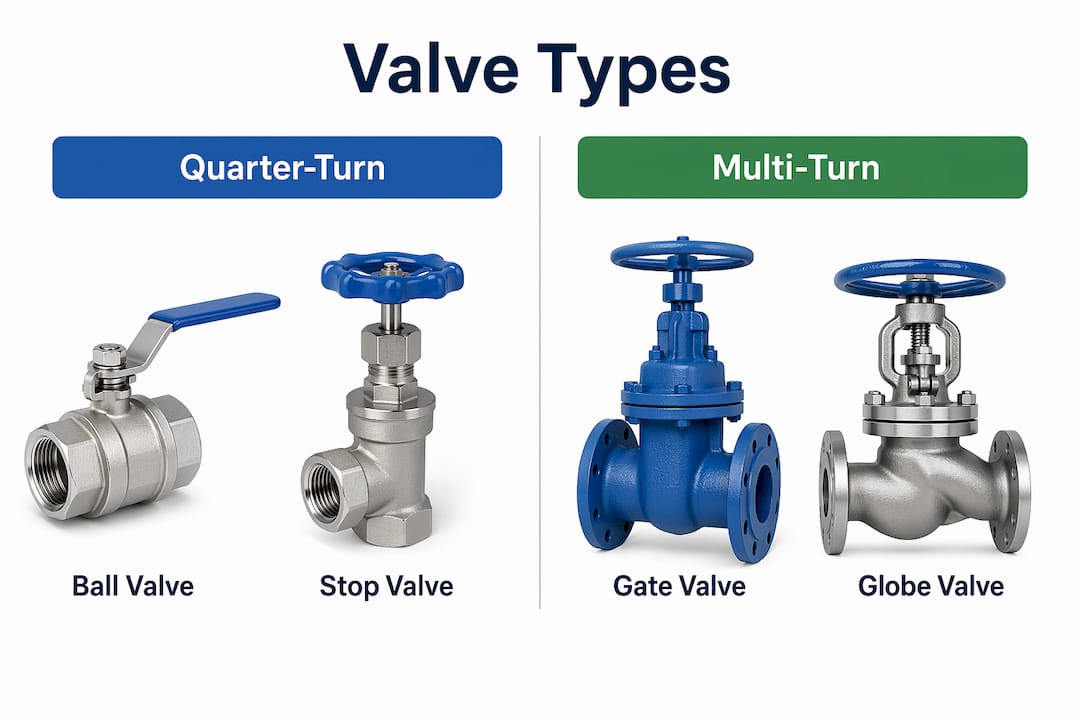
Residential shutoff valves fall into two main categories: quarter-turn valves and multi-turn valves. Each category includes specific valve designs with different strengths.
Ball valves
Ball valves are the standard in modern residential plumbing. Inside the valve body sits a hollow ball with a hole through its center. When the lever handle aligns with the pipe, water flows through the hole. A quarter turn closes it completely. Ball valves provide a bubble-tight seal, operate quickly, and hold up well over years of use. Their lever handle makes it immediately obvious whether the valve is open or closed, which matters during an emergency.
Gate valves
Gate valves use a threaded stem to raise or lower a metal gate across the pipe. They require multiple full rotations to open or close, which is slow under pressure. Gate valves are common in older New Jersey homes built before the 1980s. They are more prone to seizing when left unused for years, and their internal gate can corrode or break off, leaving the valve stuck in one position.
Globe and stop valves
Globe valves and stop valves (also called angle stop valves) appear most often under sinks and behind toilets. They use a disc pressed against a seat to stop flow. Stop valves are compact and easy to install in tight spaces, making them the default choice for fixture supply lines throughout New Jersey homes.
Pro Tip: Replace any gate valve you find in your home with a ball valve during your next renovation. Ball valves cost only slightly more, operate in a fraction of the time, and are far less likely to fail when you need them most.
| Valve type | Operation | Speed | Best location | Reliability |
|---|---|---|---|---|
| Ball valve | Quarter turn | Fast | Main shutoff, water heater | High |
| Gate valve | Multi-turn | Slow | Older main lines | Low (prone to seizing) |
| Globe/stop valve | Multi-turn | Moderate | Fixture supply lines | Moderate |
How does a shutoff valve work to control water flow?
A shutoff valve works by physically blocking the path water travels through a pipe. The blocking mechanism varies by valve type, but the operating principle is the same across all of them: move the internal component to align or block the flow path.
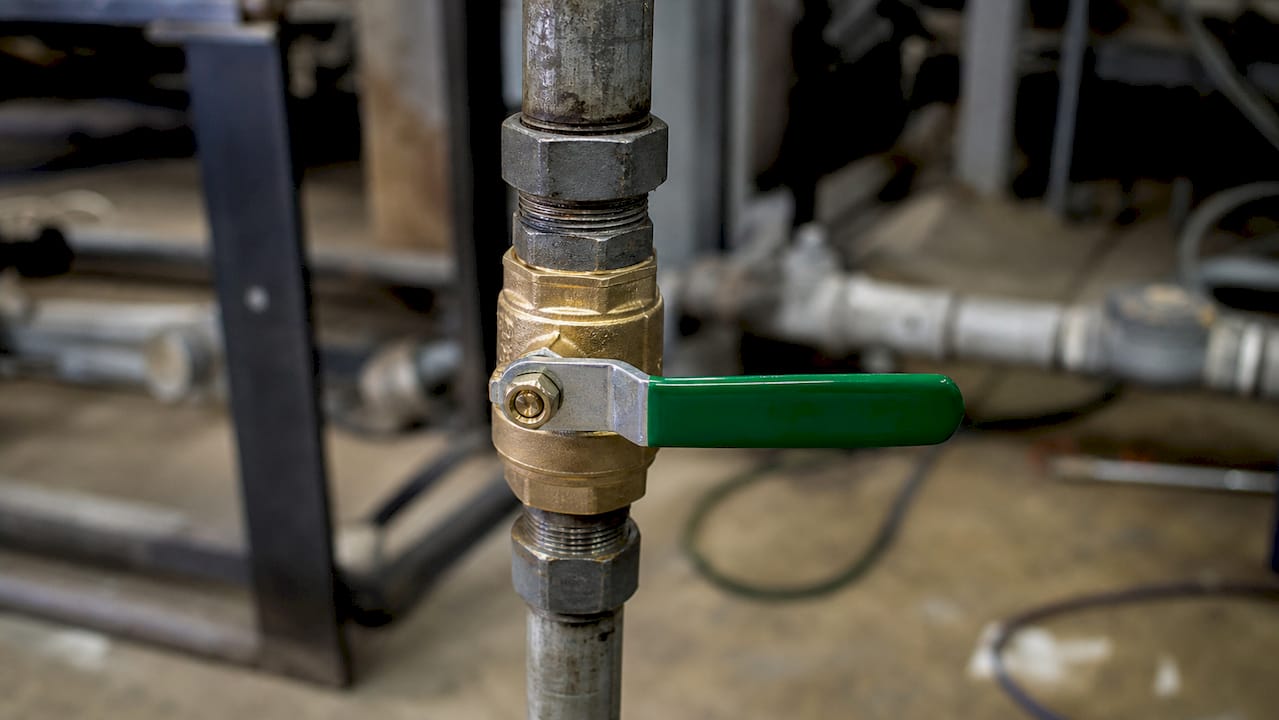
Ball valves are binary by design. The ball is either aligned with the pipe (open) or perpendicular to it (closed). There is no functional in-between position. Leaving a ball valve partially open causes the water stream to erode the ball’s surface and damage the seals, which leads to leaks and eventual failure.
Gate and globe valves use threaded stems that move a blocking element up or down. These valves can technically be left partially open, but they are not designed for flow regulation either. Throttling flow through a gate valve causes vibration and wear that degrades the gate over time.
Common failure modes for shutoff valves include:
- Seizing: A valve left in one position for years can fuse internally due to mineral deposits or corrosion, making it impossible to turn.
- Packing leaks: The seal around the valve stem can dry out or wear, causing drips around the handle.
- Partial closure: A damaged gate or worn ball may not fully seal, leaving a slow drip even when “closed.”
- Handle breakage: Forcing a seized valve can snap the handle off, leaving the valve inoperable.
Pro Tip: Never use a shutoff valve to regulate water pressure or flow volume. Use it fully open or fully closed. Flow regulation belongs to a separate pressure-regulating valve.
Where are shutoff valves located and how do you maintain them?
Shutoff valves appear at predictable locations throughout every New Jersey home. The main shutoff valve sits where the water supply line enters the building, typically in the basement, utility room, or near the foundation wall. A second shutoff appears on the cold water supply line feeding the water heater. Individual stop valves sit on the hot and cold supply lines under every sink, behind every toilet, and at the supply connection for dishwashers and washing machines.
Knowing where your main shutoff valve is before an emergency is not optional. Quickly closing the main shutoff during a burst pipe can mean the difference between a few hundred dollars in repairs and tens of thousands in water damage. Walk through your home now and locate every valve. Label them with a permanent marker or a tag if needed.
Annual maintenance routine for NJ homeowners
Shutoff valves corrode and seize when left unused. Cycling valves once a year extends their useful life and confirms they will work when you actually need them. Follow these steps each year:
- Locate every shutoff valve in the home, including the main, water heater supply, and all fixture stops.
- Turn each valve fully closed, then fully open again. This breaks up mineral deposits and keeps the internal mechanism free.
- Check for packing leaks around the stem after cycling. A small drip at the handle means the packing nut needs tightening or the valve needs replacement.
- Test the main shutoff by closing it and confirming that all water in the home stops. Open it again and check that flow restores normally.
- Clear the area around each valve. Valves stored behind boxes or under clutter cannot be reached quickly in an emergency.
For a broader seasonal maintenance checklist, including winterization steps specific to New Jersey, review the guidance published by Southjerseybackflow.
What plumbing code requirements do NJ homeowners need to know?
New Jersey plumbing code, which adopts and amends the International Plumbing Code, sets specific requirements for shutoff valve placement and accessibility. NJ code requires accessible shutoff valves at every fixture supply line and on the cold water supply to every water heater. The valves must be operable without a tool, meaning a wrench should never be required to turn them off in an emergency.
Non-compliance carries real consequences. A property that fails inspection due to missing or inaccessible shutoff valves may require costly retrofits. More practically, a valve that cannot be reached or operated during a leak event turns a manageable problem into a major one. Many of the most common NJ plumbing code violations involve shutoff valves that are either missing, blocked, or non-functional.
| Code requirement | Standard | Applies to |
|---|---|---|
| Main building shutoff | Required at entry point | All residential properties |
| Water heater supply shutoff | Required on cold water inlet | All water heater installations |
| Fixture supply shutoffs | Required at each fixture | Sinks, toilets, dishwashers |
| Accessibility | Operable without tools | All shutoff valves |
| Location marking | Must be identifiable | Main shutoff valve |
Property managers overseeing multiple units in New Jersey carry additional responsibility. Each unit should have its own shutoff capability so that one unit’s plumbing emergency does not require shutting off water to the entire building. Annual verification of valve operability is a best practice that protects both tenants and the property itself.
Key Takeaways
A working shutoff valve at every fixture and the building entry is the single most effective safeguard against water damage in a New Jersey home.
| Point | Details |
|---|---|
| Definition and function | A shutoff valve stops water or gas flow completely by creating a positive isolation seal. |
| Ball valves are the best choice | Ball valves provide fast, reliable shutoff and are the standard for modern residential plumbing. |
| Annual cycling prevents failure | Turn every valve fully closed and open once a year to prevent seizing and confirm operability. |
| NJ code mandates placement | New Jersey requires shutoff valves at the building entry, water heater, and every fixture supply line. |
| Know your main shutoff location | Locating and operating the main shutoff quickly can prevent catastrophic water damage during emergencies. |
Why shutoff valves deserve the same attention as smoke detectors
Most homeowners test their smoke detectors every six months without thinking twice. Almost none of them test their shutoff valves. That gap in attention is a real problem, because a stuck or forgotten shutoff valve causes more damage during a plumbing emergency than the leak itself.
I have seen this play out in New Jersey homes where the main shutoff had not been touched in 15 years. When a pipe failed, the homeowner could not close the valve. The handle turned but the internal gate had corroded in place. By the time the water company shut off service from the street, the basement had flooded. The repair bill ran well into five figures. The valve replacement would have cost under $50 and 30 minutes of a plumber’s time.
The uncomfortable truth is that shutoff valves are emergency equipment. They sit idle for years, and that idleness is exactly what makes them fail. Treating them like a fire extinguisher, meaning you check them on a schedule and replace them before they fail, is the only approach that actually works. Homeowners who improve plumbing safety proactively spend far less over time than those who react to failures.
Property managers have even more at stake. A seized valve in a multi-unit building means water stays on while you wait for an emergency plumber. Every minute of delay is more damage, more liability, and more cost. Annual valve cycling across all units is not excessive. It is the minimum standard for responsible property management.
— Jordan
Southjerseybackflow: plumbing safety and compliance for NJ properties
Shutoff valves are one piece of a larger plumbing safety picture. Backflow prevention is another, and in New Jersey, it carries its own set of code requirements and annual testing obligations.

Southjerseybackflow specializes in backflow testing and compliance for residential and commercial properties across New Jersey. If you have received a backflow testing notice from your municipality, or if you want to confirm your property meets current NJ plumbing standards, Southjerseybackflow can handle the inspection, testing, and submission process. Scheduling an annual check with a licensed professional is the most direct way to stay compliant and protect your property from water system failures.
FAQ
What is a shutoff valve used for?
A shutoff valve stops the flow of water or gas to a specific fixture or the entire building, allowing for maintenance or emergency control without draining the full system.
How does a shutoff valve work?
A shutoff valve blocks the internal flow path using a ball, gate, or disc mechanism. Turning the handle moves that component to either allow or stop flow completely.
What are the main types of shutoff valves in homes?
The three most common types are ball valves, gate valves, and stop valves. Ball valves are the most reliable and are standard in modern residential plumbing.
How often should shutoff valves be tested?
Shutoff valves should be cycled fully open and closed at least once a year to prevent seizing and confirm they will operate correctly during an emergency.
Does New Jersey require shutoff valves at every fixture?
Yes. New Jersey plumbing code requires accessible, tool-free shutoff valves at every fixture supply line, at the water heater cold water inlet, and at the main building entry point.