
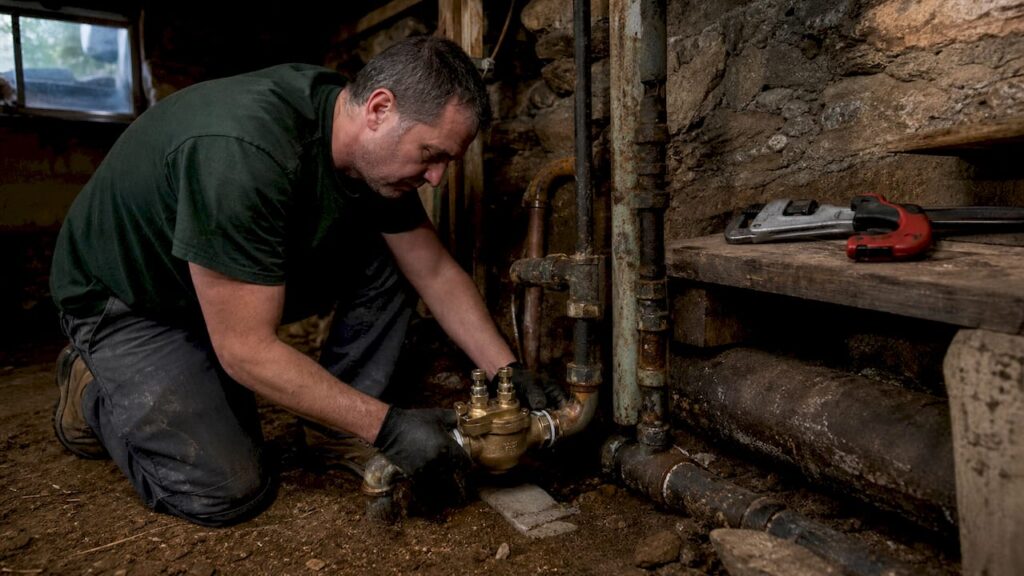
TL;DR:
- Proper placement of basement backflow preventers is crucial for effective sewage backup protection and compliance with local codes. Installing the device near the main sewer exit on the basement wall, ensuring correct flow direction, maintaining at least 12 inches of clearance, and avoiding submerged locations are key for reliable operation. Regular annual inspections by a licensed technician help ensure ongoing protection and prevent costly basement flooding.
Basement backflow preventer placement is defined as positioning a backwater valve where it shields every basement plumbing fixture that sits below the upstream sewer manhole elevation, while remaining fully accessible for inspection and repair. New Jersey homeowners with finished basements, laundry rooms, or floor drains face real sewage backup risk during heavy storms and municipal sewer surcharges. Getting the device location right the first time prevents costly damage, satisfies NJ plumbing codes, and keeps your home insurable. This guide covers every placement decision you need to make before a licensed plumber touches your slab.
1. Key criteria for basement backflow preventer placement
The single most important placement rule is elevation. IRC 2021/2024 requires a backwater valve when basement fixtures sit below the upstream manhole elevation, not simply because a basement exists. That distinction matters because some basements are high enough that code does not trigger the requirement at all.
Once you confirm the elevation trigger applies, you need to decide between mainline protection and branch protection.
- Mainline protection places the valve on the main sewer lateral before any branch lines split off. Every basement fixture is covered automatically.
- Branch protection places a smaller valve on individual branch lines serving specific fixtures like a floor drain or laundry sink.
Placing the valve too far downstream leaves some fixtures, such as laundry sinks and floor drains, completely unprotected during a sewer surcharge. That is the most common placement error New Jersey homeowners discover after a flood.
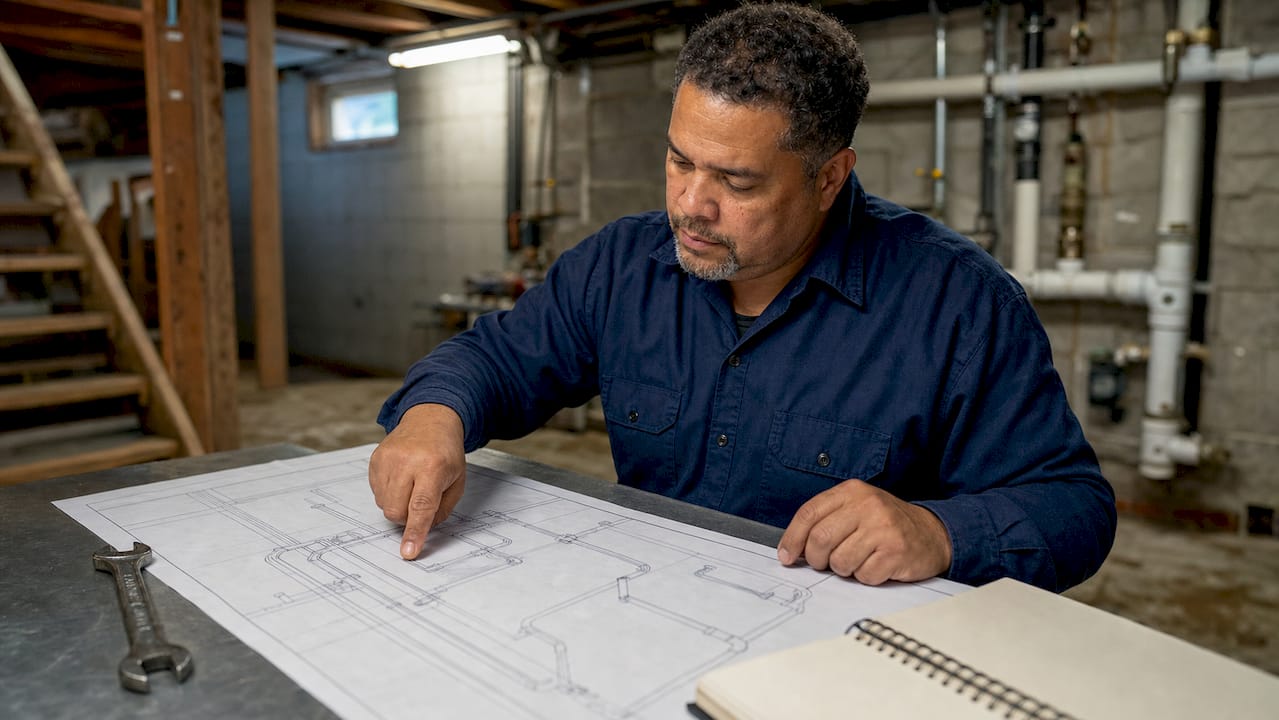
Pro Tip: Ask your plumber to sketch the basement drain layout before buying any device. Knowing exactly where each branch connects to the main line tells you whether one mainline valve covers everything or whether you need branch valves on specific fixtures.
2. Install near the main sewer lateral exit
The best position for a backwater valve is as close as possible to where the main sewer lateral exits the basement wall toward the street. At that point, the valve sits upstream of every basement fixture connection. Nothing gets left behind.
Valve placement is as much a plumbing layout decision as it is a device installation. A plumber who treats it as a simple add-on without mapping the drain layout first will almost always place it in the wrong spot.
Installing the valve near the exit point also minimizes the length of pipe that remains unprotected inside the basement. Shorter unprotected runs mean less risk if the sewer surges before the valve closes.
3. Confirm correct flow direction before setting the valve
Every backwater valve carries an arrow stamped on the body indicating the correct flow direction. Misorienting the valve relative to flow direction breaks the seal and causes malfunction. The flapper mechanism only works when wastewater flows in the intended direction during normal operation.
Flow direction sounds obvious, but it trips up even experienced installers when working in tight basement spaces with awkward pipe angles. Verify the arrow aligns with the direction waste travels toward the street, not toward the house.
4. Maintain proper pipe slope throughout the installation
Correct slope is non-negotiable. Too flat or negative slopes cause chronic blockages and prevent proper wastewater flow through the valve body. The standard minimum slope for drain lines is 1/4 inch per foot of horizontal run.
When a plumber cuts the slab to install the valve, the restored pipe sections must match the original slope. Any dip or flat spot created during concrete restoration becomes a debris trap that eventually blocks the valve.
5. Position the valve for easy access at all times
Valves installed behind equipment or under flooring are rarely tested or maintained, which negates their protective function entirely. New Jersey plumbing authorities require accessible clearance so licensed technicians can inspect and service the device on schedule.
The practical rule is simple: if you cannot crouch beside the valve with a flashlight and a wrench, it is in the wrong place. Avoid positioning the device behind water heaters, under stairs with no removable panel, or beneath finished flooring without an access hatch.
Backflow testing and repair requires physical access to the valve body, the inspection port, and the cleanout. Plan that space before the concrete is poured back.
6. Maintain minimum clearance requirements
Backflow prevention devices require a minimum clearance of 12 inches from the floor or grade to function correctly and allow maintenance. Devices installed above 5 feet may require a platform so a technician can reach the valve safely.
That 12-inch floor clearance also serves a drainage function. If the relief valve discharges, the water needs somewhere to go. A floor drain positioned near the device handles that discharge and prevents water damage to the surrounding basement area.
7. Never install in pits or submerged areas
Backflow preventers must never be placed in locations subject to flooding or submersion. A valve sitting in a pit that fills with water during a storm cannot function and may corrode faster than expected.
This rule catches homeowners who assume a sump pit is a logical location because it already handles water. The opposite is true. Submersion disables the device at exactly the moment you need it most.
8. Isolate basement fixtures with a dedicated valve when possible
Isolating basement fixtures with a dedicated valve reduces entire-home plumbing downtime during sewer surcharges. When a mainline valve closes during a backup event, upper-level drains stop working too because all wastewater flow is blocked.
A dedicated basement branch valve lets upper-level plumbing continue operating normally while the basement fixtures stay protected. This setup costs more upfront but avoids the inconvenience of a whole-house shutdown every time the municipal sewer surcharges.
For code-compliant installation decisions like this one, consult a licensed plumber who knows your local sewer system’s surcharge history.
9. Account for slab cutting and restoration costs
Backwater valve installation requires concrete cutting in the basement slab with subsequent restoration. Homeowners consistently underestimate the restoration cost, which can equal or exceed the valve and labor combined.
Choosing the right location before the slab is cut saves money. Every repositioning after the fact means cutting concrete again. Get the placement right on the first consultation, not after the first flood.
10. Plan for annual maintenance from day one
An effective basement flood protection strategy pairs backwater valve installation with annual maintenance that clears debris and confirms the flapper mechanism works. A valve that has never been opened since installation is not a protected basement. It is a false sense of security.
Annual maintenance by a licensed technician also satisfies seasonal backflow maintenance requirements that New Jersey municipalities increasingly enforce. Skipping inspections can void manufacturer warranties and create liability exposure if a backup causes damage.
11. Common mistakes that compromise placement and protection
Most placement failures fall into a short list of repeatable errors. Recognizing them before installation saves significant repair costs later.
- Reversed installation: The valve arrow points toward the house instead of the street. The flapper seals in the wrong direction and backflow passes through freely.
- Downstream placement: The valve sits past one or more branch connections, leaving those fixtures exposed to sewage backup.
- Hidden installation: The valve ends up under a finished floor, inside a cabinet, or behind mechanical equipment with no access panel. Accessibility for testing and repair is a code requirement, not a preference.
- Incorrect slope: The restored pipe section after slab cutting runs flat or dips, creating a blockage point directly at the valve.
- Pit installation: The valve sits in a low point that collects water, submerging the device during the exact conditions it needs to operate.
Each of these errors shares one root cause: treating placement as an afterthought rather than the primary design decision.
Key takeaways
Proper basement backflow preventer placement requires positioning the valve upstream of all basement fixture connections, maintaining 12 inches of floor clearance, confirming correct flow direction, and keeping the device accessible for annual inspection.
| Point | Details |
|---|---|
| Elevation triggers the requirement | IRC 2021/2024 requires a valve only when basement fixtures sit below the upstream manhole elevation. |
| Mainline placement covers everything | Installing near the sewer lateral exit protects all basement fixtures without exception. |
| Access is a code requirement | A minimum 12-inch clearance from the floor is mandatory; hidden valves fail inspection and maintenance. |
| Slope and orientation are non-negotiable | Incorrect slope or reversed flow direction causes blockages and valve failure at critical moments. |
| Annual maintenance keeps protection active | A valve that is never serviced provides no reliable protection regardless of its placement. |
What I’ve learned about placement after years of NJ basement inspections
The single most expensive mistake I see New Jersey homeowners make is letting a plumber choose the valve location without a full drain layout map in hand. The plumber cuts the slab where it is convenient, not where it is correct. The homeowner assumes the job is done. Then a nor’easter hits, the sewer surcharges, and the basement floods because two branch lines sat downstream of the valve.
Proper placement is a design conversation, not a field decision made with a jackhammer already running. I always recommend homeowners ask their plumber one question before work begins: “Which fixtures will this valve protect, and which ones will it not?” If the plumber cannot answer that immediately, the layout has not been mapped.
The other pattern I see constantly is valves installed in finished basements with no access hatch. The homeowner renovated after installation and covered the valve with drywall or tile. Now the device cannot be inspected, tested, or repaired without tearing out finished material. That is a code violation and a maintenance failure waiting to happen.
Proactive homeowners in New Jersey who review their backflow preventer FAQs and schedule inspections before problems arise spend far less money over a ten-year period than those who react after a flood. The placement decision is permanent once the concrete sets. Get it right the first time.
— Jordan
Southjerseybackflow serves New Jersey homeowners with licensed backflow expertise
Southjerseybackflow provides licensed backflow testing, inspection, and installation services across New Jersey, with technicians who know state and municipal code requirements inside out.

Whether you need a new basement installation mapped correctly before the slab is cut, or an existing valve inspected to confirm it still meets current standards, Southjerseybackflow handles both. The team works across Ocean County, Mercer County, Gloucester County, and surrounding areas. Start with a backflow compliance consultation to confirm your basement protection meets 2026 New Jersey requirements and schedule your annual inspection before the next storm season arrives.
FAQ
What triggers the requirement for a basement backflow preventer in NJ?
The requirement applies when basement fixtures sit below the upstream sewer manhole elevation, per IRC 2021/2024. Elevation relative to the manhole, not simply having a basement, determines whether a valve is required.
Where is the best location for a backflow preventer in a basement?
The best location is as close as possible to where the main sewer lateral exits the basement wall toward the street. That position protects every basement fixture connected to the main drain.
How much clearance does a basement backflow preventer need?
Backflow prevention devices require a minimum of 12 inches of clearance from the floor or grade. Devices installed above 5 feet may require a platform for safe technician access.
Can a backflow preventer be installed in a basement pit or sump?
No. Backflow preventers must never be placed in pits or locations subject to flooding or submersion. Submersion disables the device at exactly the moment it needs to operate.
How often should a basement backflow preventer be inspected?
Annual inspection and maintenance by a licensed technician is the standard requirement. Annual service clears debris, confirms the flapper mechanism works, and satisfies New Jersey municipal compliance requirements.