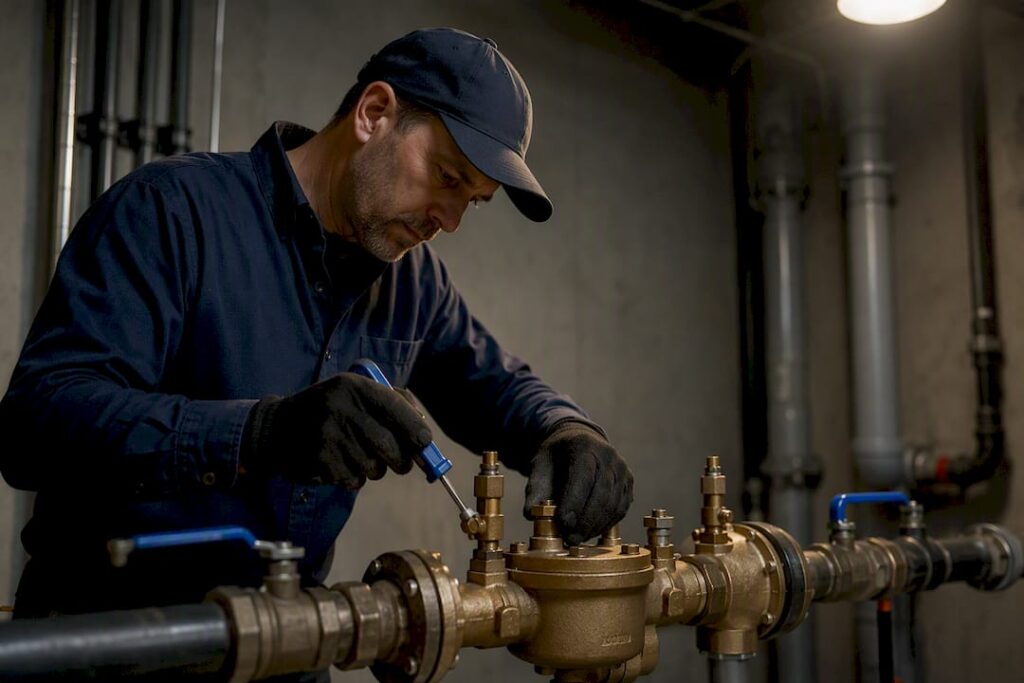
A condo board must install a backflow prevention device whenever a hazard on the property (irrigation, boilers, pools, fire suppression) or the local water authority requires containment. Beyond installation, boards are on the hook for certified annual testing, timely report filing with the water authority, and fast repairs when a device fails. In a multi-unit building, the board or property manager, not individual unit owners, usually runs this program.
TL;DR:
- Most condo boards must have backflow prevention devices installed and tested annually when a hazard like irrigation or pools exists on the property.
- Board responsibility primarily covers devices on common elements, with individual unit owners responsible for interior fixtures unless bylaws specify otherwise.
- Selecting the correct device depends on hazard severity, with reduction pressure assemblies used for severe risks like chemicals or fertilizer injection.
- Installation requires permits, licensed professionals, and certification standards, with retesting mandatory after repairs or every year, whichever comes first.
- Creating a detailed compliance schedule, verifying contractor credentials, and maintaining organized records prevent penalties and protect residents from contaminated water risks.
Table of Contents
- Quick Compliance Checklist for Condo Boards
- Who Is Responsible for Backflow Compliance in a Condo?
- When Does a Condo Actually Need a Backflow Device?
- Types of Backflow Assemblies and What They Protect Against
- Installation, Permits, and Who Has to Approve the Plan
- How Often Does Backflow Testing Need to Happen?
- Maintenance and Repair Timelines After a Failed Test
- What Does an Annual Compliance Calendar Look Like?
- How South Jersey Backflow Supports Condo Boards
- Why Boards Can’t Treat This as a Checkbox
- Get Your Condo’s Backflow Program Handled
- Where to Verify the Rules for Your Building
- Sources
Quick Compliance Checklist for Condo Boards
Before you dig into codes and hazard categories, get a snapshot of where your building actually stands. Most boards discover gaps the moment they pull their files together.
Start here:
- Pull existing device records: model, assembly type, certification number, and the date of the last passing test.
- Walk the property for hazards that typically trigger a requirement, including irrigation lines, boilers, pools, and fire systems with chemical additives.
- Book a certified tester and require proof of gauge calibration along with a fully completed test form, not just a verbal “it passed.”
- Confirm whether your original installation needed a permit or an engineering plan, then archive that paperwork with your test records.
- Assign one person to own the calendar, set a repair window policy for failures, and put annual testing reminders on the books now.
Pro Tip: Ask your tester for their authorized certification number before the appointment, not after. Some water authorities reject reports from testers who aren’t on the approved list, and you don’t want to discover that after your device has already failed inspection.
Who Is Responsible for Backflow Compliance in a Condo?
Governing documents usually put the association on the hook for backflow devices tied to common elements and the building’s service entrance. Unit owners typically stay responsible for internal fixtures, like a washing machine hookup or a hose bib, unless bylaws say otherwise.
Water suppliers and the local authority having jurisdiction enforce this through direct notices, and they don’t hesitate to escalate. Noncompliance can mean:
- Warning letters with a fixed repair or retest deadline.
- Water service restriction or shutoff for the affected line.
- Fines assessed against the association, sometimes recurring until the issue is resolved.
Put testing obligations and access rights directly into vendor contracts and association rules. That single step prevents the “who was supposed to call the plumber” argument that derails half of all compliance disputes.
When Does a Condo Actually Need a Backflow Device?
A hazard assessment, usually conducted or reviewed by the water authority, determines what level of protection your building needs. The logic is straightforward: any connection between your potable water and a nonpotable source creates a cross-connection risk, and the EPA’s cross-connection control guidance treats that risk as the trigger for device requirements.
Systems that commonly force the issue include:
- Irrigation systems drawing from the building’s potable supply.
- Boilers, chillers, or cooling towers with chemical treatment.
- Pools and spas.
- Auxiliary or well-water supplies feeding into the same building.
- Fire suppression systems using antifreeze or other additives.
- Commercial kitchens, if your condo has a leased retail or restaurant space.
Containment protects the entire building at the service line. Isolation protects a single hazard point inside, like the boiler room. Many buildings need both.
Types of Backflow Assemblies and What They Protect Against
Not every device does the same job, and picking the wrong one is a common (and expensive) mistake. Assembly selection comes down to hazard severity, and state cross-connection control programs generally sort them this way:
- Reduced Pressure Principle (RP) assemblies cover severe health hazards, like boiler chemicals or irrigation with fertilizer injection.
- Double Check (DC) assemblies handle moderate, non-health hazards such as basic fire lines.
- Pressure Vacuum Breakers (PVB) and Spill-Resistant Vacuum Breakers (SVB) guard against backsiphonage only, common on irrigation.
- Atmospheric Vacuum Breakers (AVB) are inspection-only, not testable, and unsuitable for continuous-pressure hazards.
- Air gaps offer physical separation but only work where a true gap is feasible, like at a cooling tower basin.
RP, DC, and PVB assemblies can be field-tested, which is why authorities require them for anything touching health hazards. AVBs can’t be tested the same way, so they’re reserved for lower-risk, intermittent-use situations. Installation placement matters too: RP assemblies typically need clearance above grade near the meter, per approved-assembly lists your local authority maintains.
Installation, Permits, and Who Has to Approve the Plan
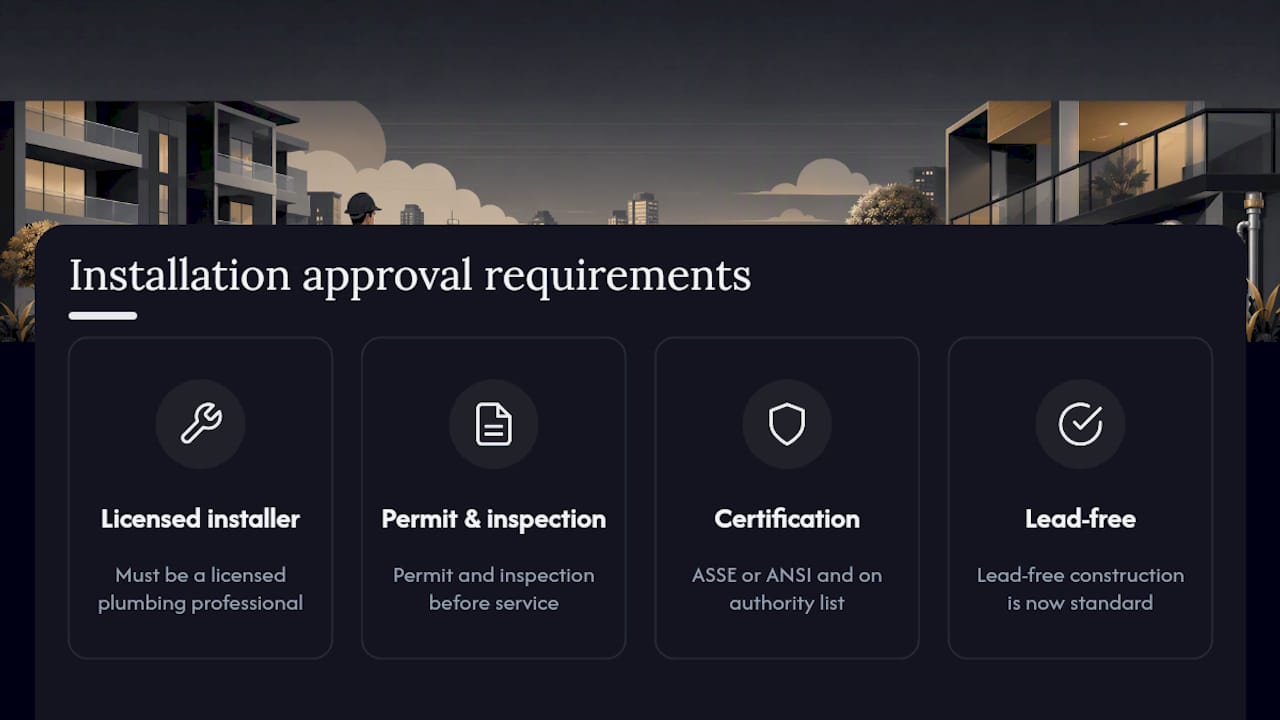
Most jurisdictions require a plumbing permit and inspection before a new backflow assembly goes into service, and your installer needs to be a licensed plumbing professional, not a handyman with the right parts. The California Cross-Connection Control Policy Handbook lays out installation criteria that many state programs mirror.
Some installs go further, triggering a professional engineer (PE) or registered architect (RA) plan for review before the authority signs off. Domestic-service-only connections sometimes qualify for self-certification in certain cities, though NYC’s cross-connection program still requires annual testing regardless of how the install was approved.
Whatever assembly you choose, confirm it carries ASSE or ANSI certification and appears on your water authority’s approved list. Lead-free construction is standard now, and an unapproved assembly can fail inspection even if it works perfectly.
How Often Does Backflow Testing Need to Happen?
Testing isn’t a one-time event. It follows a predictable cadence:
- Initial test immediately after installation, before the device goes into service.
- Retest after any repair, rebuild, or relocation of the assembly.
- Annual test at minimum, thereafter, unless your local authority sets a shorter interval.
TCEQ guidance confirms this annual minimum and notes that public water systems commonly retain test records for at least three years. Only a certified or authorized tester can sign off, and their report should include gauge calibration proof, not just a pass/fail checkbox.
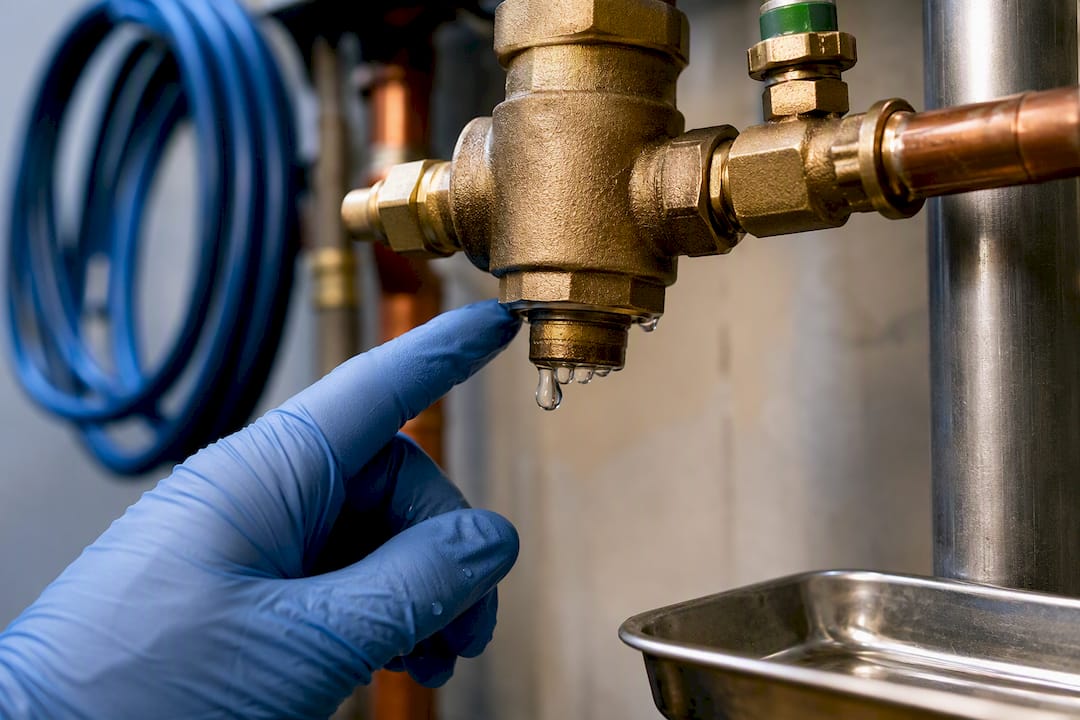
A test that shows pressure loss beyond tolerance, a stuck check valve, or a relief valve that won’t seat properly means immediate repair and retest, plus notifying the authority of the failure.
Maintenance and Repair Timelines After a Failed Test
Most authorities give you a defined window, often around 30 days, to repair a failed assembly and submit a passing retest. Miss it, and you’re looking at fines or a forced disconnection notice.
When a device fails:
- The board (or property manager, if authorized) should approve emergency repair work the same week, not the same month.
- Document the parts replaced, the technician’s certification, and the retest results in one file.
- Notify affected residents ahead of any water shutoff, and build in a backup date in case access gets denied.
Pro Tip: Keep a standing list of residents who need extra notice, like ground-floor units with in-unit mechanical rooms, so a routine shutoff doesn’t turn into three unanswered doors and a missed testing window.
What Does an Annual Compliance Calendar Look Like?
A simple quarter-by-quarter rhythm keeps most boards ahead of deadlines instead of scrambling after a warning letter arrives.
- Q1: Inventory all devices, confirm certification status, and check for expired tags.
- Q2: Schedule certified testing before the busy summer irrigation season strains crews and calendars.
- Q3: File test reports, resolve any failures, and update your association’s records.
- Q4: Review budget for next year, factoring in access difficulty, multiple-device sites, and winterization needs that can extend testing time.
Assign one board member or manager to own scheduling and another to approve payment, so records don’t end up scattered across three inboxes. For associations managing several properties, standardized multi-property compliance tracking keeps calibration proof and filing dates in one place instead of one per building.
How South Jersey Backflow Supports Condo Boards
Certified testing, repairs, rebuilding, and enclosure installation services for multi-unit properties are available, along with direct filing of results to the water authority. Before hiring any contractor, ask for their tester certification ID, gauge calibration date, and proof of submission to your authority. Contact a qualified backflow service provider for a site-specific compliance review.
Why Boards Can’t Treat This as a Checkbox
Backflow testing gets filed under routine maintenance until the day a device fails silently and contaminated water reaches a resident’s tap. That’s the real reason industry commentary on backflow prevention frames it as liability management, not paperwork. A board that documents its testing calendar, contractor credentials, and repair history isn’t just avoiding fines. It’s building the record that protects the association if something ever does go wrong.
— Jordan
Get Your Condo’s Backflow Program Handled
Some companies work with condo boards and property managers on certified annual testing, repairs and rebuilds for failed assemblies, enclosure installation for exposed devices, and direct filing of results with water authorities.
Rather than chasing down a tester’s certification, tracking gauge calibration dates, and hoping the report reaches the right office, some providers manage the whole sequence and file paperwork directly, so your board isn’t the one following up. If you’ve already received a notice from your water authority, that timeline matters even more. Boards in Ocean County, Mercer County, or Middlesex County can find local service details on their respective county pages, and if you’ve received a backflow letter in New Jersey, don’t wait for the deadline to close in. Schedule a backflow testing and certification visit and get your building’s compliance file in order before the next audit.
Where to Verify the Rules for Your Building
Local rules vary, so confirm specifics with your own water authority before finalizing a compliance plan. Start with the EPA’s cross-connection control manual for foundational definitions, state guidance like the TCEQ cross-connection program handbook, and municipal pages such as NYC DEP’s backflow prevention page for city-specific forms. For broader building compliance context, the local law compliance guide for NY and NJ owners is a useful companion reference. Your local water supplier remains the final word on approved-assembly lists and filing procedures for your address.
Sources
- Manual of Cross-Connection Control (EPA-linked copy)
- Establishing and Managing an Effective Cross-Connection Control Program (TCEQ guidance)
- Backflow Prevention Devices – NYC DEP
- Cross-Connection Control Policy Handbook (California State Water Board)