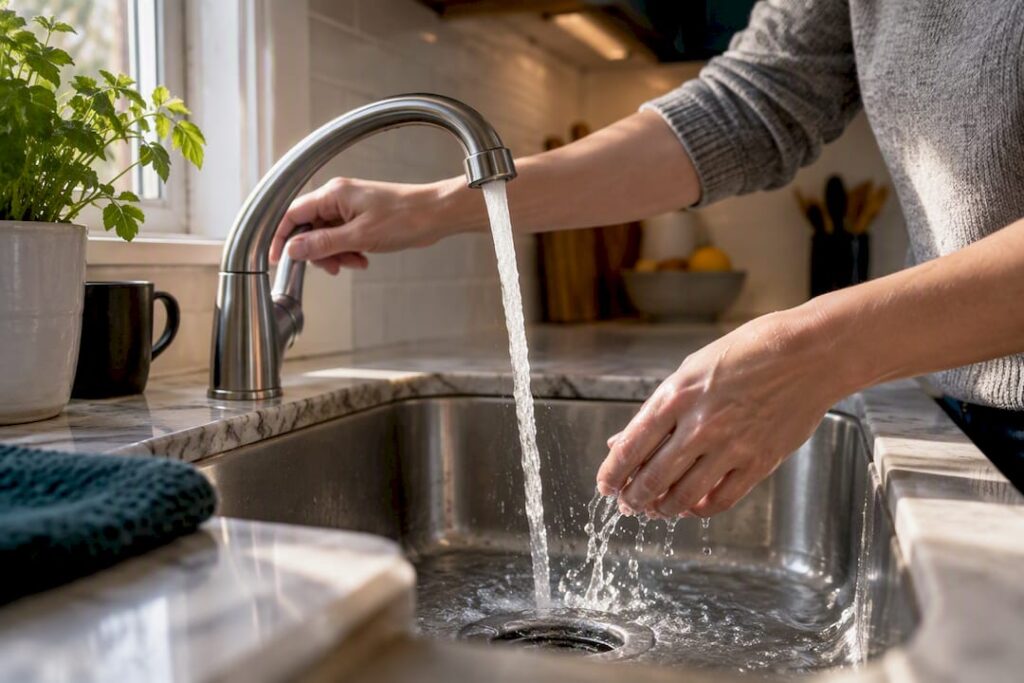
Yes, a water main break can cause backflow: the sudden pressure drop pulls contaminated water and debris backward into household plumbing. Follow any boil-water advisory from your utility, avoid drinking or cooking with tap water until it’s lifted, and flush your pipes properly once cleared. If your backflow preventer shows continuous discharge or won’t hold, call a certified tester.
TL;DR:
- Backflow can occur if pressure drops or rises unexpectedly during a main break, pulling contaminated sediment and microorganisms into household plumbing.
- Signaling issues like sputtering faucets, discolored water, or odd tastes may indicate backflow or backpressure, especially if your backflow preventer shows continuous discharge.
- Flushing the entire plumbing system after the advisory lifts requires running cold water for several minutes at each fixture, starting from the lowest in the house, to clear sediment and air.
- Persistent discoloration or sputtering after flushing suggests trapped debris or air and warrants stopping water use and contacting a professional or utility.
- Regular maintenance, including annual certified testing and installing appropriate backflow prevention devices, is crucial to prevent contamination during future main breaks.
Table of Contents
- How a Water Main Break Causes Backflow and Contamination
- What to Do Right Away During or After a Main Break
- How to Flush Your Plumbing Once the Advisory Lifts
- What Can Go Wrong With Backflow Preventers After a Break
- When to Call a Certified Tester or Plumber
- Reducing Your Risk Before the Next Main Break
- What Field Service Actually Teaches About Main Break Damage
- Post-break service calls typically involve direct scheduling, fast response, statewide coverage, and stocked OEM parts allowing for rebuilds often on the first visit instead of a second appointment.

- Where to Verify Advisory Status and Get Official Guidance
- Sources
- FAQ
How a Water Main Break Causes Backflow and Contamination
A main break drains pressure out of the distribution system fast. When pressure inside your pipes drops below the pressure outside them, water can reverse direction and get pulled backward into your plumbing, a phenomenon called backsiphonage. Backpressure works the other way. If something on your property, a boiler or an irrigation pump, generates more pressure than the depressurized main, it can push contaminated water into the public supply instead of just your own lines.
Either mechanism can drag in sediment, soil, bacteria, or whatever sits in the ground around a broken pipe. That’s the part people miss: water contaminated this way often looks completely normal.
Watch for these signs after any reported break in your area:
- Sputtering or spitting air from faucets when you first turn them on
- Noticeably low water pressure across multiple fixtures
- Brown, yellow, or cloudy water
- An odd smell or metallic, earthy taste
- Air bubbles in a normally steady stream
A continuous risk factor cited by the EPA is that backflow preventers represent the last line of defense against these events, meaning any weakness in the device becomes the only thing standing between your household and contaminated water.
What to Do Right Away During or After a Main Break
Treat the first hour after a break like a triage situation, not a wait-and-see one.
- Check for a boil-water advisory. If your utility has issued one, stop using tap water for drinking, cooking, brushing teeth, or making ice. Switch to bottled water or boil tap water for at least one minute before use.
- Isolate cross-connections. Disconnect garden hoses, shut off irrigation systems, and stop any equipment tied directly into your water line, including ice makers and beverage dispensers.
- Shut down nonessential water use. Skip laundry, dishwashing, and long showers until you know the water is safe.
- Watch your backflow preventer. If you see continuous discharge from a relief valve or hear unusual sounds from the device, note it, but don’t touch it.
- Call the utility if something seems off. A drop in pressure that doesn’t match reported repairs, or discoloration that persists well after the advisory lifts, is worth reporting.
- Request an inspection if you suspect device damage. Don’t wait for your annual test date if you have reason to think the event stressed your preventer.
Pro Tip: Keep a case of bottled water and a battery flashlight in a spot you can grab in the dark; main breaks tend to happen at odd hours and knock out pressure before anyone’s had coffee.
How to Flush Your Plumbing Once the Advisory Lifts
Don’t flush anything until your water utility officially confirms the advisory is over. Lab sampling takes time because clearance is a microbiological test, not a guess about repair progress.
Once you get the all-clear, work through your home in this order:
- Open the lowest cold-water tap in the house and let it run for about 5 minutes.
- Move to every other cold tap, running each for 2 to 5 minutes.
- Run washing machines and dishwashers empty on a hot cycle before using them normally.
- Flush the hot water system last, only after cold water runs clear.
- Open valves slowly rather than all at once. A sudden pressure surge (water hammer) can damage a backflow assembly already stressed by the event.
A few things to keep in mind while you work through the list:
- Discoloration that persists past a normal flush isn’t something to push through.
- Sputtering that continues after several minutes suggests trapped air deeper in the line.
- If either happens, stop using the water for consumption and call the utility or a professional instead of continuing to run taps hoping it clears.
What Can Go Wrong With Backflow Preventers After a Break
A backflow preventer stops water from reversing direction. It does not purify anything, and that distinction trips up a lot of homeowners who assume the device is some kind of filter. Sediment and debris kicked loose by a break can lodge in the checks or relief seats inside the assembly, often causing secondary contamination risks in HVAC systems and other building components, and that’s usually what causes trouble afterward rather than the device failing outright (HVAC contamination risk: a building manager’s guide).
Signs your preventer needs attention:
- Continuous discharge from an RPZ (reduced pressure zone) assembly’s relief valve
- Visible leaks at the test cocks or housing
- The device failing to hold pressure during a basic check
- Unusual noise or vibration when water runs through it
Debris dislodged during a main break commonly fouls internal components like aerators and filter screens too, not just the backflow device itself, so replacing point-of-use filters after a significant break is standard advice, not overkill.
Pro Tip: Never open or disassemble a backflow preventer yourself. A rebuild kit fixes most post-event fouling issues cheaply, but a certified tester needs to diagnose which parts actually need replacing.
When to Call a Certified Tester or Plumber
Certain symptoms mean it’s time to stop troubleshooting and call someone.
- Continuous device discharge that doesn’t stop after a full flush cycle
- Contamination symptoms (smell, color, taste) that persist after the utility lifts its advisory
- Explicit instructions from the utility or health department to have your device inspected
- Any sign the preventer failed to hold during normal operation
A typical service visit starts with cleaning the inlet strainer, since that’s where most debris collects first. From there, a certified tester runs a differential pressure test to confirm the checks are seating properly. If the assembly failed that test, expect a rebuild kit replacement rather than a full unit swap in most cases, and the tester will file the resulting certification with your water authority if your property requires it. A qualified tester can often isolate a failing device and put in a temporary safe bypass on the same visit if parts need ordering, so you’re not stuck without water while waiting on a fix. For homeowners comparing device types, this breakdown of backflow preventer options covers what each style does.
Reducing Your Risk Before the Next Main Break
Prevention here isn’t complicated, it’s mostly about not skipping the boring maintenance.
- Schedule annual certified testing rather than waiting for a compliance letter to force the issue.
- Replace worn internal parts on the tester’s recommended schedule instead of running a device until it fails.
- Install hose-bib vacuum breakers on outdoor spigots and confirm irrigation systems have their own certified backflow protection, since sprinkler lines are common backpressure sources.
- Use air gaps wherever a fixture connects to a non-potable source.
- Consider a backwater valve if your property has fixtures below the elevation of the nearest upstream manhole cover; placement matters enormously here, since a valve installed wrong can trap the whole building during a sewer surcharge instead of protecting it.
| Action | Why It Matters | How Often |
|---|---|---|
| Certified backflow test | Confirms device holds under pressure loss | Annually |
| Replace rebuild kit parts | Prevents fouling-related failures | As recommended by tester |
| Hose-bib vacuum breakers | Blocks backpressure from garden hoses | Install once, inspect yearly |
| Irrigation backflow protection | Stops pump-driven backpressure | Check each season |
| Backwater valve (if applicable) | Prevents sewer surcharge flooding | Inspect per local code |
Coordinate any backwater valve installation with your local authority having jurisdiction, since code triggers around fixture elevation and placement vary by municipality.
What Field Service Actually Teaches About Main Break Damage
Every failing backflow preventer I’ve heard about after a main break traces back to the same culprit: debris that got stirred up and never got flushed out properly. Homeowners who flush thoroughly and call for testing within days almost never see the device fail again on the same debris. Wait weeks, and sediment settles somewhere harder to reach.
That’s the real argument for certified testing shortly after an event, not just compliance paperwork.
— Jordan
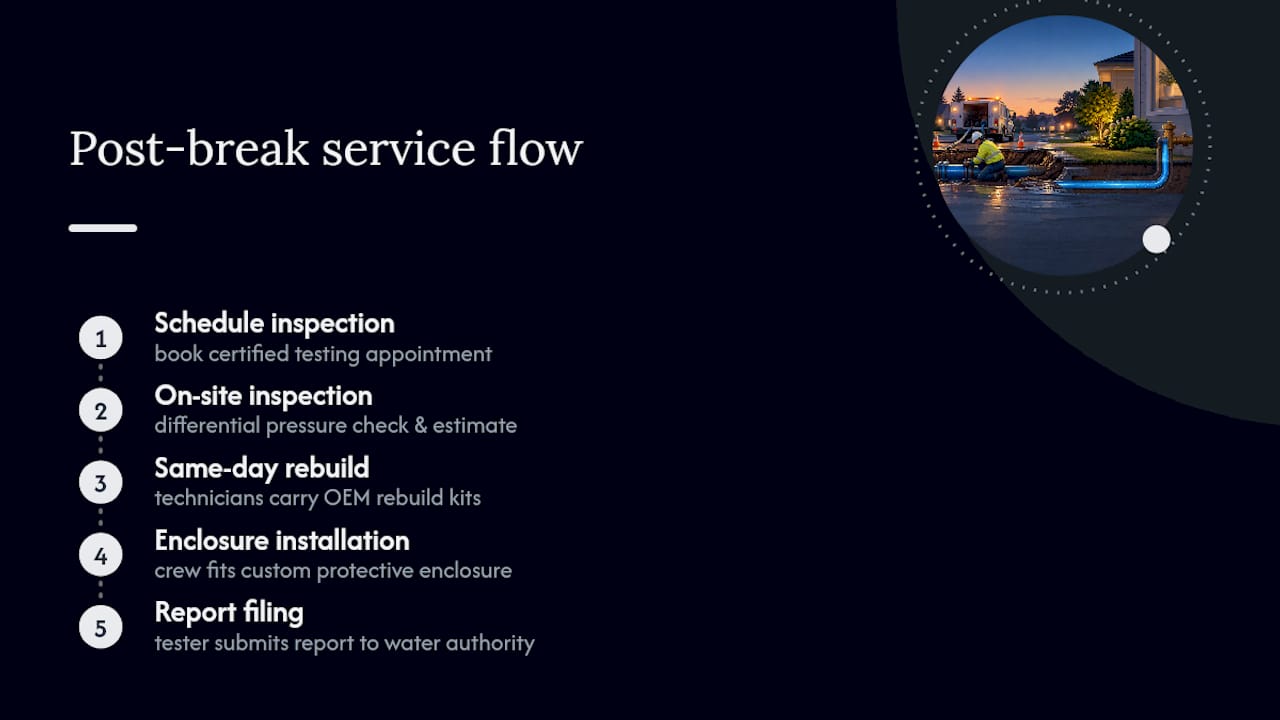
Post-break service calls typically involve direct scheduling, fast response, statewide coverage, and stocked OEM parts allowing for rebuilds often on the first visit instead of a second appointment.
A typical call starts with scheduling an inspection, where a certified tester runs a differential pressure check on your device and gives you an estimate on the spot. If your assembly just needs a rebuild kit rather than full replacement, Southjerseybackflow’s technicians usually carry the parts to finish that same day. For properties that need a new enclosure to protect the device from future weather or debris exposure, custom enclosure installation is handled by the same crew.
Certified testers often file test reports directly with your water authority, so you’re not stuck chasing paperwork on top of dealing with a main break. If you got a compliance letter after an inspection flagged an issue, this guide walks through what happens next. Ready to get your device checked? Schedule certified testing and certification with Southjerseybackflow today.
Where to Verify Advisory Status and Get Official Guidance
Check your water utility’s website or hotline first for advisory status; they confirm both when a notice starts and when lab sampling clears it. The EPA’s backflow prevention overview explains device standards, and the TCEQ’s incident response guide outlines how utilities isolate, flush, and verify water safety after a break.
This article is general information, not a substitute for advice from a qualified doctor. Consult a qualified healthcare professional about your own circumstances before acting on anything here.
Sources
- What is a boil-water advisory — American Water
- What to do after a boil-water notice is lifted — Pinellas County
- Backflow prevention overview — EPA
FAQ
How Long Should I Run My Water After a Water Main Break?
Once your utility lifts any boil-water advisory, run each cold tap for 2 to 5 minutes, starting with the lowest tap in the house for about 5 minutes. Run hot water last, only after cold water runs clear.
How Do I Flush Pipes After a Water Main Break?
Start at your lowest cold-water tap and run it for roughly 5 minutes, then move through every other cold tap in the house for 2 to 5 minutes each. Finish by running dishwashers and washing machines empty on a hot cycle, then flush your hot water system.
How Long Does Water Stay Brown After a Water Main Break?
Discoloration usually clears within a normal flush cycle once the advisory lifts, but there’s no fixed timeline since it depends on how much sediment the break stirred up. If brown or cloudy water persists after a full flush, stop using it and contact your utility or Southjerseybackflow for an inspection.
Are You Supposed to Boil Water After a Water Main Break?
Only if your utility has issued a boil-water advisory for your area. If so, boil tap water for at least one minute before drinking, cooking, or brushing teeth, or use bottled water until the utility confirms the advisory is lifted.