
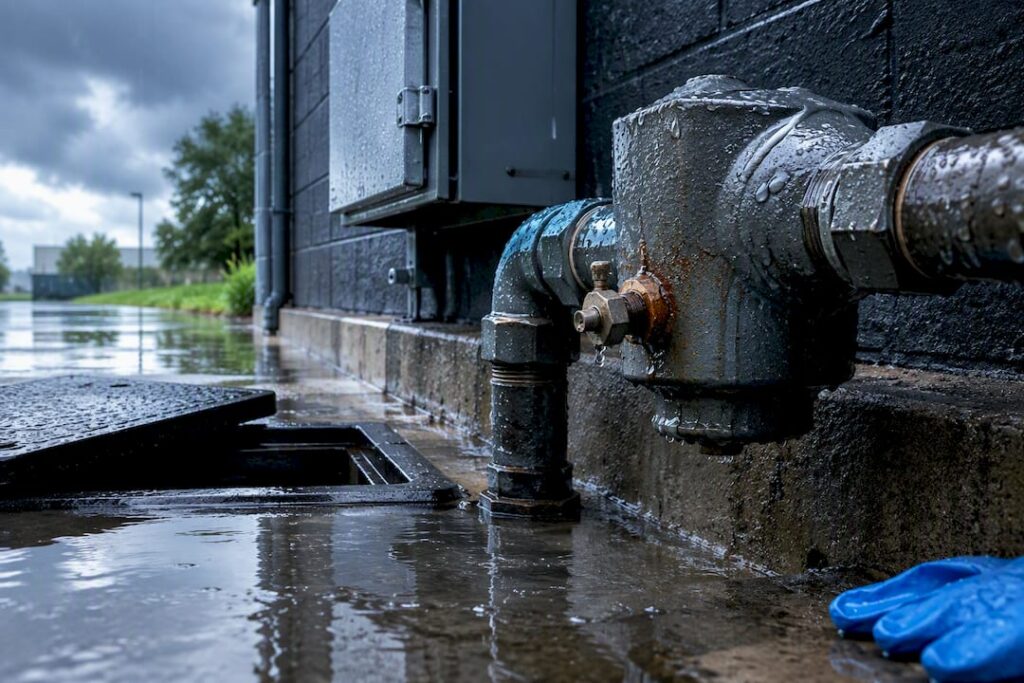
Yes, storms damage backflow prevention devices, and yes, it happens more often than most property owners realize. If your assembly was submerged, cracked, or your property saw sewage back up during heavy rain, stop using downstream water for drinking and cooking and get a certified tester out before anyone touches the system again. A quick flush sometimes clears a debris jam, but only a certified retest actually clears the device for safe use.
TL;DR:
- Storm-related debris and pressure fluctuations often cause backflow device failures, with debris settling on check valves being the most common issue.
- Visible damage, fluctuating pressure, or continued relief valve weeping after a storm indicate the need for professional inspection and possibly rebuilding.
- Immediate steps include shutting off the water, avoiding use of downstream water, photographing the device, and scheduling a certified tester promptly.
- Most failures can be repaired through flushing to clear debris, avoiding costly parts replacement unless there is obvious cracking or corrosion.
- Preventing storm damage is cheaper and more effective through site upgrades like backwater valves, elevating assemblies, and proper gutter and drainage maintenance.
Table of Contents
- How Storms Cause Backflow and Sewage Backups
- Warning Signs Your Backflow Assembly Took Storm Damage
- What to Do in the First Hours and Days After a Storm
- Why Technicians Flush Before They Replace Anything
- Preventing the Next Storm From Doing It Again
- Who Pays and How Long Repairs Take
- What South Jersey Backflow Checks During a Storm Response
- Storm Prep Beats Storm Recovery Every Time
- Get Your Backflow Device Checked Before the Next Storm
- Sources
- FAQ
How Storms Cause Backflow and Sewage Backups
Backflow comes in two flavors, and storms trigger both. Sewer backflow happens when wastewater reverses direction and pushes back into a building through drains. Potable backflow happens when contaminated water gets pulled or pushed into the clean water supply, which is exactly what your backflow preventer exists to stop.
Heavy rain overwhelms municipal sewer systems faster than most residents expect. When storm runoff and groundwater sneak into sewer pipes through cracks and loose joints, a problem called inflow and infiltration, treatment plants and pipes hit capacity and wastewater has nowhere to go but backward into lateral lines. On the water supply side, storms cause pressure drops when water mains break or firefighters draw heavily from hydrants, and that pressure loss can trigger backsiphonage, essentially sucking contaminated water backward through any unprotected connection.
Physical stress compounds the hydraulic problem:
- Submersion floods internal components with silt, sewage, and debris
- Salt water accelerates corrosion on metal housings and check valves
- Saturated soil shifts and settles, straining pipe joints and vault structures
- Freeze-thaw cycles following a storm crack components already weakened by flooding
Warning Signs Your Backflow Assembly Took Storm Damage
Some damage announces itself. A cracked device body, a missing test cock cap, or visible rust bleeding from the housing all mean the assembly needs professional attention before it goes back into service. Water dripping or spraying continuously from the relief port on a reduced pressure zone assembly is another obvious red flag.
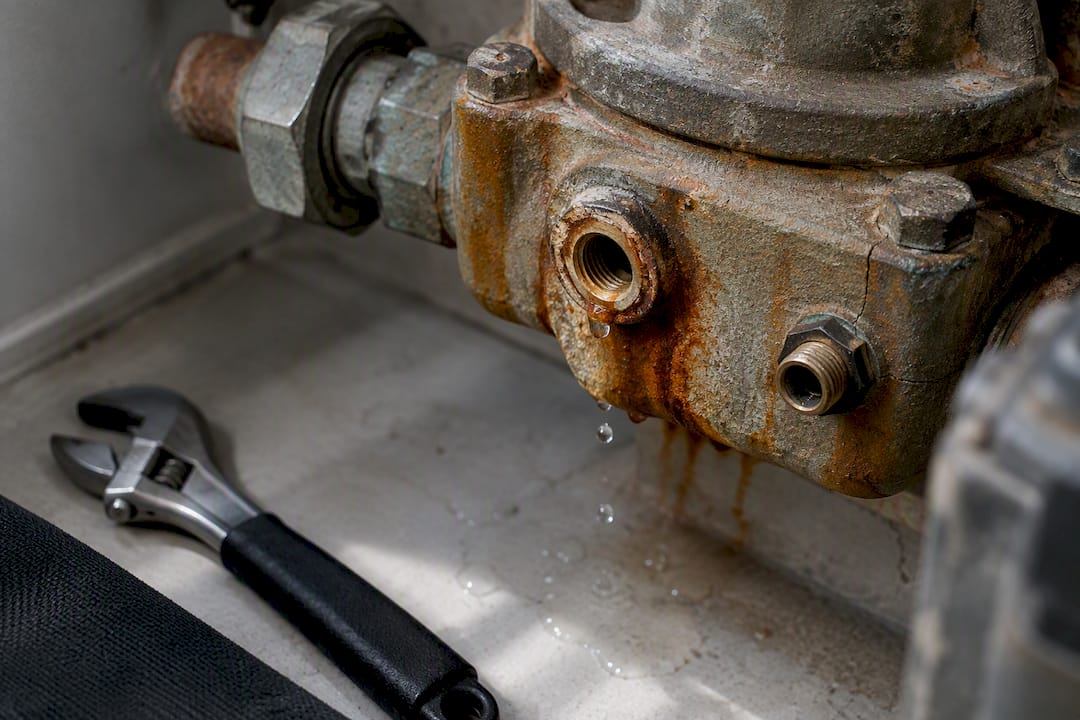
Other failures hide inside the mechanism. Watch for fluctuating pressure downstream of the device, a relief valve that keeps weeping even after the storm passes, or failed differential readings when a tester puts gauges on the assembly. Context matters too: if a water main broke nearby, crews flushed hydrants on your street, or neighbors reported sewage backups, your device faced the same pressure swings and debris load even if it looks fine from the outside.
Pro Tip: Debris kicked loose by a nearby main break or hydrant flush is the single most common reason a backflow assembly fails its post-storm test, and it is often fixable without replacing a single part.
What to Do in the First Hours and Days After a Storm
- Shut off the main or isolate the backflow assembly if you suspect submersion or damage.
- Stop using downstream water for drinking, cooking, or ice until a certified tester clears it. A submerged device should be treated as contaminated until it has been inspected, disinfected, and tested.
- Do not attempt to re-pressurize or operate a device with a visibly cracked body.
- Photograph the assembly, the surrounding area, and any flood lines for insurance and compliance records.
- Schedule an emergency inspection with a certified backflow tester as soon as possible.
- If the line is accessible, let the technician handle any flushing. Doing it yourself can push debris deeper into the check valves.
Pro Tip: Save your last test certificate and the device’s serial number before the storm season starts. Technicians move faster on emergency calls when they already know what they’re working with.
Why Technicians Flush Before They Replace Anything
Most failed post-storm tests trace back to debris, not broken parts. Grit and sediment kicked up by main breaks or hydrant flushing settle on check valve seats and keep them from sealing, which reads on a test gauge exactly like a worn or failed part. A field-tested repair sequence treats flushing as step one precisely because it resolves so many cases without opening the device at all.
The standard sequence looks like this:
- Isolate the assembly by closing the shutoff valves on both sides
- Relieve internal pressure before opening any test cocks
- Flush the line and assembly to clear settled debris
- Read the gauges again and compare differential pressure against the passing threshold
- Interpret the pattern: a steady relief weep usually points to a worn rubber seal, while a check valve that won’t hold points to debris or a cracked seat
| Failure Pattern | Likely Cause | Typical Fix |
|---|---|---|
| Continuous relief discharge | Worn relief valve diaphragm or fouled seat | Rebuild kit |
| Check valve won’t hold pressure | Debris on seat after flushing didn’t clear | Rebuild kit or seat replacement |
| Cracked or corroded body | Impact, submersion, or freeze damage | Full assembly replacement |
| Repeated failures at same site | Poor location, chronic submersion | Relocation, riser, or enclosure |
Preventing the Next Storm From Doing It Again
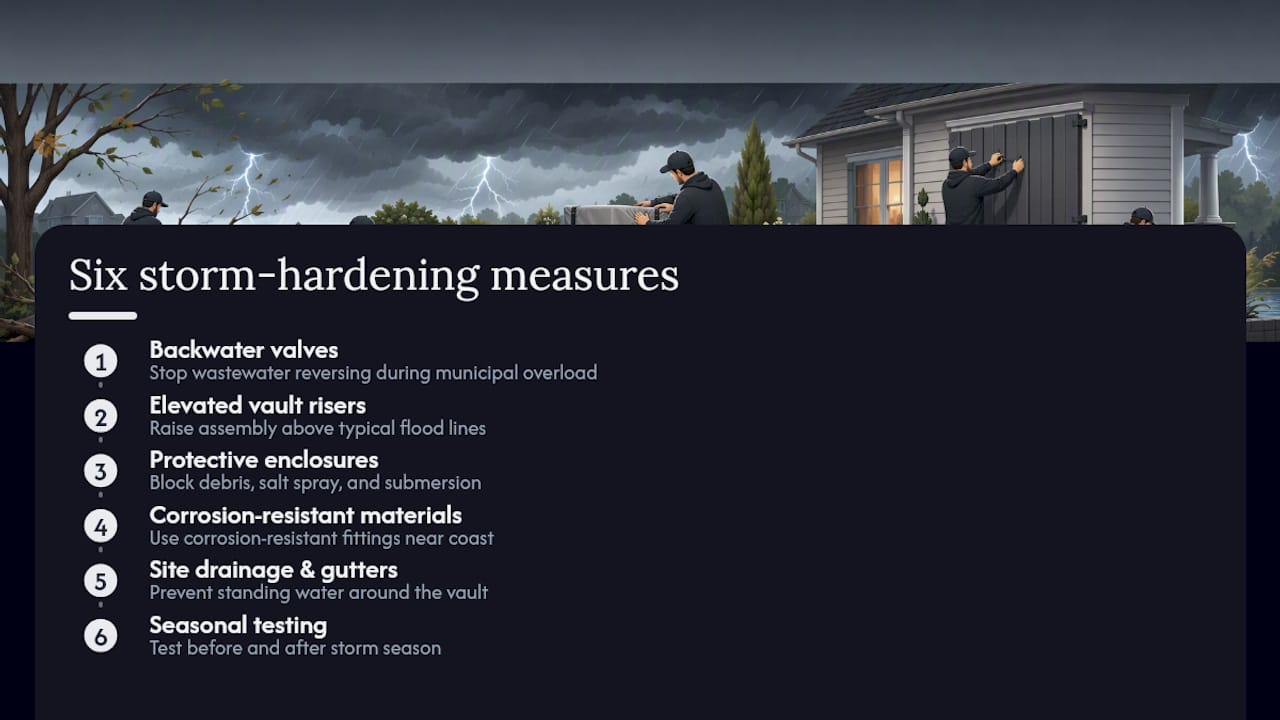
Hardening your system before hurricane season beats rebuilding after it every time. A few upgrades consistently cut down on storm-related failures, and none of them require a full system overhaul.
Backwater valves installed on sewer laterals stop wastewater from reversing into a building during a municipal overload, and they make sense for any property on a low-lying lot or with a history of backup complaints. On the potable side, elevation and vault risers keep the assembly above typical flood lines, while a protective enclosure blocks debris, salt spray, and direct submersion. Corrosion-resistant materials matter more near the coast, where salt air eats through standard fittings years faster than inland installations.
Site drainage and gutter maintenance sound unglamorous, but standing water around a vault is what turns a heavy rain into a submersion event. Pair that with seasonal testing scheduled before and after storm season, and most storm damage becomes a minor inconvenience instead of an emergency replacement.
Pro Tip: If your device has failed its test more than once at the same location, the fix might not be another rebuild. Repeated failures at a poorly placed assembly usually mean the location itself needs to change.
Who Pays and How Long Repairs Take
Repair costs and retest filing responsibility fall on the property owner, not the water authority. Once a device fails or gets flagged for storm damage, the owner is generally responsible for arranging repairs and submitting a passing retest to the local water authority within the deadline set by that jurisdiction, usually within a reasonable timeframe that most utilities expect operators to meet.
A typical timeline runs like this:
- Emergency triage and inspection: same day to 48 hours after the storm
- Repair or rebuild: same visit if parts are on hand, or 1 to 3 days if a part needs sourcing
- Retest and report filing: immediately after repair, often same-day
What drives the final bill varies. A simple rebuild kit costs far less than a full body replacement, and vault access, corroded fittings, or emergency after-hours service all push the price up. Filing the retest report promptly keeps you compliant and avoids follow-up notices from the water authority.
What South Jersey Backflow Checks During a Storm Response
When crews respond to a post-storm call, the triage follows a consistent pattern. Before touching the assembly, a technician documents its condition: photos of the housing, the last test date on record, any sign of submersion or cracking, and whether the relief valve is weeping.
That checklist determines the next move:
- Visible cracks or corrosion typically mean the assembly needs replacement, not a rebuild
- A weeping relief valve with an otherwise intact body often just needs a rebuild kit
- A device with no visible damage still gets a full test and retest report before anyone calls it safe
- Enclosure or riser damage gets flagged separately, since a compromised enclosure invites the same submersion risk next storm
The company handles testing and certification, rebuild kits, enclosure installation, and emergency response across the properties it serves, filing the resulting retest reports directly with the water authority once the device passes.
Storm Prep Beats Storm Recovery Every Time
Prevention costs less than emergency repair, full stop. Anyone who has watched a property owner scramble for same-day service after a hurricane knows the pattern: the properties that tested and hardened their assemblies before the season sail through with a quick inspection, while the ones that skipped it face replacement costs and compliance deadlines at the same time. That gap is entirely avoidable, and it’s the single biggest lesson storm season keeps teaching.
— Jordan
Get Your Backflow Device Checked Before the Next Storm
A specialized backflow testing and certification service gets you back to a passing, filed test faster than the typical wait for a general plumber. Such providers often stock OEM parts for same-visit rebuilds, offer same-day emergency response, and file your retest report directly with the water authority so you’re not chasing paperwork on top of storm cleanup.

If your device was submerged, cracked, or flagged after a recent storm, have a few things ready before you call: photos of the damage, your last test date, and the device model if you can find it on the housing. That alone speeds up triage. For testing and certification, a custom enclosure to prevent the next submersion event, or general questions about pricing and timelines, reach out and get on the schedule before the next system moves through.
Sources
For readers who want to go deeper on the mechanics and safety guidance behind this article:
- Understanding Wet-Weather Sewer Backups
- Post-hurricane water safety: why immediate inspections are critical
- Backflow failed-test repair checklist
FAQ
What Is the Most Common Cause of Backflow?
Pressure loss from water main breaks or heavy hydrant use during storms is a leading trigger, since it can pull contaminated water backward through unprotected connections. Debris left over from those same events, like grit settling on check valve seats, is the most common reason an assembly fails its test afterward.
Who Is Responsible for Backflow Repair?
The property owner is responsible for arranging repairs and submitting a passing retest report to the local water authority. South Jersey Backflow handles both the repair work and the report filing so owners aren’t managing separate paperwork after the fix.
Why Does My Sewer Line Back Up After Rain?
Heavy rain overwhelms municipal sewer capacity or infiltrates aging pipes through cracked joints, and once the system hits its limit, wastewater has nowhere to go but back into your lateral line. A backwater valve on that lateral is the standard fix for properties that experience this repeatedly.
How Much Should It Cost to Replace a Backflow Preventer?
Residential installation typically runs $300 to $800, while a rebuild kit for a repairable device runs $125 to $250. The final number depends on whether the body needs full replacement or just internal parts, plus any vault access work involved.
Do I Need to Flush My Backflow Device After Every Storm?
Not automatically, but any storm involving a nearby main break, hydrant flushing, or visible submersion warrants a professional check. A certified tester will flush and test the assembly as the first diagnostic step rather than assuming parts need replacement.