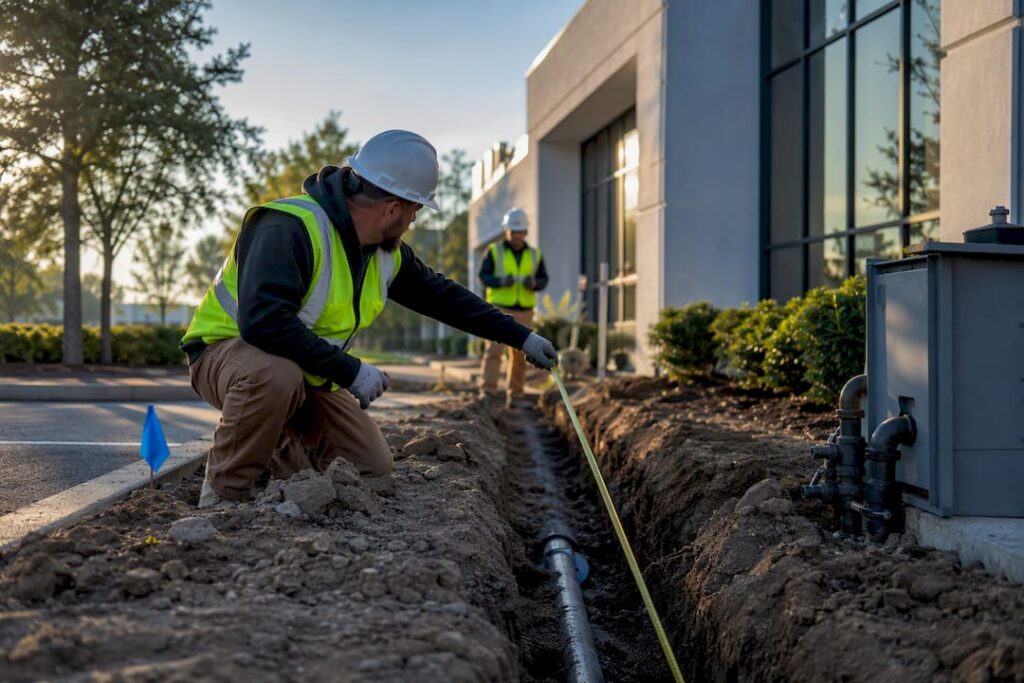
Expect typical residential backflow relocation costs in the range of several hundred to a few thousand dollars, and commercial RPZ assemblies that require excavation, permits, and freeze protection to cost significantly more. Access is the number one driver of backflow relocation cost. A device sitting behind an accessible wall costs a fraction of one buried under a driveway. The scenario table below breaks down exactly where that money goes.
TL;DR:
- Access is the primary factor driving backflow relocation costs, with buried or vault-mounted devices costing significantly more than wall-mounted systems.
- Device type, pipe size, and access difficulty influence costs, with commercial RPZ assemblies being the most expensive to relocate.
- Permitting, plan review, and certified testing are unavoidable expenses that vary by municipality and often add hundreds of dollars to the total.
- Secondary costs such as electrical work, concrete pads, and landscape restoration often cause budget overruns if not planned for upfront.
- Getting early permits and precise site information can significantly reduce delays and unexpected expenses during the relocation process.
Table of Contents
- Backflow Relocation Cost Breakdown by Line Item
- How Device Type, Pipe Size, and Access Change the Price
- Permits, Inspections, and Timeline Expectations
- Real Budget Examples for Three Common Relocation Jobs
- Budgeting for Hidden and Secondary Costs
- Getting Accurate Quotes and Vetting Contractors
- Why These Cost Ranges Hold Up
- What Crews Find on Relocation Jobs That Owners Don’t Expect
- Get a Backflow Relocation Quote From a New Jersey Specialist
- Sources
Backflow Relocation Cost Breakdown by Line Item
The invoice for moving a backflow preventer is never just “labor.” It’s a stack of separate charges, and understanding each one is how you catch a padded quote before you sign it.
Here’s what typically shows up on a relocation bill:
- Device unit cost: The assembly itself, ranging roughly $60 to $1,000 depending on size and type, per Current Cost’s breakdown.
- Labor and installation: Commonly $180 to $1,200, driven by access difficulty and how much pipe has to be cut and re-fitted.
- Permits and plan review: Municipal fees that vary by city, usually required whenever a device is relocated rather than simply repaired in place.
- Certified testing and filing: A post-relocation test is standard practice, and most water authorities won’t sign off without it.
- Enclosure or vault: Insulated boxes for outdoor units, or vault construction for larger commercial assemblies.
- Excavation and restoration: Digging, trenching, backfill, and putting the landscape or pavement back the way it was.
Nationally, calculator baselines put the typical installed cost for a single unit around $1,400, once you fold in access, freeze protection, and permit surcharges, according to HomeCostCalc’s backflow preventer estimator. That number tracks closely with what Current Cost’s homeowner guide reports for straightforward replacement work, and it’s a reasonable anchor before you adjust for your specific property.
Three packaged scenarios show how those line items stack up in practice:
| Scenario | Device & Labor | Permits & Testing | Enclosure/Excavation | Typical Total |
|---|---|---|---|---|
| Simple residential (accessible, no digging) | Several hundred to over a thousand dollars | Varies by municipality | Sometimes minimal or none | Generally under two thousand dollars |
| Moderate residential (buried, some excavation) | Hundreds to low thousands | Varies by municipality | Several hundred to over a thousand dollars | Approximately one to three thousand dollars, depending on specifics |
| Commercial RPZ (2" or larger, vault/enclosure) | Around one to several thousand dollars | Variable higher fees | Significant costs often in the thousands | Typically multiple thousands, depending on project complexity |
What pushes a project from one tier to the next is rarely the device itself. It’s whether a crew has to break concrete, reroute buried supply lines, or build a heated enclosure to satisfy a local freeze-protection rule. A relocation that sounds simple over the phone can turn into a moderate-tier job the moment someone finds out the new location is six feet underground.
How Device Type, Pipe Size, and Access Change the Price
Not every backflow preventer costs the same to move, and the differences aren’t small. Three variables do most of the work: what kind of device it is, how big the pipe is, and how hard it is to reach.
RPZ, DCVA, and PVB are the three assembly types you’ll run into most often. A reduced pressure zone (RPZ) assembly offers the highest level of protection and is usually required for commercial and irrigation systems with health hazard potential, but it’s also the priciest to relocate because it needs a drain path for relief valve discharge. A double check valve assembly (DCVA) costs less to install and doesn’t require that drainage, which is why it’s common in residential fire suppression lines. A pressure vacuum breaker (PVB) sits at the low end for both parts and labor, typically used for irrigation systems with lower hazard ratings.
Pipe size scales the whole job. A 1-inch residential line is manageable for two people in a few hours. Jump to 2 inches or larger, common in commercial and multi-unit buildings, and you’re often looking at heavier fittings, more welding or soldering time, and sometimes a second technician just to handle the assembly safely.
Access is where budgets really diverge:
- Indoor, wall-mounted: Fastest and cheapest. No excavation, no weather delays.
- Buried in yard or under pavement: Requires excavation equipment, utility locating, and restoration afterward.
- Vault-mounted (commercial): Often needs confined-space precautions and sometimes a crane or lift for larger assemblies.
Freeze protection adds its own layer. Moving a device outdoors in a climate with hard winters usually means an insulated or heated enclosure, which brings electrical work into the project. That’s not a plumbing line item anymore. It’s an electrician’s invoice stapled to a plumber’s invoice, and property owners frequently forget to budget for it until the estimate arrives.
Pro Tip: Ask your contractor whether the new location requires a heated enclosure before you finalize the site. Adding electrical service after excavation is already done costs far more than planning for it up front.
Permits, Inspections, and Timeline Expectations
Relocating a backflow preventer almost always triggers a fresh round of paperwork, because you’re not just repairing a device, you’re changing where it lives on the property. Municipal water utilities are typically the agency issuing plan review approval, permits, and post-installation inspection for relocated assemblies, as Charlotte Water’s construction guidance lays out for its jurisdiction. Local code libraries go further: some municipalities specify that a device can only be relocated with written confirmation the new placement still meets protection requirements, and a retest is mandatory afterward.
Budget for these administrative costs separately from the physical work:
- Permit and plan review fees: Vary widely by municipality, often $50 to $300 for residential, more for commercial plan review.
- Certified test and filing: A licensed tester has to verify the relocated device works and file the report with the water authority.
- Retesting triggers: Any change in device location, orientation, or piping usually forces a new test, even if the device itself is only weeks old.
Timelines split into two rough categories. A quick project, indoor relocation with no excavation and a responsive permit office, can wrap in one to two weeks. A complex project, commercial RPZ requiring excavation, utility locating, plan review, and inspection scheduling, can stretch three to eight weeks or longer, especially if the local water department has a backlog. Getting your permit application in early is the single best lever you have over that timeline.
Real Budget Examples for Three Common Relocation Jobs
Numbers are more useful when they’re attached to an actual project. Here are three worked examples that mirror what shows up on real invoices.
-
Residential, accessible relocation. A homeowner moves a 3/4 inch DCVA from a crawlspace to an exterior wall. Device and labor total moderate costs, with permits and testing adding fees. No excavation is needed, and basic weatherproof covering may be required. A contingency allowance is sensible for budgeting. Confirm with your contractor: wall accessibility, whether the existing shutoff valves are reusable.
-
Residential, buried relocation with trenching. Moving a 1 inch PVB from an inaccessible side yard to the front of the house involves trenching. Device, labor, permits, testing, excavation, and restoration contribute to total costs likely in the low thousands, with contingency factored in. Confirm: utility markings before digging, and whether the new location meets local freeze-depth code.
-
Commercial, 2 inch RPZ relocation. A multi-unit property relocates an RPZ from a tight mechanical room to a new vault near the property line. Device, labor, permits, plan review, testing, vault construction, and drainage costs combined may total several thousand dollars, with contingency added for budget safety. Confirm: site photos submitted with the permit application, exact device sizing, and drainage capacity for relief valve discharge.
Across all three, the negotiable items tend to be restoration cosmetics (sod, pavers, paint) and enclosure upgrades. The non-negotiable items are permit fees, certified testing, and code-required drainage. Don’t try to bargain those down.
Budgeting for Hidden and Secondary Costs
The device and the labor to move it are rarely where budgets go wrong. It’s everything attached to those two things that catches property owners off guard.
Secondary costs worth planning for upfront:
- Electrical work for heated enclosures or freeze-protection systems, since that’s a separate trade from plumbing.
- Concrete pads for code-compliant foundations under vaults or outdoor enclosures.
- Landscape or pavement restoration after trenching, particularly on properties with mature landscaping or decorative hardscaping.
- Temporary bypass piping to keep water service running during multi-day commercial relocations.
Relocation projects frequently trigger these secondary trades without warning, and budgeting only for the plumbing labor and device is one of the most common causes of cost overruns on this kind of job.
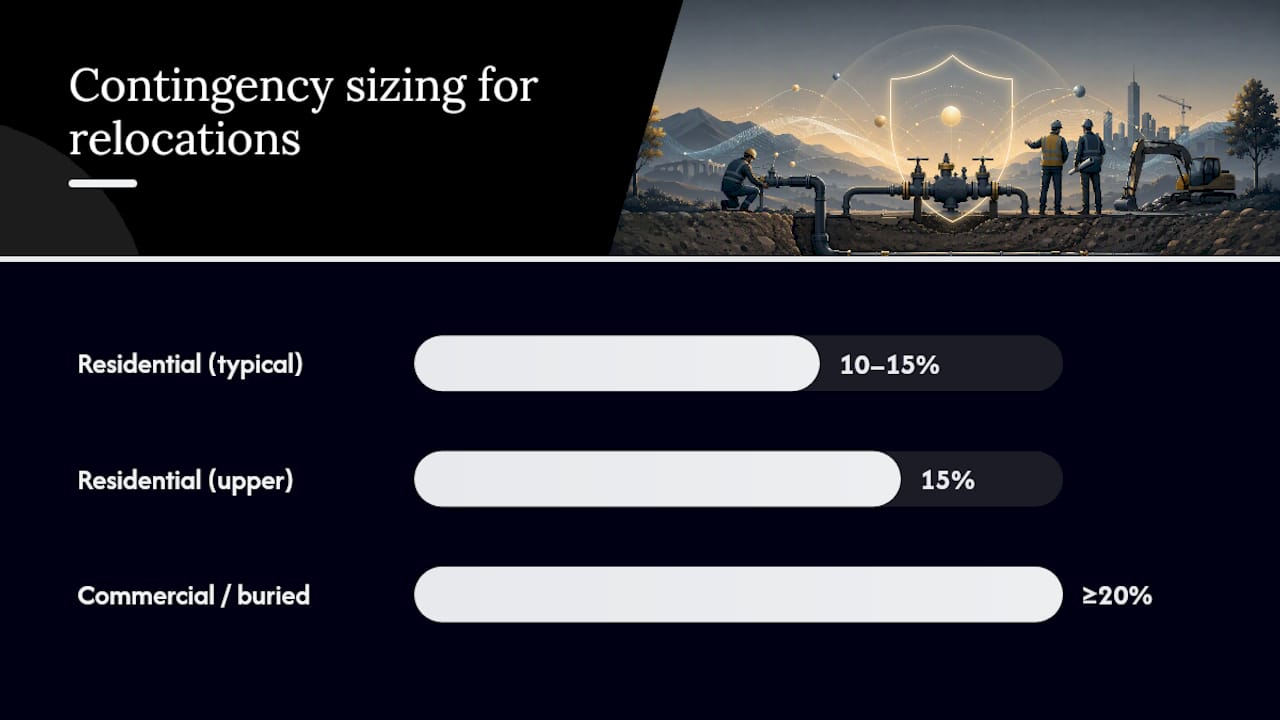
As a general rule, size your contingency at 10 to 15% for simple residential moves and 20% or more for commercial or buried relocations, where the odds of hitting an unmarked utility line or code surprise go up. Pro Tip: Ask your contractor to itemize electrical, concrete, and restoration work as separate line items in the bid, not folded into a single “installation” number. That’s how you spot change orders before they happen instead of after.
Getting Accurate Quotes and Vetting Contractors
A good bid answers questions before you have to ask them. A vague one is a red flag by itself.
Before requesting quotes, gather:
- Site photos of the current device location and the proposed new location.
- The device’s current size and type, if known (check the tag on the assembly).
- Notes on any known utility lines, buried irrigation, or underground obstacles near the new site.
- A copy of any letter or notice from your water utility, if the relocation was prompted by one.
When comparing bids, look for these details spelled out in writing:
- Recommended device type and size, not just “a backflow preventer.”
- Whether permit filing and plan review are included in the quoted price or billed separately.
- Restoration scope, meaning what the property looks like when the crew leaves.
- Whether a certified backflow tester is on staff or subcontracted, and who files the test report with the water authority.
- Flat pricing versus hourly, and what happens if the job runs long due to something the contractor didn’t disclose upfront.
A contractor who hesitates to separate permit costs from labor costs, or who can’t tell you who handles the post-installation test filing, is worth a second look before you sign anything.
Why These Cost Ranges Hold Up
These figures aren’t pulled from a national average and left unadjusted. Southjerseybackflow builds its scenario budgets from actual New Jersey relocation and rebuild jobs, cross-checked against published cost guides.
A few resources that back these numbers and go deeper on related decisions:
- The water meter relocation and backflow compliance guide covers combined relocation projects where the meter and the backflow device move together.
- The backflow replacement cost breakdown walks through 2026 budgeting for straight replacements, which share several line items with relocation work.
- For device selection trade-offs between RPZ and DCVA assemblies, Priority Plus Plumbing’s overview of backflow prevention benefits covers the general reasoning behind device choice.
Rebuild and repair pricing, covered on Southjerseybackflow’s rebuild and repair service page, also factors into relocation decisions when an aging device gets moved instead of simply replaced outright.
What Crews Find on Relocation Jobs That Owners Don’t Expect
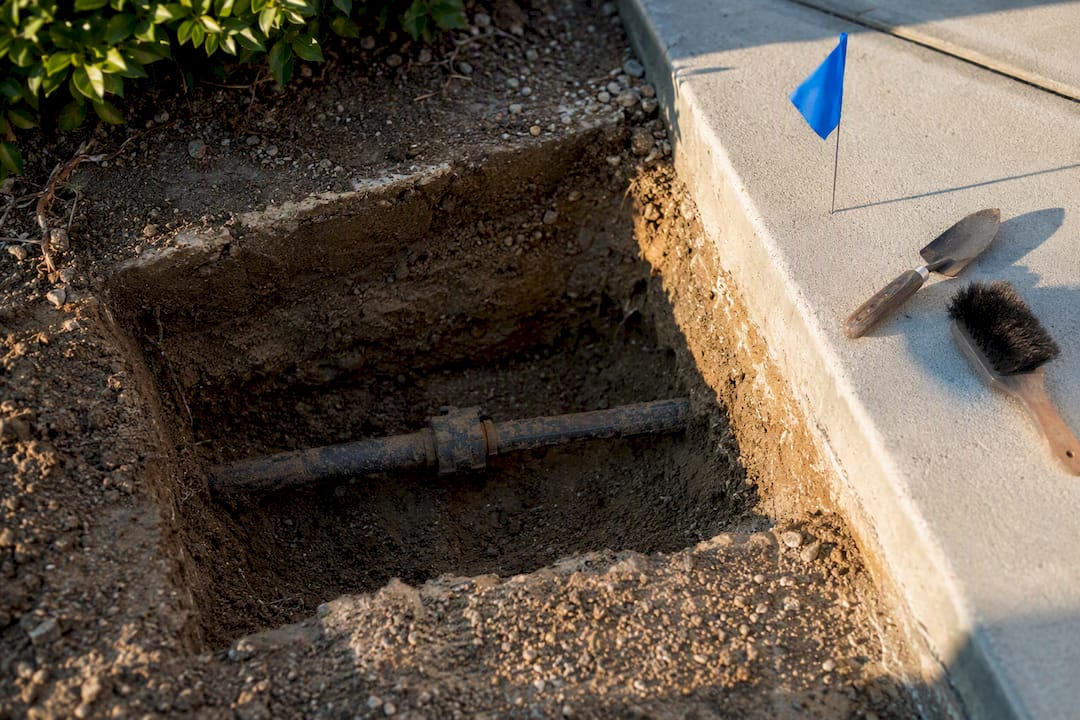
Every relocation job has at least one surprise, and it’s almost never the plumbing. It’s the buried irrigation line nobody marked, the concrete pad that turns out to be four inches thicker than expected, or the discovery that the “accessible” indoor spot the owner picked doesn’t leave enough clearance for code-required drainage on an RPZ.
Scheduling around municipal inspection windows matters more than most owners realize. A permit office that takes two weeks to review plans can turn a one-week job into a five-week one, purely from waiting. Getting the application in the moment you decide to relocate, rather than after the plumbing work starts, is the single biggest schedule saver available to you.
On contingency, 10 to 15% covers most simple residential jobs without stress. Commercial or buried relocations deserve 20%, because the variables (utility conflicts, drainage requirements, inspection delays) compound each other in ways a simple job never does.
— Jordan
Get a Backflow Relocation Quote From a New Jersey Specialist
Southjerseybackflow handles the entire relocation process instead of leaving you to coordinate plumbers, permit offices, and certified testers separately. That means one point of contact for the device move, the permit filing, the post-installation test, and the report submission to your local water authority, rather than three different invoices and three different schedules to track.
To get an accurate quote fast, send photos of the current device location and the proposed new spot, along with the pipe size if you know it and any notice you received from your water utility. Southjerseybackflow’s team typically responds within one business day with next steps, and for properties needing testing alongside relocation, the step-by-step compliance guide for New Jersey backflow testing covers exactly what your local water authority will expect at filing. Property owners in Ocean, Mercer, Salem, Hunterdon, Middlesex, Gloucester, or Cumberland County can find service details on their county’s dedicated page, or start with a request through Southjerseybackflow’s main site to get a scoped estimate for your specific relocation.
Sources
The cost ranges throughout this guide draw from Current Cost’s homeowner replacement guide and typical price breakdown, plus HomeCostCalc’s national installed-cost calculator. For permit and inspection rules specific to your property, contact your municipal water utility’s plan review department directly, since fee schedules and retesting requirements vary by jurisdiction, as Charlotte Water’s backflow construction page illustrates for its own service area.
- Backflow Preventer Cost Calculator (2026) — Free Online Estimate | HomeCostCalc
- Backflow Cost Guide: Typical Price and Budget Ranges – Current Cost
- Backflow Construction Charlotte Water