
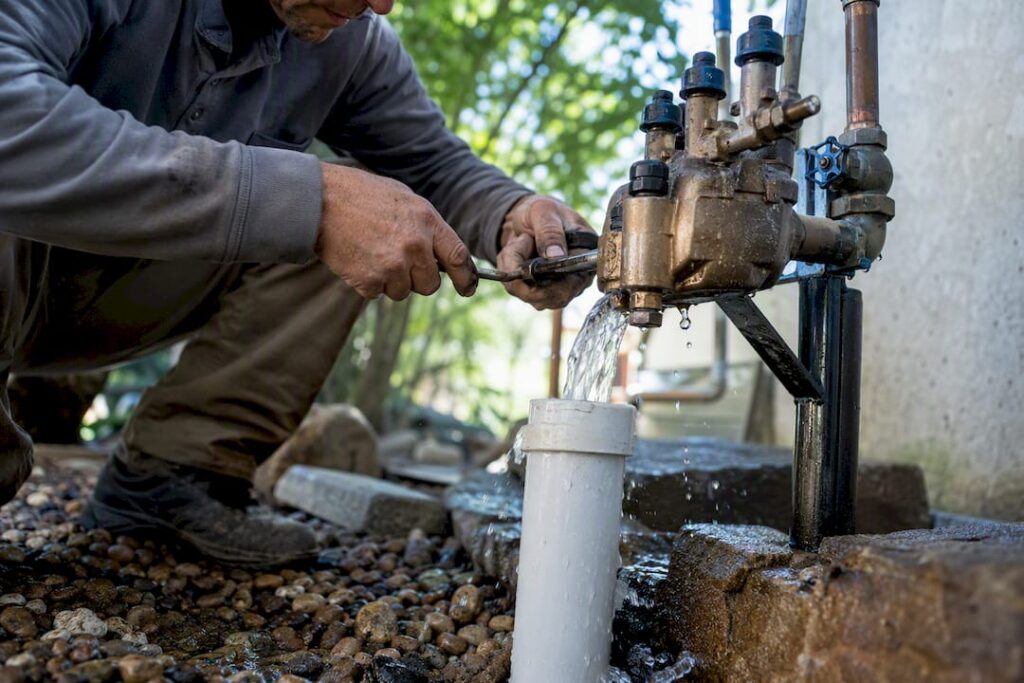
Gravity drainage is the default, and the drain has to accept the assembly’s manufacturer-listed maximum discharge rate, not just a routine drip. Discharge must terminate with a visible, code-compliant air gap into an approved receptor. Sump pumps may serve as a backup drainage method only if sized to handle the maximum expected discharge and powered by emergency power. Every relief event needs to be seen or alarmed, and the assembly itself needs open access for annual testing.
TL;DR:
- Discharge capacity must match the manufacturer’s maximum flow rate, which can reach up to 650 GPM for an 8-inch assembly at 80 PSI.
- Acceptable discharge locations include sanitary sewer with an indirect connection and backwater check, storm sewer with jurisdiction approval, or grade with erosion protection.
- Gravity drainage is preferred and fails safe, while sump pumps are only suitable if sized for maximum flow and equipped with emergency power and alarms.
- The minimum air gap must be twice the effective diameter of the outlet pipe, with a minimum of 1 inch, and termination points must be protected against pests and backflow.
- Proper drain sizing, placement, and discharge planning should be confirmed before installation to prevent costly retrofits after pressure events.
Table of Contents
- What Are the RPZ Discharge Requirements for Drain Sizing?
- Where Can RPZ Discharge Legally Go?
- Gravity Drains vs. Sump Pumps: When Is a Pump Acceptable?
- How Big Should the Air Gap Be for RPZ Discharge Piping?
- Installation Location: Clearance and Access Rules for RPZ Assemblies
- Why Is My RPZ Discharging Water, and What Maintenance Does It Need?
- Field Checklist: What to Verify Before an RPZ Passes Inspection
- Why Discharge Planning Gets Skipped, and Why It Shouldn’t
- Get RPZ Discharge Compliance Handled by South Jersey Backflow
- Sources
What Are the RPZ Discharge Requirements for Drain Sizing?
The relief valve on a reduced pressure zone assembly isn’t a slow leak waiting to happen. It’s a safety valve designed to dump water fast when something upstream goes wrong, and your drain has to be built for that worst case, not the average day.
Start with the manufacturer’s discharge curve for the specific assembly model and size. These curves plot discharge rate against inlet pressure, and they’re published by every major RPZ manufacturer for exactly this purpose. Manufacturer curves determine max discharge, and you’re required to design drainage capacity around that catastrophic relief scenario, using whichever is higher: your street-side supply pressure or on-site pressure after any booster pumps.
The numbers get big fast. At 80 PSI, a 2 inch RPZ can discharge up to 150 GPM, and an 8 inch assembly can push up to 650 GPM. A standard 2 inch floor drain won’t come close to swallowing that without backing up into the mechanical room.
Once you know the GPM, convert it to physical drain capacity:
- Match floor drain or floor sink diameter to the flow rate, not the pipe size of the RPZ itself.
- Oversize the receptor by a margin to account for debris, sediment, or partial clogging over time.
- Verify the downstream sewer or storm line can actually accept a sudden peak flow, not just steady-state discharge.
- Run a flush test during commissioning to confirm the drain clears the design flow without pooling.
Rule-of-thumb sizing based on pipe diameter alone is a common failure point. Manufacturer discharge graphs are the only reliable source for this number, and skipping that step is how undersized drains end up flooding mechanical rooms during a real relief event.
Where Can RPZ Discharge Legally Go?
Three destinations are generally acceptable: sanitary sewer, storm sewer, or grade. Each comes with its own protective hardware and approval requirements, and picking the wrong one without sign-off is one of the fastest ways to fail an inspection.
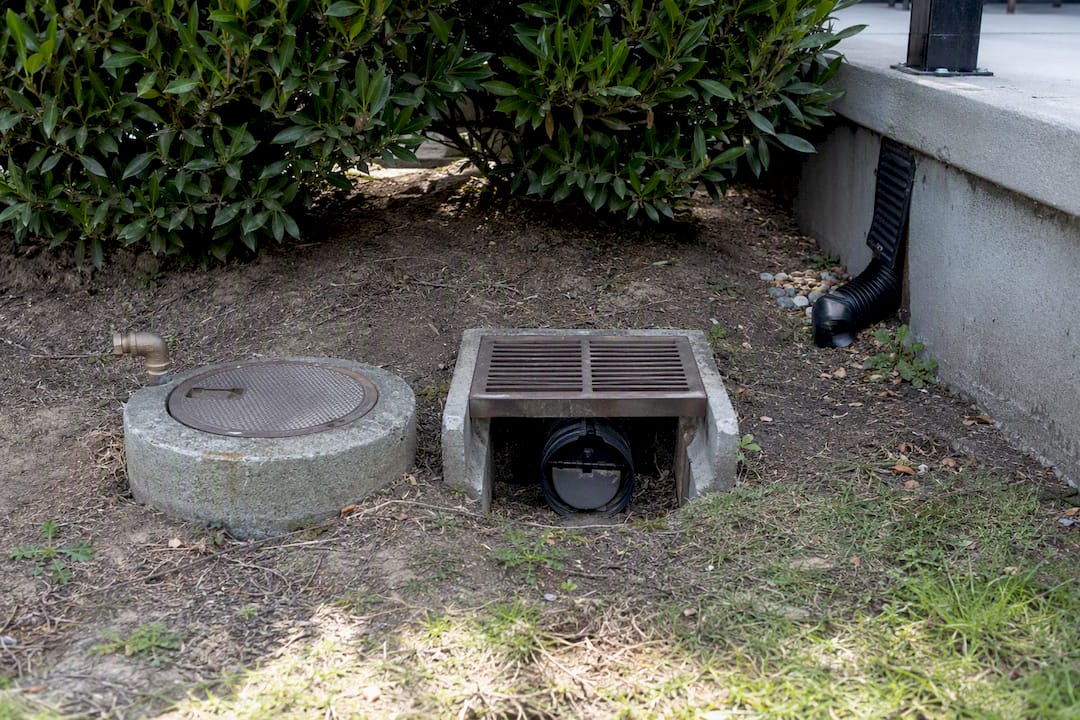
Sanitary sewer connections need an indirect connection through a trap, plus a backwater check valve to stop sewage from ever migrating back toward the RPZ. Direct connection to a sanitary line is not acceptable; the air gap has to stay intact at all times.
Storm sewer discharge is allowed in many jurisdictions but almost always requires authority having jurisdiction (AHJ) review before installation. You’ll need a backwater or flap valve to prevent stormwater backflow into the discharge line, and the AHJ will want to confirm there’s no cross-connection risk between the two systems.
Grade discharge becomes the fallback when sanitary connection isn’t practical. It’s allowed only with AHJ review and approval, and it has to terminate above grade in a location that never floods, with erosion control like a splash block underneath to keep the discharge from washing out landscaping or a foundation.
A few termination details apply no matter which destination you pick:
- Terminate discharge piping at least 1 inch above any floor drain or receiving receptacle.
- Add a rodent screen or flap valve at any exterior termination point.
- Don’t assume the manufacturer’s own air-gap fitting is enough. Those fittings are sized for intermittent, low-flow discharge and often can’t handle a full catastrophic event.
Gravity Drains vs. Sump Pumps: When Is a Pump Acceptable?
Gravity wins by default because it fails safe. No power, no moving parts, no pump that can jam or lose priority right when you need it most. Codes lean hard on gravity drainage as the primary path for exactly that reason.
A sump/pump system is only acceptable when it meets two conditions at once. First, the pump has to be sized to handle the assembly’s full manufacturer-rated maximum discharge, not just typical nuisance drips. Second, it has to run on emergency power, because a relief event during a power outage is a realistic scenario, especially during storms that also spike water pressure swings.
When you’re specifying a pump system, work through it in this order:
- Pull the manufacturer’s max discharge figure for your specific RPZ size and pressure range.
- Size the sump pit volume to buffer that flow for the expected event duration before the pump catches up.
- Select pump capacity with margin above the peak GPM, not matched exactly to it.
- Confirm the emergency power source (generator or battery backup) actually covers the pump circuit.
- Add a high-water alarm as a second layer of protection if the pump falls behind.
Pro Tip: Test the pump on emergency power specifically, not just on utility power. A pump that runs fine off a wall outlet during a routine check can still fail if the generator transfer switch has a delay longer than your sump can absorb.
Inspect sump pump systems tied to backflow discharge at least annually, alongside your certified RPZ test, and more often in properties with a history of pressure spikes or pump wear.
How Big Should the Air Gap Be for RPZ Discharge Piping?
The air gap is the single detail inspectors check first, because it’s the whole point of the relief valve design. Cut corners here and you’ve defeated the assembly’s core safety function no matter how well everything else is installed.
The minimum air gap has to be at least twice the effective diameter of the discharge opening, and never less than 1 inch even on smaller assemblies. That gap has to terminate above the receiving drain with nothing obstructing the visible fall of water between the pipe outlet and the receptor below.
A few piping details matter as much as the gap itself:
- Match discharge pipe diameter to the RPZ’s rated outlet size. Downsizing the pipe defeats the sizing work you just did on the drain.
- Never install a shutoff valve anywhere downstream of the relief valve outlet. If someone can close it, they can turn a safety device into a flood risk.
- Use approved plastic piping or stainless steel downstream where local code restricts other materials.
- Avoid copper alloys downstream where codes flag them, since some water chemistries accelerate corrosion on that discharge path specifically.
- Add a rodent screen and, at exterior terminations, a flap valve to keep pests and backflow out of the open pipe.
Installation Location: Clearance and Access Rules for RPZ Assemblies
Placement decisions get made early in design, but they determine whether a tester can actually service the unit five years later without cutting into a wall.
Most codes and AHJ guidelines call for the assembly to sit a minimum of about 12 inches above the floor, with clear working room on the sides and top for test cocks, gauges, and removal of the check modules during rebuild. Below-grade installations are the exception, not the norm, and they only pass when the design includes sufficient sump volume, water-level alarms, or a backup pump on emergency power to keep the assembly from ever sitting submerged.
- Keep at least enough side clearance to swing test equipment hoses and read gauges without disassembling piping.
- Avoid pits or low points prone to flooding unless the alarm and pump criteria above are fully met.
- Where interior space is tight, routing discharge through an exterior wall to spill at grade or into a storm system often solves both the clearance and drainage sizing problem at once, with AHJ approval.
- Confirm the enclosure or vault, if outdoors, still allows full access for the annual certified test.
Why Is My RPZ Discharging Water, and What Maintenance Does It Need?
Not all discharge means the same thing, and reading the pattern correctly saves you a service call that isn’t necessary or, worse, delays one that is.
Intermittent spitting during pressure fluctuations is usually normal behavior. The relief valve is doing exactly what it’s designed to do when supply pressure dips relative to the zone between the checks. A steady drip points to a worn check valve seat or debris caught in the first check, letting a small pressure differential leak past continuously. Heavy, continuous discharge is different and usually means the first check has failed outright or there’s a major pressure event upstream. It needs immediate attention.
- Note the discharge pattern (intermittent, dripping, or continuous) before calling for service; it tells the tester where to look first.
- Check differential pressure readings against the assembly’s rated thresholds for check valve opening.
- Schedule certified annual testing, since continuous discharge signals the unit needs service now, not at the next routine visit.
- Keep test reports and repair records on file for AHJ compliance and future troubleshooting.
At 80 PSI, remember that a 2 inch assembly alone can move 150 GPM if the first check fails completely, which is why continuous discharge on a larger assembly is treated as urgent rather than routine. Certified testers rely on differential pressure readings, not just visual inspection, to confirm whether a check valve is holding or slowly failing. Annual testing exists specifically to catch that slow failure before it becomes a flood.
Field Checklist: What to Verify Before an RPZ Passes Inspection
Walk the installation with this list before you call it done:
- Floor drain or receptor sized for the manufacturer’s maximum discharge rate, not the pipe diameter.
- Visible air gap present, at least twice the opening diameter or 1 inch minimum, unobstructed.
- Manufacturer discharge spec on hand for the exact model and size installed.
- Alarm or pump present and tested if the design relies on a sump instead of pure gravity drainage.
- Full side and top clearance for test equipment and check module removal.
Common fixes when an existing installation doesn’t meet these marks include rerouting discharge to an exterior scupper with a flap valve, upsizing an undersized floor sink, or adding sump capacity and emergency power where gravity drainage isn’t practical. A certified tester checking commissioning or an annual test will run differential pressure checks on both checks, confirm relief valve opening behavior, and verify the discharge path is still clear and visible before signing off.
Why Discharge Planning Gets Skipped, and Why It Shouldn’t
Discharge sizing gets treated as an afterthought on most jobs because the RPZ itself passes inspection fine on day one. Nobody notices the drain is undersized until the first real pressure event floods a mechanical room. Pull the manufacturer’s discharge curve and get AHJ sign-off on termination method before the concrete gets poured, not after. That paperwork trail is cheap insurance against a much more expensive retrofit.
— Jordan
Get RPZ Discharge Compliance Handled by South Jersey Backflow
Southjerseybackflow is the alternative to guessing at drain sizing or hoping a floor sink is big enough. We verify manufacturer discharge specs against your actual installation, size drains and sumps to match, and handle the rebuild or enclosure work when a unit doesn’t pass. Property managers juggling multiple sites get one point of contact instead of chasing separate contractors for testing, remediation, and filing.

Our technicians inspect placement, clearance, and termination during every certified test, then file the results directly with your water authority so nothing sits waiting on your desk. If a drain is undersized or a sump lacks emergency power backup, we spec and install the fix on the spot rather than writing it up as someone else’s problem. Schedule an inspection or compliance quote and get your discharge setup verified before it becomes a violation notice.
Sources
For manufacturer discharge curves, consult your assembly’s published specification sheet directly. For code language on drainage and clearance, review the Cornell facilities backflow guidance and New York State’s installation guidelines. Always confirm the specific plumbing code version your AHJ has adopted, since local amendments can shift these baseline numbers.
- 221100 PLUMBING – BACKFLOW PREVENTION
- Guidelines for Designing Backflow Prevention Assembly Installations
- Reduced Pressure Zone Assemblies: Key Considerations for Plumbing Engineers
- RPZ Backflow Assemblies: Installation and Requirements – LegalClarity