
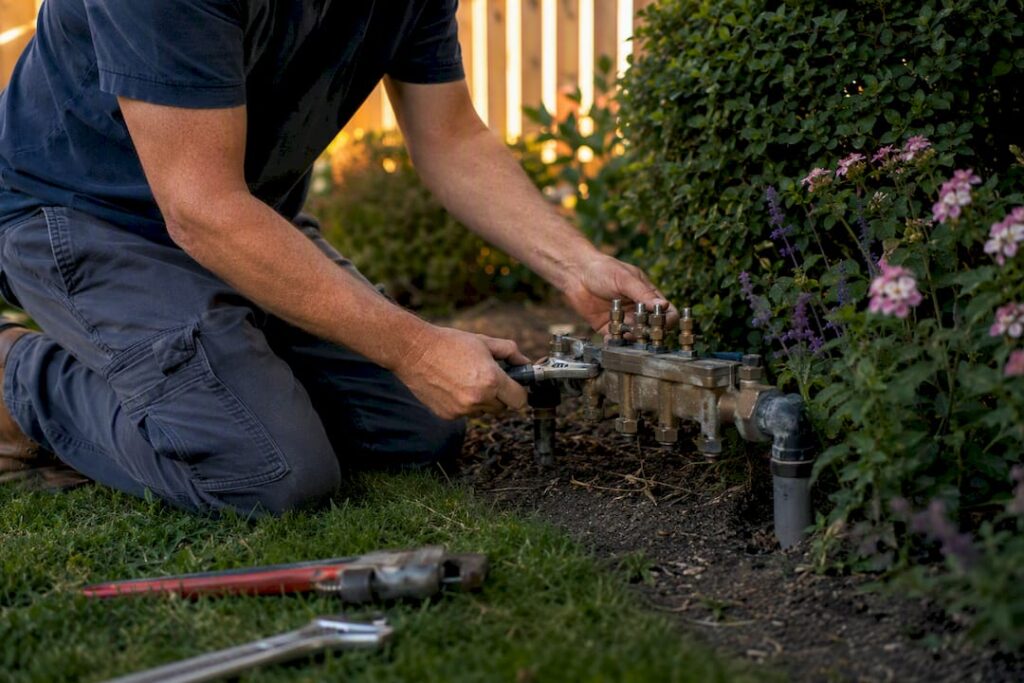
Choose a PVB (pressure vacuum breaker) when your only real risk is backsiphonage, like a standard irrigation system with no pumps or chemical injectors. Choose an RPZ (reduced pressure zone assembly) when backpressure is possible or when the connected water could carry high-hazard contaminants. That’s the whole decision in one sentence, but a few details determine which category your property actually falls into.
Before you call a supplier or a tester, run through these:
- Hazard level — is the cross-connection a health hazard (chemicals, boilers, labs) or a lower-risk pollutant?
- Backpressure potential — do you have booster pumps, elevated tanks, or fire pumps that could push water backward?
- Drainage access — can the site handle periodic discharge from a relief valve, or is there nowhere for water to go?
- Local code — does your municipality or water utility specify one device type for your use case?
- Installation geometry — is there enough vertical clearance for a PVB, or a floor drain nearby for an RPZ?
TL;DR:
- A PVB is suitable only for low-hazard backsiphonage scenarios and requires at least 12 inches of vertical clearance above downstream outlets.
- An RPZ provides the highest level of protection by guarding against both backsiphonage and backpressure, but needs a safe drainage point for relief valve discharge.
- Installation conditions, such as elevation, drainage, and access, often determine whether a PVB or RPZ is feasible before hazard classification is considered.
- Both devices must be tested annually by certified technicians, with test reports filed with the water authority; freezing risks require appropriate winter protection.
- The choice heavily depends on actual plumbing setup, backpressure risks, and local code requirements, making thorough site assessment crucial before installation.
Table of Contents
- PVB vs RPZ: How Each Device Actually Stops Backflow
- What Are the Real-World Differences Between PVB and RPZ?
- Where Do PVB and RPZ Devices Typically Get Used?
- What Do Installation Codes Require for Each Device?
- How Should You Decide Between PVB and RPZ?
- How Often Do PVB and RPZ Devices Need Testing?
- A Practitioner’s Checklist for Confirming the Right Device
- Key Takeaways
- Where to Verify Codes and Standards
- Why the PVB vs RPZ Debate Misses the Point
- Sources
PVB vs RPZ: How Each Device Actually Stops Backflow
A PVB and an RPZ solve overlapping but different problems, and the mechanics explain why one isn’t just a “smaller version” of the other.
A pressure vacuum breaker uses a spring-loaded check valve paired with an air inlet valve that opens the moment pressure in the pipe drops. That inrush of air breaks the vacuum before contaminated water can get siphoned backward into the potable supply. According to the Southern Nevada Health District, a PVB protects only against backsiphonage and must sit at least 12 inches above the highest downstream outlet it protects.
A reduced pressure zone assembly is built for a tougher job. It uses two independently acting, spring-loaded check valves with a relief valve vented to the atmosphere between them. The San Antonio Water System explains that this configuration keeps the zone between the checks at a lower pressure than the supply side at all times. If either check valve fails or pressure reverses, the relief valve dumps water to the outside rather than letting contamination back into the main. That’s what lets an RPZ guard against both backsiphonage and backpressure, the two ways water can travel the wrong direction through a pipe.
Both devices are considered “testable assemblies,” meaning they include test ports so a certified technician can verify each check valve holds pressure independently. That single design feature (testability) is why these devices show up on municipal compliance lists instead of simpler, unlisted check valves.
A few mechanical facts worth knowing:
- PVBs are governed by ASSE 1020, while RPZs fall under ASSE 1013.
- Both require field testing at installation and annually after that, done with a calibrated test kit.
- Neither device is rated for continuous submersion or below-freezing exposure without added protection.
The National Fire Protection Association notes that RPZ assemblies deliver the highest level of backflow protection commonly available, which is exactly why they’re required wherever hazardous fluids might be present.
What Are the Real-World Differences Between PVB and RPZ?
Once you understand the mechanics, the practical differences between PVB and RPZ come down to protection level, plumbing, and ongoing upkeep.
Protection and hazard suitability. An RPZ handles both backsiphonage and backpressure, which makes it the default for high-hazard connections, boiler feeds, and irrigation systems with fertilizer injectors. A PVB only stops backsiphonage, so it’s a poor fit anywhere backpressure could occur, such as a line with a booster pump or an elevated storage tank.
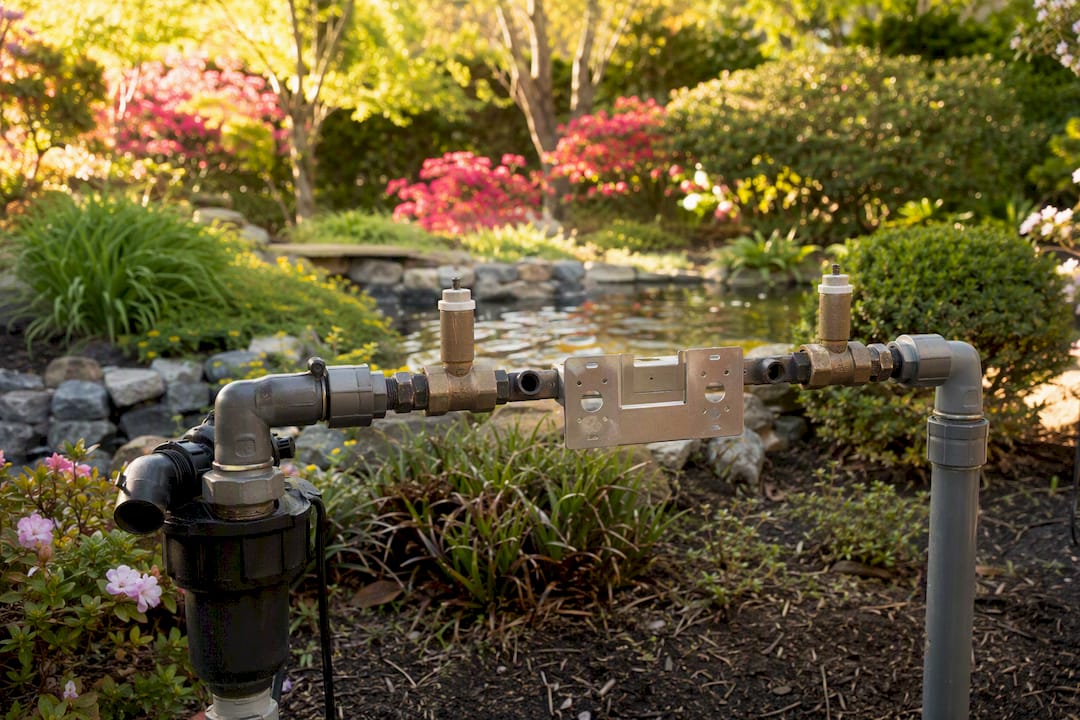
Installation tradeoffs. A PVB needs 12 inches of vertical clearance above its highest downstream fixture and must be mounted with the air inlet facing up. That’s a simple ask for a straight irrigation riser but a real problem for a retrofit where the riser sits at grade. An RPZ doesn’t have the same elevation rule, but it needs a spot where relief valve discharge can drain safely, plus enough side clearance for a tester to access the test cocks with a gauge.
Operational behavior. This is the difference owners notice first. A PVB is silent and dry under normal operation. An RPZ can discharge water periodically when the relief valve vents pressure, and that can look alarming even when nothing is wrong. It’s often just the assembly doing its job during a pressure fluctuation, not a sign of failure, though repeated or heavy discharge does warrant a service call.
Cost, size, and maintenance. PVBs are smaller, cheaper to buy, and simpler to service since they contain fewer moving parts. RPZs cost more upfront, take up more room, and need periodic rebuild kits for the check valves and relief mechanism. Here’s the tradeoff in short form:
- PVB: lower cost, smaller footprint, no discharge, backsiphonage protection only.
- RPZ: higher cost, larger footprint, occasional discharge, protection against both backsiphonage and backpressure.
Neither device is objectively “better.” The right one depends entirely on what’s actually connected to your water line.
Where Do PVB and RPZ Devices Typically Get Used?
Matching the device to the property is mostly about identifying what’s downstream of the connection.
- Residential irrigation without pumps. A house with a standard sprinkler system fed directly off the municipal main, no booster pump, no elevated cistern, is the textbook PVB scenario.
- Irrigation with fertilizer or chemical injection. The moment a system adds fertigation, chemical injectors, or any additive downstream, the hazard classification jumps and an RPZ becomes the standard.
- Boilers, cooling towers, and commercial kitchens. These systems can generate backpressure and often involve treated or contaminated water, both reasons to require RPZ protection.
- Labs, medical facilities, and industrial sites. High-hazard fluids on the property side make RPZ close to mandatory under most local codes.
- Any system with pumps or elevated tanks. A PVB is explicitly unsuitable here. Booster pumps and elevated storage tanks both create backpressure conditions a PVB isn’t designed to resist, regardless of hazard level.
If your property has more than one of these conditions, like an irrigation system that also feeds a decorative pond with a booster pump, the higher-hazard classification wins and you specify RPZ.
What Do Installation Codes Require for Each Device?
Installation constraints often decide the PVB vs RPZ question before hazard classification even enters the conversation.
A PVB has to be installed vertically, with the air inlet oriented upward, at least 12 inches above the highest point of use it protects, according to the Southern Nevada Health District. That elevation requirement is exactly why retrofitting a PVB onto an existing grade-level irrigation riser can force a relocation or a switch to a different compliant assembly.
An RPZ doesn’t need that elevation, but it does need somewhere for the relief valve to discharge safely, often a floor drain, air gap fitting, or a route to daylight that won’t flood a mechanical room. Utilities typically recommend clearance on all sides so a technician can attach test gauges without disassembling nearby piping.
Both devices need to stay accessible for annual testing. Municipal programs, including examples like Portland’s backflow prevention guidance, generally require test reports to be filed directly with the water authority or a designated cross-connection control program, not just kept on file at the property.
Before you order equipment, verify:
- Your municipality’s or utility’s specific elevation and clearance requirements.
- Whether your water authority accepts either device type for your hazard classification.
- Local drainage rules for RPZ relief discharge, especially in finished basements or mechanical rooms.
- Freeze protection requirements if the assembly sits in an unheated space.
Codes vary enough between towns that assuming your neighbor’s setup is compliant for your property is a common and avoidable mistake.
How Should You Decide Between PVB and RPZ?
Run through these steps in order. Each one either confirms your choice or bumps you up to the next level of protection.
- Classify the hazard. Is the connected water system a health hazard (chemicals, medical, industrial) or a lower-risk pollutant? The EPA’s cross-connection guidance treats high-hazard connections as requiring the strongest available protection.
- Check for backpressure sources. Look for booster pumps, elevated tanks, fire pump connections, or any equipment that could push water back into the main. Any of these rules out a PVB entirely.
- Assess installation feasibility. Confirm you have the vertical clearance a PVB needs, or the drainage and access an RPZ needs. Factor in freeze exposure if the device sits outdoors or in an unheated space.
- Check local code and book a tester. Confirm your water authority’s requirements, then schedule a certified installation test before the device goes into service.
Pro Tip: If you’re unsure whether your irrigation system counts as “low hazard,” ask your water utility directly. Classification standards vary by municipality, and getting it wrong can mean re-installing the wrong device later.
How Often Do PVB and RPZ Devices Need Testing?
Both devices require annual testing by a certified backflow tester, and most water authorities won’t accept a self-reported result. The tester connects a calibrated gauge to the test cocks, checks each check valve’s ability to hold pressure independently, and confirms the relief valve (on an RPZ) or air inlet (on a PVB) activates correctly.
Common failure points differ by device. RPZs tend to develop relief valve issues, either fouling that causes constant weeping or a worn seat that leads to sudden discharge under normal pressure. PVBs more often fail at the air inlet seal, letting it stick shut or leak slowly.
- Freezing is a real risk for both devices if installed outdoors or in unconditioned space; drain or insulate before winter.
- Keep copies of every test report. Most utilities require the certified tester to file results directly, but property owners should retain their own records too.
- Call a certified tester immediately if an RPZ discharges continuously rather than intermittently.
A Practitioner’s Checklist for Confirming the Right Device
Before you finalize a device choice, document three things: the hazard classification of everything downstream, the full plumbing layout including any pumps or tanks, and any point where chemicals or additives enter the system.
- Confirm hazard classification and backpressure sources in writing before ordering equipment.
- Verify installation clearances and drainage capacity against your chosen device’s installation requirements.
- Schedule a certified installation test and confirm the report gets filed with your water authority.
- Add the device to a recurring annual testing calendar and keep every report on file.
Pro Tip: Multi-property managers often lose track of test due dates across buildings. A shared compliance calendar with automatic reminders prevents the kind of missed deadline that triggers a violation notice.
Key Takeaways
The right backflow preventer depends on hazard level and backpressure risk, not personal preference or upfront cost alone.
| Point | Details |
|---|---|
| Match device to risk | Use PVB for backsiphonage-only risks; use RPZ when backpressure or high-hazard fluids are possible. |
| Elevation vs. drainage | PVB needs 12 inches of clearance above the highest outlet; RPZ needs safe relief valve drainage. |
| Discharge is often normal | Occasional RPZ relief valve discharge can be a normal pressure response, not automatically a failure. |
| Testing is annual and mandatory | Both devices require yearly certified testing with reports filed directly with the water authority. |
| Pumps rule out PVB | Any booster pump, elevated tank, or backpressure source makes an RPZ the required choice. |
Where to Verify Codes and Standards
The EPA’s cross-connection control guidance outlines how backflow assemblies fit into broader municipal safety programs. ASSE standards (1020 for PVB, 1013 for RPZ) set the performance benchmarks manufacturers must meet. For New Jersey property owners, South Jersey Backflow’s RPZ testing guide and RPZ installation checklist cover code-specific details worth reviewing before you install or replace a device.
Need a certified test scheduled or a device evaluated for compliance? South Jersey Backflow’s testing and compliance guide walks through what to expect and how reports get filed with your local water authority.
Why the PVB vs RPZ Debate Misses the Point
Most comparisons treat PVB and RPZ like competing products, as if one is simply the upgraded version of the other. That framing gets property managers into trouble. The real question was never “which device is better.” It’s “what’s actually connected to this pipe.”
The most overlooked factor isn’t hazard classification. It’s backpressure. Owners fixate on whether their irrigation water is “dangerous enough” to need an RPZ, while missing that a single booster pump added years after the original PVB installation quietly voids the whole setup. Nobody revisits backflow device selection when they upgrade unrelated equipment, and that gap is where compliance failures actually happen.
If you manage multiple properties, prioritize a plumbing review before your next annual test, not after. Ask specifically whether anything with pump or pressure capability has been added since the original device was chosen. That one question resolves more PVB vs RPZ disputes than any hazard chart ever will.
— Jordan
Sources
- Southern Nevada Health District — Types of backflow devices
- San Antonio Water System — Backflow prevention devices
- NFPA — Backflow preventer types (blog)