

TL;DR:
- An atmospheric vacuum breaker prevents back-siphonage by admitting air during pressure drops in potable water systems. Proper installation, regular maintenance, and correct application are crucial to ensure compliance and water safety. Failure to follow guidelines can result in inspection violations and potential contamination risks.
An atmospheric vacuum breaker (AVB) is a mechanical backflow prevention device that stops contaminated water from being sucked backward into your potable water supply during a pressure drop. Property owners and managers in New Jersey need to understand this device because it sits at the front line of water safety on hose bibbs, irrigation systems, and commercial faucets. The International Plumbing Code (IPC) and Uniform Plumbing Code (UPC) both mandate AVBs on specific potable water connections. Getting this wrong means failed inspections, contaminated water, and real liability. This guide will explain atmospheric vacuum breaker function, installation rules, and maintenance requirements in plain terms.
How does an atmospheric vacuum breaker work?
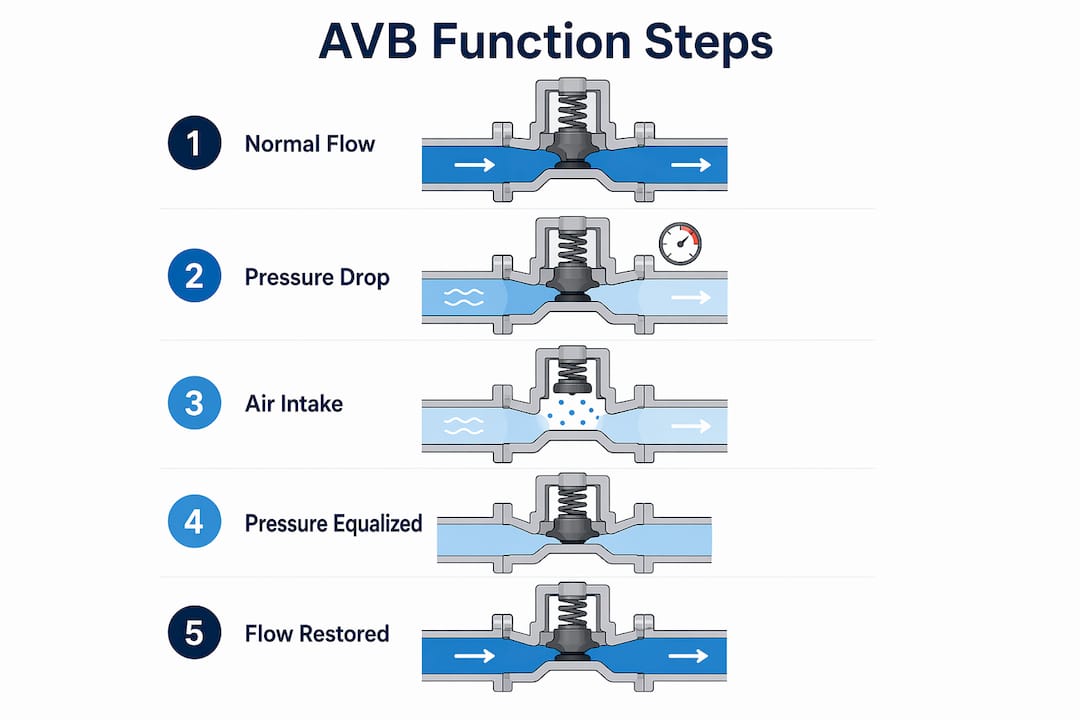
An AVB is a simple, mechanical device priced between $5 and $30 that operates without electricity or external controls. It contains a float or poppet valve that sits closed during normal water flow. The moment supply pressure drops below atmospheric pressure, the valve drops open and air rushes in through a small inlet port.
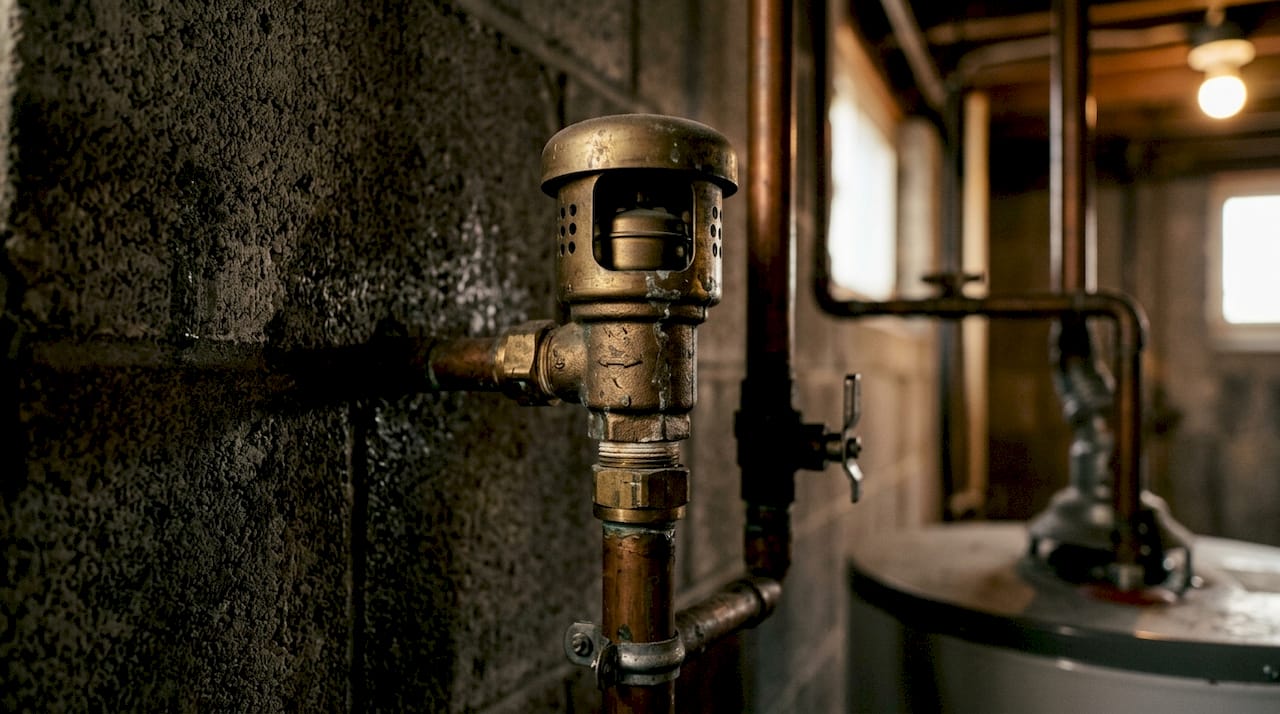
That air admission is the key action. When a vacuum occurs, the AVB opens automatically to equalize pressure, cutting off the suction force that would otherwise pull contaminated water back into your supply lines. Think of it like releasing your thumb from the top of a straw. The moment air gets in, the siphon breaks.
AVBs protect against one specific threat: back-siphonage. This is the condition where a sudden drop in main line pressure, caused by a water main break or heavy upstream demand, creates a vacuum that pulls water backward through your plumbing. Without an AVB on your garden hose or irrigation line, whatever that hose sits in, fertilizer, standing water, or chemicals, can get sucked into your drinking water.
The device has real limitations, though. AVBs cannot handle continuous downstream pressure and require a pressure-free period of at least one second per day. That constraint rules them out for irrigation zones with downstream shutoff valves or systems that stay pressurized around the clock.
- AVBs respond instantly to pressure drops below atmospheric levels.
- They admit air through an inlet port to break the siphon.
- They protect against back-siphonage only, not backpressure.
- They require at least one second of zero pressure daily to reset properly.
- They are non-testable devices, meaning they cannot be field-tested like a pressure vacuum breaker.
Pro Tip: Never install a shutoff valve downstream of an AVB. Trapped pressure will force the device to leak and will cause it to fail its inspection.
What are the installation requirements for AVBs in New Jersey?
New Jersey plumbing code follows the IPC and UPC frameworks, which mandate AVBs on potable water connections subject to submergence. That includes outdoor hose bibbs, irrigation systems without continuous pressure, and any commercial or lab faucet fitted with hose threads. If your property has any of these connections, an AVB is not optional.
Installation height is the most commonly violated requirement. AVBs must sit at least 6 inches above the highest sprinkler head or outlet they serve. The reason is physical. Air must enter from a point above the highest possible water level. If the device sits too low, water can submerge the air inlet and the vacuum never breaks.
Here are the core installation rules New Jersey property managers must follow:
- Mount the AVB at least 6 inches above the highest downstream outlet. This is a code minimum, not a suggestion.
- Install no shutoff valves downstream of the AVB. Downstream valves trap pressure and cause leaks and device failure.
- Orient the device vertically with the air inlet facing upward. Horizontal or inverted installation prevents proper air admission.
- Use AVBs only on systems without continuous pressure. Irrigation systems with zone valves that stay closed under pressure require a testable pressure vacuum breaker (PVB) instead.
- Do not install AVBs in pits or below-grade locations. The air inlet must be exposed to open atmosphere, not enclosed spaces.
Failing any one of these requirements can cause a failed plumbing inspection. New Jersey municipalities conduct backflow compliance checks, and an improperly installed AVB counts as a violation. Southjerseybackflow regularly encounters properties where AVBs were installed at the wrong height or with a downstream ball valve that the previous plumber left in place. Both errors are fixable, but both carry inspection risk until corrected. You can review common plumbing code violations in NJ to see how often AVB errors appear on inspection reports.
How do AVBs compare with other backflow prevention devices?
Understanding where an AVB fits requires knowing what it cannot do. AVBs protect against back-siphonage but not backpressure. Backpressure occurs when downstream pressure exceeds supply pressure, pushing water backward. A check valve or a reduced pressure zone (RPZ) assembly handles backpressure. An AVB does not.
Property managers often install AVBs on irrigation systems that actually need a pressure vacuum breaker. The difference matters because systems with continuous pressure and zone valves require a testable PVB, not a simple AVB. Using the wrong device leaves the system out of compliance and the water supply unprotected.
| Feature | Atmospheric vacuum breaker | Pressure vacuum breaker | Check valve |
|---|---|---|---|
| Protects against back-siphonage | Yes | Yes | Partial |
| Protects against backpressure | No | No | Yes |
| Handles continuous pressure | No | Yes | Yes |
| Testable in the field | No | Yes | Varies |
| Typical cost | $5–$30 | $50–$200 | $10–$80 |
| Downstream shutoff valves allowed | No | Yes | Yes |
The practical takeaway is straightforward. AVBs work well on hose bibbs and simple irrigation lines that lose pressure when the system shuts off. For anything more complex, including systems with multiple zones, downstream valves, or constant pressure, a PVB or RPZ assembly is the right call. Combining an AVB with a check valve on the supply side gives more complete protection where both back-siphonage and backpressure are possible risks. You can find a broader overview of backflow prevention methods that covers when each device type applies.
For properties with irrigation systems, the NJ irrigation backflow compliance guide covers device selection in detail.
What maintenance practices keep an AVB working reliably?
AVBs are low-maintenance devices, but they are not maintenance-free. The rubber internal seal degrades over time, and units should be replaced every 3–5 years to maintain water supply integrity. In New Jersey, where freeze-thaw cycles are common, that rubber degrades faster than in warmer climates. A $15 replacement prevents a contamination event that costs far more to address.
Proper AVB operation depends on clean internal parts and correct vertical orientation. Debris inside the valve body can jam the float or poppet in the closed position. When that happens, the device cannot admit air during a pressure drop, and back-siphonage protection disappears entirely without any visible warning.
Watch for these signs of AVB malfunction:
- Constant dripping from the air inlet port. This usually means the internal seal is worn or debris is holding the valve open.
- Water spraying from the top of the device. The float is stuck open or the cap is cracked.
- Visible corrosion or mineral buildup around the inlet. Hard water deposits can block the air port.
- Device installed horizontally or at an angle. Incorrect orientation prevents the float from seating properly.
Pro Tip: Inspect your AVBs every spring before irrigation season starts. Clean the air inlet port with a soft brush, check the orientation, and replace any unit that is more than five years old or shows signs of seal wear.
Plumbing service technicians who specialize in backflow prevention are trained to spot these failure modes during routine inspections. Scheduling an annual check with a qualified technician is the most reliable way to catch problems before they become code violations or contamination events.
Key Takeaways
An atmospheric vacuum breaker is the first and most cost-effective line of defense against back-siphonage, but it only works when installed correctly, maintained regularly, and matched to the right application.
| Point | Details |
|---|---|
| Core function | AVBs admit air during pressure drops to stop contaminated water from flowing backward into supply lines. |
| Installation height | Mount at least 6 inches above the highest outlet; lower placement defeats the vacuum-breaking mechanism. |
| No downstream valves | Shutoff valves downstream of an AVB trap pressure, cause leaks, and trigger inspection failures. |
| Replacement schedule | Replace rubber seals or the full unit every 3–5 years, especially in freeze-thaw climates like New Jersey. |
| Device matching | Use AVBs only on non-continuous-pressure systems; upgrade to a pressure vacuum breaker for zone-valve irrigation setups. |
What field experience teaches about AVBs that most guides skip
Property managers tend to treat AVBs as a set-it-and-forget-it solution. That assumption is the most common and most costly mistake I see in the field. An AVB installed five years ago with a downstream ball valve that someone added “just in case” is not protecting anything. It is failing quietly, and the first sign of trouble is often a contamination complaint or a failed municipal inspection.
The second pattern I see constantly is the wrong device for the application. Irrigation systems with multiple zones and solenoid valves stay pressurized between cycles. An AVB on that system is out of compliance from day one. A testable pressure vacuum breaker is the correct device, and the distinction matters because testable devices get inspected on a schedule, which means problems get caught. Non-testable AVBs get ignored until they fail.
My honest advice: treat your AVB like a smoke detector. Check it annually, replace it on schedule, and do not modify the downstream plumbing without understanding what that change does to the device’s operating conditions. The backflow preventer FAQs at Southjerseybackflow cover the questions I hear most often from property managers who are seeing this equipment for the first time. Start there if you are unsure whether your current setup is correct.
— Jordan
Southjerseybackflow: professional AVB and backflow services for NJ properties
Southjerseybackflow provides backflow testing, installation inspections, and compliance support for property owners and managers across New Jersey. If your property has hose bibbs, irrigation systems, or commercial faucet connections, a professional inspection confirms whether your current devices meet IPC and UPC code requirements.

The team at Southjerseybackflow handles everything from identifying the wrong device for an application to replacing worn AVBs before they cause inspection failures. For a full breakdown of what backflow testing in New Jersey requires and how to stay compliant year after year, that resource covers the complete process. Reach out to Southjerseybackflow to schedule an inspection and confirm your property’s backflow protection is working correctly.
FAQ
What does an atmospheric vacuum breaker do?
An atmospheric vacuum breaker admits air into a plumbing line when supply pressure drops below atmospheric pressure, breaking the siphon that would otherwise pull contaminated water backward into the potable supply.
Where are AVBs required by code in New Jersey?
IPC and UPC codes mandate AVBs on hose bibbs, irrigation systems without continuous pressure, and commercial or lab faucets with hose threads connected to potable water lines.
Can I install a shutoff valve downstream of an AVB?
No. Downstream shutoff valves trap pressure inside the device, causing it to leak continuously and fail inspection. AVBs must have no shutoff valves on the downstream side.
How often should an atmospheric vacuum breaker be replaced?
Replace AVBs every 3–5 years. The internal rubber seal degrades over time, and freeze-thaw cycles common in New Jersey accelerate that wear, increasing the risk of leaks and contamination.
What is the difference between an AVB and a pressure vacuum breaker?
An AVB is a non-testable device for low-pressure, non-continuous applications like hose bibbs. A pressure vacuum breaker is a testable device rated for systems with continuous pressure and downstream zone valves, making it the correct choice for most irrigation setups.