
TL;DR:
- Rust corrosion in backflow preventers is caused by environmental factors like moisture, salinity, and freeze-thaw cycles, especially in New Jersey’s coastal areas. Regular visual inspections and annual professional testing help detect early signs of rust and damage, preventing costly repairs or replacements. Proper maintenance, including cleaning with vinegar and sealing with silicone grease, can extend the device’s lifespan and ensure compliance with regulations.
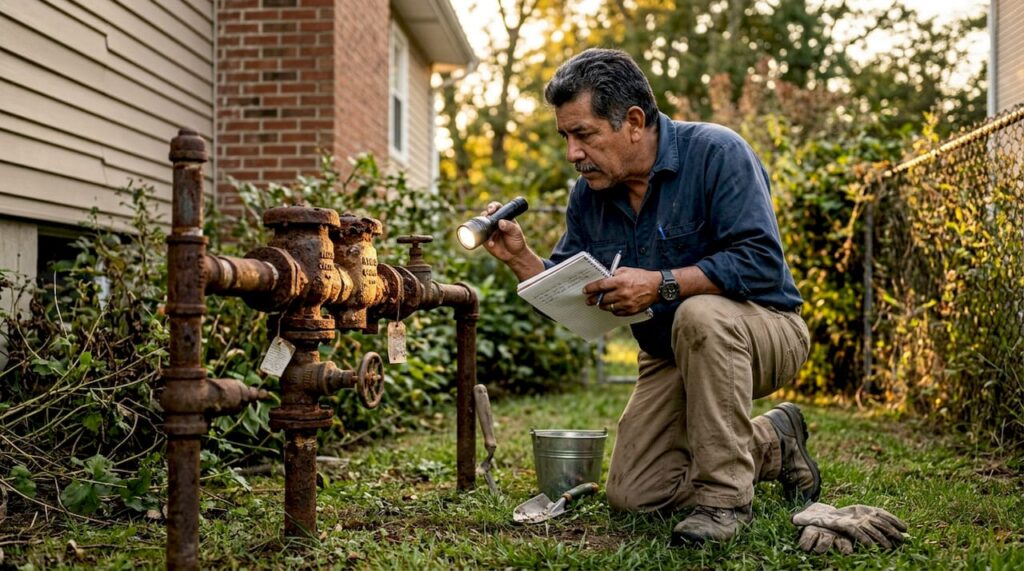
Backflow preventer rust corrosion is defined as the oxidation and structural breakdown of iron or steel components inside your backflow device when exposed to moisture, oxygen, and environmental contaminants. New Jersey property owners face this problem at higher rates than many other states, thanks to coastal humidity, freeze-thaw cycles, and aging plumbing infrastructure. Left unchecked, corrosion weakens the internal valves and seals that keep contaminated water from flowing back into your drinking supply. Southjerseybackflow works with NJ property owners daily to catch and address corrosion before it becomes a water safety crisis. The NJDEP requires annual certified backflow testing, and corrosion is one of the top reasons devices fail those tests.
What causes backflow preventer rust corrosion in New Jersey?
Rust forms when iron or steel reacts with water and oxygen over time. That reaction is unavoidable in a device that lives outdoors or in a wet vault and handles pressurized water every day. New Jersey’s environment makes the process faster and more aggressive than in drier climates.
Several specific factors drive corrosion in NJ backflow preventers:
- Coastal air salinity. Salt particles in the air near the Shore accelerate oxidation on exposed metal surfaces. A device installed in Ocean County or Cape May faces more corrosive air than one installed inland.
- Freeze-thaw cycles. Water expands when it freezes. Repeated freezing inside a device cracks seals, shifts fittings, and opens microscopic gaps where moisture collects and rust begins.
- Standing water in vaults. Standing water in vaults accelerates rust corrosion and mechanical failure. Poor vault drainage is one of the most common and most preventable causes of early device failure.
- Galvanic corrosion. Galvanic corrosion between dissimilar metals in contact with water accelerates rust on fittings. When aluminum and brass parts meet in a moist environment, blister-like corrosion forms at the contact point.
- Mineral-rich water. Hard water deposits calcium and magnesium scale inside the device. That scale traps moisture against metal surfaces and creates the perfect conditions for rust to take hold.
Pro Tip: Check your vault drainage every spring before irrigation season starts. A vault that holds even an inch of standing water after rain is already shortening your device’s lifespan.
The quality of the original backflow preventer installation also matters. Devices installed with mismatched metal fittings or without proper support brackets vibrate under pressure, which loosens joints and lets water seep into places it should never reach.
How do you inspect a backflow preventer for rust and damage?
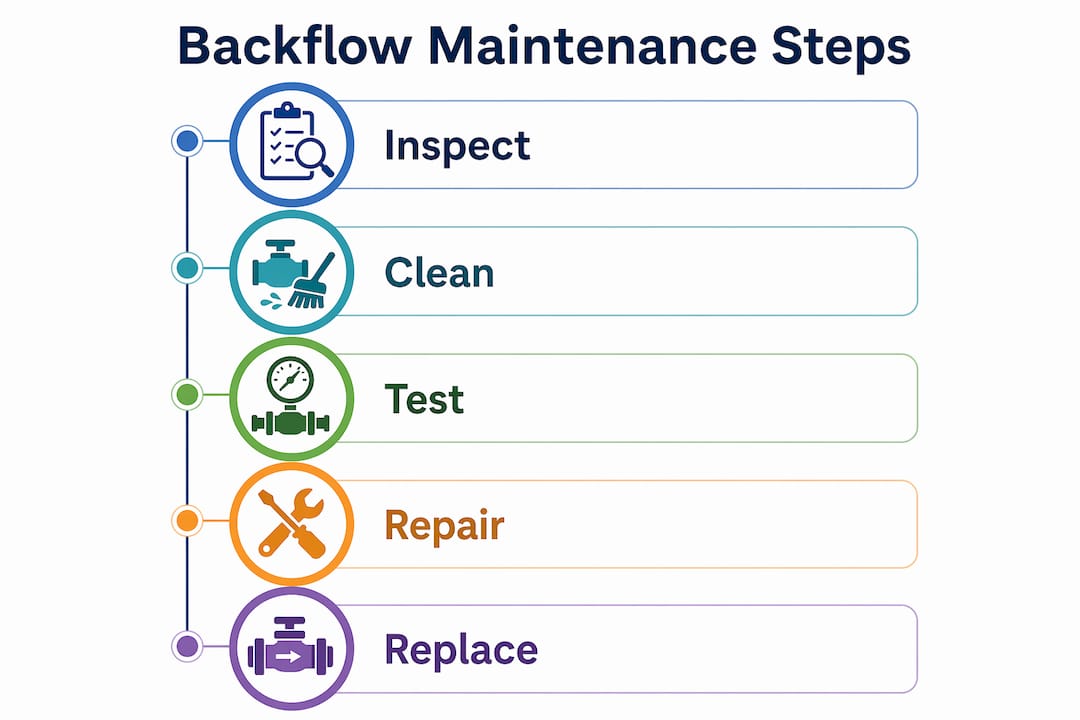
Industry standards recommend quarterly 2-minute visual inspections and annual certified backflow performance testing to catch rust corrosion early. A quick quarterly check takes less time than making coffee and can save you hundreds of dollars in emergency repairs.
Follow these steps for an effective visual inspection:
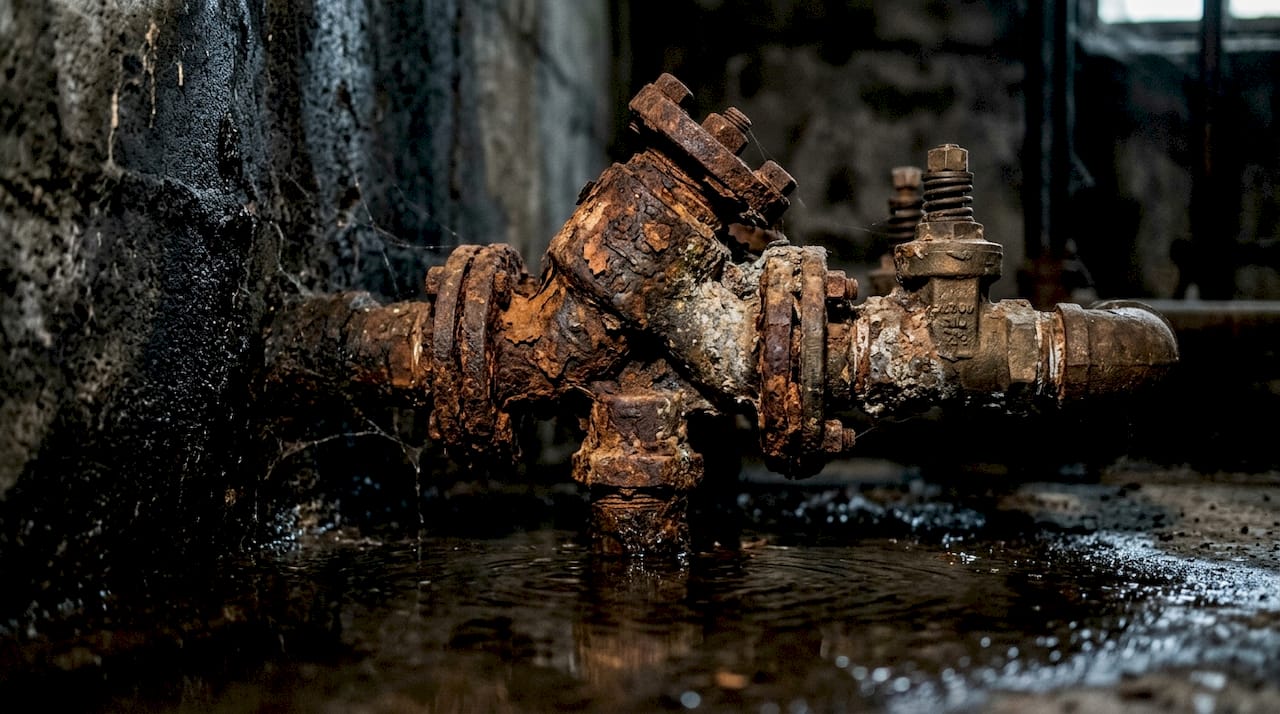
- Look at the body of the device. Surface rust appears as orange or brown discoloration on the metal casing. Note any areas where paint or coating has bubbled or flaked off, since that exposes bare metal to moisture.
- Check the test cocks. These are the small valves used during certified testing. Rust or mineral buildup around test cocks signals moisture intrusion and makes future testing harder.
- Inspect all fittings and connections. Look for white or greenish deposits, which indicate galvanic corrosion or mineral scale. Any visible cracking or pitting in the metal requires professional evaluation.
- Look for active leaks. Water dripping from the relief valve or any joint is a sign that internal seals have degraded, often due to corrosion. Check the signs of a failing system to understand what each symptom means.
- Check the vault floor. Standing water or mud inside the vault means drainage is inadequate. Clear debris from the drain and confirm water flows freely away from the device.
Visible surface rust on backflow preventer bodies indicates potential internal corrosion but does not always require immediate replacement if structural integrity remains intact. That distinction matters. Minor surface oxidation is manageable. Deep pitting, flaking, or cracks are not.
Pro Tip: Take a photo of your device during each quarterly check. A side-by-side comparison from three months ago makes it easy to spot changes that are too gradual to notice in a single visit.
Visual inspection is a valuable first step but cannot substitute for certified testing, which confirms true device performance under required pressure conditions. Schedule a professional test annually regardless of what your visual check shows.
Step-by-step guide to cleaning and maintaining your backflow preventer
Routine maintenance extends backflow device lifespan and reduces the risk of corrosion taking hold. Most property owners can handle exterior cleaning themselves. Internal work requires a certified technician.
Tools and materials you need:
| Item | Purpose |
|---|---|
| Soft-bristle brush | Scrub surface rust and dirt from the device body |
| White vinegar | Dissolve mineral scale and light oxidation |
| Silicone-based plumber’s grease | Lubricate O-rings and seals |
| Safety gloves and eye protection | Protect against debris and cleaning agents |
| Garden hose | Rinse the device exterior after cleaning |
Follow this maintenance sequence:
- Shut off the water supply to the backflow preventer before touching any fittings or test cocks.
- Scrub the exterior. Use a soft-bristle brush to remove dirt, debris, and loose rust from the device body. Do not use steel wool or abrasive pads, which scratch the metal and create new sites for rust to form.
- Treat mineral scale. White vinegar effectively removes mineral scale that supports rust and corrosion buildup inside backflow preventers. Soak a cloth in white vinegar and wrap it around heavily scaled areas for at least 30 minutes, then scrub and rinse.
- Lubricate seals and O-rings. O-rings and seals should be lubricated with silicone-based plumber’s grease, not petroleum jelly, to prevent drying and cracking. Petroleum-based products degrade rubber over time, which leads to leaks and accelerated internal corrosion.
- Restore water supply and check for leaks. Turn the water back on slowly and watch all joints and the relief valve for drips. Any new leak after cleaning needs professional attention.
- Schedule your annual certified test. Certified backflow performance testing uses calibrated differential pressure gauges to verify device function under reverse pressure conditions. Visual inspection and cleaning alone cannot confirm your device is working correctly.
For guidance on routine backflow maintenance, Southjerseybackflow publishes detailed resources tailored to New Jersey property conditions.
When should you repair versus replace a rusted backflow preventer?
The repair-or-replace decision comes down to three factors: the extent of corrosion, the age of the device, and the cost of repeated repairs versus a one-time replacement.
Repair is the right call when:
- Surface rust is present but the metal body shows no pitting or cracking
- The device passes its annual certified test after cleaning and seal replacement
- The device is less than seven years old and has no history of repeated failures
- Internal components like O-rings and check valves are still available for the model
Replacement is the right call when:
- Deep pitting, cracks, or flaking on metal surfaces compromise the device. Structural damage is unsafe and cannot be repaired.
- Multiple test failures within a short period despite repairs signal that replacement is the safest and most cost-effective option. Repeated failures over two to three years indicate mechanical degradation beyond repair.
- Internal parts are frozen or seized from corrosion and cannot be freed without damaging the body
- The device is more than ten years old and showing active corrosion
Modern backflow preventers made from bronze, stainless steel, or corrosion-resistant polymers hold up significantly better in New Jersey’s environment than older iron-body models. Upgrading to a current model during replacement is worth the additional cost. Review backflow preventer testing compliance requirements before selecting a replacement model to confirm it meets NJDEP standards.
Key Takeaways
Backflow preventer rust corrosion requires consistent inspection, targeted cleaning, and timely replacement decisions to protect your water supply and stay compliant with NJDEP requirements.
| Point | Details |
|---|---|
| Quarterly visual inspections | Check for surface rust, leaks, and standing water in the vault every three months. |
| Annual certified testing | Professional pressure testing confirms device function that visual checks cannot verify. |
| Silicone grease for seals | Use silicone-based plumber’s grease on O-rings to prevent cracking and internal leaks. |
| Replace on structural damage | Deep pitting, cracks, or repeated test failures require full device replacement, not repair. |
| Vault drainage matters | Standing water in the vault accelerates corrosion faster than almost any other factor. |
What I’ve learned after years of watching NJ property owners deal with rust
Most property owners call a backflow professional only after something goes wrong. A device fails its annual test, a neighbor mentions a water notice, or they spot a puddle under the vault lid. By that point, the corrosion has usually been building for two or three seasons.
The property owners who avoid expensive replacements are the ones who treat their backflow device like a smoke detector. They check it on a schedule, not when they remember. A two-minute walk to the vault every quarter catches the early signs: a small rust stain, a damp vault floor, a test cock that looks slightly different than last time. Those are the moments when a $20 cleaning job prevents a $600 replacement.
The other thing I’ve seen consistently is that mid-year professional inspections catch what annual tests miss. An annual test tells you whether the device passes or fails under pressure. A mid-year visit from a certified technician tells you why it might be trending toward failure. That distinction saves money and keeps you ahead of NJDEP compliance deadlines. Managing annual backflow deadlines is stressful enough without adding an emergency repair to the timeline.
My honest advice: build a simple maintenance calendar. Set a phone reminder for the first week of each season. Walk to your device, take a photo, check the vault, and note anything that looks different. That habit, combined with annual certified testing, is the most reliable rust prevention system available to any NJ property owner.
— Jordan
Southjerseybackflow protects your system from rust and keeps you compliant
Rust corrosion does not wait for a convenient time to cause problems. Southjerseybackflow provides certified backflow testing and maintenance services across New Jersey, with direct experience handling the coastal humidity, freeze-thaw damage, and galvanic corrosion issues that affect local properties.

Whether your device needs its annual certified test, a professional cleaning, or a full replacement assessment, Southjerseybackflow’s licensed technicians handle every step. They know NJDEP compliance requirements and can help you stay ahead of deadlines before a notice arrives. Property owners across South Jersey rely on Southjerseybackflow for certified backflow testing that meets state standards and protects their water supply year-round. Contact Southjerseybackflow to schedule your next inspection and get ahead of corrosion before it gets ahead of you.
FAQ
What are the first signs of rust corrosion on a backflow preventer?
Orange or brown discoloration on the device body, bubbling or flaking paint, and mineral deposits around test cocks are the earliest visible signs. Standing water in the vault is also a strong indicator that corrosion conditions are present.
Can I clean rust off my backflow preventer myself?
Surface rust on the exterior can be cleaned with a soft brush and white vinegar. Internal components and seal replacement require a certified technician to avoid damaging the device or voiding compliance.
How often should a backflow preventer be professionally tested in New Jersey?
NJDEP regulations require annual certified backflow performance testing. Quarterly visual inspections between professional tests help catch rust and leaks before they cause test failures.
When does rust corrosion mean I need a new backflow preventer?
Deep pitting, cracks, or flaking metal means the device must be replaced. Repeated test failures over two to three years despite repairs also signal that replacement is the right decision.
Does backflow preventer installation quality affect rust risk?
Yes. Devices installed with mismatched metal fittings or poor vault drainage develop corrosion faster. Proper installation with compatible materials and adequate drainage significantly extends device lifespan.