TL;DR:
- Backflow can introduce Legionella bacteria into building water systems, increasing health risks.
- Proper maintenance, annual testing, and temperature control are essential for prevention and compliance.
Legionella risk from backflow is defined as the threat of Legionella bacteria entering a building’s potable water supply when contaminated water reverses direction through an unprotected or failed cross-connection. Backflow events pull water from high-hazard sources like fire sprinkler systems, hydronic boilers, and irrigation lines directly into the pipes your tenants drink from. Illness from exposure can appear within hours or days, hitting elderly residents, smokers, and immunocompromised individuals hardest. For New Jersey property owners and managers, this is not a theoretical risk. It is a compliance obligation with real health consequences and legal liability attached.
What is the legionella risk from backflow in building water systems?
Backflow is the reversal of water flow in a plumbing system, and it creates the exact conditions Legionella bacteria need to spread. Two mechanisms drive it. Backsiphonage and backpressure are the two types: backsiphonage happens when a drop in supply pressure creates a vacuum that pulls water backward, while backpressure occurs when a downstream source like a boiler operates at higher pressure than the supply line. Both push contaminated water where it does not belong.
The sources connected to your building’s water system matter enormously. Fire sprinkler systems, hydronic boilers, and irrigation lines all qualify as high-hazard cross-connections. Water sitting in those systems is often stagnant, warm, and untreated. Those are precisely the conditions where Legionella colonizes fastest. Once that water reverses into your potable supply, the bacteria travel through every faucet, showerhead, and cooling tower connected to the system.
Public health officials consistently identify aging or complex building plumbing as the origin point for Legionella outbreaks, not the municipal supply. That finding shifts the responsibility squarely onto property owners. Your building’s internal plumbing is the risk, and backflow prevention is the first line of defense.
What are New Jersey’s regulatory requirements for backflow testing?
New Jersey mandates annual testing of all testable backflow prevention assemblies. Electronic submission of reports to the local water authority is required within 30 business days of testing. Missing that window puts you in violation, regardless of whether your device actually passed.
The requirements go further than a once-a-year checkbox. Here is what New Jersey property owners must understand:
- Annual testing applies to every testable assembly on the property, including reduced pressure zone (RPZ) assemblies protecting boilers and fire suppression lines.
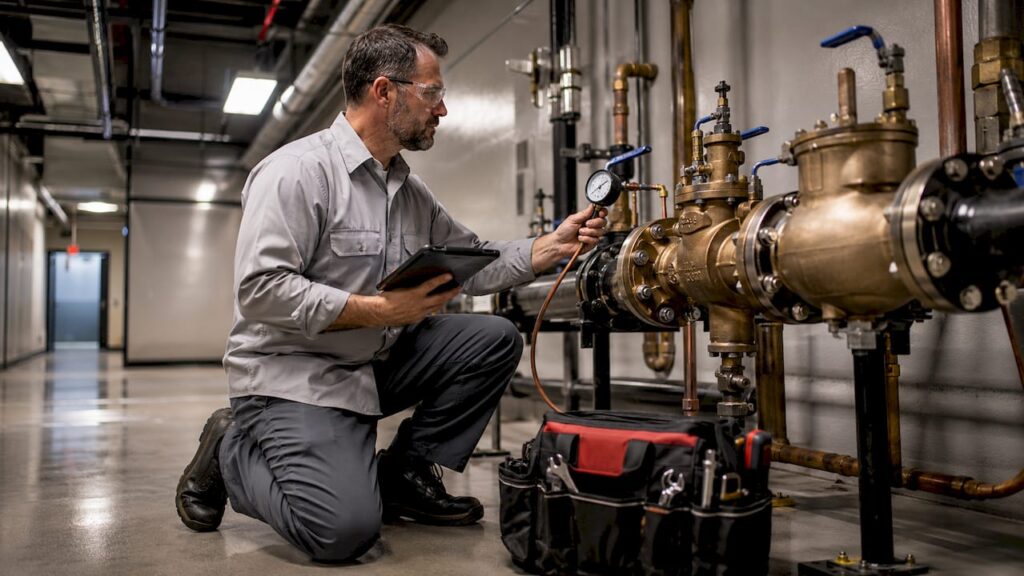
- Certified testers only. Proprietary test kits and diagnostic equipment are required to accurately assess device condition. This work cannot be done by a general plumber or a maintenance technician.
- Re-testing after disturbances. Re-testing is mandated immediately after significant repairs or pressure events to confirm the device still functions correctly.
- Electronic report submission must go to your local water authority, not just kept on file. Failure to submit is treated as non-compliance.
- Penalties for non-compliance include regulatory fines and, in contamination events, direct liability for tenant health outcomes.
Pro Tip: Keep a digital log of every test date, tester certification number, and submission confirmation. Water authorities in New Jersey can audit compliance history, and a missing record is treated the same as a missing test.
Failing to maintain backflow devices can result in contamination events carrying pathogens like Legionella, leading to regulatory penalties and liability exposure for property owners. Proactive maintenance is cheaper than emergency response by a wide margin.
How does backflow contamination create conditions for Legionella growth?
Backflow does not just introduce bacteria once. It creates the physical and chemical conditions that allow Legionella to multiply long after the initial event. Understanding this mechanism helps you see why a single failed device is a sustained threat, not a one-time incident.
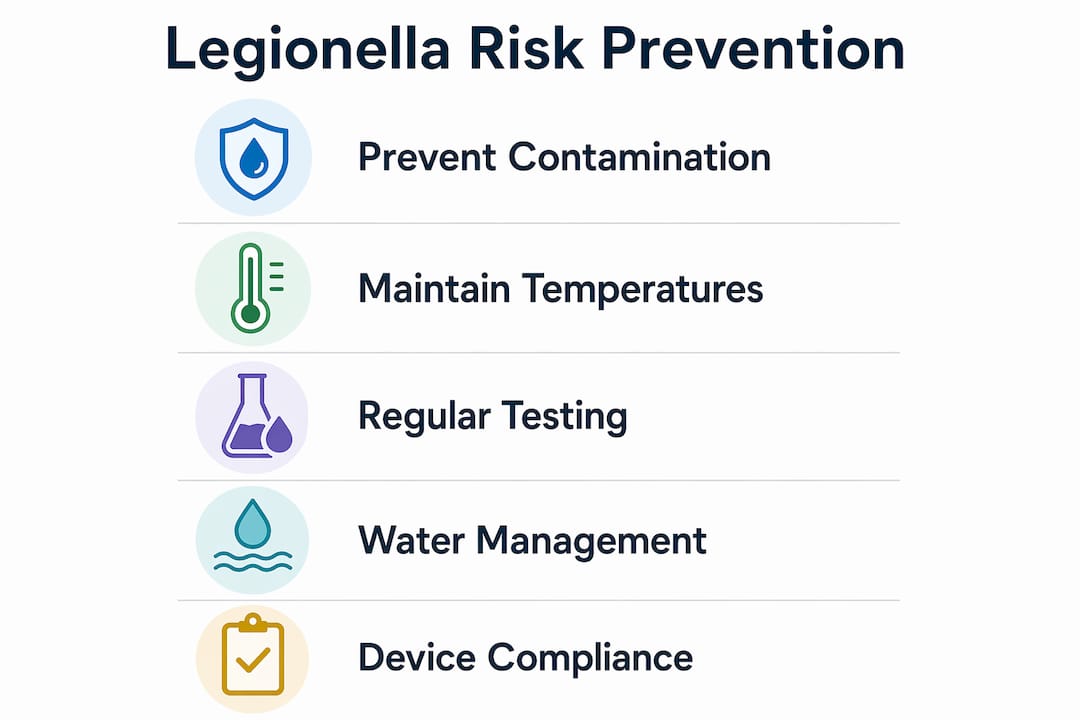
Legionella bacteria thrive in water between 77°F and 113°F. Stagnant or infrequently used outlets increase growth risk significantly. When contaminated water from a boiler or sprinkler system enters your potable lines, it often carries biofilm fragments and organic material that feed bacterial colonies. Chlorine from the municipal supply depletes quickly inside building plumbing, leaving no disinfection barrier once contamination takes hold.
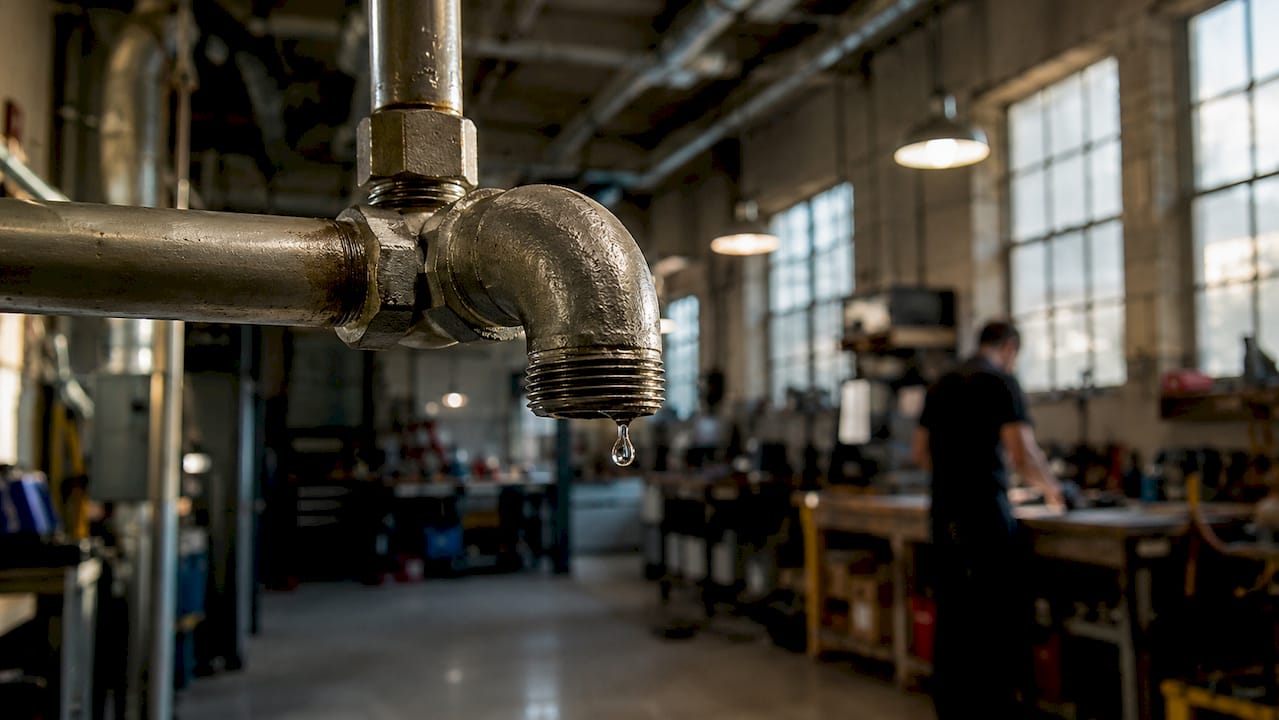
Debris like scale and rubber fragments frequently lodge in backflow prevention assemblies after water main work or pressure events. These particles cause valve sealing failure without triggering any visible alarm. The device appears intact, but contaminated water passes through it freely. This is why post-maintenance inspection is not optional. It is the only way to confirm the device is actually doing its job.
High-risk cross-connections that New Jersey property managers should know by name include:
- Hydronic boilers: Water treated with corrosion inhibitors and biocides sits at temperatures ideal for Legionella.
- Fire sprinkler systems: Water in these lines can sit stagnant for months or years between activations.
- Irrigation systems: Outdoor lines pull in soil bacteria and fertilizer residue that contaminate the supply during backsiphonage events.
- Cooling towers: These are a well-documented Legionella reservoir and require separate risk management protocols.
Not all assemblies provide equal protection. High-hazard sources like hydronic boilers and fire sprinklers require reduced pressure zone (RPZ) assemblies. An RPZ has an internal pressure relief valve that must be tested and maintained separately. A standard double-check valve is not sufficient for these applications.
What Legionella prevention strategies work beyond backflow devices?
Backflow prevention stops contamination from entering your system. Water management programs (WMPs) stop Legionella from growing inside it. Both are required for full protection. The Centers for Disease Control and Prevention recommends WMPs for any building with complex water systems, including hotels, apartment complexes, and commercial properties.
Water management programs that maintain hot water above 140°F and cold water below 68°F reduce Legionella growth by eliminating the temperature range where bacteria thrive. Quarterly cleaning and descaling of showerheads and hot water tanks are standard components of any compliant WMP.
Here is a practical framework for New Jersey property managers:
- Establish temperature targets. Set hot water heaters to deliver water at 140°F at the source and verify that it reaches 120°F at the tap. Cold water lines should stay below 68°F throughout the distribution system.
- Flush low-use outlets weekly. Infrequently used faucets, showerheads, and hose bibs are the most common sites for Legionella colonization. Run them for two minutes each week to clear stagnant water.
- Eliminate dead legs. Dead legs are sections of pipe that no longer serve an active outlet. Water trapped in them never moves, never gets disinfected, and becomes a bacterial reservoir. Remove them during any renovation or system upgrade.
- Clean and descale quarterly. Showerheads, aerators, and hot water tank components accumulate scale and biofilm. Quarterly descaling removes the physical substrate Legionella colonizes.
- Reassess after system changes. Changes in facility water use, such as new fixtures or system upgrades, alter risk profiles and require updated risk assessments and device selections.
| WMP Component | Target Standard | Frequency |
|---|---|---|
| Hot water temperature | Above 140°F at source | Continuous monitoring |
| Cold water temperature | Below 68°F | Continuous monitoring |
| Low-use outlet flushing | 2 minutes per outlet | Weekly |
| Showerhead and aerator cleaning | Full descaling | Quarterly |
| Backflow device testing | Certified tester, NJ-compliant | Annual + post-repair |
Pro Tip: Pair your WMP documentation with your backflow test records. Water authorities and health inspectors increasingly request both together during audits of commercial and multi-family properties in New Jersey.
How can NJ property owners reduce Legionella exposure through compliance?
Reducing Legionella exposure in New Jersey comes down to three things: testing on schedule, hiring the right people, and keeping records that prove it. Most compliance failures traced back to Legionella events involve at least one of these three gaps.
Start with your annual backflow testing schedule. Do not wait for a notice from your water authority. Set a calendar reminder 60 days before your test is due so you have time to select a certified tester, schedule the appointment, and submit results within the 30-business-day window.
When selecting a tester, verify their certification before booking. Certified cross-connection control technicians use specialized test kits that general plumbers do not carry. Hiring an uncertified technician does not satisfy the regulatory requirement, even if they complete a physical inspection.
Know the signs of a failing backflow device before your annual test. Watch for:
- Discolored or foul-smelling water at taps connected to the affected line.
- Unexplained pressure drops in the supply system.
- Visible corrosion or leaking at the assembly housing.
- Water flowing from the relief valve on an RPZ assembly, which indicates the device is actively compensating for a pressure imbalance.
Many property managers delay maintenance until testing fails. Industry experts identify proactive, risk-based inspection as the only reliable way to prevent emergency situations and Legionella exposure. Waiting for a failure means the contamination event may already have occurred.
Integrate your backflow compliance into a broader water system safety checklist that covers temperature logs, flushing records, and device inspection dates. This documentation protects you legally and demonstrates due diligence to regulators and insurers.
Key Takeaways
Legionella risk from backflow is a direct, preventable threat that New Jersey property owners control through annual testing, certified technicians, and active water management programs.
| Point | Details |
|---|---|
| Backflow introduces Legionella | Reverse flow from boilers and sprinkler systems carries bacteria directly into potable water lines. |
| Annual testing is mandatory in NJ | All testable assemblies must be tested yearly with electronic results submitted within 30 business days. |
| RPZ assemblies for high-hazard sources | Boilers and fire sprinkler lines require reduced pressure zone assemblies, not standard double-check valves. |
| Temperature control stops bacterial growth | Maintain hot water above 140°F and cold water below 68°F to keep Legionella outside its growth range. |
| Documentation protects you legally | Test records, flushing logs, and WMP documentation are your defense in regulatory audits and liability claims. |
What I’ve learned from years of backflow work in New Jersey
The pattern I see most often is not negligence. It is misplaced confidence. A property manager schedules the annual test, the device passes, and they consider the job done for another year. What they miss is everything that happens between tests.
A pressure surge from a nearby water main repair, a contractor who opens and closes a valve without telling anyone, a showerhead that goes unused for three months in a vacant unit. Any of these can compromise a backflow assembly or create the stagnant conditions Legionella needs. The annual test tells you the device worked on one specific day. It does not tell you what happened the other 364.
The other mistake I see regularly is treating backflow prevention as a standalone compliance task rather than part of a water safety system. A perfectly functioning RPZ assembly does nothing for the dead leg behind a wall that was capped off during a renovation two years ago. Legionella does not care about your test certificate. It cares about warm, stagnant water with no disinfectant.
My honest recommendation: treat your backflow device as one component in a system that also includes temperature management, flushing schedules, and post-maintenance inspections. If you only do one thing, make it hiring a certified tester who will tell you what they actually found, not just whether the device passed. The difference between a compliant property and a safe property is that second layer of attention.
— Jordan
Stay compliant and protect your tenants with Southjerseybackflow
Southjerseybackflow provides certified backflow testing and repair services for property owners and managers across New Jersey. Every test is performed by a licensed cross-connection control technician using the proper equipment, with results submitted electronically to your local water authority on time.
Whether you manage a single commercial building or a portfolio of multi-family properties, Southjerseybackflow handles the full compliance process from testing to documentation. If you have already received a notice from your water authority, the backflow compliance guide for NJ covers exactly what you need to do next. Schedule your certified inspection today and remove the liability from your plate.
FAQ
What is the connection between backflow and Legionella?
Backflow pulls water from high-hazard sources like boilers and fire sprinkler systems into potable water lines. That water is often stagnant and warm, creating ideal conditions for Legionella bacteria to grow and spread.
How often must backflow devices be tested in New Jersey?
New Jersey requires annual testing of all testable backflow prevention assemblies, with electronic results submitted to the local water authority within 30 business days. Re-testing is also required immediately after significant repairs or pressure disturbances.
Can I test my own backflow preventer to save money?
No. Certified cross-connection control technicians must perform backflow assembly testing using specialized proprietary equipment. Incorrect handling by an uncertified person risks disabling the backflow barrier entirely and does not satisfy New Jersey’s regulatory requirements.
What temperature kills Legionella in building water systems?
Legionella thrives between 77°F and 113°F. Maintaining hot water above 140°F at the source and cold water below 68°F throughout the distribution system keeps bacteria outside the growth range and reduces colonization risk.
What are the signs that a backflow preventer is failing?
Key warning signs include discolored or foul-smelling water, unexplained pressure drops, visible corrosion at the assembly, and water discharging from the relief valve on an RPZ assembly. Any of these symptoms require immediate inspection by a certified technician.