
TL;DR:
- Backflow preventer pipe size is determined by peak flow demand and operating pressure, not just pipe diameter. Proper sizing prevents system contamination, pressure loss issues, and code violations, especially in New Jersey. Consulting a certified professional ensures compliance and optimal performance.
Backflow preventer pipe size is determined by your system’s peak flow demand and operating pressure, not simply by matching the diameter of your supply line. For most New Jersey homes, that means a 3/4 to 1-inch assembly. Commercial properties with flows exceeding 100 GPM require 1.5-inch or larger devices. Getting this wrong creates two problems: a device that restricts your water supply or one that fails to protect it. New Jersey plumbing codes add a compliance layer that makes correct sizing non-negotiable for property owners and managers.
1. What flow rates and pipe sizes are typical for residential vs. commercial properties?
Flow rate is the starting point for every sizing decision. Residential systems typically run 5–20 GPM, which aligns with 3/4 to 1-inch backflow preventer dimensions. A single-family home with an irrigation system and two bathrooms rarely exceeds that range under normal peak demand.
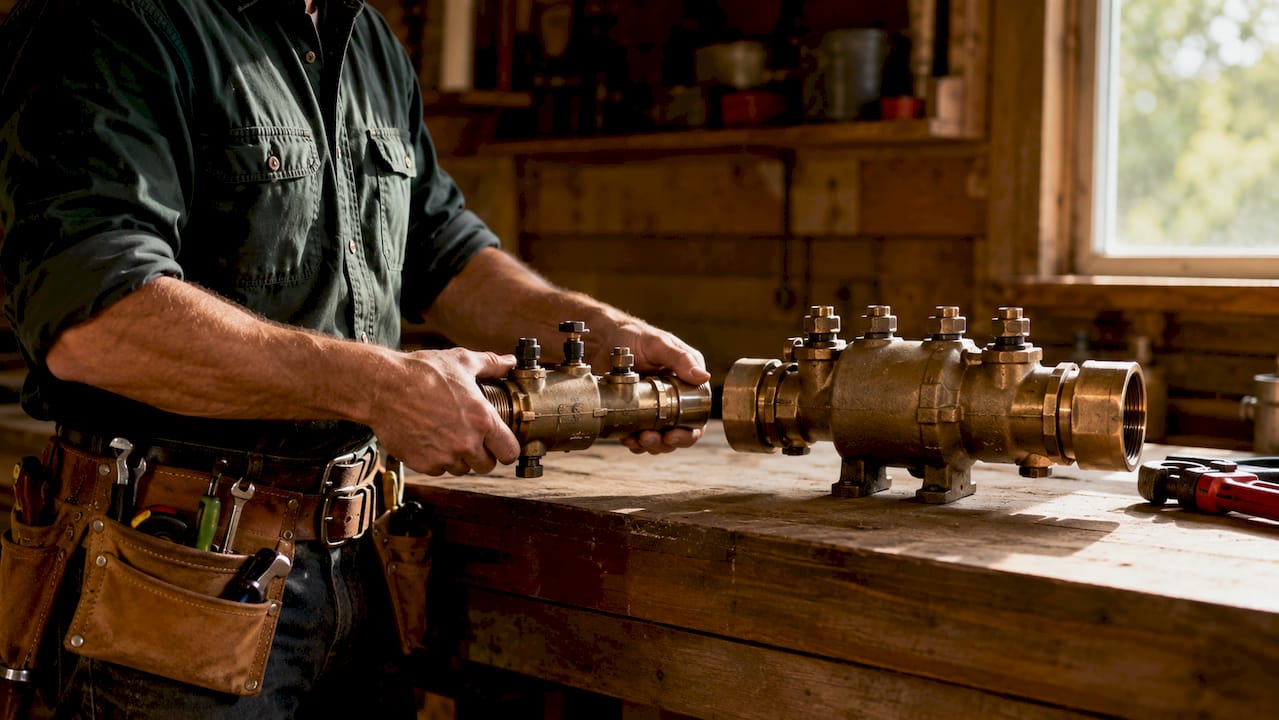
Commercial properties operate in a different category entirely. Office buildings, apartment complexes, and industrial facilities routinely push past 100 GPM during peak hours. Those systems require assemblies sized at 1.5 inches or larger, and some large commercial buildings use devices up to 6 inches in diameter.
Here is a quick reference for typical flow ranges by property type:
- Single-family residential: 5–20 GPM, 3/4 to 1-inch assembly
- Small commercial (retail, small office): 20–50 GPM, 1 to 1.5-inch assembly
- Mid-size commercial (multi-unit residential, schools): 50–100 GPM, 1.5 to 2-inch assembly
- Large commercial or industrial: 100+ GPM, 2 to 6-inch assembly
These ranges are starting points. Your actual sizing must come from a hydraulic analysis of your specific property, not a general category.
2. Why matching pipe diameter alone causes problems
Pipe diameter is a convenient shortcut, but it is an unreliable sizing method. Sizing must prioritize peak flow demand and allowable pressure loss, not the nominal pipe size. An assembly that matches your pipe diameter may still be the wrong size for your actual water demand.
Oversizing is the more common mistake, and it creates a specific failure mode. When water velocity through the device is too low, the check valves inside the assembly do not seat properly. Oversizing causes valve chatter and internal leakage due to insufficient flow velocity. That leakage is not just a performance issue. It creates a contamination risk, which is the exact problem a backflow preventer exists to prevent.
Undersizing creates the opposite problem. A device that is too small for your peak demand generates excessive pressure loss across the assembly. That pressure drop can starve fixtures on upper floors or reduce irrigation coverage significantly.
Properly sizing backflow preventers is a dual-constraint problem: the assembly must handle peak flow without excessive pressure loss and maintain enough velocity at low flow to seat the check valves reliably.
Pro Tip: Never size a backflow preventer by pipe diameter alone. Pull the manufacturer’s hydraulic performance chart for the specific assembly model and verify that your peak GPM falls within the recommended velocity range for that device.
3. How to calculate the right backflow preventer pipe size for your property
Sizing a backflow preventer correctly follows a clear four-step process. Work through each step before selecting an assembly.
-
Calculate peak flow demand. Sum the flow rates of all fixtures or irrigation zones that could run simultaneously. For a home with three irrigation zones at 4 GPM each plus two hose bibs at 2 GPM each, your peak demand is 16 GPM. For a commercial building, use your plumbing engineer’s fixture unit calculations or zone flow data.
-
Measure available system pressure. Water pressure should stay between 40–80 psi for proper device function. Below 40 psi, relief valves and check mechanisms may not operate correctly. Above 80 psi, you risk accelerated wear on the assembly internals.
-
Check New Jersey code requirements. NJ plumbing codes specify minimum assembly types based on hazard classification. Your local authority having jurisdiction (AHJ) may impose additional requirements. Confirm both before selecting a device.
-
Verify sizing with manufacturer hydraulic data. Pull the pressure loss curve for the assembly you are considering. Confirm that your peak GPM produces an acceptable pressure drop and that minimum flow conditions still generate enough velocity to seat the check valves.
The table below shows how these parameters interact across common property types:
| Property type | Peak flow (GPM) | Recommended assembly size | Pressure drop concern |
|---|---|---|---|
| Single-family home | 5–20 | 3/4 to 1 inch | Low |
| Small commercial | 20–50 | 1 to 1.5 inch | Moderate |
| Mid-size commercial | 50–100 | 1.5 to 2 inch | Moderate to high |
| Large commercial | 100+ | 2 to 6 inch | High, requires analysis |
Pro Tip: For multi-story commercial buildings, calculate residual pressure at the highest floor after accounting for the backflow preventer’s pressure drop. A device that works fine at ground level can starve upper-floor fixtures if the pressure budget is tight.
4. Comparison of backflow preventer types and their pipe size ranges
The assembly type you need depends on your hazard classification, and that classification directly shapes your pipe sizing options. Hazard classification drives assembly type, and each assembly type carries a different pressure drop profile.
Here is how the three main assembly types compare:
| Assembly type | Typical pipe sizes | Hazard level | Common applications |
|---|---|---|---|
| Pressure Vacuum Breaker (PVB) | 3/4 to 1 inch | Low | Residential irrigation |
| Double Check Valve (DCV) | 3/4 to 2 inches | Low to moderate | Small commercial, fire lines |
| Reduced Pressure Zone (RPZ) | 1 to 6 inches | High | Industrial, chemical facilities |
PVBs are sized 3/4 to 1 inch and work well for residential irrigation systems where the hazard is low and flow demands are modest. They are the most common assembly on NJ residential properties with in-ground sprinkler systems.
Double Check Valve assemblies cover a wider range of applications. DCVs range from 3/4 to 2 inches and are approved for low-hazard commercial connections. They impose a lower pressure drop than RPZ assemblies, which makes them attractive where pressure is limited.
RPZ assemblies are required at high-hazard sites. RPZ devices range from 1 to 6 inches and carry the highest pressure drop of the three types. That pressure drop must be factored into your sizing calculation. A DCV cannot replace an RPZ at a high-hazard site, regardless of pipe size compatibility.
For more detail on how each assembly type functions, Southjerseybackflow covers the differences in their guide to backflow prevention devices.
5. New Jersey-specific sizing considerations for property owners
New Jersey property owners face a specific compliance environment that affects sizing decisions. The state’s plumbing code requires that backflow prevention assemblies be tested annually by a certified tester. The assembly type and size you install directly affects testing time and cost. Testing time varies by assembly type: PVBs take 10–15 minutes, DCVs take 15–20 minutes, and RPZ assemblies require 20–30 minutes.
Several factors specific to NJ properties should shape your sizing decision:
- Local AHJ requirements: Some NJ municipalities impose stricter assembly type requirements than the state minimum. Confirm with your local water utility before purchasing.
- Future demand growth: If you plan to add irrigation zones, expand a building, or increase occupancy, size up now. Replacing an undersized assembly later means new permits, new testing, and new installation costs.
- Pressure zone variations: Water pressure varies significantly across NJ service areas. Properties in lower-pressure zones need careful pressure budgeting to ensure the assembly functions correctly after installation.
- Professional hydraulic analysis: For any commercial property or complex residential system, a certified backflow professional should perform a site-specific flow and pressure analysis before you commit to a device size.
Maintaining system pressure between 40–80 psi is a code-adjacent requirement in NJ. Devices installed in systems running below 40 psi may fail their annual test, triggering a notice of violation from your water utility.
If you have already received a compliance notice, the NJ backflow compliance process is more straightforward than it looks, but it starts with confirming you have the right assembly size installed.
Key takeaways
Correct backflow preventer pipe size requires matching the assembly to your peak flow demand and system pressure, not to your pipe diameter.
| Point | Details |
|---|---|
| Size by flow, not pipe diameter | Calculate peak GPM across all zones and fixtures before selecting an assembly. |
| Oversizing creates real risk | Low velocity from an oversized device causes valve chatter and internal leakage. |
| Assembly type limits your size range | PVBs top out at 1 inch; RPZ assemblies scale to 6 inches for high-hazard commercial use. |
| NJ code requires annual testing | Assembly type and size affect testing time and compliance obligations under NJ plumbing code. |
| Pressure must stay 40–80 psi | Devices installed outside this range may fail testing and trigger a compliance violation. |
What I’ve learned from watching NJ properties get sizing wrong
The most common mistake I see is a property manager calling a plumber, the plumber looks at the supply line, and they install a matching-size assembly without ever calculating peak flow. It works fine at low demand. Then irrigation season starts, all zones run at once, and the pressure drop across the device tanks the system. Nobody connects the dots until the annual test fails.
The second mistake is oversizing “just to be safe.” I understand the logic. A bigger device should handle more flow, right? The problem is that at low flow, the check valves in an oversized assembly do not seat. You end up with a device that leaks backward at the exact moment it should be protecting your supply. That is not a theoretical risk. It shows up in annual testing results more often than most property owners realize.
My advice to every NJ property manager is this: treat backflow preventer sizing as a hydraulic engineering question, not a hardware matching exercise. Get the peak flow number. Check the pressure. Then look at the manufacturer’s performance curve for the specific assembly you are considering. If those three inputs align, you have the right size. If they do not, no amount of matching pipe diameters will fix the problem.
Consulting a certified NJ backflow professional before installation costs far less than replacing a wrongly sized assembly after the fact.
— Jordan
Get expert sizing help from Southjerseybackflow
Selecting the right backflow preventer pipe size for your NJ property is a decision that affects both daily water performance and annual compliance. Southjerseybackflow provides certified backflow testing, sizing consultation, and installation services across New Jersey counties including Ocean, Mercer, Gloucester, Cumberland, and Middlesex.

Whether you are sizing a new assembly for a commercial building or confirming that your existing residential device meets current code, Southjerseybackflow’s certified testers bring the hydraulic knowledge and local code experience to get it right the first time. Learn exactly what passing your NJ backflow test requires, or contact Southjerseybackflow directly to schedule a sizing consultation for your property.
FAQ
What size backflow preventer do I need for a residential home?
Most residential homes in New Jersey require a 3/4 to 1-inch backflow preventer, sized to handle a peak flow of 5–20 GPM. The exact size depends on your total fixture and irrigation zone demand.
Can I install a larger backflow preventer to reduce pressure loss?
Oversizing a backflow preventer to reduce pressure drop often creates a worse problem. Low water velocity in an oversized assembly prevents check valves from seating correctly, which can cause internal leakage and backflow risk.
How does hazard classification affect backflow preventer pipe size?
Hazard classification determines which assembly type you are required to install, and each type covers a different size range. High-hazard sites require RPZ assemblies, which range from 1 to 6 inches and carry a higher pressure drop than DCV or PVB devices.
Does New Jersey require annual backflow preventer testing?
Yes. New Jersey requires annual testing of backflow prevention assemblies by a certified tester. The assembly type and size affect how long testing takes and what the test procedure involves.
What happens if my backflow preventer is the wrong size?
An undersized device restricts flow and causes excessive pressure loss. An oversized device may fail to seat its check valves at low flow, creating a contamination risk. Either condition can result in a failed annual test and a compliance violation from your water utility.