FAQ
Types of Backflow Preventer Valves in New Jersey: A Complete Guide + 8 Warning Signs You Need a Repair
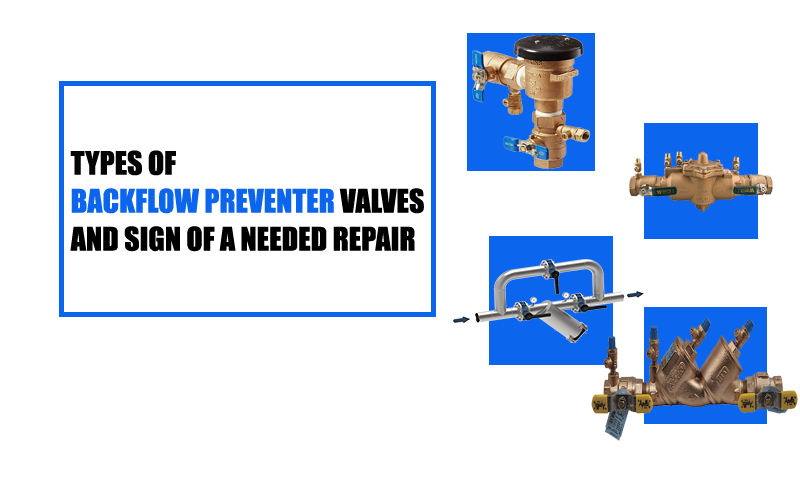
Backflow prevention is not a one-size-fits-all solution. New Jersey’s cross-connection control regulations recognize that different types of cross-connections present different levels of hazard to the public water supply — and therefore require different types of protective devices. Choosing the right type of backflow preventer for your specific application is critical for both regulatory compliance and effective protection.
This guide covers every major type of backflow preventer valve used in New Jersey residential and commercial properties, explains what each is designed to protect against, and identifies the warning signs that your device needs professional attention. For broader context, start with our guide on what a backflow preventer is and how it works and our overview of why New Jersey property owners need backflow prevention.
Understanding Backflow: Two Types You Need to Know
Backpressure Backflow
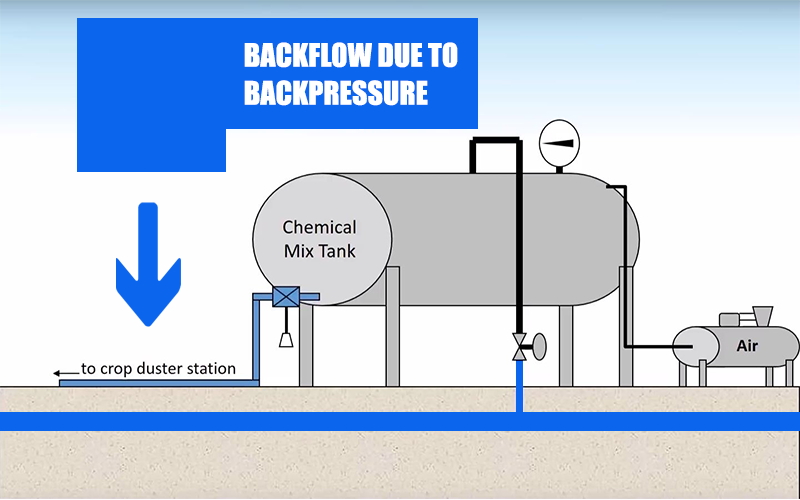
Backpressure backflow occurs when downstream pressure in a plumbing system exceeds upstream supply pressure, forcing non-potable water backward into the potable supply. Common causes include booster pumps on irrigation or fire suppression systems, thermal expansion in closed water heating systems, and elevation differences in high-rise buildings. Backpressure is most common in commercial and industrial settings where pumps and pressurized equipment are used.
Back-Siphonage Backflow
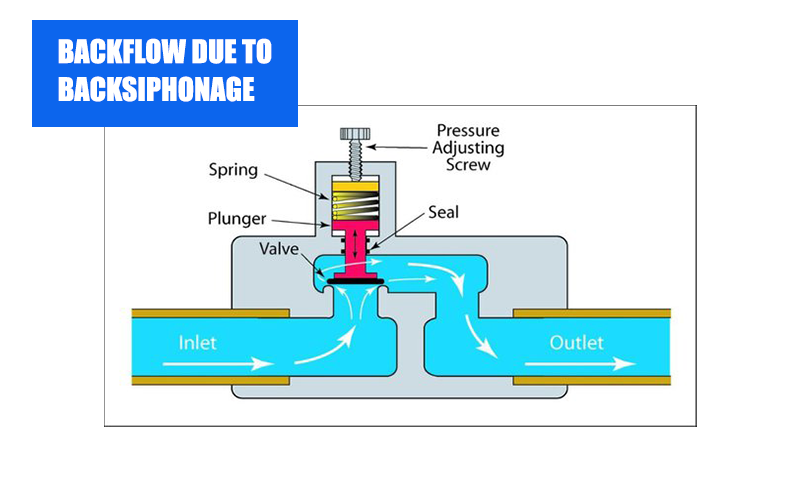
Back-siphonage backflow occurs when negative pressure (a partial vacuum) develops in the supply line, creating a suction effect that pulls non-potable water backward. This typically happens during sudden drops in supply pressure caused by water main breaks, firefighting operations, or high-demand events elsewhere in the distribution system. Back-siphonage is more common in residential settings and is the reason that even garden hose connections can be a contamination risk.
Understanding which type of backflow risk applies to your property helps determine which device is appropriate. See our full FAQ for related guidance.
The Five Main Types of Backflow Prevention Devices
1. Atmospheric Vacuum Breaker (AVB)
The Atmospheric Vacuum Breaker is the simplest and most inexpensive backflow prevention device. It uses a combination of air pressure and water pressure — rather than mechanical check valves — to prevent back-siphonage. When the water supply is on and flowing forward, the air inlet closes and water passes through normally. When pressure drops and reverse suction begins, the air inlet opens and atmospheric air enters the line, breaking the siphon.
AVBs are typically elbow-shaped or mushroom-cap-shaped and are installed at individual hose bibs, toilet flush valves, and simple irrigation connections. They must be installed at least six inches above the highest outlet they protect, they cannot be installed in a continuously pressurized system, and they cannot be tested with standard test equipment.
Because AVBs cannot be certified with standard differential pressure test equipment, they are generally not considered equivalent to testable devices for purposes of municipal compliance programs. They are suitable for low-hazard, non-continuous residential applications.
2. Pressure Vacuum Breaker (PVB)
The Pressure Vacuum Breaker is the most common residential backflow preventer in New Jersey. It features a spring-loaded check valve and an air inlet valve in a single assembly. PVBs are designed to prevent back-siphonage and are testable with standard differential pressure test equipment — making them acceptable for most municipal compliance programs.
PVBs must be installed at least six inches above the highest point of the downstream irrigation or water system. They are not rated to protect against backpressure and therefore are not appropriate for applications where downstream pressure could exceed supply pressure. For most residential irrigation systems in New Jersey, a certified PVB provides adequate, compliant protection.
3. Double Check Valve Assembly (DCVA)
A Double Check Valve Assembly uses two independently spring-loaded check valves in series, with test cocks positioned between and at each end to allow field testing. If one check valve fails, the second provides redundant protection. DCVAs can protect against both back-siphonage and low-level backpressure, making them suitable for medium-hazard applications.
DCVAs are commonly used on commercial irrigation systems, fire suppression connections (where the fire suppression water is not treated with toxic additives), and general building water service entries. They are not appropriate for high-hazard applications where the potential contamination poses a health risk.
4. Double Check Detector Assembly (DCDA)
A Double Check Detector Assembly functions identically to a standard DCVA but incorporates an additional bypass meter — essentially a second, smaller DCVA in a parallel bypass loop — that detects low levels of unauthorized water use or leakage. DCDAs are most commonly required on fire suppression service lines where the local water authority wants to detect leaks or unauthorized withdrawals from the fire system. The bypass meter registers any flow that passes through it, alerting property owners and utilities to otherwise-undetectable issues.
5. Reduced Pressure Zone Assembly (RPZ)
The Reduced Pressure Zone Assembly is the highest-specification backflow prevention device and is required wherever the cross-connection involves a high-health-hazard potential. An RPZ contains two independently operating check valves and a hydraulically operated differential pressure relief valve positioned in the zone between the two check valves. This relief zone is maintained at a pressure lower than the supply pressure at all times.
If either check valve fails to hold — or if backpressure begins to develop — the pressure in the relief zone changes and the relief valve opens, discharging water to the atmosphere through a drain port. This mechanical redundancy means that even a total failure of one check valve cannot result in contaminated water reaching the supply, because the relief valve will discharge rather than allow reverse flow. The visible dripping or discharge from an RPZ’s relief port is a signal that the device has operated as designed — and that a check valve may need service.
RPZs are required in New Jersey for applications including chemical injection systems, medical and laboratory equipment, industrial process piping, car washes, commercial boiler systems, and irrigation systems in high-hazard zones. They require professional annual testing and certification and should be rebuilt on a regular cycle. For more on rebuild costs, see our cost guide for installing, testing, and rebuilding backflow preventers.
8 Warning Signs Your Backflow Preventer Needs Repair
Even the best backflow preventer will eventually show signs of wear. Here are the eight most important warning signs to watch for. If you notice any of these, contact a certified backflow specialist immediately. See also our guide to deciding whether to repair or replace your backflow preventer.
Warning Sign 1: Water Leaking from the Body or Connections
Visible water leaking from the body of the assembly, from the test cocks, or from the connection points indicates a seal failure, cracked body, or compromised O-ring. Any leak — even a small drip — should be investigated promptly. Left unaddressed, leaks cause property damage, waste water, and indicate that the device’s internal integrity may be compromised.
Warning Sign 2: Continuous Discharge from the RPZ Relief Valve
It is normal for an RPZ’s relief valve to discharge a small amount of water occasionally — this is the device functioning as designed. However, if the relief valve is continuously dripping or discharging a steady stream of water, it indicates that the downstream check valve is not fully closing. This requires immediate service, as a sustained relief valve discharge can flood mechanical rooms, damage equipment, and indicates the device may not be providing full backflow protection.
Warning Sign 3: Discolored or Cloudy Water
Brown, yellow, or cloudy water coming from your taps or the taps of neighboring properties can indicate that contaminated water has entered the supply. If discoloration is accompanied by other symptoms — unusual odor, reduced pressure, or recent construction activity nearby — it’s possible that a backflow event has occurred. Contact your water utility and schedule an immediate inspection of your backflow prevention device.
Warning Sign 4: Unusual Odors from the Water
An unusual smell — sulfur, chlorine, petroleum, or organic decay — coming from your water can indicate contamination. While not all odors indicate a backflow event (water heater issues and municipal treatment changes can also cause odors), any sudden, unexplained change in your water’s smell warrants investigation of your backflow prevention infrastructure.
Warning Sign 5: Slow or Reduced Water Pressure
A noticeable reduction in water pressure at fixtures downstream of a backflow preventer can indicate that the device’s check valves are not fully opening — possibly due to mineral buildup, debris trapped in the valve seat, or a deteriorated spring. Reduced flow through the device can cause inadequate water pressure throughout the connected system.
Warning Sign 6: The Device Failed Its Annual Certification Test
A failed annual certification test is the most definitive indication that your backflow preventer needs repair. Test failure means the device is not providing the protection required by law and must be repaired before a passing certification can be issued. If your device has failed a test, refer to our guide on how to decide whether to repair or replace your backflow preventer to understand your next steps.
Warning Sign 7: Visible Corrosion, Rust, or Mineral Scaling
External corrosion, rust streaks, green patina, or heavy mineral scaling on the assembly body are signs of long-term environmental exposure or water chemistry issues. While surface oxidation on brass fittings is normal, heavy corrosion or visible pitting indicates potential structural compromise. Devices with significant corrosion should be evaluated by a certified technician to determine whether the body is still structurally sound.
Warning Sign 8: No Record of Recent Testing
If you don’t have records of your backflow preventer being tested within the past 12 months, that is itself a problem — regardless of how the device looks or feels. New Jersey law requires annual testing, and a device that hasn’t been tested could be failing internally without any visible symptoms. Schedule your annual backflow certification test immediately if your records are out of date.
Choosing the Right Backflow Preventer for Your Property
Selecting the correct device isn’t just about picking a brand — it requires an assessment of the hazard level of each cross-connection on your property. New Jersey’s cross-connection control regulations classify cross-connections as low-hazard (non-health) or high-hazard (health), and the device requirements differ accordingly.
A licensed backflow prevention specialist can assess your property, identify all cross-connections, and recommend the appropriate device type and model for each. Don’t rely on guesswork — the wrong device type may not satisfy your water authority’s compliance requirements, even if it’s a high-quality unit from a reputable manufacturer.
South Jersey Backflow: Expert Service on All Device Types
South Jersey Backflow is a certified specialist in all types of backflow prevention devices — AVBs, PVBs, DCVAs, DCDAs, and RPZs. We work with all major manufacturers including Watts, Febco, Zurn Wilkins, Ames, Apollo, and Conbraco. Whether you need a new device selected and installed, an existing device tested and certified, or a failing device rebuilt or replaced, our team delivers expert service throughout New Jersey. Explore our backflow preventer services, browse our library of technical articles, or contact us for a prompt assessment.
Ready to Schedule Your Backflow Service in New Jersey?
South Jersey Backflow has served residential and commercial customers across New Jersey since 2004. Our certified technicians handle backflow preventer testing, repairs and rebuilds, and protective enclosures — all with transparent pricing and 24/7 emergency availability. Contact us today or call (856) 291-6809 to get started.