
FAQ
Repair or Replace Your Backflow Preventer? 7 Key Factors to Guide Your Decision in New Jersey

When your backflow preventer starts showing signs of trouble — leaking, failing its annual test, or simply aging out — you’re faced with a decision that can feel complicated: should you repair it and keep it running, or replace it entirely with a new unit? The right answer depends on several variables, and getting it wrong either way costs you money. Repair too aggressively on a device that’s nearing the end of its service life, and you’ll spend money on labor and parts only to replace it in two years anyway. Replace prematurely when a simple rebuild would have sufficed, and you’ve overspent unnecessarily.
This guide walks you through the seven most important factors our certified technicians at South Jersey Backflow evaluate when helping New Jersey property owners make this decision. Before diving in, it helps to understand what a backflow preventer is and how it works, as well as the different types of backflow preventer valves available on the market. Those pages will give you important context for the factors described below.
Factor 1: Current Assembly Condition
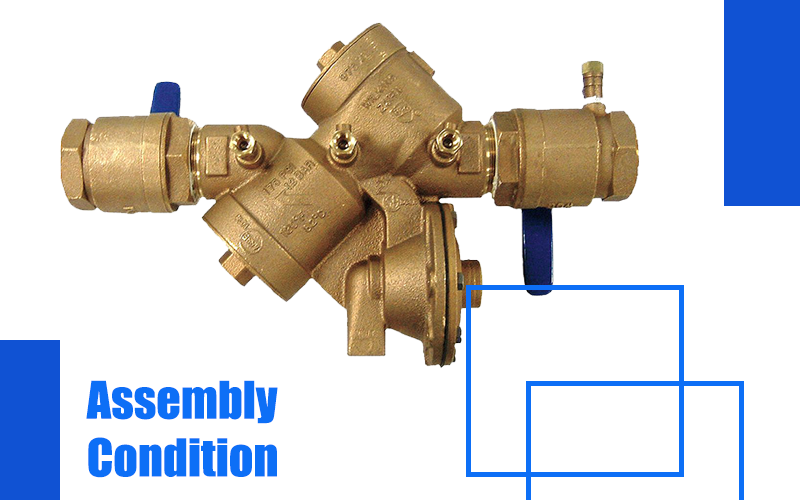
The first and most important factor is the physical condition of the existing assembly. A visual inspection combined with a professional pressure test will reveal the true state of the device. Our technicians look at the condition of the check valves, the relief valve seat, the rubber diaphragms and O-rings, the body casing, and the shutoff valves.
If the internal components show only moderate wear — softened O-rings, a slightly sticking check valve, mineral buildup — a professional rebuild is almost always the right call. These are standard wear items that are easy and inexpensive to replace. However, if the body casing shows signs of stress cracking, heavy corrosion, or physical deformation, no amount of internal work will make the assembly safe or reliable. In those cases, full replacement is the only sound option.
Sealing failures deserve special attention. Cracks in the brass or plastic body, pitting from corrosion, or cross-threaded test ports are defects that cannot be adequately repaired in the field. If an assembly has sustained structural damage — from a vehicle impact, a hard freeze, or years of outdoor exposure without proper protection — replacement is almost certainly required.
If your backflow preventer is outdoors and unprotected, consider adding a protective backflow enclosure to prevent future weather-related damage regardless of whether you repair or replace the current device.
Factor 2: Availability of Replacement Parts
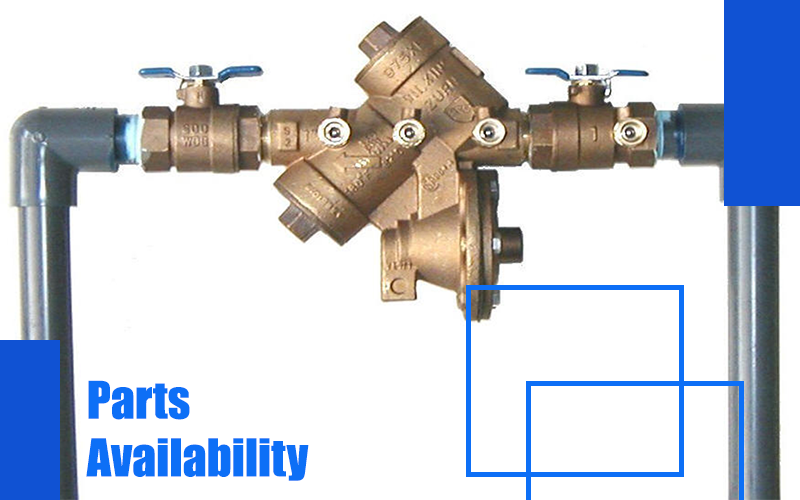
For repair to be a viable option, the right parts must be available at a reasonable cost. For most major backflow preventer brands — Watts, Febco, Zurn Wilkins, Ames, Apollo, and Conbraco — rebuild kits containing all the common wear items (diaphragms, O-rings, springs, check discs) are widely stocked and affordably priced. Rebuilding with a manufacturer-approved kit preserves the integrity of the assembly and keeps it in certified condition.
However, for older or discontinued models, parts may be scarce or priced nearly as high as a new assembly. If your technician cannot source OEM (original equipment manufacturer) parts, substituting off-brand components may void any warranty and could affect how the device performs during its next certified test. In that scenario, replacement with a current-generation model makes far more practical sense.
Also consider compatibility. If your system has been modified, repaired by different technicians over the years, or upgraded in sections, confirming that any new parts are fully compatible with the existing configuration is essential before committing to repair.
Factor 3: Valve Size and Replacement Cost
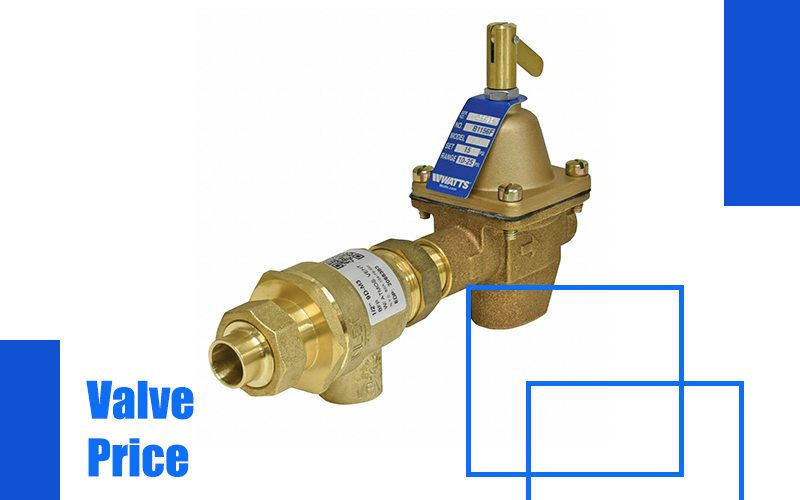
The size of the backflow preventer has a significant impact on the repair-versus-replace calculation. Small residential assemblies — typically 3/4-inch or 1-inch — are relatively inexpensive to purchase new. If a small unit needs extensive repair, the labor and parts cost may approach or exceed the cost of a new assembly. In those cases, replacement is often the smarter economic choice.
Larger commercial assemblies — 2-inch, 3-inch, 4-inch, or even larger RPZ (Reduced Pressure Zone) devices — are significantly more expensive to purchase and install. A 4-inch Watts 909 or Febco 825Y assembly can cost several thousand dollars plus installation. For devices in this size range, a professional rebuild is almost always the better financial decision when the structural integrity of the assembly is sound. Even if the rebuild costs $500 to $800 in parts and labor, that’s a fraction of the cost of a full replacement on a large commercial unit.
Our guide on backflow preventer installation, testing, and rebuilding costs in New Jersey provides current pricing benchmarks to help you calibrate your decision.
Factor 4: Age of the Installation
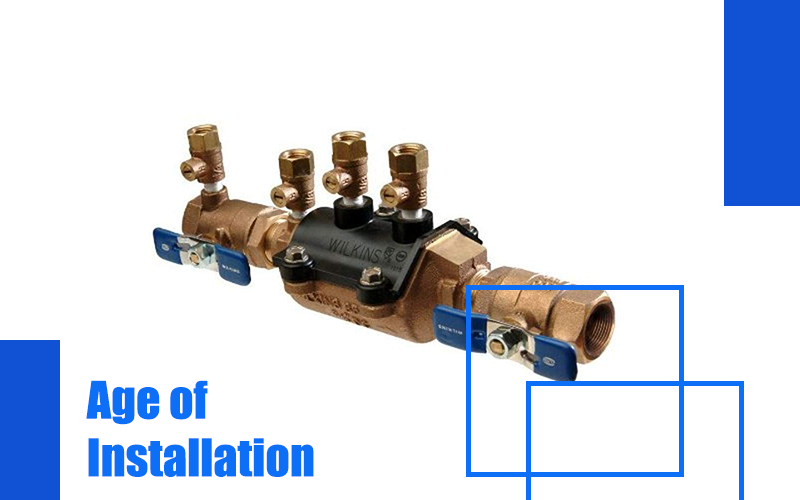
A backflow preventer that is well-maintained can last 25 to 50 years, depending on the quality of the unit and the environment it operates in. However, age alone is not a reliable indicator of whether to repair or replace. A 20-year-old Watts 009M2 in excellent condition with readily available parts is worth rebuilding. A 10-year-old no-name unit with cracked internal components is not.
What age does tell you is how far along in its service life the device is, and therefore how much useful life remains after a repair. If a backflow preventer is already near the end of its expected lifespan and requires significant repair, you’re investing money to extend the life of a device that may fail again within a few years. In that case, replacing it with a modern, high-efficiency unit — which may include improved materials, better freeze resistance, and easier rebuild access — is often the wiser long-term investment.
For newer devices (under 10 years old) with minor issues, repair is almost always the right call. These devices have significant useful life remaining, and a rebuild will restore them to like-new performance for a fraction of replacement cost.
Factor 5: Complexity and Timeline of the Repair
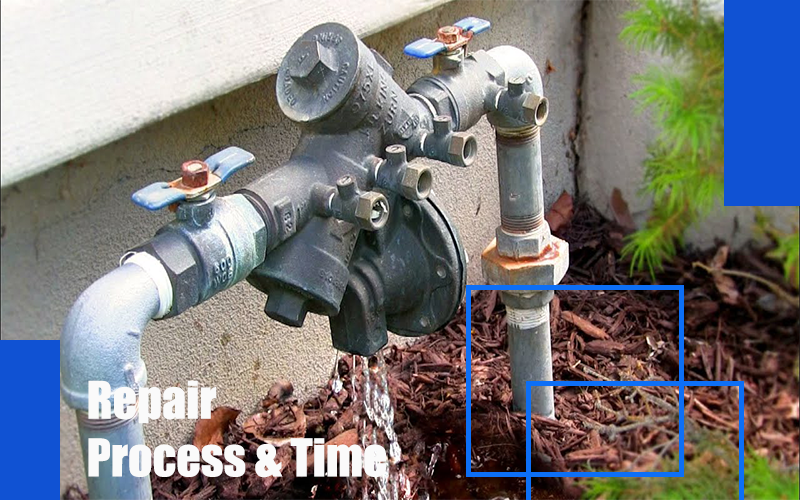
Some backflow preventer repairs are quick, straightforward, and affordable. Replacing an O-ring, cleaning a check valve seat, or rebuilding the relief valve on a common residential RPZ typically takes an experienced technician under an hour and costs well under $200 in parts. These are obvious cases where repair wins.
Other repairs are time-consuming and technically demanding. Assemblies that require disassembly of the entire body, specialized tooling, or multiple return visits — particularly if parts must be ordered and shipped — accumulate labor costs rapidly. When the repair timeline is uncertain and the cost of labor is high, the economic advantage of repair over replacement begins to shrink.
At South Jersey Backflow, we give our customers transparent estimates before beginning any repair work. We will always tell you honestly if the economics of the repair don’t make sense for your specific situation.
Factor 6: Comparative Cost Analysis
Once you know the assembly condition, the parts required, the valve size, the age, and the repair complexity, it’s time to run the numbers side by side. Get a firm estimate for the repair, including parts and labor. Then get a quote for a new comparable unit, including the cost of removal, installation, and certification.
A common rule of thumb in the plumbing industry: if the repair cost exceeds 50% of the cost of a new comparable unit, replacement is usually the better choice. This threshold accounts for the fact that repairs on aging equipment often don’t address every underlying issue — and you may find yourself facing additional repair costs within a year or two.
For small residential units, the math often favors replacement when repair costs are high. For large commercial RPZ assemblies, the math almost always favors repair unless the body is structurally compromised. Your certified backflow technician should be able to walk you through this comparison clearly.
Factor 7: Whether Replacement Is Overdue
Sometimes the decision is made not by economics but by timing. If your backflow preventer has been reliably serviced throughout its life and has now reached the end of its rated service span, there’s a strong case for proactive replacement — before it fails, rather than after.
Proactive replacement eliminates the risk of an unexpected failure that could leave your property out of compliance, trigger a failed annual backflow test, or — in a worst-case scenario — allow a backflow event to occur. It also gives you the opportunity to upgrade to a higher-quality device with better corrosion resistance, improved internal components, and more accessible test ports.
When you schedule a proactive replacement during the off-season (fall or early winter in New Jersey, when irrigation systems are not in use), you also avoid the premium pricing that comes with emergency repair calls during peak season.
Repair vs. Replace: A Quick Reference Summary
Lean toward REPAIR when: The assembly body is structurally sound, the device is relatively new (under 15 years), OEM parts are readily available at reasonable cost, the damage is limited to internal wear items, and the device is large (2″ or larger).
Lean toward REPLACE when: The body is cracked, corroded, or physically damaged, the unit is old and near end-of-service, parts are discontinued or prohibitively expensive, the repair cost approaches or exceeds 50% of replacement cost, or the device has failed multiple tests in a short period.
Trust a Certified Backflow Professional — Not a General Plumber
Backflow prevention devices are specialized equipment that requires certified, experienced technicians to properly evaluate, test, rebuild, and certify. Not every licensed plumber in New Jersey has the specific training and equipment to perform a proper backflow test or rebuild. South Jersey Backflow is a dedicated backflow prevention specialist — this is all we do. Our technicians are state-certified, fully insured, and experienced with all major brands and models of backflow prevention devices. Explore our backflow repair and rebuild services or read our FAQ for more answers.
Ready to Schedule Your Backflow Service in New Jersey?
South Jersey Backflow has served residential and commercial customers across New Jersey since 2004. Our certified technicians handle backflow preventer testing, repairs and rebuilds, and protective enclosures — all with transparent pricing and 24/7 emergency availability. Contact us today or call (856) 291-6809 to get started.